Some coastal stories are told in museums.
Manuela’s are still lived at sea.
Born and raised in Getaria, Manuela belongs to a fourth-generation fishing family whose life has always followed the rhythm of the Cantabrian tide. Around here, the sea isn’t scenery — it’s memory, livelihood and identity passed carefully from one generation to the next.
Many call them the last traditional fishing family in town. Spend a day with them, and it’s easy to see why.
Together with her husband — a lifelong fisherman — Manuela opens the doors to their working world: the local fish market, the docks, the tools of a trade that refuses to disappear. Guests step inside a living maritime heritage where techniques are still practiced by hand and time-honoured knowledge shapes every knot and cast.
You’ll see how longline systems are prepared, how different nets serve different waters, how nasas (traditional traps) are woven, repaired and readied the old way — patiently, skillfully, without shortcuts.
Their boat tells a story of its own.
They fish aboard the Manual II, the second family vessel to carry the name, honouring the boat once owned by Manuela’s grandfather — a quiet tribute to legacy written across generations.
But time with Manuela goes far beyond the harbour.
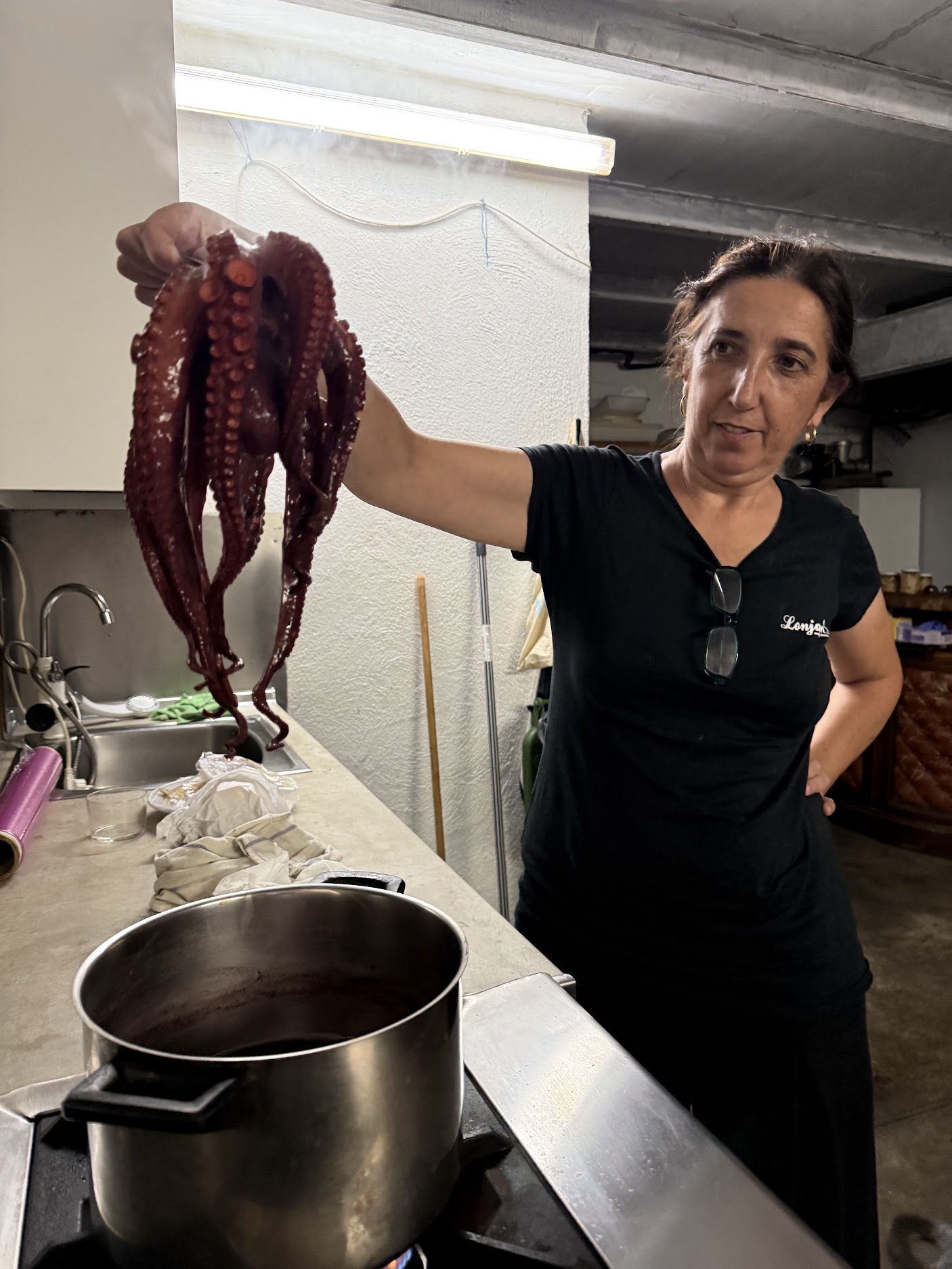
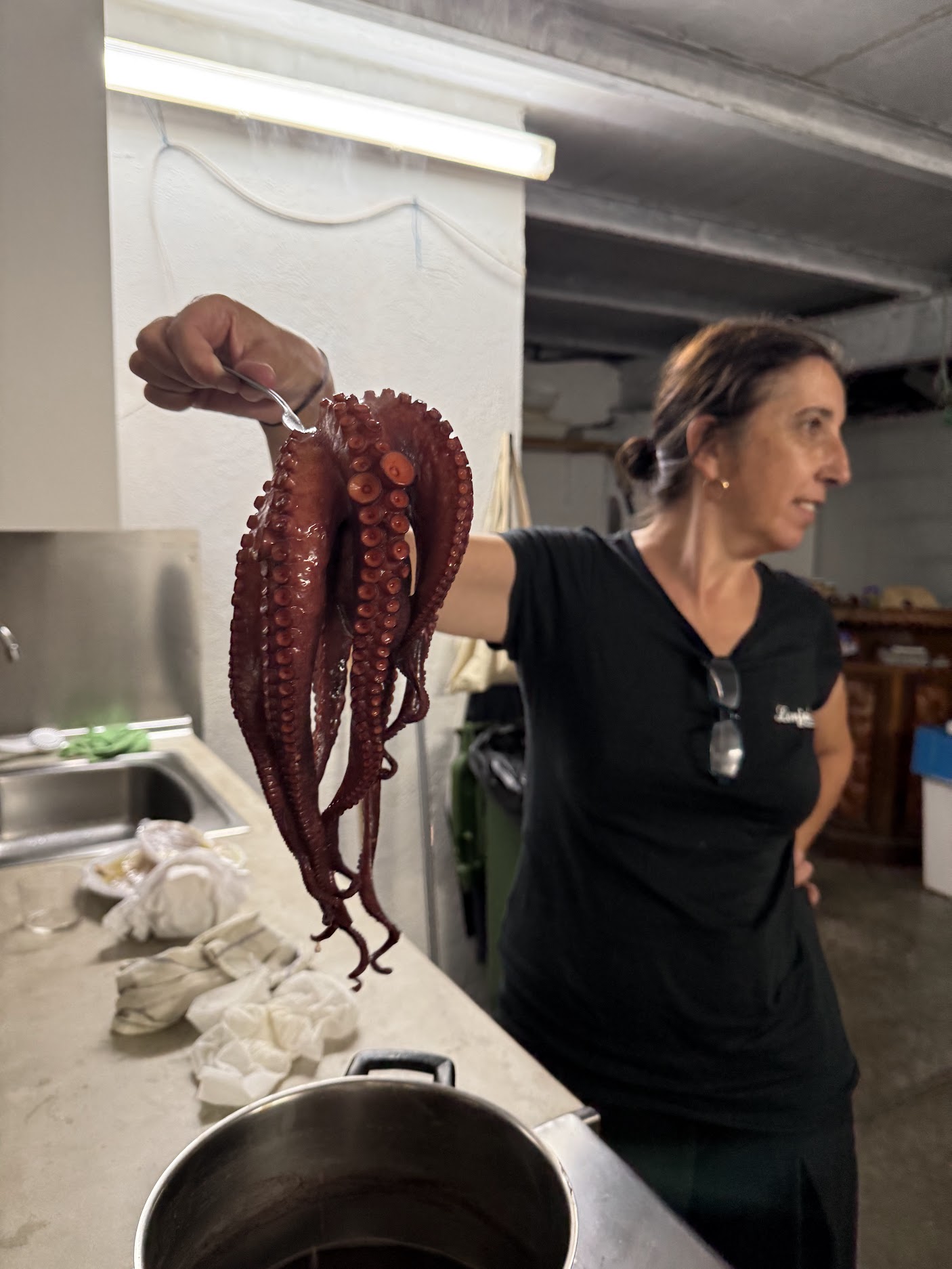
Between tastings of bonito, anchovies and other treasures of the Cantabrian Sea, she welcomes guests into the kitchen to share the rituals of coastal cooking. Here, you’ll learn how octopus is prepared the traditional Northern Spain way — simple techniques, deep flavour, recipes shaped by weather, salt and patience.
And always, there are stories.
Of a seafaring town shaped by whale hunters and navigators. Of Juan Sebastián Elcano, Getaria’s most legendary son and the first sailor to complete a circumnavigation of the globe. Of tides, traditions and the quiet pride of a community that has lived from the sea for centuries.