
What to See in Lesaka
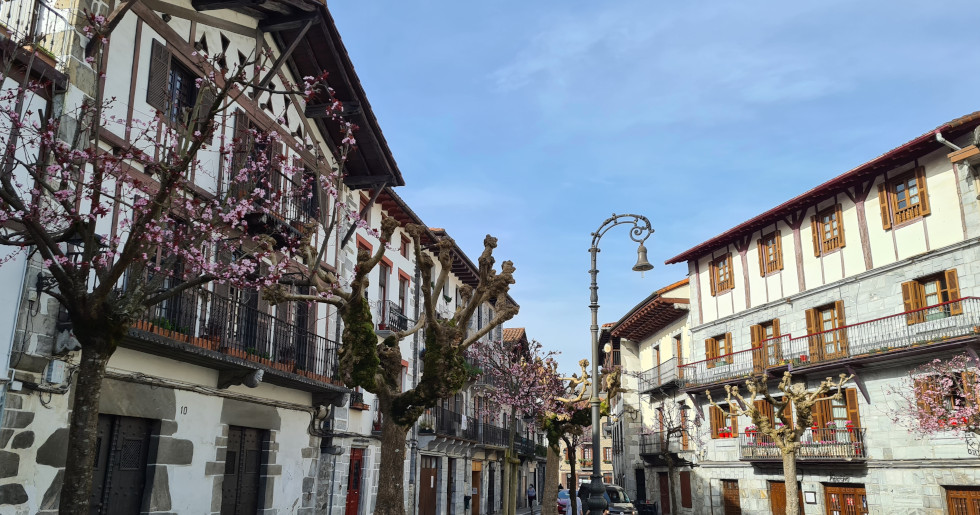
What to See in Lesaka Written by Stephanie Mutsaerts Photos by Jesus Caso and Stephanie Mutsaerts Charming Lesaka Lesaka (in Basque, and Lesaca in Spanish) is just 75 kms from Pamplona. This post about what to see in Lesaka reveals the many surprises this Basque – Navarre town can offer visitors. Lesaka is one of the most picturesque towns in the Cinco Villas Province, located in northwestern mountains of Navarre, with a municipality of 2,742 inhabitants. It is not far from the Atlantic Ocean and is close to the French border and the famous coastal Basque city of San Sebastián. It is a profoundly Basque – Navarre community where Basque traditions and culture have deep roots. The primary language spoken here is Basque rather than Spanish. This city became famous for its ironworks, being the first heavy industry in the region. As you admire the city’s striking buildings you will appreciate that Lesaka enjoyed economic growth as it moved from a predominantly rural and cattle town to one of the most important industrial centers in the area. Despite the industrial growth that produced the booming economy, the city has retained all the charm of yesteryear, visible in constructions such as the ironworks, flour mills, cider making workshops, or carpentry workshops – all dating from the 18th century. The center of Lesaka reflects the history of its past as seen in its traditional farmhouses with their ornate windows and doors adorning the facades that look out onto the town’s cobbled streets. But, without a doubt, the image of the town which best defines its historic links is of the stone bridge over the river along with the Kaxerna, or Zabaleta, tower standing next to it. A beautiful example of a 15th century palace constructed of stone stands at the Cape of Armory. Within the city you can see other ancient towers, such as Minyurinea, which, dating from the 14th century, which is considered the oldest building in the town. Lesaka Festivals Lesaka has many authentic festivities, three of which are: San Fermin in July, which is called ‘the other San Fermin’; Carnaval, which is in February; and their Christmas celebration Olentzero, in December. The Other San Fermin A very special time to visit Lesaka is in July since, as in Pamplona, San Fermín is also celebrated here. One of the most colorful features of the festival is the traditional dancing, which is performed on the stone embankments of the Onin River. Christmas in Lesaka Lesaka’s Olentzero is held annually on Christmas Eve. According to Basque traditions, Olentzero comes to town late at night on the 24th of December to drop off presents for children. He is now depicted as a lovable character, a bit overweight, having a huge appetite and thirst. He is a Basque peasant wearing a Basque beret, a farmer’s attire with traditional shoes and smoking a pipe. The celebration is divided into two parts. In the morning there is the contest where various groups present their floats depicting Olentzero undertaking various activities and in various poses, and in the afternoon there is a parade with the winner of the contest. Find out more about joining us for a special Basque Christmas Carnaval in Lesaka During the Lesaca carnivals, the town streets become, all in good fun, a “nightmarish” place for young boys and girls who are chased by the “zaku zaharrak”. These fierce-looking characters wear a body sack and on each leg a sack stuffed with dry grass, leaving only their arms uncovered. They hide their faces with a white cloth and cover their heads with straw hats. To complete their outfits they use the “pixontzia”, an inflated pig bladder tied to a stick, which they use to attack the little ones. Finally at the end of the day, justice is served when the zaku zaharrak receive punishment for their misdeeds. The town band plays lively music as it accompanies the crowd into the main square where, while the zaku zaaharrak hold on to iron rings set in the walls. The ‘original’ costumes are torn off them and the children take their revenge by destroying and burning the garments and the “pixontziak”. You truly have to be here to understand the fun of this event! Several well-known celebrities, including Orson Wells and Ernest Hemingway, fell in love with the charming province of Cinco Villas in Navarra in Northern Spain. This Basque Navarran farmhouse is like a magnificent country palace with a history of its own. Built in the 16th Century at the same time as the village church, San Martin de Tours, by a builder who, even though he had not been approved to build the church, designed and constructed this grand farmhouse to prove himself as a master builder. Every side of this building offers a different style of architecture. To top off the history of this building, it is worth noting that Orson Wells filmed Falstaff (The Chimes at Midnight) on the top floor. Lesaka Church San Martín de Tours, located on the Lesaka hill top, is considered to be one of the most architecturally significant churches in Navarra. The Lesake church was built in the 16th Century and subsequently modified in the 17th and 18th Centuries, and it consists of both Gothic and Baroque styles. With its cathedral-like dimensions it presents a magnificent example of religious architecture. The church houses the Virgin of Carmona and a Romanesque organ, that dates back to medieval times. The church has been declared a Site of Cultural Interest. How to Experience it All There are endless sights in northern Spain, and these are but a few. The region is welcoming to visitors who can travel around the region by bike, on foot or by car. Along with the many amazing cultural and historical places to see and experience, northern Spain also offers an abundance of Michelin-starred restaurants, rustic restaurants serving delicious, traditional cuisine, wineries, luxury hotels, all nestled in quaint villages and gorgeous landscapes. Northern Spain Travel has a collection of outside-the-box travel journeys throughout the region.
For Whom The Bull Tolls
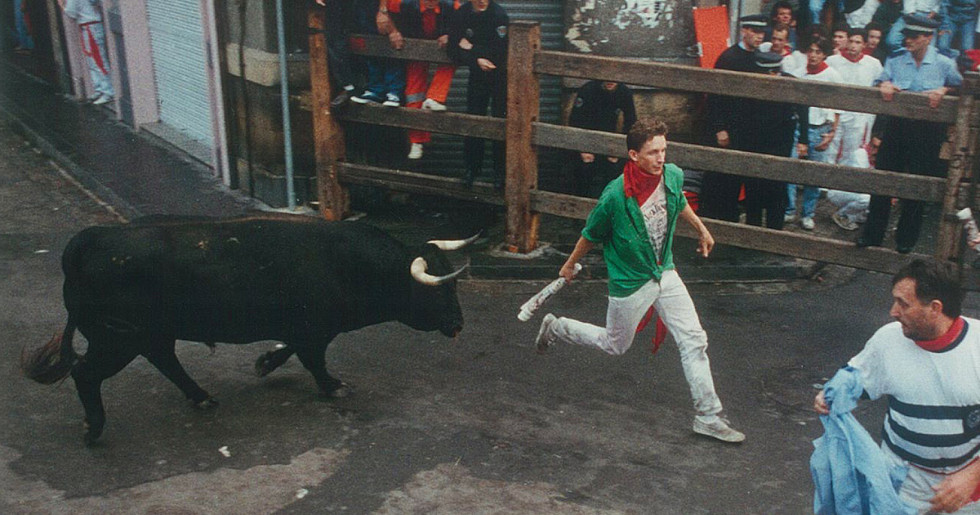
For Whom The Bull Tolls Written by Tim Pinks Photos by Jesus Caso and Stephanie Mutsaerts ‘If you build it, they will come.’ Magic. You know that feeling we get, even as we grow older, when it snows? Magic. That feeling that makes our heart leap and our stomachs summersault as the snow falls ever thicker and heavier? Magic. The sort of magic that takes us back to our childhood when we believed in Father Christmas – I still do – and when we had the proof he existed because there were presents under the tree. It’s a magical feeling. Nieve en Navarra. Nievarra. Magico. Well, I don’t need to tell you, but San Fermin is magic. He is The Conjurer. And when he throws his party, his Fiesta…it’s magical. No matter how often we guiris go, we never lose that childlike joy of looking forward to it, of arriving in the city, of the fiesta equivalent of Christmas Eve – San Fermin Eve – and then the arrival of July 6th, and a Christmas Day that lasts for nine days and nights. Like the bells in Hemingway’s book, ‘For Whom The Bells Toll,’ the saint rings for us. He calls to us. But the bells in a church can make two types of noise. There is the happy sound they make, like for a wedding or when just passing the time of day, and there is a sad sound, like for a funeral or announcing something ominous. When the saint rings, he sings. It’s a happy sound. For those who would like to read the Spanish Version of the same article published in Navarra.com please feel free to click here. Like the bells in the Hemingway book, ‘For Whom The Bells Toll’ the Saint rings for us. But in the original English version, the word is ‘toll.’ In the Spanish it’s more ‘ring.’ Or ‘peel.’ And toll has an ominous sound to it…yes, an ominous ‘ring,’ whereas in the Spanish translation of the book the word ‘suena’ is used, which has a softer, nicer, yes, ‘ring’ or ‘peel’ to it. It’s more…appealing. A little bit of magic. And in this second Escalera month, when normally we’d all be celebrating Fiesta coming ever closer…there is nothing definite to celebrate. Nothing concrete to look forward to. I’m not being overly negative or pessimistic here – and anyone who knows me will know that in most things I’m a glass ‘half full’ person – but at the moment, although my glass is still half full…I can’t find a waiter to top it up. The Fiesta of San Fermin hasn’t been cancelled yet…but neither has it been confirmed. But as the days and weeks go by it feels more like a tolling will be in the air than a ringing… I fear for fiesta. Photo taken by: Rodrigo Demedeiros And if, (and I know it’s a very, very, big ‘IF’) fiesta does happen, I’m reminded of a British novelty pop song called ‘Star Trekkin’ by a band called The Firm. In it, Spock says to Captain Kirk, ‘It’s life, Jim, but not as we know it.’ Well, if some sort of San Fermin is allowed and arranged, it’ll be, ‘It’s Fiesta, Tim, but not as we know it.’ Quite frankly, I wouldn’t care if they only ran it over a couple of weekends, and the Giants and Saint came out to see everyone. At least we could all say hello to San Fermin and his friends. So, a little like San Fermin de Aldapa, perhaps. At least the town would have something to dance with, smile at, and raise a toast to. And if, just if, some guiri like me who loves Fiesta and Pamplona, it’s people and it’s parties, more than anything, was allowed to travel to pay a visit…well, it would be like meeting Father Christmas as a child. Photo taken by: Juan Antonio Garaikoetxea The joy would be childishly wide-eyed and magical. It always is, every year, even though we know what’s going to happen, but after last year’s Sin Fermin, and this years’ seriously increasing problems with the pandemic it looks like San Fermin will become San Doubtful… What seems obvious is that even if travel is allowed, fiesta as we know it almost certainly cannot happen. The words at the top of this article are actually a mis-quote from the Kevin Costner film, ‘Field of Dreams.’ Talking about building a ballfield to play baseball, that will maybe bring Costner’s father back, a mystery voice says, ‘If you build it, he will come.’ So you know, Pamplona Town: if you are open, they will come. And here, by ‘they’ I mean…us. Guiris. Just as people Navarra wide and country wide will come. If it is possible to be in Pamplona in July during the fiesta dates, they will come. Not all, by any means of course. But some… Last year was different, a one off. The town was open, although Fiesta was cancelled, and people accepted it and didn’t travel. (Although this Englishman came!) Plus, last year, Spain was closed to Americans, but this year, if the borders are open…they will come. Whether nothing is going on, or whether some small scale events are planned, like the Procession, the Giants, some fireworks or a Plaza del Castillo concert…they will come. Photo taken by: Rodrigo Demedeiros Many years ago I learnt a word, from Dr. Jose Joaquin Arazuri, in volume two of his ‘History of San Fermin.’ It was a Navarran word, he said, ‘ciriquiar.’ It meant, ‘to make mischief.’ Well, for us who love Pamplona, capital of Navarra, during fiesta or outside it, it is a place where we adults can, in the nicest, most respectful way, come to play. To make mischief! I have been lucky enough in my life to go to Disneyland in California, and Las Vegas in Nevada. And the Oktoberfest in Germany and New Year’s Eve in Scotland. (And many in Pamplona!) But if you combined all of those and added, let’s say: the Rio de Janeiro Mardi Gras, the Calgary Stampede, Bastille Day and, I don’t know, the lights of the Aurora Borealis…you wouldn’t come close to the Fiesta of San Fermin. As you and I know, there is nothing, nothing, NOTHING like the Fiesta of San Fermin! And on this second Escalera day, as we countdown to…what?…I will never stop believing in the Fiesta of San Fermin. Like I believe in Father Christmas, Olentzero, the Little People and the Jentilak… I believe in San Fermin. They may have to cancel, or change, Fiesta for this year, but as the sun also rises…the Saint will rise again. With hope in my heart and song in my soul…¡ya falya menos! Viva San Fermin! Gora! Written by Tim Pinks Coming soon more about Tim Pinks and his novels Once Upon a Time in Pamplona and Bulls Eye (A Tale in English and Spanish) Con esperanza en mi corazón
A Special Friend of the Encierro
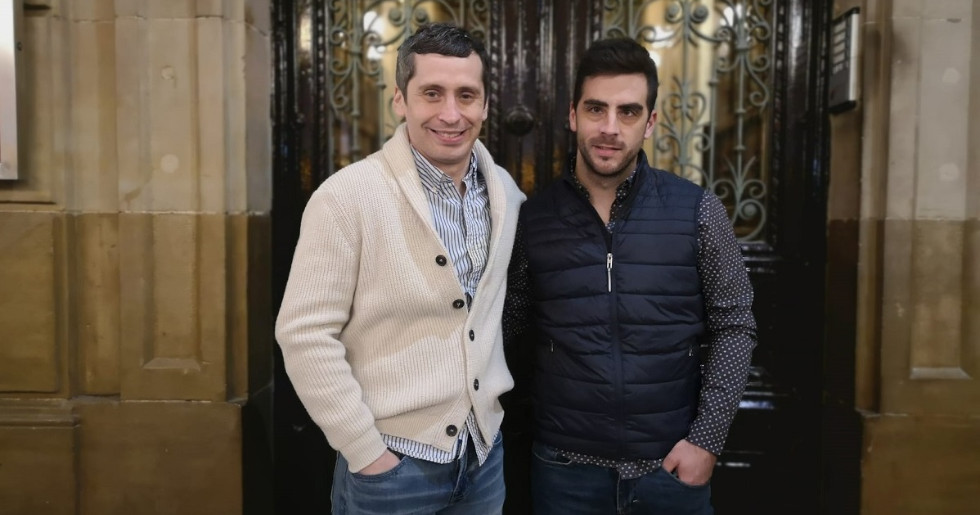
A Special Friend of the Encierro Written by Stephanie Mutsaerts Photos by Jesus Caso and Stephanie Mutsaerts This afternoon Xabi Mintegi presented his novel ‘Amanece en San Fermín’ in the Nuevo Casino Principal, in Pamplona. For the occasion, his Chicago-born friend Bill Hillmann, boxer, writer and fellow mozo (bull runner) wrote a touching article reflecting on his friendship with Xabi, making reference to the local mozos. Amanece en San Fermín When San Fermin was cancelled last summer most of us mourned the loss including me, that goofy American guy who’s been gored a few times and is crazy about San Fermines. I tried not to think of bulls at all because it was just too painful. My friend, 29-year-old Xabi Mintegi did the opposite. He sat down and started writing about his powerful love for the bulls and the encierro, beginning in June through August until he had finished his book, “Amanece en San Fermín”. Xabi is not a writer by trade, he is not even a very visible runner because he refuses media interviews. He is an old-school runner who does it for the love of his culture and the bulls and has had many excellent runs on Santo Domingo over his ten years running in San Fermin. That all said, Xabi is very special person and spirit in the culture of the encierro. The purpose of this article is to try to explain to you what makes him so special and why you should both read his book and come to his socially distanced launch event on December 5th at the Nuevo Casino, and don’t worry if the event reaches the reduced capacity, Mintegi will also be signing books after the event near the door of Nuevo Casino with social distancing in place. There are well known bull-runners like Atanasio, Jokin Zuasti, Juan Pedro Lecuona and and Aitor Aristregui who are and were in the encierro highlights leading bulls year-after-year and are beloved for their excellence and humility. But then there are less visible runners like Carmelo Butini who’s had many excellent runs and run encierros all over Spain, survived a terrible goring and who’s passion for the encierro is mountainous. Carmelo’s spirit dominates the hours before and after the encierro and the months between. He recently bought the countdown to San Fermin clock to hang above his family’s bookshop door on Estafeta named Casa Del Libro. Butini has an unofficial encierro museum in the basement of Casa Del Libro. It’s Carmelo’s sense of humor, his contagious love for the encierro and his vigor when he congratulates you on a successful run that bonds the other runners with him. Carmelo is a powerful spiritual center and leader amongst the runners. For the generation thirty years old and younger, Xabi Mintegi is one of those spiritual centers and leaders. After the encierro, Xabi’s loud racous greetings “Ostia! Cabron! Eres Un Crak! Madre Mia!” resonate throughout Estafeta, Tudela, Tafalla, Alfaro and all the way down to San Sebastian de Los Reyes. And on July 14th in Pamplona, you are sure to see Xabi with tears in his eyes because no one feels the pain of the end of San Fermin like, Mintegi. All the young runners know to give Mintegi a hug along Estafeta that day because he will be utterly inconsolable. Where we runners are stoic and too ashamed to show our pain, it is Mintegi who cries the tears we all feel inside when saying goodbye to another San Fermin. Hay encierros de renombre como Atanasio, Jokin Zuasti, Juan Pedro Lecuona y Aitor Aristregui que están y estuvieron en el encierro destacando año tras año los toros líderes y amados por su excelencia y humildad. Pero luego hay corredores menos visibles como Carmelo Butini, que ha tenido muchas carreras excelentes y encierros en toda España, sobrevivió a una terrible cornada y cuya pasión por el encierro es montañosa. El espíritu de Carmelo domina las horas antes y después del encierro y los meses intermedios. Recientemente compró el reloj de cuenta regresiva para San Fermín para colgarlo sobre la puerta de la librería de su familia en Estafeta llamada Casa del Libro. Butini tiene un museo encierro no oficial en el sótano de la Casa del Libro. Es el sentido del humor de Carmelo, su contagioso amor por el encierro y su vigor cuando te felicita por una carrera exitosa que une a los demás corredores con él. Carmelo es un poderoso centro espiritual y líder entre los corredores. Xabi is already a seasoned businessman who started a candy shop in his home town of Etxarri Aranatz when he was just 19-years-old named Urtxintxa Goxoki Denda. Now the shop is a center for the town as people come in at all hours for snacks, mostly it’s children. When you enter the shop a massive Victoriano del Rio bull named Brevito stands tall across from the entrance. It’s my mount, Brevito gored me in 2014. I asked Xabi if he would hang Brevito after I found out he had a sort of museum for bull running in his shop. I am very proud to be a small part of something so precious. On the same wall several historic books on the encierro sit displayed on little shelves and behind the register is a large photo of one of Xabi’s many brilliant runs on Santo Domingo hangs on the wall. In the back room there is a TV for video games and when the kids are interested, Xabi puts on videos of the Encierro as well. All of this is noteworthy because El Mundo de Toro is not very popular in Etxarri Aranatz but Xabi’s passion for bulls is special and very contagious. Xabi’s strong and beautiful friendship with Aitor Aristregui is a very important bond amongst the younger generation of runners. I have had the honor to observe it closely. The great encierro in San Sebastian De Los Reyes was trying to give their best runner of the year award to Aitor but because he is so humble and shy, he wouldn’t go to the award ceremony. Then Aitor said he would go but only if they brought Xabi as his companion. Xabi reassured Aitor and helped him with the nerves of having to get on stage and make a very short speech. Without Xabi’s friendship Aitor never would have accepted the honor but that is just one of those intangible things that make Xabi so special. Xabi is also a historian of the encierro. He has committed Javier Solano’s book on the 50-years of bull running to memory and can recall all sorts of interesting facts and statistics on the encierro. I brought Xabi up to my friend Tom Gowen’s apartment in Plaza del Castillo to see Tom’s version of the museum of the encierro. Gowen ran with Atanasio in the 1970’s and was an excellent bull-runner himself. Gowen also never lets the truth get in the way of a good story and as we looked at a famous photo of Pulitzer Prize winning author James Michener running on Santo Domingo, Gowen exaggerated a little and said that one of the gored runners in the photo died. Xabi grew restless, finally he confronted Gowen, “Mr. Tom Gowen, I have a lot of respect for you but I know the dates and names of every death known in history of San Fermin and no runner was killed on this day on Santo Domingo!” Gowen grinned proudly, Xabi had passed the exam. Then the two of them began playfully negotiating the sale of Gowen’s beatiful apartment to Mintegi. But possibly the sweetest moment that displays why and how Xabi is so special was one morning in 2018, I walked up near Mercederes when Aitor Aristregui rushed up to me very distraught, he asked if I’d seen, Xabi. I grinned and said “No but I’m sure he’s ok,”. “No!” Aitor scolded me, “I have a bad feeling!” A terrible fear spread across Aitor’s trembling face, his chest heaved. He rushed away from me looking for Xabi. I followed knowing Xabi was ok, because word would have spread to us by then but also touched by what is easily the most beautiful fear in the encierro, the fear for a friend. I rounded the curve down toward Santo Domingo and found the two of them hugging with Xabi consoling Aitor. Xabi was ok, it seemed like the whole of San Fermines was now at peace because this very special friend of the encierro was safe. And that is just a small peak inside, a sliver of light through the lens of some silly American guy, to show you why Xabi Mintegi such a special friend to the encierro and San Fermin and of course to me. I hope to see you on Saturday my beloved Navarros, Bill Hillmann For those who are looking for a Christmas present with a theme or would like to get the viewpoint of a passionate Mozo (bull runner), then this is your novel! Feel free to ask us to send you one just in time for Chirstmas!
CNN Benefits from Northern Spain Travel Insider Knowledge
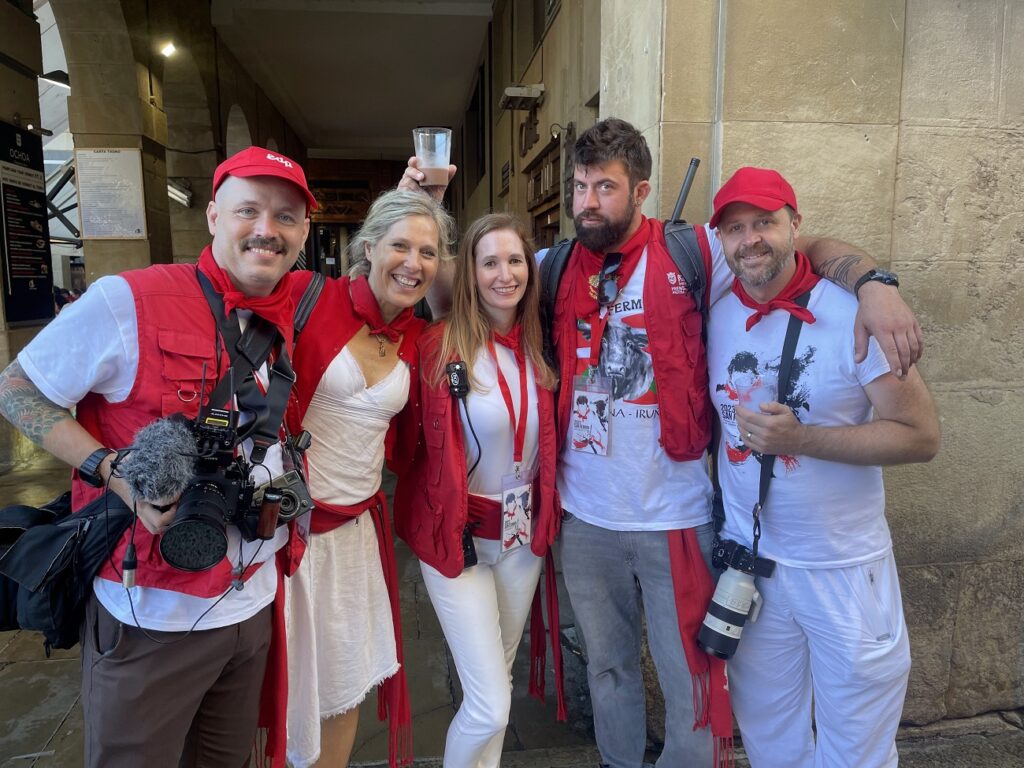
Northern Spain Travel: Adding Sophistication to your Adventure Article written by Stephanie Mutsaerts “It’s a tradition that dates back to the 14th century, but what is it really like to experience running with the bulls in Spain? David Culver heads to Pamplona to explore the lure of running with bulls, as well as the controversy around it.” The Whole Story, an Original CNN documentary Northern Spain Travel oversees ground production Northern Spain Travel is proud to have contributed to the CNN documentary on the running of the bulls, which is both informative and entertaining. It is a classic example of journalists maintaining objectivity while allowing viewers to form their own opinions. Beyond the Bulls: Extending Your Adventures in Northern Spain Explore the lure of the running of the bulls with Northern Spain Travel. The main focus of this documentary The documentary by David Culver focuses on presenting an objective view of the culture and traditions of the running of the bulls in the context of the San Fermn Festival. The result is a stunning documentary that delves into the many facets and hot button issues surrounding bull running and bullfighting, allowing viewers to make their own decisions. Culver’s documentary begins by following the lives of North American runners who return year after year to take part not only in the annual running of the bulls, but also in the weeks and days preceding San Fermn. Surprisingly, only 16 people have died while watching the bulls run since records began in 1910. Culver joins a group of runners who are receiving technique and tactics advice from seasoned competitors. As the race day approaches, Culver decides to don the traditional white pants and shirt, as well as the red scarf worn by runners, in order to experience and comprehend the thrill that so many runners seek. The documentary also addresses the contentious issue of bullfighting, which is condemned by animal rights organizations but considered an integral part of heritage and culture in many regions of Spain. Bill Hillmann from North America: An Important Perspective The CNN documentary, in our opinion, provides the best representation of the Pamplona bull runs by providing a comprehensive account of the runs provided by North American runners, one of whom is Dr. Bill Hillmann, a novelist and professor of creative writing at East-West University in Chicago. Bill Hillmann fell in love with the encierro (bull running) and now runs in several other Spanish towns, in addition to San Fermin in Pamplona, and has participated in well over 100 runs. We highly recommend Bill’s books “Mozos” or his most recent novel “Los Pueblos” for advice or inspiration to be a part of a San Fermin adventure. Bill Hillmann does an excellent job of sharing his passions with the rest of the world. Bill Hillmann is giving our Northern Spain Travel guests a private tour of the running of the bulls. A Personal Highlight of the Dangers of Running with the Bulls The Risks of running with the bulls One of the documentary’s personal highlights was seeing Tasio Blazquez, the 22-year-old son of Northern Spain Travel’s founder Steph Mutsaerts in action. Tasio tripped and fell in front of the entire herd on July 8th, the day the bulls from the Cebada Gago ranch ran the course, right where the CNN cameras were filming. Tasio had no idea where the cameras were, and the CNN crew had no idea who Tasio was. He was clearly performing for the cameras, making it a hilarious and awesome moment for his fifteen minutes of fame. Northern Spain Travel founder Steph Mutsaerts recounted the event as follows: “Here’s how the story goes: I wake up to a phone call from Ander Echanove, a Basque/North American runner and novelist, informing me that Tasio had been trampled by the herd but was fine. As I learn more, I realize that the fall occurred precisely where the cameras were installed. I tell CNN producer Natalie, ‘You must have seen my son get trampled today because it was exactly here’ (I point to the location). ‘That was your son?’ Natalie asks, puzzled. We witnessed the entire incident, in which the entire herd jumped over him and he miraculously escaped unharmed. We were going to interview him, but he bolted into the crowd. ‘And this is how Tasio was interviewed and filmed as he described a local runner’s experience running with the bulls.” Northern Spain Travel Gives Thanks: CNN Production Behind the Scenes First and foremost, we’d like to thank Bill Hillmann for recommending us to CNN as the best fixer in the region, with the know-how and contacts required to make this documentary a success. Second, it was a true pleasure to work with the lovely people behind this CNN production, the ‘A’ team, which included producer Natalie Angley, reporter David Culver, and cameramen Jordan Guzzardo, Martin Bourke, and Joe Teahan. David Culver is an incredible journalist, an incredible interviewer, and a kind and sensitive soul. He truly entered our community with an open heart, as evidenced by the film. The Trailer for the CNN San Fermin documentary Northern Spain Travel invites you to experience the allure of running with bulls Sign up for one of our tours to experience San Fermin from the inside. We offer packages that combine some of Spain’s best festivals, museums, gastronomy, and wine experiences. In a San Fermin experience, we highlight the true essence of Spain’s greatest festival of all. San Fermin is a once-in-a-lifetime ‘must’, a true bucket list adventure. Highlights of a sample package San Fermin from the inside. Watch the running of the bulls from the right balcony. Join us to private venues for insider cultural experiences. Day trip to to the wine regions from the historic and modern wineries. Boutique accommodation throughout your journey. Photos by Stephanie Mutsaerts