
What to See in Lesaka
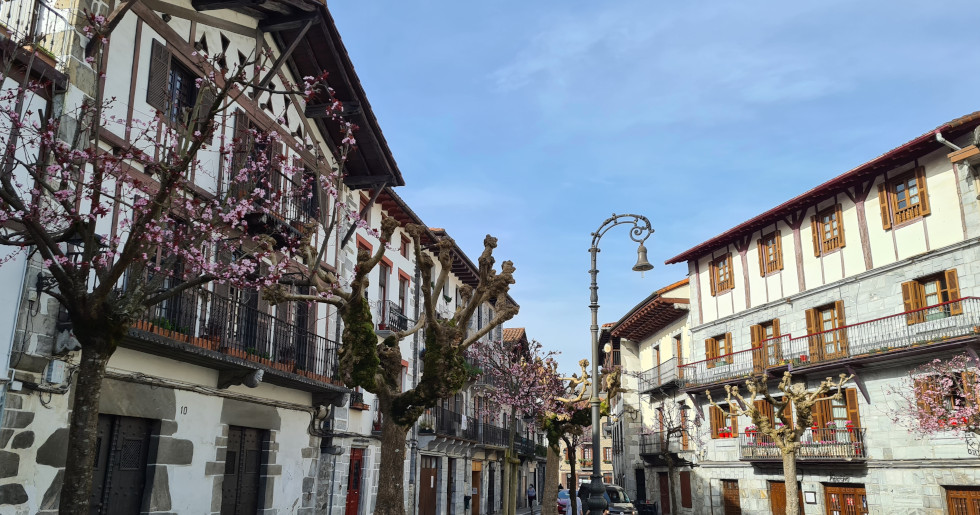
What to See in Lesaka Written by Stephanie Mutsaerts Photos by Jesus Caso and Stephanie Mutsaerts Charming Lesaka Lesaka (in Basque, and Lesaca in Spanish) is just 75 kms from Pamplona. This post about what to see in Lesaka reveals the many surprises this Basque – Navarre town can offer visitors. Lesaka is one of the most picturesque towns in the Cinco Villas Province, located in northwestern mountains of Navarre, with a municipality of 2,742 inhabitants. It is not far from the Atlantic Ocean and is close to the French border and the famous coastal Basque city of San Sebastián. It is a profoundly Basque – Navarre community where Basque traditions and culture have deep roots. The primary language spoken here is Basque rather than Spanish. This city became famous for its ironworks, being the first heavy industry in the region. As you admire the city’s striking buildings you will appreciate that Lesaka enjoyed economic growth as it moved from a predominantly rural and cattle town to one of the most important industrial centers in the area. Despite the industrial growth that produced the booming economy, the city has retained all the charm of yesteryear, visible in constructions such as the ironworks, flour mills, cider making workshops, or carpentry workshops – all dating from the 18th century. The center of Lesaka reflects the history of its past as seen in its traditional farmhouses with their ornate windows and doors adorning the facades that look out onto the town’s cobbled streets. But, without a doubt, the image of the town which best defines its historic links is of the stone bridge over the river along with the Kaxerna, or Zabaleta, tower standing next to it. A beautiful example of a 15th century palace constructed of stone stands at the Cape of Armory. Within the city you can see other ancient towers, such as Minyurinea, which, dating from the 14th century, which is considered the oldest building in the town. Lesaka Festivals Lesaka has many authentic festivities, three of which are: San Fermin in July, which is called ‘the other San Fermin’; Carnaval, which is in February; and their Christmas celebration Olentzero, in December. The Other San Fermin A very special time to visit Lesaka is in July since, as in Pamplona, San Fermín is also celebrated here. One of the most colorful features of the festival is the traditional dancing, which is performed on the stone embankments of the Onin River. Christmas in Lesaka Lesaka’s Olentzero is held annually on Christmas Eve. According to Basque traditions, Olentzero comes to town late at night on the 24th of December to drop off presents for children. He is now depicted as a lovable character, a bit overweight, having a huge appetite and thirst. He is a Basque peasant wearing a Basque beret, a farmer’s attire with traditional shoes and smoking a pipe. The celebration is divided into two parts. In the morning there is the contest where various groups present their floats depicting Olentzero undertaking various activities and in various poses, and in the afternoon there is a parade with the winner of the contest. Find out more about joining us for a special Basque Christmas Carnaval in Lesaka During the Lesaca carnivals, the town streets become, all in good fun, a “nightmarish” place for young boys and girls who are chased by the “zaku zaharrak”. These fierce-looking characters wear a body sack and on each leg a sack stuffed with dry grass, leaving only their arms uncovered. They hide their faces with a white cloth and cover their heads with straw hats. To complete their outfits they use the “pixontzia”, an inflated pig bladder tied to a stick, which they use to attack the little ones. Finally at the end of the day, justice is served when the zaku zaharrak receive punishment for their misdeeds. The town band plays lively music as it accompanies the crowd into the main square where, while the zaku zaaharrak hold on to iron rings set in the walls. The ‘original’ costumes are torn off them and the children take their revenge by destroying and burning the garments and the “pixontziak”. You truly have to be here to understand the fun of this event! Several well-known celebrities, including Orson Wells and Ernest Hemingway, fell in love with the charming province of Cinco Villas in Navarra in Northern Spain. This Basque Navarran farmhouse is like a magnificent country palace with a history of its own. Built in the 16th Century at the same time as the village church, San Martin de Tours, by a builder who, even though he had not been approved to build the church, designed and constructed this grand farmhouse to prove himself as a master builder. Every side of this building offers a different style of architecture. To top off the history of this building, it is worth noting that Orson Wells filmed Falstaff (The Chimes at Midnight) on the top floor. Lesaka Church San Martín de Tours, located on the Lesaka hill top, is considered to be one of the most architecturally significant churches in Navarra. The Lesake church was built in the 16th Century and subsequently modified in the 17th and 18th Centuries, and it consists of both Gothic and Baroque styles. With its cathedral-like dimensions it presents a magnificent example of religious architecture. The church houses the Virgin of Carmona and a Romanesque organ, that dates back to medieval times. The church has been declared a Site of Cultural Interest. How to Experience it All There are endless sights in northern Spain, and these are but a few. The region is welcoming to visitors who can travel around the region by bike, on foot or by car. Along with the many amazing cultural and historical places to see and experience, northern Spain also offers an abundance of Michelin-starred restaurants, rustic restaurants serving delicious, traditional cuisine, wineries, luxury hotels, all nestled in quaint villages and gorgeous landscapes. Northern Spain Travel has a collection of outside-the-box travel journeys throughout the region.
The 5 Best Things to Do in Getaria
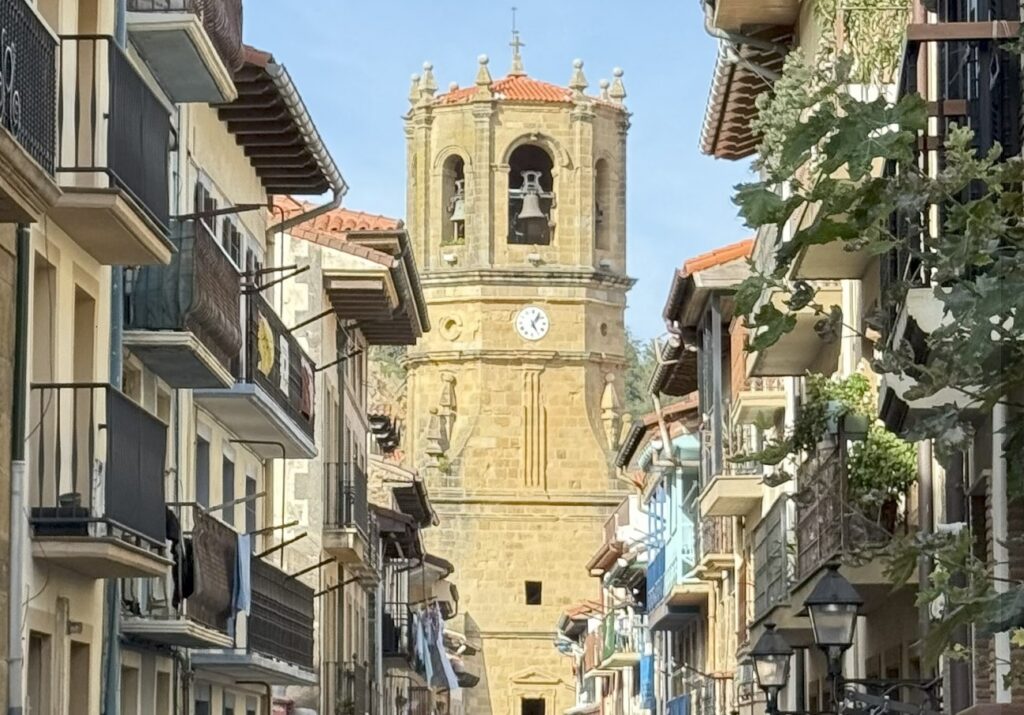
Here are the five best things to do in Getaria when traveling with Northern Spain Travel: With Northern Spain Travel, every moment in Getaria becomes a curated journey into the heart of Basque beauty and tradition. 1. Begin with a Txakoli Winery Visit Start your day among the lush green hills that surround Getaria. The region’s boutique Txakoli wineries are perched on steep slopes that seem to tumble into the Cantabrian Sea. Here, you’ll enjoy a private vineyard tour, learn about the crisp Basque white wine, and savor a tasting paired with artisan cheeses and fresh seafood—all while soaking in panoramic ocean views. A refreshing and refined beginning to your day. 2. Walk the Historic Town After your tasting, stroll through the charming cobbled streets of Getaria’s old town, where fishermen’s houses, Gothic churches, and inviting plazas tell the story of a community shaped by the sea. The port bustles with life, and boutiques showcase local crafts and flavors. This leisurely walk connects you directly with the soul of the village. 3. Guardians of the Sea: Fisherman’s Experience with Manuela The highlight of any visit is our exclusive experience with Manuela and Claudio, the last family in Getaria still practicing traditional, low-intensity fishing. At the harbor, they’ll share their centuries-old techniques and handmade tools before inviting you into the lonja (fish market) for a pintxo-style tasting. Sample tender octopus, unforgettable anchovies, and ventresca tuna, paired with txakoli and local cheeses. More than a meal, it’s a living lesson in Basque resilience, heritage, and love of the sea. 4. Discover the Cristóbal Balenciaga Museum In the afternoon, step into the world of Cristóbal Balenciaga, the legendary couturier born in Getaria. The Balenciaga Museum houses a collection of his timeless haute couture, displayed in a strikingly modern architectural space. Fashion lovers and cultural travelers alike will find inspiration in the elegance and innovation of one of the greatest designers of the 20th century. 5. Sunset Walk on the Ratón de Getaria Conclude your day with a sunset hike on the Ratón de Getaria, the mouse-shaped islet that rises behind the village. The gentle climb offers sweeping views over the vineyards, rooftops, and the vast Atlantic Ocean. At the summit, watch the sun sink into the horizon, painting the sky in shades of gold and crimson—a perfect, serene finale to a day of Basque luxury. Experience Getaria with Northern Spain Travel From Txakoli tastings with sea views to exclusive encounters with local fishermen, from Balenciaga’s haute couture to sunset panoramas, Getaria offers an unforgettable blend of elegance and authenticity. Who Was Elkano? Getaria is not only famous for its wine, fashion, and fishing traditions—it also gave the world one of history’s greatest explorers: Juan Sebastián Elkano. Born here in 1487, Elkano became the first person to successfully circumnavigate the globe. After Ferdinand Magellan was killed in the Philippines during the famed expedition of 1519–1522, Elkano assumed command of the ship Victoria and led the surviving crew back to Spain, completing the first-ever journey around the world. This monumental feat forever placed Getaria on the global map as the birthplace of one of humanity’s boldest navigators. Today, Elkano’s legacy is honored throughout the town, from statues and monuments to the prestigious Elkano restaurant, one of the most celebrated grills in the world. Dining here is an homage not just to Basque culinary excellence, but also to the adventurous spirit of Getaria’s most famous son.