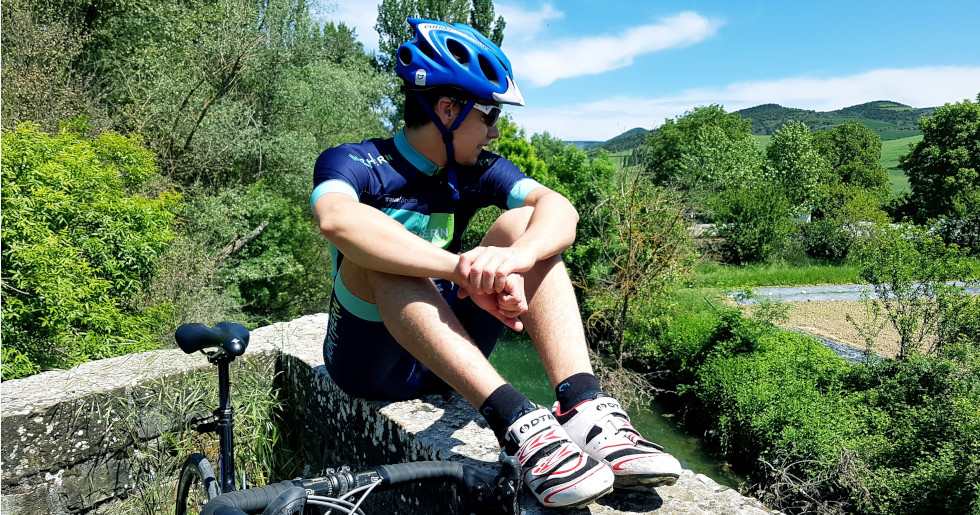
Our Hemingway Road Trip Tour is a purely experiential travel adventure. It is a road trip through Northern Spain full of diverse and local experiences connected to the life and writing of Ernest Hemingway.
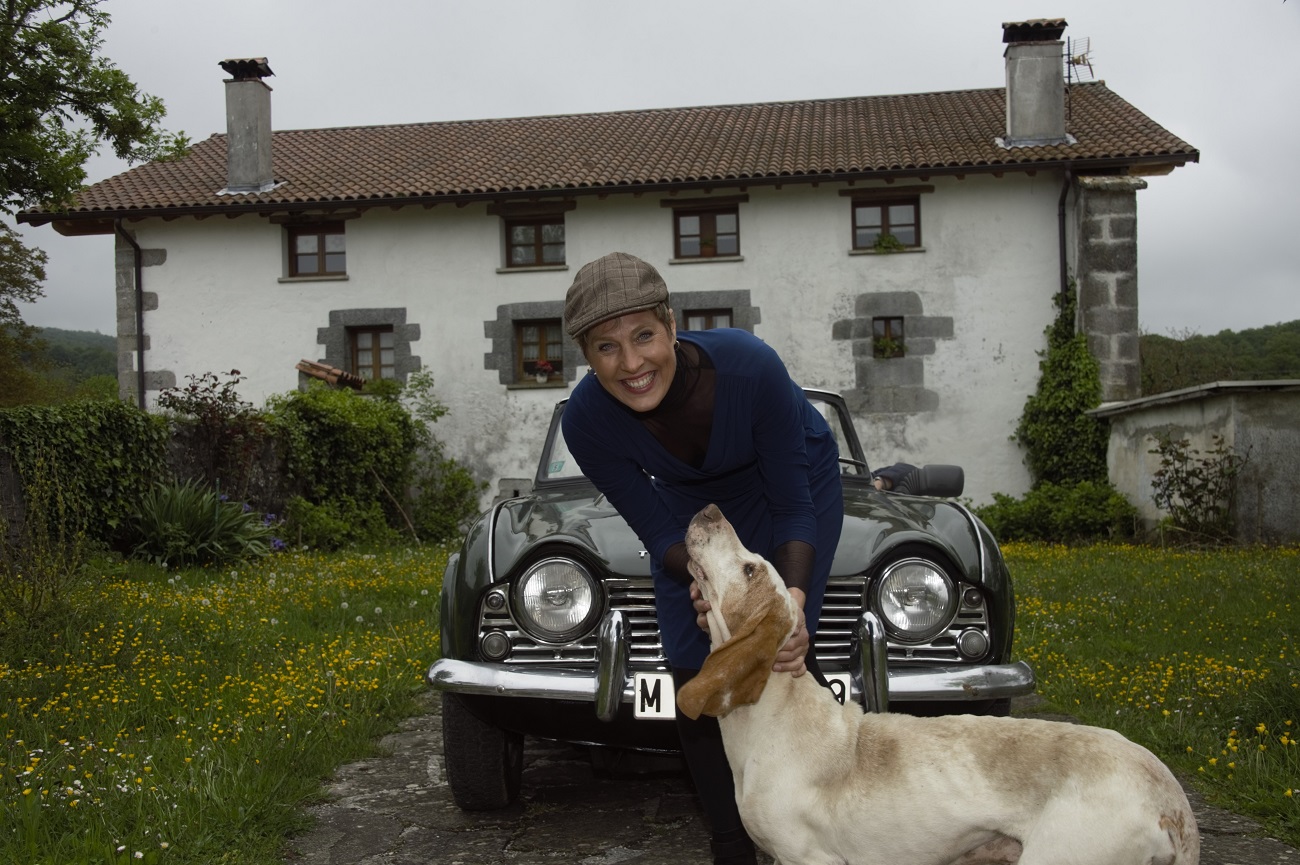
Heming-WAY: Luxury Road Trip Tours Through Northern Spain in the Footsteps of Ernest Hemingway
If you’re dreaming of luxury travel in Northern Spain, there’s no better inspiration than Ernest Hemingway. The Nobel Prize-winning author fell deeply in love with the region’s raw beauty, fine wines, and warm hospitality.
Our Heming-WAY Semi-Guided Tour is your invitation to follow in his footsteps on a curated luxury road trip through Spain, exploring the Basque Country, the La Rioja wine region, and Navarra—our jewel in the raw. With private local guides in select destinations, exclusive wine tastings, and boutique stays, this is a luxury tour of Spain with soul.
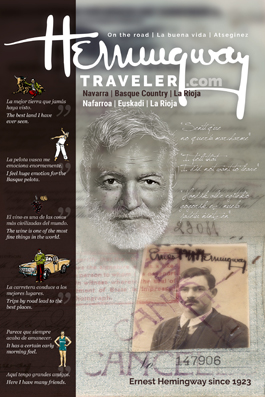
Ready to travel the Heming-WAY?
Let us design your luxury tour of Northern Spain, where every glass of Rioja, every sea breeze, and every cobblestone street tells a story worthy of Hemingway himself.
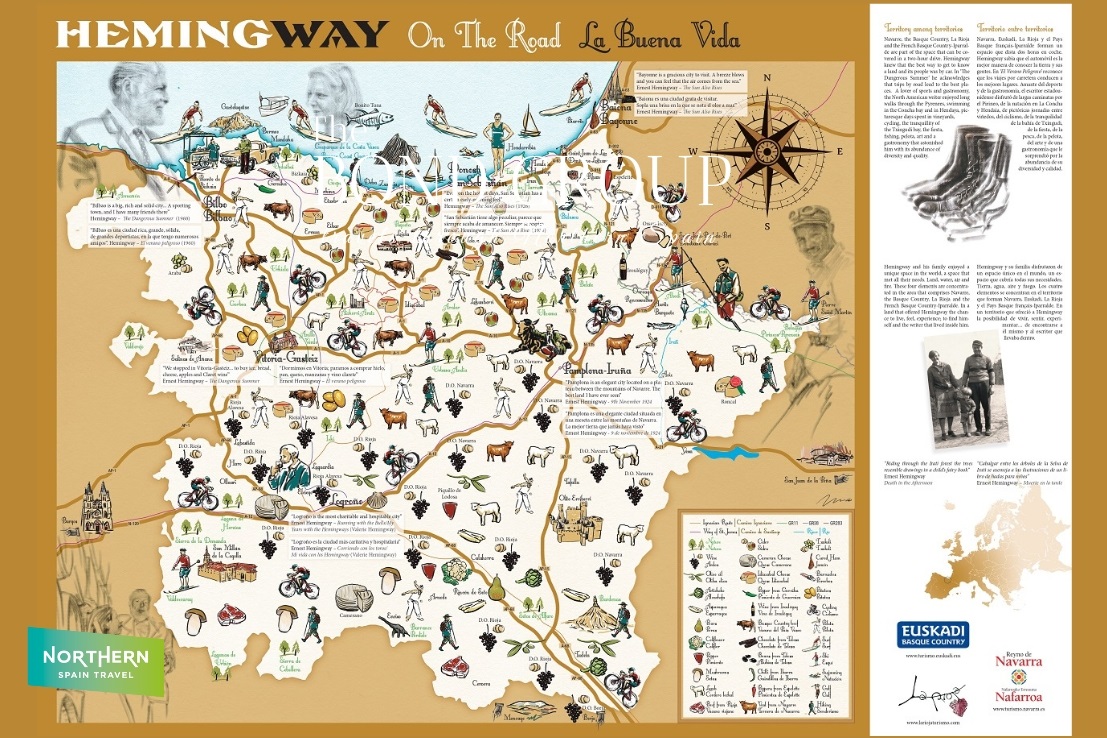
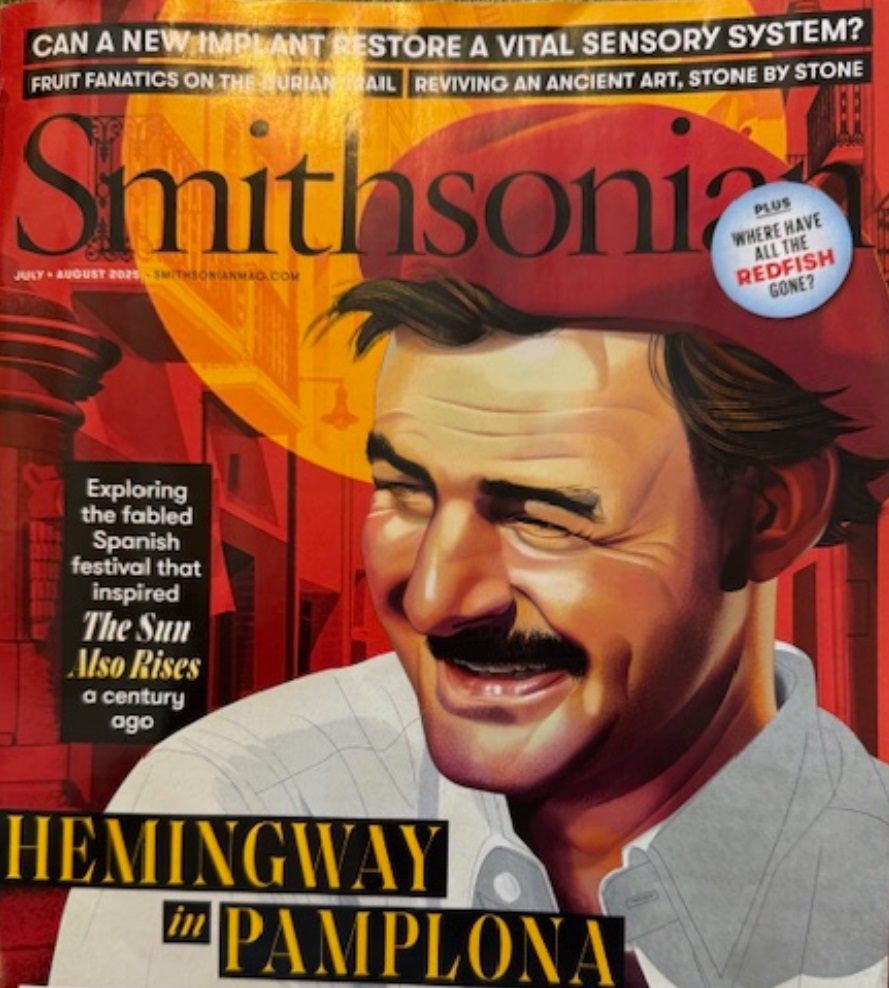
Ask us for a paper copy of The Hemingway Traveler Magazine
- Hemingway Traveler Magazine
The magazine ‘Hemingway Traveler’ describes the journeys taken by Hemingway in each region, featuring the places known as ‘Hemingway’. It explains the development of the American writer and Nobel Prize winner’s ties to his beloved and admired Navarra, during his stays in Pamplona for San Fermin, Aoiz, Burguete; Orreaga / Roncesvalles, Selva de Irati; Lekunberri, Sunbilla and Tudela. In Gipuzkoa, he visited San Sebastian, Tolosa, Hondarribia, Irun, Txingudi Bay, Zarautz, Zumaia, Loiola, Deba (with its geopark on the Basque Coast), Markina, Etxebarri, Eibar (Armera Industry Museum). In Bizkaia he traveled to Bilbao, Ermua, Gernika, Urdaibai, Mundaka, Bermeo and Orduña. In Álava, Vitoria and Ollauri. In Iparralde he walked through the streets of Hendaia, and in La Rioja his stays are recorded in Logroño, Haro and Calahorra. The magazine presents photographs of all the locations that the writer visited from 1923 to 1960. Along with the images you can read Ernest Hemingway’s phrases highlighting the main characteristics and annual events of those municipalities. Recipes from some of the oldest restaurants in each region is also included – Gipuzkoa, Alameda de Hondarribia (1880); in Navarre, the Benta Miguel, from Ventas de Arraitz (1800); in Bizkaia, Los Fueros de Bilbao (1878); in Álava, El Portalón de Vitoria, which has been a post house and inn since the 15th century; and in La Rioja, Casa Terete, in Haro (1877).
That the American writer and Nobel Laureate Ernest Hemingway was in love with Gipuzkoa and its bordering territories is no secret. uniqueness of Ernest Hemingway as the thread of its storyline, connects the links between Euskadi, Iparralde, Navarra and La Rioja through a variety of proposed trips and getaways. The places, people, parties, and customs that the Nobel Prize winner knew in these three neighboring autonomous communities left a strong mark on both his life and his writing. These experiences went beyond those of San Fermin which Ernest Hemingway made famous through the world with his first great novel, published in 1926 ‘The Sun Also Rises’ (titled ‘Fiesta’ in its Spanish version).
Where Are We?
Hemingway had a gift for finding places with a unique flavour and identity of their own — and our “Heming-WAY” territory is no exception.
It spans three distinct cultural communities with more than 3,000 years of history to uncover, nestled in the angle formed by the Bay of Biscay and the Franco-Spanish border. In less than 300 kilometers, you’ll travel through:
-
Two UNESCO biosphere reserves
-
One of Europe’s best-preserved ancient forests
-
A European Cultural Capital and a European Green Capital
-
Some of the world’s most beloved festivals
-
A dazzling variety of landscapes — from Atlantic beaches to vineyard hillsides — plus a culinary scene renowned across the globe.
All this lies within a short trip from Europe’s great cities: 6 hours by train from Paris, 4 hours from Barcelona, 3.5 hours from Madrid.
Day-by-Day Highlights of the Heming-WAY Tour
From the Gipuzkoa Basque Coast to the rolling vineyards of La Rioja and the untamed Pyrenean valleys of Navarra, Hemingway discovered a Spain far from the tourist crowds—a place of deep tradition, authentic flavors, and landscapes that stir the imagination.
On this semi-guided luxury tour, you’ll enjoy the freedom of your own pace combined with exclusive experiences only possible through our insider network.
Day 1 – Pamplona: Pintxos, History & Private Hemingway Haunts
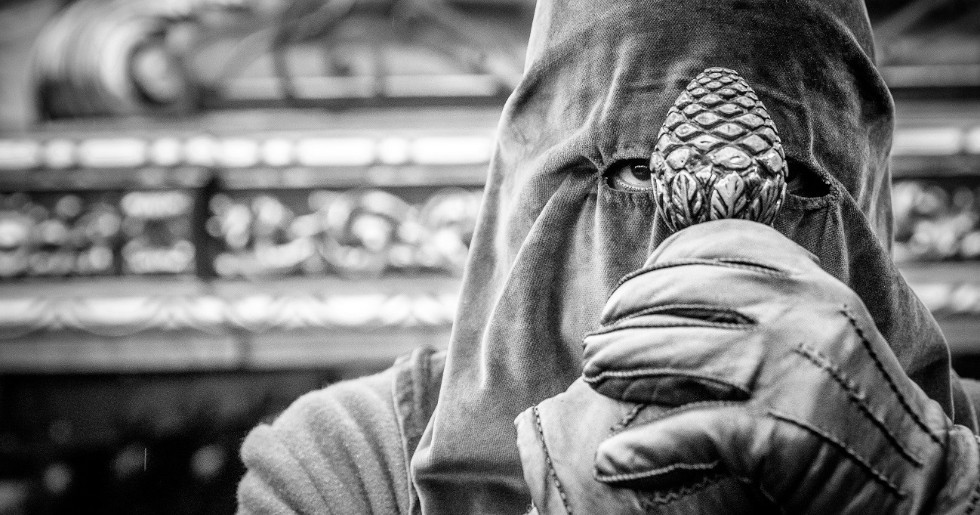
Begin in Pamplona with a private guided walking tour of the charming Old Town, tracing the legendary bull run route, visiting the Cathedral of Santa María la Real, and pausing at Hemingway’s favorite spots. Step inside the historic Café Iruña and a members-only 1920s gastronomy club for a welcome drink, then indulge in gourmet pintxos paired with Basque cider or fine Navarra wine.
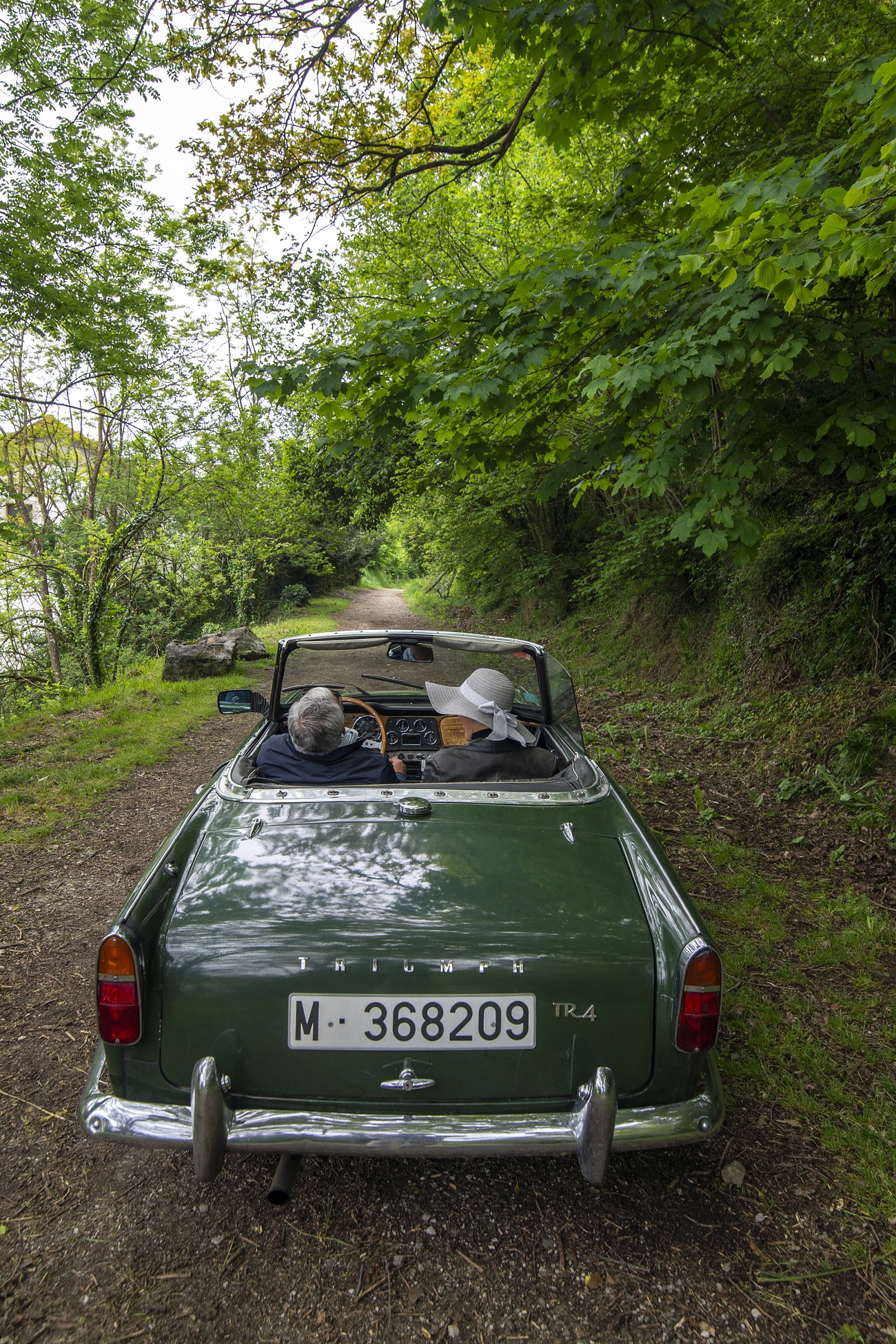
Northern Spain Travel invites you not just to visit, but to experience the careful craft behind each cut of meat with rich marbling and natural flavor.
Semi-guided tours Spain
Contact us to book your seat on this unforgettable road trip experience.
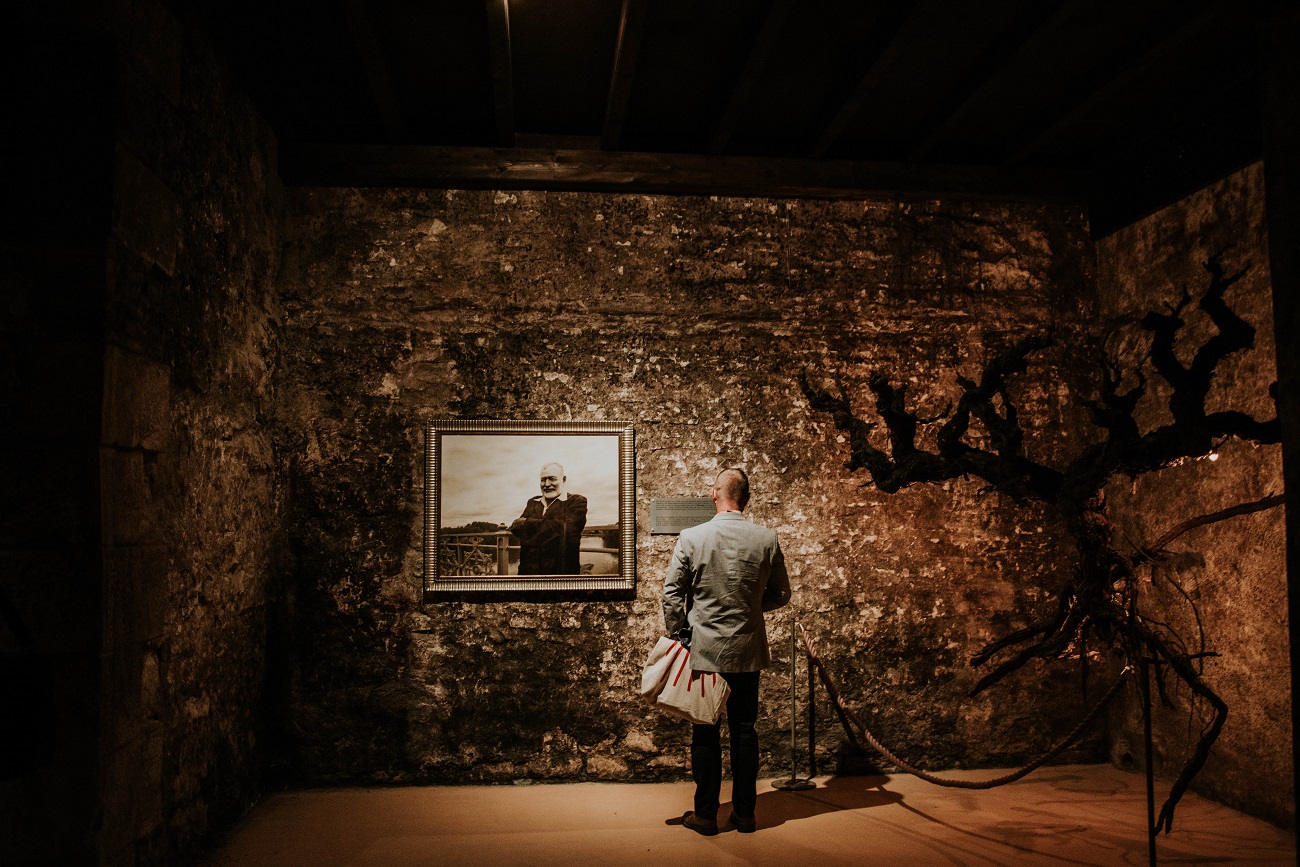
Day 2 – La Rioja: Private Wine Tastings & Gourmet Dining
Travel to La Rioja wine country, where Hemingway famously spent days exploring the vineyards. Visit handpicked wineries—some with centuries-old underground cellars—for intimate tastings of Gran Reservas and elegant blends. Savor a Michelin-worthy lunch at top hotels, surrounded by vineyard views.
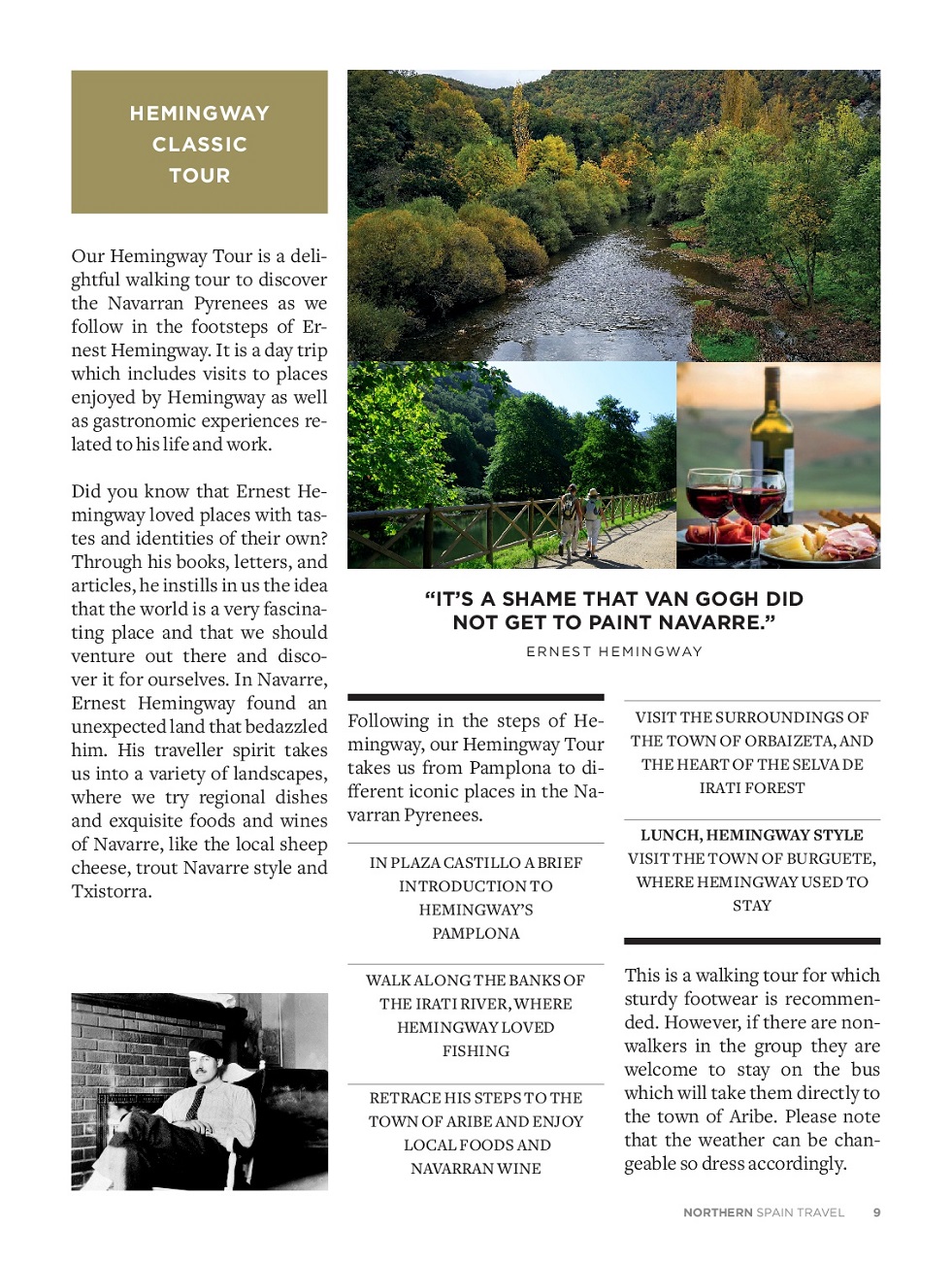
Day 3 – Navarra & the Pyrenees: Rustic Luxury in Wild Landscapes
Experience Navarra’s “jewel in the raw” as you follow Hemingway’s fishing trails along the Irati River. Enjoy artisanal sheep cheese and txistorra sausage in the village of Aribe, then dine on freshly caught trout at Hemingway’s favorite hotel in Burguete—still run by the same family who served him nearly a century ago.
Day 4 – Basque Country & San Sebastian: Culture, Coast & Culinary Bliss
Immerse yourself in Basque traditions before arriving in San Sebastian, one of Europe’s top luxury coastal destinations. Enjoy a private pintxos and wine tour, discovering why this city is a global gastronomic capital. Relax on La Concha Beach or stroll the elegant Belle Époque promenade.
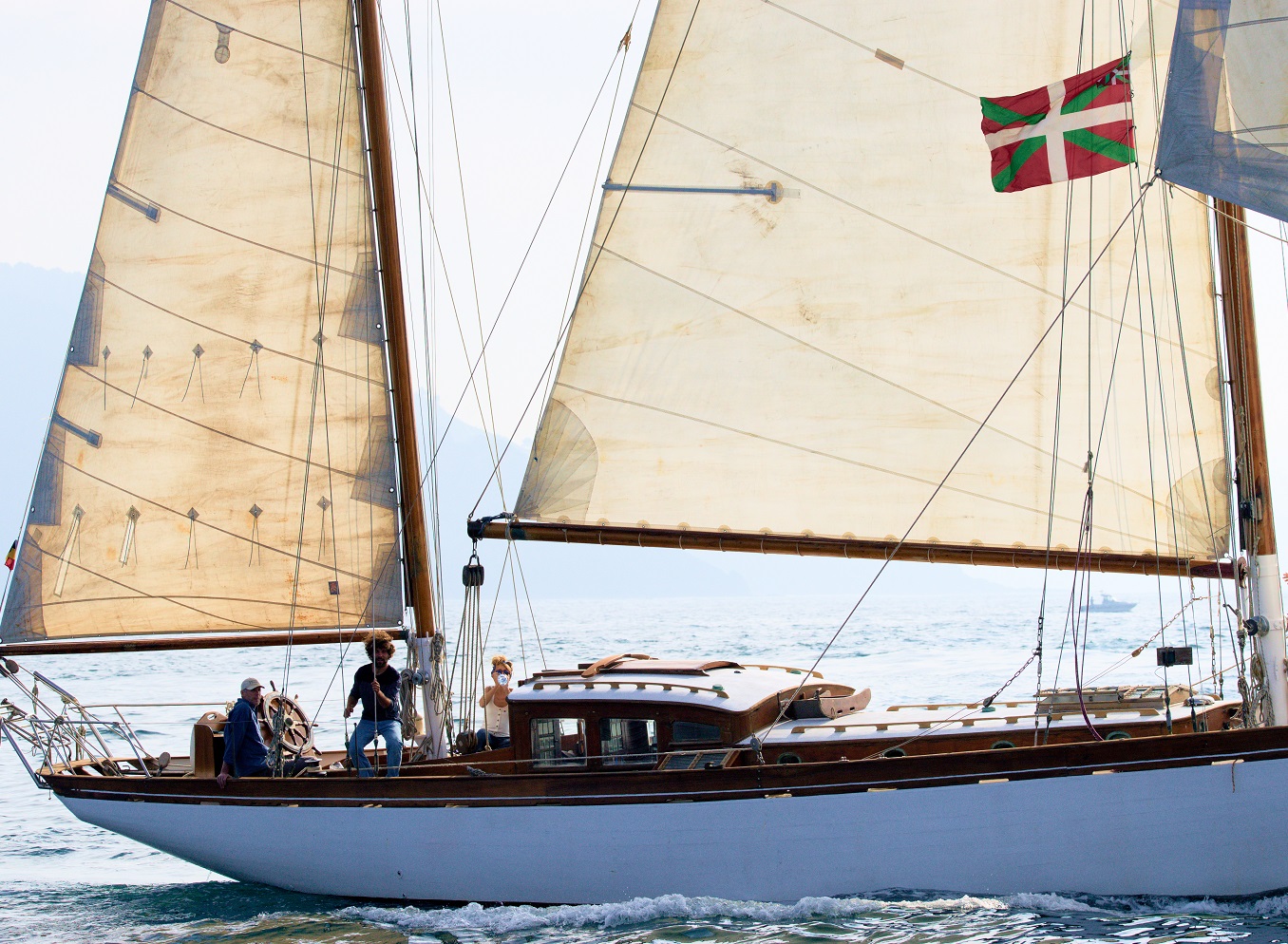
Day 5 – Sailing the Basque Coast: A Hemingway-Style Escape
Board a privately chartered antique sailboat from the fishing port of Pasajes. Cruise along the emerald Atlantic coastline toward San Sebastian, champagne glass in hand, just as Hemingway would have done. End the day with a curated bar hop to taste the city’s finest pintxos and wines.
Why Choose a Semi-Guided Luxury Tour in Spain?
Our Heming-WAY experience blends independent travel with exclusive guided moments, giving you the best of both worlds. You enjoy the freedom of a self-paced road trip, while we arrange the luxury stays, insider access, and gourmet experiences that make the journey unforgettable.