Imagine a place where ancient stone chapels sit in the shadow of a futuristic glass cathedral dedicated not to religion, but to water. This valley of contrasts is Escaldes-Engordany, the vibrant, water-fueled heart of the tiny country of Andorra, nestled high in the Pyrenees mountains. It’s a community whose entire story is one of fascinating, flowing opposites.
What gives this place its unique pulse? For centuries, natural hot springs have bubbled up from deep beneath the ground. This thermal water is so fundamental that the town’s name, ‘Escaldes,’ literally means ‘scalding.’ According to local history, this powerful natural gift is central to understanding the parish, defining its identity from its origins to its modern fame.
Beyond the spas, that single element shapes everything, from ancient Romanesque art and medieval bridges to a modern wellness culture and rugged mountain lifestyle. It’s a journey into a place where history and modernity flow together as one.
Why Does This Town Have Two Names? The Story of Water and Earth
The hyphen in Escaldes-Engordany isn’t just punctuation; it’s a history lesson. The name tells the story of two distinct villages that became one. Escaldes was the community built around the “scalding” thermal springs bubbling up from the earth, a natural spa town from its very beginning. Across the river, Engordany was a sunnier, agricultural hub, its name linked to fertile land perfect for farming and raising livestock. One village was a center for water and wellness, the other for traditional mountain life.
This historical separation lasted for centuries until the two communities officially merged in 1978. In doing so, they formed Andorra’s newest “parish,” or parròquia. Think of a parish as a county or a local district—a core piece of Andorran identity with its own government. The creation of the Escaldes-Engordany parish brought these two different worlds together under a single name, legally uniting the hot springs with the green pastures.
This blend of ancient wellness and grounded tradition is what makes the parish so unique today. It’s a place where history is visible everywhere, yet it isn’t afraid to look to the future. And nowhere is that forward-looking spirit more obvious than in the giant glass spire that now defines its skyline.
Is Caldea’s Glass Spire the Heart of Modern Andorra?
That futuristic pyramid of glass is Caldea, and it’s unlike anything else in the Pyrenees. More than just a spa, it is Europe’s largest mountain thermal complex. It takes the town’s ancient hot springs and reimagines them on a spectacular scale, creating an experience of thermalism—the modern industry of wellness—inside a work of art. Its shimmering spire, visible from all over the valley, has become an icon not just for the parish, but for the entire country.
The arrival of Caldea in 1994 was a turning point. It transformed the parish’s main natural resource into its biggest tourist attraction, drawing visitors from across the globe. This single complex reshaped the local economy and cemented Escaldes-Engordany’s reputation as a premier wellness destination, proving that the town’s historic connection to water could fuel a modern future.
Even the building’s design tells a story. Its sharp, crystalline tower is a deliberate nod to the minerals in the thermal water and the ice on the surrounding mountain peaks. The architecture acts as a powerful symbol of the parish’s identity, announcing that this is a place where nature and bold, modern ambition meet.
But while Caldea may be the glamorous, modern heart of Escaldes-Engordany, the parish’s ancient soul is just as captivating. In fact, steps away from this monument to wellness, you can find pieces of history that are just as powerful—and completely free to explore.
Where Can You Touch History for Free in Escaldes-Engordany?
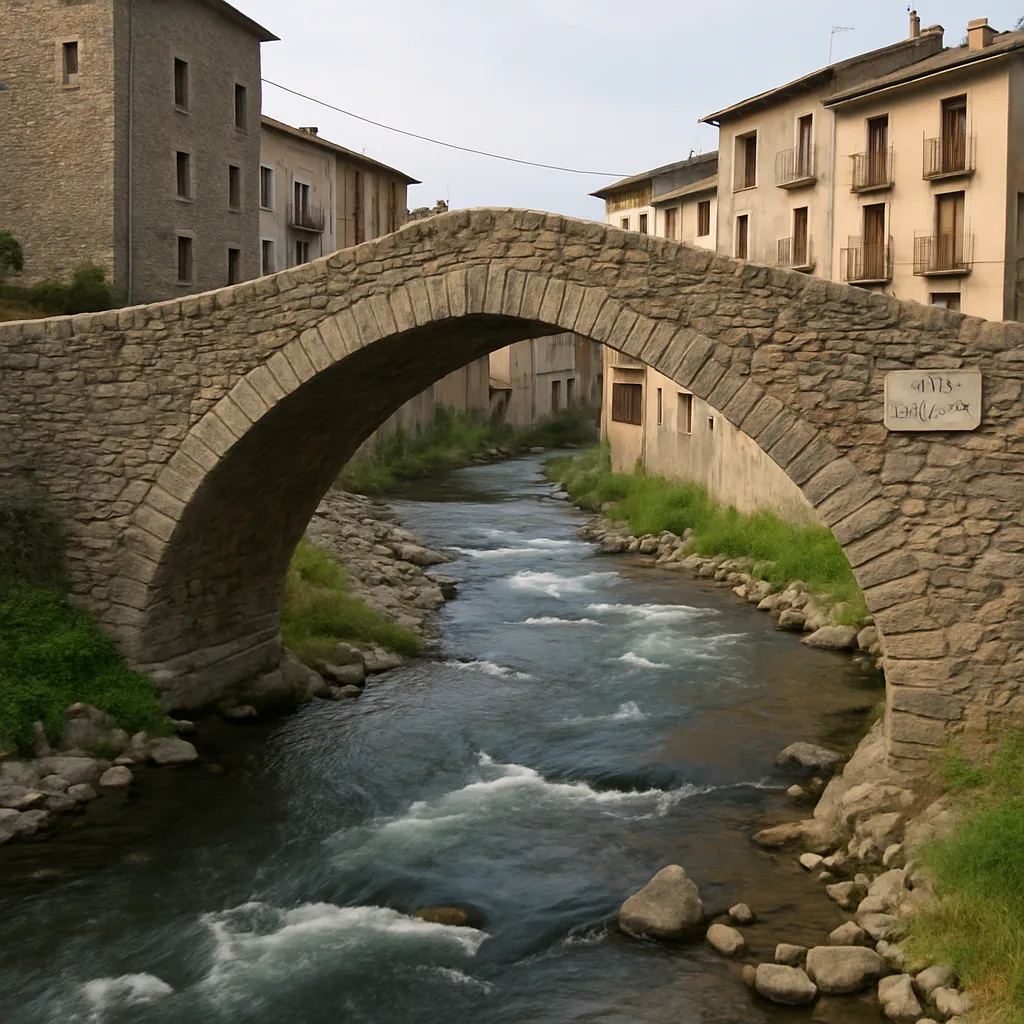
One of the most striking free cultural attractions is the Pont de la Tosca, a medieval stone bridge arching gracefully over the Valira d’Orient river. Believed to date back to the Romanesque period, this simple, sturdy bridge has connected the two sides of the valley for centuries. Standing on its ancient stones, you get a powerful sense of the parish’s deep roots and can easily imagine shepherds and traders crossing this same path hundreds of years ago.
Crossing this bridge feels like stepping into the historic heart of Engordany. Here, the wide, modern avenues give way to narrow cobblestone streets and traditional stone houses with slate roofs. This is the perfect place to wander without a map, discovering quiet plazas and soaking in the atmosphere of a Pyrenean village that has held onto its character—an authentic slice of Andorran life.
This old-world charm is a hallmark of Romanesque architecture in Escaldes-Engordany. Because the Pyrenees were so isolated for centuries, they acted as a cultural time capsule, preserving a simple, powerful building style long after it faded elsewhere. You’ll see it in the small, unadorned stone churches that dot the landscape—humble, spiritual buildings that are as much a part of the mountains as the trees.
Ultimately, the magic here is that history isn’t locked behind glass. It’s part of the landscape, woven into the very fabric of the streets you walk on. This deep connection to the past gives the local culture a unique flavor—something you can not only see but also taste.
What Does a Pyrenean Mountain Culture Taste Like?
That taste of history translates directly to the plate. The gastronomy in Escaldes-Engordany isn’t about delicate bites; it’s about hearty, soulful food built to fuel life in the Pyrenees. Imagine rich stews, savory cured meats, and wild mushrooms foraged from the forest floor. It’s a cuisine born from the landscape, perfected over generations to be both simple and deeply satisfying.
To experience this authentic flavor, look for a borda. These are old stone barns or mountain stables that have been lovingly converted into cozy, rustic restaurants. It’s here you’ll find the quintessential traditional Andorran food in Escaldes: Trinxat. This beloved dish is a savory pancake made from pan-fried potatoes and cabbage, often topped with bacon—the ultimate Pyrenean comfort food.
Beyond Trinxat, the menu of everyday life in Escaldes-Engordany includes must-try dishes like canelons a l’andorrana(a rich, meaty cannelloni), grilled snails known as cargols a la llauna, and unique local cured sausages like donja and bringuera. This deep connection between landscape and plate provides sustenance for the body, but the parish’s culture also nourishes the soul through its vibrant local arts and festivals.
Beyond the Spa: Where is the Living Heartbeat of Local Art and Festivals?
That same soul-nourishing spirit finds a home in the parish’s vibrant art scene. You might not expect to find a world-class art collection tucked away in the Pyrenees, but the Carmen Thyssen Museum Andorra delivers just that. Housed in a historic hotel, it showcases masterpieces from world-renowned artists, creating a stunning contrast between the building’s past and the modern art within.
Just as important, however, is the culture that grows from the valley itself. For a look at the local creative spirit, the Art Center of Escaldes-Engordany (CAEE) offers a different perspective. This space is dedicated to showcasing the work of Andorran artists, providing a platform for home-grown talent and telling stories that are deeply connected to the mountain landscape and its people.
This cultural heartbeat is most alive during the town’s festivals and events, especially the annual Festa Major. Think of it as the biggest community party of the year, when the streets fill with music, parades, and neighbors celebrating together. It’s a time when the modern energy of the parish reconnects with its deep-rooted traditions.
During these celebrations, you can see folk traditions come to life. Dancers might perform the “Ball de Santa Anna,” a historic dance unique to the parish. These traditions aren’t just relics; they are a living, breathing part of the community’s identity. It’s a reminder that in Escaldes-Engordany, culture isn’t just something you see in a museum—it’s something you experience in the streets and even in the valleys themselves.
How Can a Valley Be a Museum? Exploring the Madriu-Perafita-Claror
What if a community’s most important cultural treasure isn’t in a building at all, but is the landscape itself? That’s the story of the Madriu-Perafita-Claror Valley, a vast, quiet expanse that makes up nearly 10% of Andorra’s entire territory. UNESCO recognized it as a World Heritage site, not for pristine nature, but as a “cultural landscape”—a place where humans and mountains have shaped each other for 700 years.
Essentially, this means the valley is a living record of Andorra’s past. For centuries, before the age of spas and shops, this is how Andorrans survived. They built terraces for farming on steep slopes, forged iron from the rock, and created a network of high-altitude trails to herd their livestock. The valley tells the story of a tough, resilient mountain lifestyle written directly onto the earth.
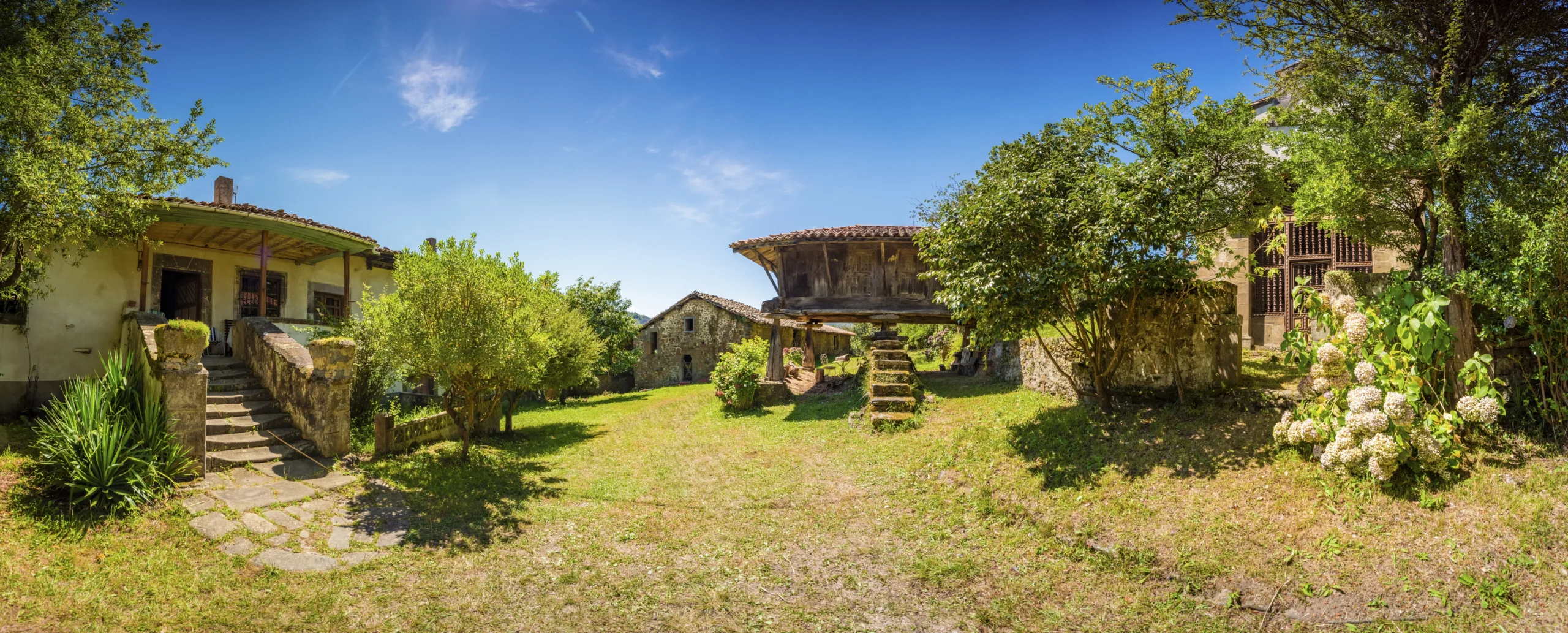
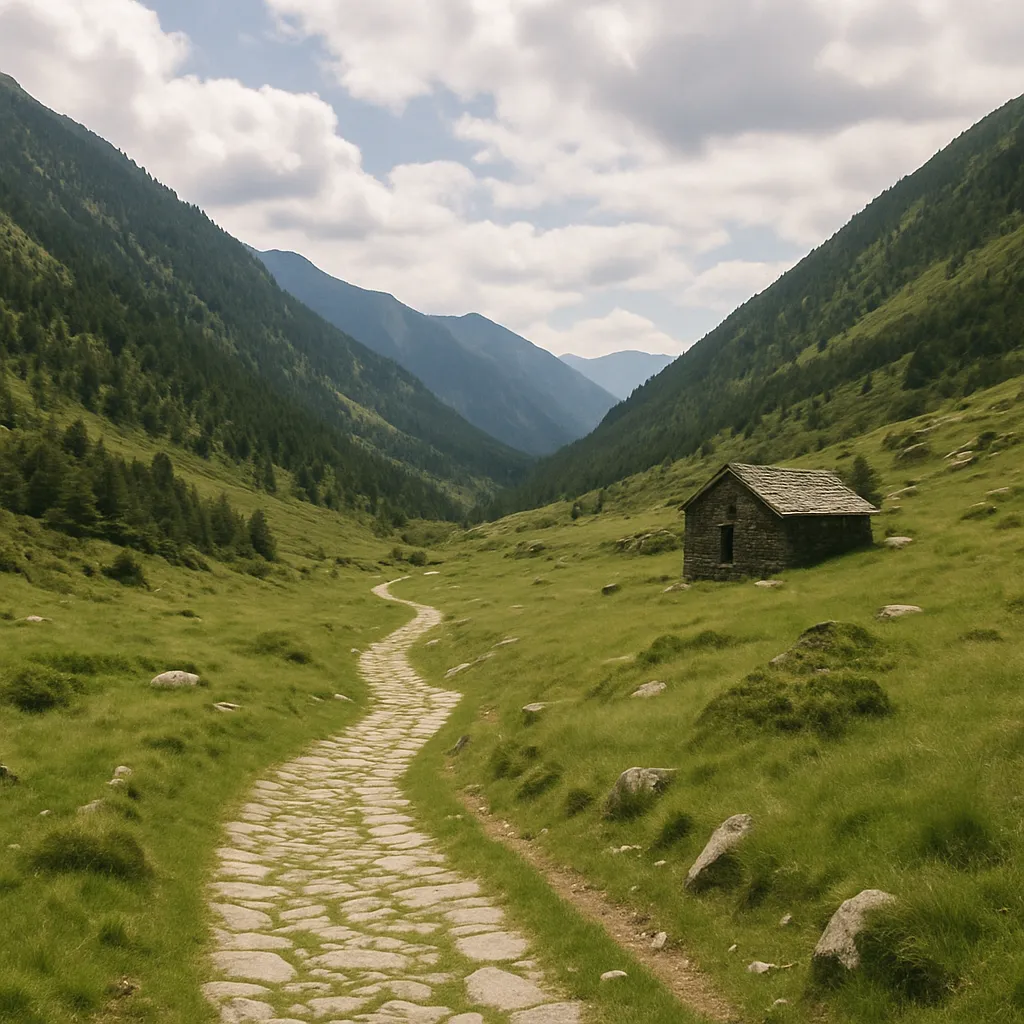
As you explore its paths, you’ll see the evidence everywhere. The most iconic artifacts are the bordes—small, dry-stone huts that once served as shelters for shepherds and their animals. These simple, sturdy structures, along with the remnants of old forges and stone walls, aren’t ruins; they are the quiet, powerful exhibits of this enormous open-air museum.
This is why a hike here feels like so much more than just a walk in the mountains. You’re literally following in the footsteps of generations, seeing how a civilization managed to thrive in this dramatic, isolated environment. It’s an unforgettable way to connect with the very soul of Andorra.
The Soul of Water and Stone
The story of Escaldes-Engordany is written in steam rising from its thermal heart and the ancient stone of its chapels. It is a tale of contrasts, where you can soak in the futuristic Caldea spa in the morning and walk across a medieval stone bridge in the afternoon; a place where modern glass meets timeworn rock.
This is the parish’s unique rhythm: a constant, beautiful dialogue between nature and innovation, heritage and wellness. Escaldes-Engordany is not defined by a single element, but by the powerful energy created where its history and its future flow together as one.