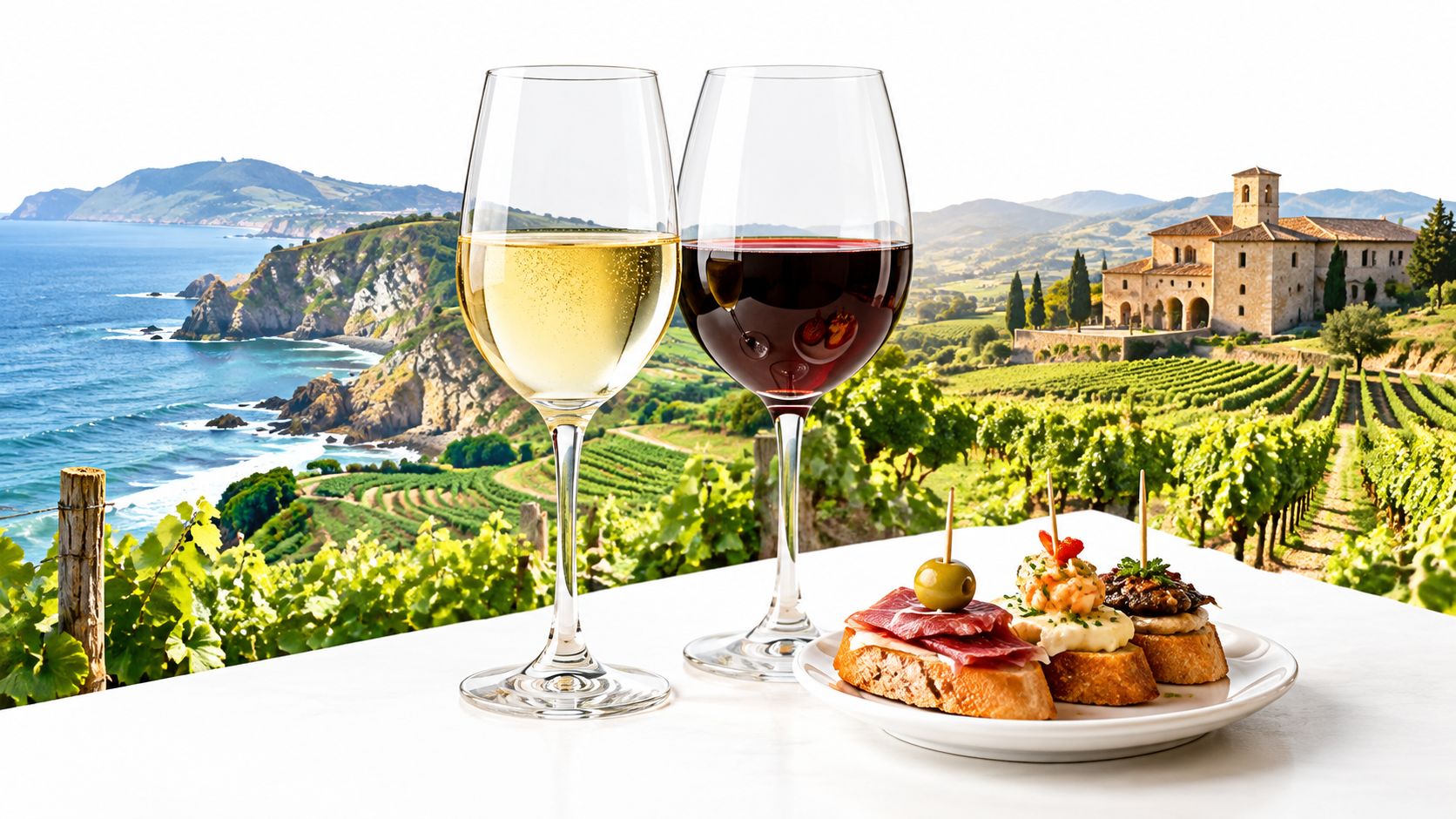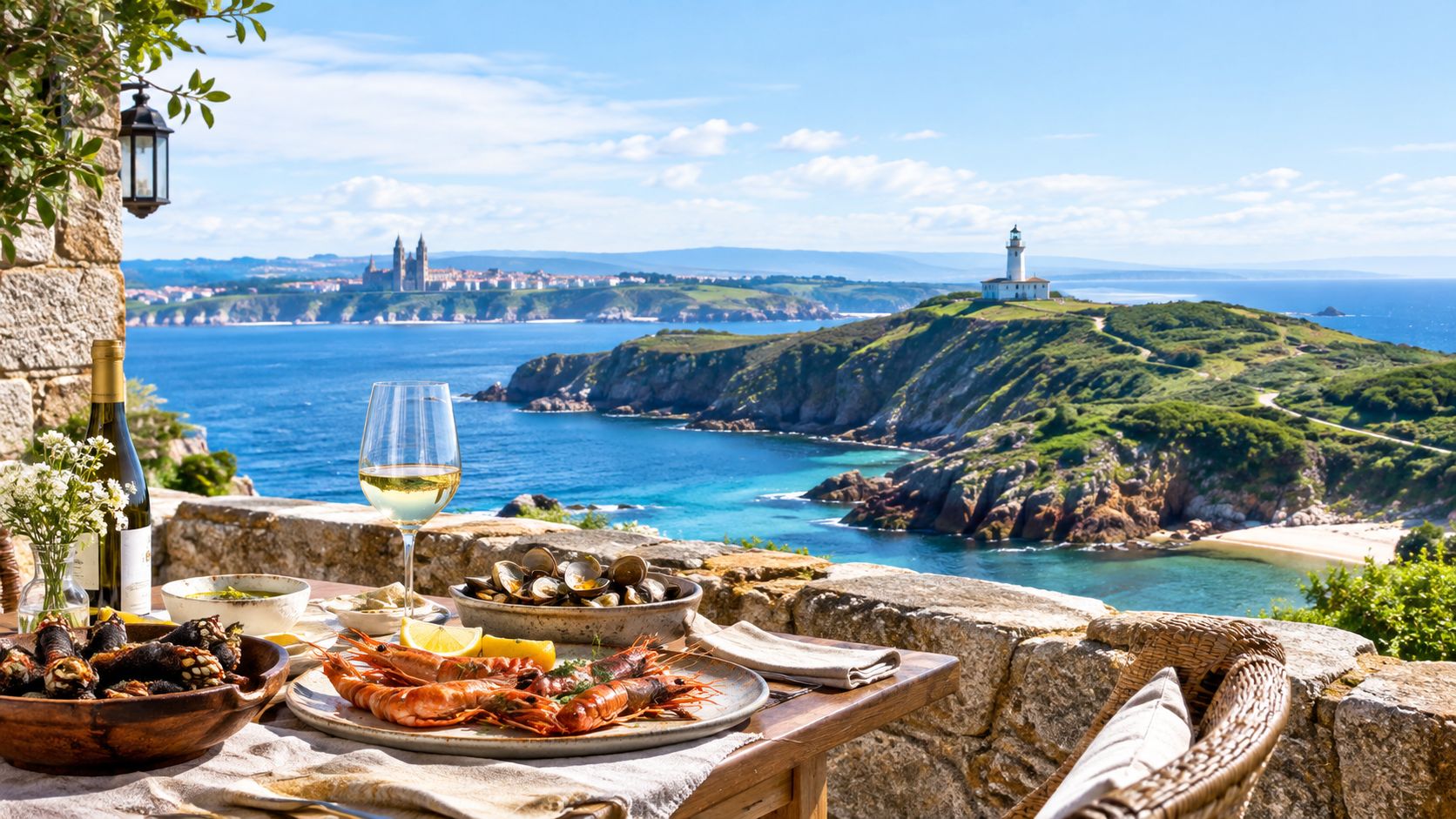
You’re probably looking at an open suitcase and trying to solve a very Northern Spain problem. One day starts with a private cellar visit in Rioja Alta, moves through a breezy village lunch, and ends with a Michelin-starred dinner in San Sebastián. The next might involve a coastal promenade in Galicia, a cathedral visit, and a long evening on a hotel terrace after the temperature drops.
That’s why a standard answer to what to pack for Spain often falls short. Northern Spain isn’t the postcard version of endless heat and beachwear. It asks more of your wardrobe. Atlantic weather shifts quickly, dining culture is polished without being stiff, and many of the best experiences involve walking far more than travelers expect.
A practical Spain packing list for most travelers starts with a compact capsule. Trafalgar recommends 3–5 tops, 2 bottoms, 1–2 optional dresses, 1 jacket or cardigan, plus underwear and socks for 5 days, with walking shoes and casual sandals as core footwear. For a luxury itinerary through the north, I’d keep that same discipline but upgrade the fabrics, finish, and versatility so every piece earns its place.
This guide is built for that exact trip. Not for overpacking, not for generic summer-city advice, but for a smooth, elegant journey through Northern Spain’s vineyards, coasts, dining rooms, and mountain edges.
Table of Contents
- 1. Layered Clothing for Northern Spain’s Variable Climate
- 2. Comfortable Yet Refined Footwear
- 3. Sophisticated Dining and Evening Attire
- 4. Sun Protection and Skincare Essentials
- 5. Versatile Day Bag and Luxury Overnight Bag
- 6. Premium Wine and Food Journal or Digital Documentation
- 7. Comprehensive Travel Documents and Digital Backup
- 8. Luxury Electronics and Charging Solutions
- 8-Item Spain Packing Comparison
- Your Perfectly Packed Suitcase for Northern Spain
1. Layered Clothing for Northern Spain’s Variable Climate
Northern Spain rewards restraint. Instead of packing separate wardrobes for coast, wine country, and city dining, build around layers that can be added or removed as needed through the day. That matters in a region where a bright morning in Bilbao can give way to sea wind by late afternoon, and a warm inland tasting can end with a cool terrace dinner.
Seasonal guidance for Spain consistently shifts toward layers rather than fixed outfits. Kimkim’s Spain guide advises summer pieces like sandals, shorts, skirts, sundresses, sunhats, and extra swimwear, while winter calls for a winter jacket, rain jacket, sweaters, scarf, gloves, long pants, and warm boots, with spring and fall centered on rain gear, a light jacket, closed-toe shoes, and a lightweight scarf. In Northern Spain, that logic becomes even more important because the microclimates are tighter, greener, and more changeable.

Build the wardrobe around movement
A good layering system for this trip usually looks elegant on a hanger and practical in a car, on a promenade, or during a winery visit. Fine merino from Smartwool or Icebreaker works well as a base under a blazer. A silk shell under a cashmere cardigan handles shifting temperatures without looking sporty. A lightweight technical outer layer from Arc’teryx or Loro Piana is worth bringing if your itinerary includes the Basque coast, Asturias, Galicia, or the Picos.
I’d keep the color story disciplined. Navy, cream, taupe, charcoal, olive, and black travel well together and always look considered in photographs, hotel lounges, and dining rooms.
Practical rule: If a piece only works in one town or one weather condition, leave it at home.
What works best in practice
The most useful clothing pieces are the ones that survive repetition without looking tired.
- Merino layers: Thin merino knits resist odor, pack small, and look polished at lunch or dinner.
- Light outerwear: A water-resistant jacket matters more in the north than a heavy coat for most itineraries.
- Scarves and wraps: A lightweight scarf does three jobs. Warmth, polish, and modest coverage for churches.
A final point on what to pack for Spain in the north. Bring clothes that move well between settings, not clothes assigned to single moments. Northern Spain’s weather patterns make flexibility look smarter than excess.
2. Comfortable Yet Refined Footwear
Most packing mistakes in Spain happen at shoe level. Travelers assume they need more variety than is necessary, then discover they’ve brought the wrong kind of variety. Northern Spain asks for support, grip, and enough polish to hold up in excellent restaurants and refined hotels.
Across expert guidance, Spain packing advice converges on a minimal footwear system. One source recommends one pair of proven walking shoes plus one secondary dressier flat or sandal, with heels generally skipped in favor of supportive shoes for cobblestones, transit, and walking-heavy days. That framework is exactly right for the north, though many luxury travelers will want a third pair if their itinerary includes serious rain or multiple formal evenings.

A small shoe strategy works better
For most Northern Spain itineraries, these are the pairs that earn space:
- Supportive walking shoes: Ecco Soft 7, Cole Haan GrandPro, or a refined leather sneaker with real cushioning.
- Dining shoes: Ferragamo loafers, Gucci moccasins, elegant flats, or low-profile dress shoes with a proper sole.
- Weather-ready pair: Waterproof leather boots from Grenson or Scarosso if your trip leans coastal or shoulder season.
The key is not formality. It’s finish. A Michelin-starred room in San Sebastián rarely demands black-tie dressing, but visibly worn athletic shoes can flatten the tone of the evening.
What fails quickly
Heels are the obvious misstep, but they’re not the only one. Thin-soled fashion sneakers often feel fine in the hotel and miserable by the second village. Slippery loafers can be awkward on wet stone. New shoes are the worst choice of all.
Good Spain footwear should still feel good after a long old-town walk, a winery visit, and a late dinner reservation.
If your trip includes pilgrimage routes, countryside strolls, or family travel with slower pacing, practical comfort matters even more. This Camino-focused slow travel perspective reflects the same basic truth. Northern Spain is best experienced on foot, and your shoes need to support that without making you look underdressed.
3. Sophisticated Dining and Evening Attire
Northern Spain has one of the most rewarding dining cultures in Europe, and it has its own dress code. It isn’t rigid, flashy, or performative. It’s cultivated. You’ll feel far better in well-cut, quiet pieces than in anything overly dramatic or obviously occasionwear.
That matters most in San Sebastián, where dinner can be the central event of the day. This look at San Sebastián’s Michelin-starred identity gives the right context. The city values style, but in a measured way. Think confidence and texture, not spectacle.

Dress for the room, not for theater
For women, that often means well-fitting trousers, a silk blouse, a knit dress, or a beautifully cut skirt with a blazer. Max Mara, Brunello Cucinelli, The Row, and Loro Piana all translate well because they rely on fabric and line rather than excess detail. For men, lightweight suiting, refined loafers, crisp shirts, and soft jackets work in nearly every top dining room in the north.
A shawl or silk scarf deserves space in your case. Restaurants can be cool, terraces can turn breezy, and a single elegant layer can rescue an otherwise too-simple evening look.
An evening capsule that travels well
The most efficient dinner wardrobe is a small rotation that changes character with accessories.
- Quality foundation pieces: One excellent trouser and one dark, elegant bottom are better than several mediocre options.
- Evening tops: Silk, fine knit, or matte crepe tends to travel better than stiff cotton.
- Jewelry and bags: Bring pieces that can repeat. One evening bag that works with multiple outfits is enough.
For celebratory travel, I always suggest one standout piece. Not a costume piece. A piece with presence. That might be a beautifully cut jacket, a superb dress, or heirloom jewelry that marks the trip without dominating it.
Northern Spain rewards understatement. The most elegant travelers rarely look overdressed. They look precisely right.
4. Sun Protection and Skincare Essentials
Many travelers underpack skincare for the north because they associate Spain with either urban sightseeing or beach climates farther south. That’s a mistake. Northern Spain still brings long outdoor lunches, vineyard walks, coastal light, mountain exposure, and dry cabin-to-hotel transitions that can leave skin looking tired by evening.
Trafalgar’s Spain essentials specifically include sun protection, travel-size toiletries, a refillable water bottle, a quick-dry towel, a crossbody or day bag, and a light scarf, along with a power adapter because Spain uses Type C or F plugs. That list is practical because it covers the things travelers often realize they needed only once the day is underway.

Northern Spain still asks for daily SPF
Cloud cover doesn’t remove UV exposure. If your trip includes the coast, vineyard lunches, or any altitude, daily sunscreen is essential. La Roche-Posay Anthelios, Shiseido, Clé de Peau, and Sisley all make formulas that sit well under makeup or on bare skin without becoming greasy halfway through the day.
I’d also bring a proper hat if your itinerary includes winery time, boat outings, or long market mornings. Choose one that travels well and doesn’t need constant reshaping.
Skincare that earns luggage space
A luxury travel kit should be compact and boring in the best possible way. Bring what you know works.
- Gentle cleanser: Hotel products are often fragranced and unreliable.
- Hydrating serum or essence: Useful after flights and long days outdoors.
- Moisturizer and eye treatment: Enough to restore skin before dinner.
- After-sun or calming cream: Helpful if you spend longer outside than planned.
If you want to refine your liquids setup before departure, these TSA-friendly skincare routines offer a sensible way to shrink the kit without sacrificing the essentials.
Your evening appearance in Northern Spain often depends less on makeup than on whether you protected and hydrated your skin from breakfast onward.
5. Versatile Day Bag and Luxury Overnight Bag
The right bag does more than hold things. It removes friction from the day. In Northern Spain, you’ll likely move between old towns, hotel cars, wineries, museum visits, lunch terraces, and scenic stops. A bag that looks beautiful but behaves badly becomes a burden very quickly.
For summer travel in Spain, one practical source recommends a secure crossbody bag with locking zippers, RFID-blocking slots, and a slash-resistant strap, plus a power bank because navigation apps can drain your phone during long sightseeing days. The security emphasis is especially relevant in busy urban settings, transport hubs, and high-foot-traffic areas.
This quick visual guide is useful before you choose your day bag:
Choose security before logo visibility
For daytime, I favor a structured crossbody or compact shoulder bag that closes fully and sits close to the body. An Hermès Evelyne, a discreet leather camera bag, or a polished weather-resistant crossbody works better than an open tote when you’re moving through crowded streets or stepping in and out of vehicles.
Your overnight bag should be equally disciplined. If your itinerary includes hotel changes between Rioja, San Sebastián, and Galicia, a smart weekender or carry-on-compatible soft case makes transitions smoother than a large, overfilled holdall.
What belongs in each bag
A day bag should carry only what supports the day’s rhythm.
- Daily core items: Phone, card holder, sunglasses, lip balm, sunscreen, and one compact layer.
- Functional extras: Refillable water bottle, portable charger, and a small notebook.
- Protection: A secure closure matters more than easy access.
For larger soft totes and structured travel carryalls, this guide to travel tote bags with pockets is useful for thinking through internal organization.
Don’t confuse capacity with usefulness. The best bag for what to pack for Spain is one that lets you move lightly and keeps valuables secure without looking utilitarian.
6. Premium Wine and Food Journal or Digital Documentation
Northern Spain gives you too much to remember casually. A private tasting in Rioja Alta, a rare bottle ordered by a sommelier in San Sebastián, an exceptional hake dish in Getaria, a cider house lunch in Asturias. By the end of the trip, the details start to blur unless you capture them.
This is one area where high-end travelers often underprepare. They bring excellent cameras and no system. The result is a phone full of labels, menus, and dishes with no context attached.
Record details while they are fresh
A dedicated journal creates memory structure. Smythson, Hermès, Moleskine, and Appointed all make handsome notebooks that are compact enough to carry and substantial enough to keep afterward. If you care about wine, use a repeatable note format. Producer, vintage, appellation, tasting impression, food pairing, and where you had it.
That same discipline helps with restaurants. Note the room, not just the plate. Who guided the meal. Which course surprised you. Which wine you’d order again.
The most valuable note is often not the technical tasting note. It’s the personal one that tells you why the moment mattered.
The best format is usually hybrid
A hybrid method works best for most travelers. Photograph the menu, bottle, vineyard view, or market stall in the moment. Then add a few lines by hand later that evening when the pace slows.
If you prefer digital organization, keep it simple.
- Wine apps: Vivino or Delectable for label capture and quick recall.
- Notes apps: Apple Notes, Evernote, or Notion for restaurant summaries and recommendations.
- Photo discipline: Create one album per region so the trip stays navigable later.
A journal also becomes useful after you return home. It helps with future wine purchases, restaurant recommendations to friends, and planning the next trip with much more specificity.
7. Comprehensive Travel Documents and Digital Backup
Luxury travel still depends on mundane competence. Beautiful hotels, private drivers, cellar appointments, and restaurant reservations all work better when your documents are organized and instantly accessible. When they aren’t, small issues become disruptive.
For a multi-stop trip through Northern Spain, I prefer one physical folder and one digital master file. Both should be tidy enough that a partner, family member, advisor, or host could understand them at a glance.
Keep the master file simple
Your digital folder should include passport scans, travel insurance details, flight information, hotel confirmations, driver contacts, restaurant bookings, and any winery or event confirmations. Store it in a secure cloud service you can access from your phone without hunting through email in a hotel lobby.
A printed set still matters. Phones die. Connectivity drops. Screens crack. Paper remains useful for arrival days, road transfers, and emergencies.
What to store physically and digitally
Use a simple hierarchy and avoid clutter.
- Identity documents: Passport copy, driver’s license copy, and any required travel paperwork.
- Trip confirmations: Hotels, guides, private transfers, dining reservations, and tastings.
- Health details: Insurance information, prescriptions, and medication names.
- Emergency contacts: Family, bank contacts, and key itinerary support numbers.
I also recommend sharing the final itinerary with one trusted person at home. For families or multigenerational groups, this matters even more because not everyone will keep the same documents on hand.
A well-prepared file doesn’t just protect you in emergencies. It also keeps the trip feeling smooth, private, and properly managed.
8. Luxury Electronics and Charging Solutions
Electronics should disappear into the background. That’s the goal. In Northern Spain, your phone will handle navigation, photographs, restaurant details, messaging with guides, boarding passes, and access to your travel documents. If your battery fails at the wrong moment, the day gets less graceful very quickly.
The most useful electronics setup is compact, reliable, and compatible with European power. Spain uses Type C or F plugs, so a proper adapter belongs in your bag, not on your last-minute shopping list.
Power and compatibility matter more than volume
A clean setup usually includes one primary phone, one portable charger, one adapter, and the exact cables you need. Bring a camera only if you’re serious about photography. For most travelers, current premium smartphones are more than sufficient for food, wine, architecture, and scenic documentation.
Wireless earbuds are worth bringing for flights and downtime, but keep them secondary. They shouldn’t replace awareness when you’re walking through stations, old towns, or meeting local hosts.
A clean charging kit
Don’t overcomplicate this category. A few dependable pieces outperform a tangle of gadgets.
- Portable charger: Slim, airline-compliant units from Anker, Mophie, or Belkin are usually the smartest choice.
- Adapter: One well-made universal adapter is better than several cheap plug heads.
- Cables: Bring a primary and a backup for your phone.
- Optional extras: Kindle, compact camera, or tablet only if you know you’ll use them.
If you’re evaluating battery packs before departure, this roundup of airline-approved portable chargers is a helpful starting point.
A final note on what to pack for Spain. Electronics should support the trip, not travel as their own category of stress. Edit ruthlessly. Bring the devices you trust and the charging kit that keeps them alive from breakfast through a late return to the hotel.
8-Item Spain Packing Comparison
| Item | Implementation Complexity 🔄 | Resource Requirements ⚡ | Expected Outcome ⭐ | Ideal Use Cases 💡 | Key Advantages 📊 |
|---|---|---|---|---|---|
| Layered Clothing for Northern Spain’s Variable Climate | Moderate, requires strategic selection & packing | Moderate–High (quality merino/cashmere, technical jacket) | High, adaptable comfort and polished appearance | Shoulder seasons, coastal walks, mountain hikes, wine region days | Versatility across activities; lightens overall luggage |
| Comfortable Yet Refined Footwear (Multiple Styles) | Moderate, choose few versatile pairs and break-in | High (premium shoes occupy space & budget) | High, comfort across terrains while preserving elegance | Cobblestone villages, vineyard exploration, light hiking, Michelin dining | Support for long days; maintains luxury aesthetic |
| Sophisticated Dining and Evening Attire | Moderate–High, careful packing to avoid wrinkles | High (tailored pieces, evening wear) | Very High, access to high-end dining and events | Michelin-starred dinners, private tastings, VIP celebrations | Conveys respect for local culture; elevates experiences |
| Sun Protection and Skincare Essentials | Low, routine application and packing considerations | Moderate (luxury SPF, serums; TSA liquids) | High, protects appearance and skin health | Outdoor tastings, mountain exposure, flights, hotel stays | Prevents sun damage; sustains comfort and confidence |
| Versatile Day Bag and Luxury Overnight Bag | Low–Moderate, select size/features for itinerary | High (luxury materials; carry-on overnight) | High, organized, polished mobility between activities | Day explorations, multi-destination transfers, boutique hotels | Protects valuables; organized packing; refined presentation |
| Premium Wine and Food Journal or Digital Documentation | Low, habit to capture notes/photos | Low–Moderate (journal or app + photography tools) | Moderate–High, richer memory and shareable record | Wine tastings, chef interactions, culinary tours | Deepens engagement; useful reference for purchases/recommendations |
| Comprehensive Travel Documents and Digital Backup | Moderate, organize physical & encrypted digital copies | Low–Moderate (cloud storage, printed copies) | Very High, rapid problem resolution & seamless logistics | Multi-region itineraries, VIP events, emergencies | Reduces disruption; enables concierge coordination |
| Luxury Electronics and Charging Solutions | Low–Moderate, pack adapters, cables, backups | Moderate–High (premium devices, power banks) | High, reliable connectivity, documentation, navigation | Long exploration days, photography, digital access to docs | Ensures power & communication; documents experiences |
Your Perfectly Packed Suitcase for Northern Spain
Packing well for Northern Spain isn’t about volume. It’s about calibration. The best suitcase for this kind of journey feels edited, not sparse. Every item should answer a real need. Changing weather, polished dining, coastal air, vineyard visits, walking-heavy days, and the quiet standards of excellent hotels.
That’s why the strongest approach is always a capsule with range. A few layers in quality fabrics. Shoes that can handle stone streets without compromising dinner. Evening pieces that look composed rather than overplanned. Skincare that protects you through time outdoors and restores you before an important reservation. A day bag that keeps valuables close and your silhouette neat. Documents and electronics organized well enough that no logistical detail interrupts the experience.
Northern Spain especially rewards this kind of preparation because the region is varied in ways many travelers underestimate. Galicia, Asturias, Cantabria, the Basque Country, Navarra, and La Rioja don’t ask for identical wardrobes. Yet they do respond beautifully to the same core strategy. Pack for movement. Pack for transitions. Pack for weather that changes and hospitality that remains refined throughout.
I’ve found that affluent travelers enjoy the trip more when they stop packing for hypothetical scenarios and start packing for the actual rhythm of the days. You’re more likely to need another elegant layer than another statement outfit. More likely to want dependable walking shoes than a fourth dinner shoe. More likely to value a beautiful notebook, a secure crossbody, and a charged phone than anything bulky or overly specialized.
That doesn’t mean stripping the trip of pleasure. Quite the opposite. Luxury travel should feel easy, and ease comes from making good decisions before departure. The right sweater, the right loafers, the right bag, the right evening jacket. Those choices are small on paper and enormous in practice.
A well-packed case changes the texture of the journey. You move through a rainy harbor town without discomfort. You arrive at a winery looking polished but not precious. You sit down to a long tasting menu in San Sebastián knowing you’re dressed for the room. You wake up for the next region without having to reorganize your entire life.
That is the definitive answer to what to pack for Spain, especially in the north. Bring less than you think. Bring better than average. Bring pieces that belong in more than one setting. When the suitcase is right, the trip opens up properly.
For travelers who want every detail handled with the same care, from hotel selection to private tastings to pacing across regions, Northern Spain Travel can shape the journey around exactly how you like to move.
Northern Spain deserves more than a standard itinerary and a generic packing list. Northern Spain Travel designs fully private, tailor-made journeys through the Basque Country, La Rioja, Galicia, Asturias, Navarra, Cantabria, the Pyrenees, and beyond, with discreet luxury, trusted local access, and thoughtful planning at every step. If you’d like a bespoke trip where the hotels, dining, pacing, logistics, and experiences all fit together perfectly, reach out to begin planning your private tour.