Written by Stephanie Mutsaerts
Photos by Jesus Caso and Stephanie Mutsaerts
The Cofradia in Spain is a social institution created for the purpose of promoting special Christian works. In this article we are going to explain the religous cofradia in Spain, what they are, when these Cofradías began and what they are do.
The Term Cofradía
The term Cofradía – pronounced in three syllables co·fra·día – emphasis falls on the last syllable – stems from Old Spanish confrade, from con — from Latin com = with — + frade = brother, monk, priest, from the Latin word fratr, frater, which can be translated into English as Cofraternity – Fraternity.
The word Cofradia is used in two different ways in reference to social institutions. One is related to the Catholic Church and the other to gastronomy. In this article, we describe the Catholic Church Cofradía, give some background history of when and how the Cofradías began, and outline what they are and what they do.
What are Religious Cofradías in Spain?
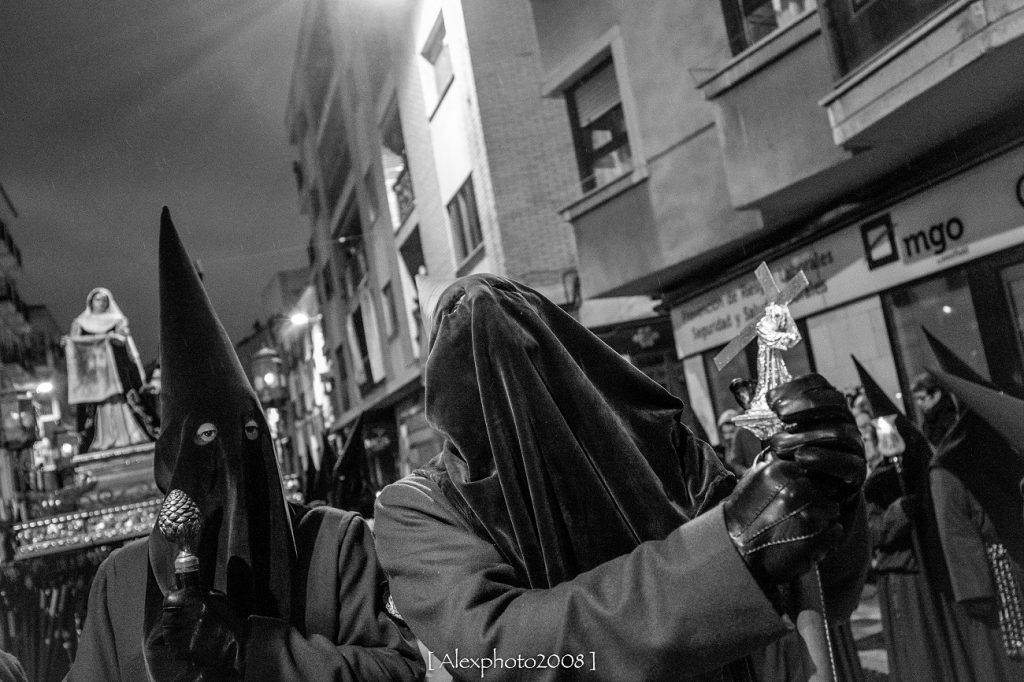
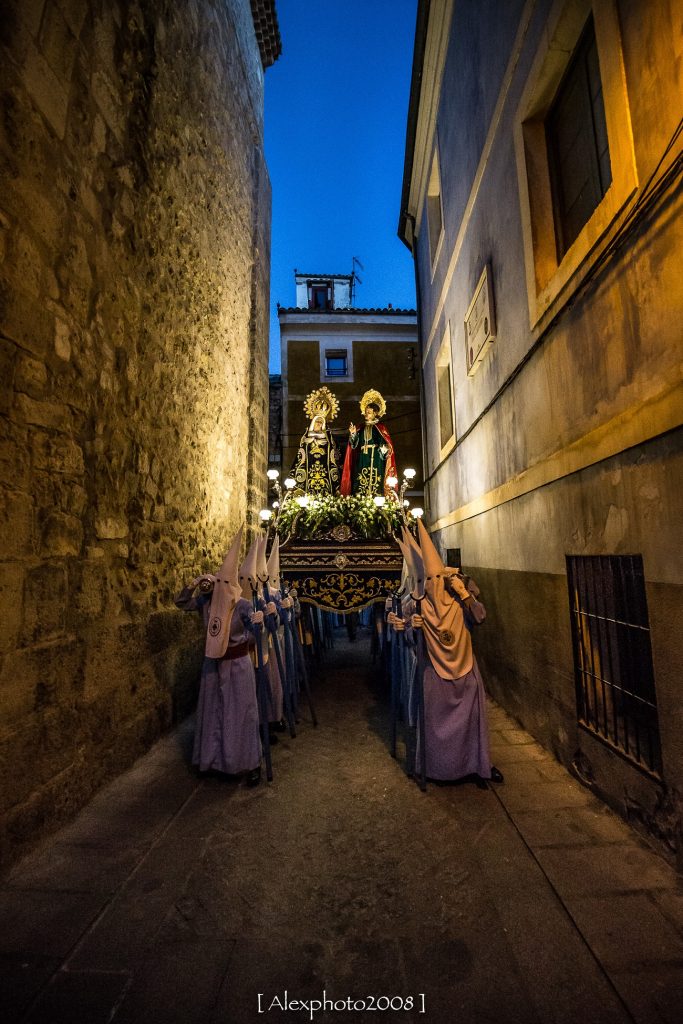
A religious Cofradía is a fraternity of laypersons, both men and women, young and old, who have come together for the purpose of promoting special, church approved, deeds of Christian charity or piety in the community. Cofradia members have not taken the vows of any religious order, but they conform to rules laid out by the Church.

Photographer Alex Simon
A little bit of History about Cofradías
The Link between Charitable Acts and Eternal Reward
In many parts of Spain, religious devotion and daily worship in the Catholic Church were at the center of daily life. Cofradías, or religious charitable organizations, developed during the 16th Century as members strove to find deeper meaning in their religious devotion and to ensure suitable reward in the afterlife. The importance of charitable works that helped the poor was felt so strongly by some members of the cofradias that they made bequests to certain charities in their wills, leaving items such as bedding, clothing, or monetary gifts.
Photographer Alex Simon
One of the First Institutions Created by Members of the Public
Many cofradias, had a positive religious, social, and economic impact on society. They were one of the few institutions formed by the public to meet the needs of the public. Even though each cofradia had its own set of rules or by-laws which every member promised to live by, they worked in harmony with the Church.

Photographer Alex Simon
In the late middle ages, Popes would grant permission for the creation of cofradias, and would grant members rewards such as physical protection, eternal membership in the Cofradías both in life and in death, along with access to indulgences and forgiveness of sins.
“He who gives charity, extinguishes hunger and covers nakedness, extinguishes his own faults and covers his own sins.”
Friar Tomas Trujillo
Cofradias Cradle of the Arts
Originally, the Cofradias were advocacies of supporting strong professional institutions. Thus, for example, in medieval Europe the creation, legislation, and regulation of theatrical performances depended on Cofradias, some of which were created by kings or bishops. Among the best known and most important were the “Cofrères de la Passion” in Paris or the “Disciplinados de Jesus Cristo”, in Umbria. Other examples are the brotherhoods of Dutch or guild painters, and the Spanish theatrical la Cofradía de la Pasíon y Solitud (brotherhood of The Passion and Solitude) as well as the 17th Century Brotherhood in Madrid, Los Escalabos del Sacramento Bendecido (Slaves of the Blessed Sacrament), whose members included highly talented poets, playwrights, and writers.

Photographer Alex Simon
Cofradías Today
Cofradias still work and are created in the same way and with the same criteria as they were from the beginnings. There are about three million Cofrade members in approximately 10,000 brotherhoods throughout Spain today. One of their key roles is the preparation of the Easter Festival, a religious event that is currently going through its “silver age” although within the framework of a “secularized” society in which processions become a way to bring the Church closer to the people. Most brotherhoods organize a procession, at least once a year, either alone or together with other brotherhoods.
Visiting Spain during Easter
Hidden Gems of the North
Hidden Gems of the North is a gastronomical adventure that can be enjoyed during Semana Santa – the Holy Week in Spain. This journey in spring is a fabulous way to discover the northern region, participate in its traditions and culture, and of course, savour world-class gastronomy.
Walking & Wine in Northern Spain Tour
Walking & Wine in Northern Spain Tour is an active travel walking aventure that can be done during Semana Santa – the Holy Week. Spring is the ideal time of the year to visit the North of Spain, as the countryside bursts back to life with its blossing almond trees, Olive groves, and vineyards a lively green. During the Holy Week, our walking and wine tour is designed taking into account the special festivities dates so that we walk during the morning and enjoy the Semana Santa festivities in the afternoon. We include a visit to Los Picaos de San Vicente de Sonsierra and the evening procession in Ezcaray to view the fantastic centuries-old rituals and processions.
Check out our adventures in Spring