Most advice on summer vacation spots still points travelers toward the same overheated formula. Mediterranean beach clubs, overbooked islands, resort strips with good lighting and thin cultural payoff. That's fine if your goal is visibility. It's a poor strategy if your goal is privacy, substance, and ease.
Northern Spain offers the opposite experience. The coast is greener, the food is sharper, the wine culture is less performative, and the rhythm suits travelers who'd rather spend a week well than collect a dozen predictable stops. It also fits where the market is already moving. In summer 2024, U.S. travelers showed a marked preference for cooler outdoor destinations, while hot-weather destinations such as Palm Springs, Tucson, and Phoenix saw declines, according to summer travel data on cooler U.S. destinations. That shift matters because it confirms what experienced planners already see firsthand. Comfort is no longer a secondary concern. It shapes destination choice.
For discerning travelers, the strongest summer vacation spots now combine climate comfort, food, nature, and logistics that don't feel like work. Northern Spain does that better than most of Europe. The Basque Country, Rioja, Galicia, Cantabria, Asturias, Navarra, and the Pyrenees reward a slower, more private style of travel.
If you're also avoiding common Europe travel issues, this part of Spain is one of the smartest places to do it.
Table of Contents
- 2. Rioja Wine Region & Private Cellar Experiences
- 2. Rioja Wine Region & Private Cellar Experiences
- 4. Galicia Atlantic Coastline, Rias Baixas & Seafood Excellence
- 4. Galicia Atlantic Coastline, Rias Baixas & Seafood Excellence
- 5. Navarra Wine Region & Pamplona Wine, Events & Medieval Culture
- 6. Cantabria Green Coast, Fishing Villages & Soft Adventure
- 7. Asturias Mining Heritage, Gastronomy & Atlantic Wilderness
- 8. Pyrenees Alpine Grandeur, Private Hiking & Mountain Villages
- 10. Northern Spain Travel Services & Curated Logistics
- 10. Northern Spain Travel Services & Curated Logistics
- Top 10 Northern Spain Summer Vacation Spots Comparison
- Planning Your Bespoke Journey to Northern Spain
2. Rioja Wine Region & Private Cellar Experiences

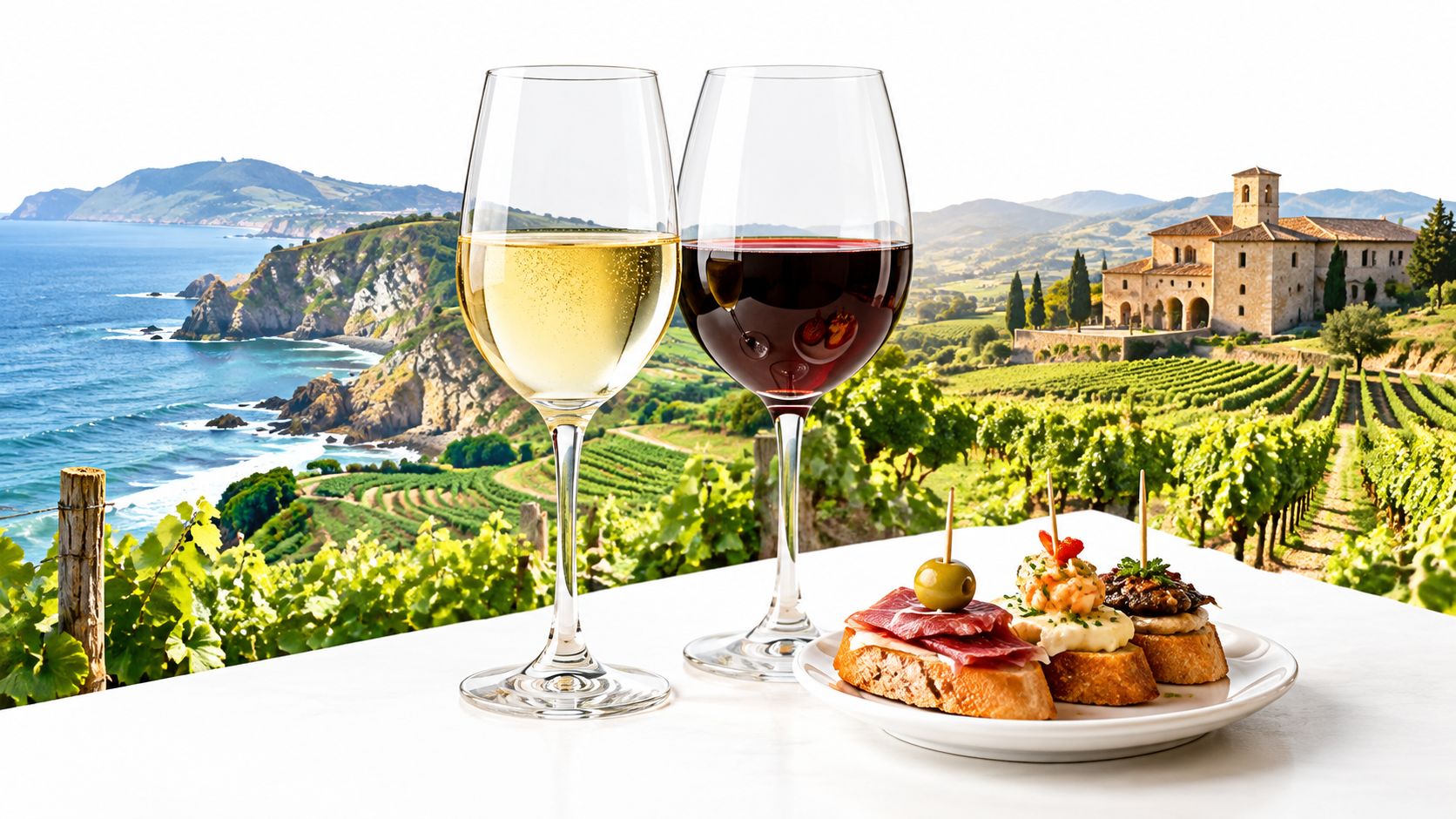
Rioja is often handled too quickly in summer itineraries. A transfer from San Sebastián, a glossy winery visit, two polite pours, lunch, then back on the road. Travelers leave with photos of striking architecture and very little sense of why the region matters.
The version worth booking is slower and far more private. Rioja shows its character in barrel rooms, historic underground cellars, and long table conversations with estate owners or winemakers who still shape the final blend. For travelers looking beyond the Mediterranean circuit, this is one of Northern Spain's strongest answers to the usual summer formula of crowded coasts and interchangeable luxury.
What works better than standard wine tourism
The best days in Rioja balance contrast. One contemporary bodega can justify itself for the architecture and collection design, but the trip gets depth from small and mid-sized estates where the visit is built around site, family history, and the style of the house rather than volume. Add time in Laguardia or San Vicente de la Sonsierra and the region starts to feel lived-in, not staged.
Private access changes the quality of the experience. A serious tasting of older vintages, served with context on terroir, oak handling, and bottle age, gives far more than a lineup of current releases at a public counter. Travelers who want to taste well rather than taste more should review these expert wine tasting tips for Northern Spain before they go.
Summer also favors Rioja for a practical reason. It offers privacy, culinary substance, and strong accommodation options without the pricing chaos and social overexposure that define many famous coastal markets in July and August. The trade-off is simple. Rioja suits travelers who enjoy conversation, place, and pace. It is less compelling for anyone who needs constant nightlife or a packed schedule.
- Best for: Couples, collectors, private groups, and food-focused travelers who want wine with real context.
- Best use of time: Two to three nights. One night is enough for a tasting stop, not enough for the region.
- What to book privately: Old-vintage tastings, underground cellar access, estate lunches, blending sessions, and helicopter or chauffeured transfers between villages and bodegas.
- What separates a strong itinerary from a generic one: Fewer wineries, better access, and at least one appointment with a producer whose wines are hard to taste without an introduction.
A final point matters here. Rioja is not only about prestige labels. The region rewards curation. I would usually choose one flagship estate, one traditional producer, and one smaller family project over a parade of famous names. That is how Rioja becomes memorable rather than merely efficient.
2. Rioja Wine Region & Private Cellar Experiences
Rioja attracts plenty of wine tourists. Most of them see the public face of the region. Tasting counters, design-forward wineries, short pours, and a polished script. That version is pleasant, but it misses the point.
The better Rioja is private and layered. It happens underground in old cellars, over long conversations with producers, and inside family estates where hospitality isn't optimized for bus traffic. If you're evaluating summer vacation spots through the lens of culture and access, Rioja deserves more weight than it usually gets.
What works better than standard wine tourism
The strongest itineraries mix modern architecture with family-run bodegas and leave space for villages such as Laguardia rather than treating them as photo stops. For serious wine travelers, a structured tasting with older vintages and a guide who can explain terroir, elevage, and stylistic differences beats a rushed day of volume tasting every time.
The region also suits travelers who want certainty. Volatile seasonal accommodation pricing is a recurring problem in summer markets, and Bankrate reporting summarized in this travel pricing analysis reinforces a broader point many luxury travelers already understand. Fixed, well-curated arrangements often provide more predictability than chasing fragmented bookings in peak season.
- Best for: Couples, collectors, private groups, milestone trips
- Less ideal for: Travelers who want nightlife or a city-first itinerary
- Best approach: Combine estate visits, one ambitious lunch, and unhurried village time
A practical advantage of Rioja is educational depth. Done well, tastings here aren't entertainment. They're interpretation. In this context, expert wine tasting tips for Northern Spain become useful, especially if you want to ask better questions and get beyond entry-level storytelling.
Rioja rewards restraint. Two private cellar visits in a day is usually ideal. More than that, and even excellent wine starts to blur.
4. Galicia Atlantic Coastline, Rias Baixas & Seafood Excellence

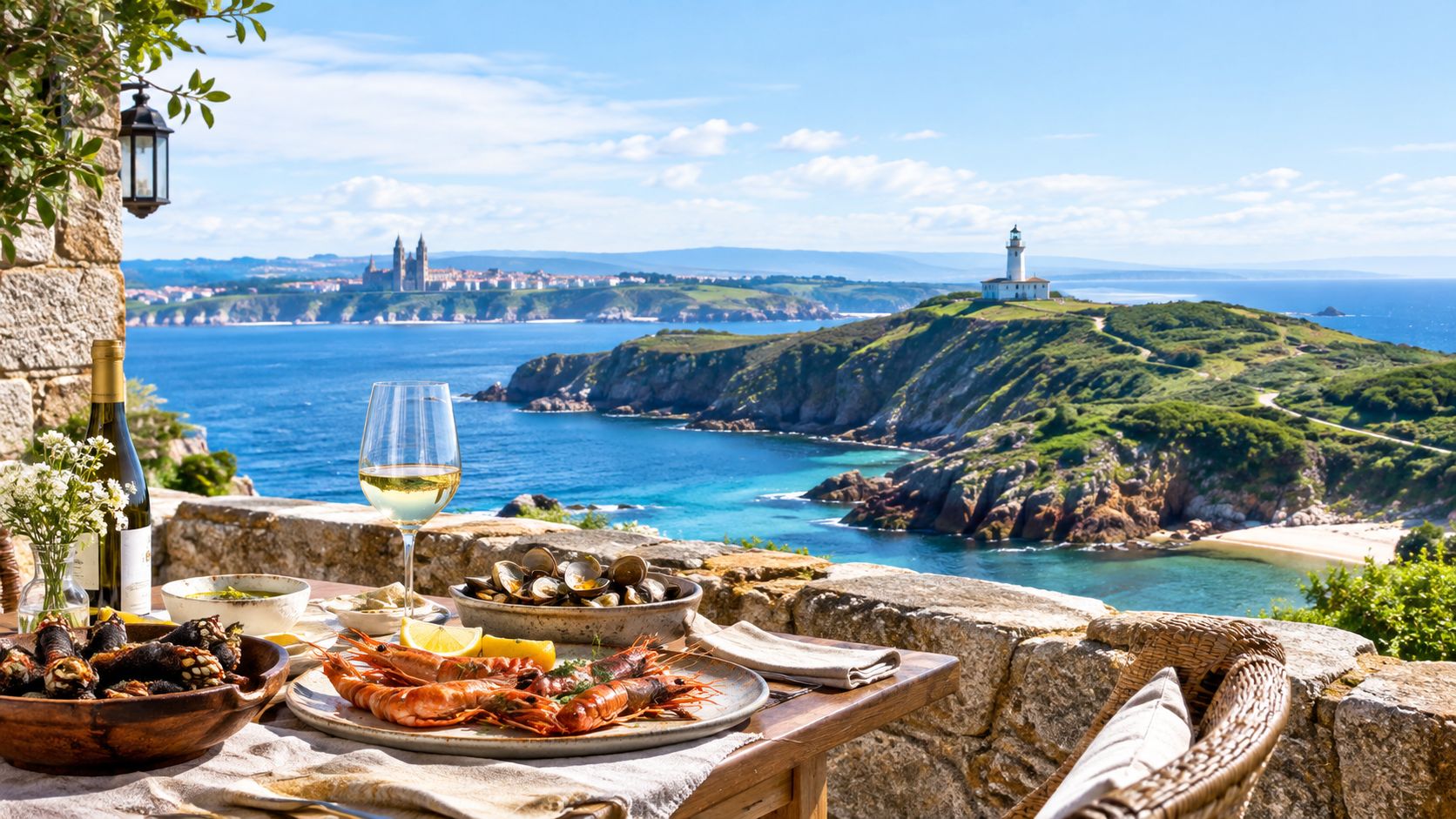
Galicia suits travelers who no longer confuse a beach holiday with a luxury trip. Along the Rías Baixas, the main draw is access. Access to shellfish beds, small ports, island waters, family wineries, and kitchens that treat seafood with the restraint it deserves.
For a well-traveled guest choosing Northern Spain over the Mediterranean, this coast makes a persuasive case. Summer days are softer, the food has more depth, and the atmosphere still belongs to the region rather than to seasonal spectacle. The experience feels private because much of it is.
Seafood is the organizing principle here. Oysters from Arcade, mussels from the estuaries, almejas, percebes when conditions allow, octopus prepared without theatrics, and superb fish landed close to where it is served. Albariño belongs at the table, but the better version of the experience is not a generic tasting flight. It is a thoughtful lunch by the water, or a visit to a serious producer who explains acidity, salinity, and site with precision.
Best use of time
Galicia rewards restraint and good logistics. Two bases usually work best, often one around Pontevedra or Cambados and another farther out on the coast if privacy matters more than range. A private boat day through the estuary, a market visit with a cook or specialist guide, unhurried time at a winery, and one ambitious seafood meal will usually outperform a checklist route.
There are trade-offs. Weather can shift quickly, the coast is at its best with local handling, and top properties are fewer than in Spain's headline resort markets. That is not a weakness. It is exactly why Galicia appeals to travelers who want high standards without the overproduced feel of more obvious summer vacation spots.
- Best for: Food-led travelers, couples, yacht-charter clients, discreet family trips
- Less ideal for: Travelers who want beach clubs, late-night energy, or a resort corridor
- Best approach: Book selective experiences, protect free time, and let meals anchor the itinerary
I advise clients to avoid treating the Rías Baixas as a drive-through wine region with a seafood add-on. The order should be reversed. Start with the coast, the tide, and the market culture. Then add wine in measured doses. That sequence produces a more accurate, and far more memorable, version of Galicia.
Galicia is one of the few summer coasts in Europe where luxury still comes from judgment, sourcing, and access, rather than display.
4. Galicia Atlantic Coastline, Rias Baixas & Seafood Excellence

Galicia is for travelers who've grown tired of coastal destinations that are all surface. Its Atlantic edge feels older, saltier, and less edited. The Rías Baixas combine inlets, islands, fishing towns, vineyards, shellfish culture, and a kind of quiet authority that many better-known summer vacation spots do not have.
This is also where Spain's seafood identity sharpens. Oysters, mussels, clams, octopus, spider crab, and line-caught fish aren't menu ornaments here. They're the center of the table. Albariño, when poured by people who live with it, makes far more sense than it does on export lists.
Best use of time
Galicia is best done slowly. Pick two bases, not five. A coastal manor house, a private boat day in the estuary, a market visit with someone who knows the buying culture, and one or two carefully chosen meals will outperform any fast-moving regional loop.
Travelers also tend to underestimate how appealing timing can be. According to Tripadvisor's 2025 Summer Travel Index as reported by TravelAge West on summer travel trends, late August 2025 was identified as the cheapest and least crowded period globally, with savings on fares and hotel rates. That principle matters in Galicia, where shoulder timing often improves both atmosphere and access.
Galicia doesn't need a packed itinerary. It needs good bases, good weather luck, and the right introductions.
The drawbacks are real. Weather shifts quickly, top-end hotels are fewer, and the best experiences often sit behind private arrangements rather than polished tourism infrastructure. For the right traveler, that isn't a flaw. It's exactly the point.
5. Navarra Wine Region & Pamplona Wine, Events & Medieval Culture
Navarra is one of Spain's most undervalued regions for enriching summer travel. It has excellent wines, a strong sense of local identity, handsome medieval towns, and access that still feels personal rather than industrial. Travelers who default to Rioja often overlook it. That's usually a mistake.
Pamplona gives the region a cultural anchor, but Navarra's appeal extends well beyond the city. Olite, Estella, and smaller wine villages offer a calmer, more intimate experience. The wines deserve attention too, especially for travelers who are curious rather than label-driven.
The real trade-off
Navarra offers better intimacy than more famous wine regions, but it asks more of the traveler. English-language infrastructure is lighter. Visits need curating. Public-facing wine tourism can feel uneven if you don't have the right local setup.
That said, the rewards are strong:
- For wine lovers: Family bodegas often provide more direct, human access than larger regions.
- For cultural travelers: Medieval architecture and pilgrimage heritage add substance between tastings.
- For event seekers: San Fermín can be extraordinary when handled privately and very badly done when handled casually.
During festival season, this is not a place to improvise. The city's mood changes completely, and comfort depends on access, security, and intelligent positioning. Outside festival dates, Navarra becomes one of the most balanced summer vacation spots in Northern Spain. It offers wine, history, and lower-profile sophistication without demanding that every day revolve around one theme.
6. Cantabria Green Coast, Fishing Villages & Soft Adventure
Cantabria doesn't advertise itself loudly, which is one reason seasoned travelers like it. The scenery is lush, the villages still work for a living, and the coast has enough drama to feel cinematic without becoming theatrical. It's one of the most convincing alternatives to the usual southern European beach circuit.
For travelers who want sea air, good food, and light activity, Cantabria is especially strong. Coastal walks, old towns, anchovy producers, cave heritage, and easy access to the mountains create variety without turning a holiday into a logistical exercise.
Where Cantabria outperforms bigger names
Cantabria often wins on atmosphere. It's less about headline attractions and more about consistency. A day in Comillas, a slow lunch, a scenic drive inland, and a boutique hotel with views can be more restorative than a famous destination with better branding and worse congestion.
The practical constraints are simple enough:
- Accommodation is selective: Book early if you want the best small properties.
- Dining requires context: The region eats well, but not every highly rated room is refined in an international luxury sense.
- Weather is part of the deal: If you need guaranteed heat, go elsewhere.
Local insight: Cantabria is strongest when you treat it as a base for a series of elegant half-days, not a checklist destination.
For families and couples who want summer vacation spots with room to breathe, that's a strong profile. It also pairs naturally with the Picos de Europa, which lets you combine coast and mountain in one coherent itinerary.
7. Asturias Mining Heritage, Gastronomy & Atlantic Wilderness
Asturias is less polished than the Basque Country and less immediately legible than Rioja. That's part of its appeal. It has a fiercely local character, a serious food tradition, mountain-and-sea geography, and a kind of cultural self-possession that many destinations lose once they become widely consumed.
The food scene is rooted rather than staged. Fabada, mountain cheeses, cider houses, seafood, and traditional cooking all matter here, but they need framing. Without guidance, some travelers miss the refinement because it doesn't always arrive in a polished package.
Who tends to love Asturias
Asturias suits travelers who care more about substance than gloss. Food writers, returning Spain travelers, private groups looking for authenticity, and families interested in nature with cultural grounding often connect with it quickly.
It's less ideal for travelers who require overt luxury signals every day. Boutique comfort exists, but not in endless supply. The region's strengths are identity, natural beauty, and honesty.
A few patterns tend to work best:
- Stay in two contrasting bases: One urban, one rural
- Use a guide for cider culture and cheese visits: Context changes everything
- Keep expectations precise: Rustic can be excellent. It just isn't the same as formal luxury
Asturias also works beautifully as a contrast region. After San Sebastián or Rioja, it recalibrates the trip. The pacing slows, the scenery expands, and meals become less performative and more rooted in place.
8. Pyrenees Alpine Grandeur, Private Hiking & Mountain Villages
The Spanish Pyrenees remain one of the clearest examples of value in high-end European summer travel. Not “value” in the discount sense. Value in the sense that the scenery, access to wilderness, and village authenticity often exceed what travelers find in better-known alpine markets.
This is mountain travel for people who still want elegance at day's end. Private guides, converted stone houses, carefully chosen lodges, and moderate-to-serious hiking routes make it ideal for travelers who want a physical trip without surrendering comfort.
How to do it well
The Pyrenees punish overambition. Too many valley changes, too many hikes, and too much driving turn a beautiful region into a tiring one. Better to choose one sector well and let the guide match route difficulty to energy and weather.
What usually works best:
- Moderate walking with depth: Fewer routes, better interpretation
- One excellent lodge over multiple hotel changes: Stability matters in mountain travel
- Combination itineraries: The Pyrenees pair especially well with Rioja or Navarra
The constraints are obvious. Roads can be narrow, weather moves quickly, and luxury stock is limited. But those aren't reasons to skip it. They're reasons to plan it properly.
For travelers comparing summer vacation spots across Europe, the Pyrenees offer something increasingly rare. Grandeur without spectacle. You still feel that the mountains belong first to the people who live there.
10. Northern Spain Travel Services & Curated Logistics
Northern Spain rewards discrimination and punishes casual planning. On paper, the distances look manageable. In practice, restaurant booking windows, small luxury hotel inventory, harvest calendars, road conditions in mountain areas, and local festival closures can turn a promising itinerary into a choppy one very quickly.
The difference is rarely the destination itself. It is sequence, access, and pacing.
A strong private journey through the Basque Country, Rioja, Navarra, Cantabria, Asturias, Galicia, and the Pyrenees needs more than a list of good hotels. It needs judgment about what belongs together and what does not. I usually find that travelers coming from the Mediterranean circuit underestimate this point. Northern Spain works best as a set of distinct regions with different rhythms, not as a box-ticking loop.
Why specialist planning matters here
Affluent travelers usually care less about shaving cost than avoiding wasted time, weak transitions, and second-rate access. In Northern Spain, those losses show up fast. A beautiful winery visit can feel flat if it follows a long transfer and a heavy lunch. A celebrated coastal stop can disappoint if it lands on the wrong day, with the wrong room, in the middle of a local crowd surge.
Good planning solves specific problems:
- Regional pairing: Coast with wine, city with mountain, festival with quiet recovery time
- Access quality: Private cellar appointments, closed-door culinary experiences, discreet transport, guides who add context rather than commentary
- Pacing: Enough movement to keep the trip alive, without turning every second day into a packing exercise
- Seasonal judgment: Knowing when a famous stop is at its best, and when a lesser-known alternative will deliver more privacy and better atmosphere
The highest-value itineraries are often the most restrained. Fewer hotel changes. Longer lunches in the right place. Better rooms booked early. Drivers and guides who understand discretion. Time left open where the region deserves it, and structure where it does not.
That is what defines the service in Northern Spain. Not generic luxury packaging. Careful control over the trip's pressure points, so the experience feels polished, private, and authentically connected to the region rather than staged around it.
10. Northern Spain Travel Services & Curated Logistics
The regions above are excellent on their own. What most travelers underestimate is how quickly a multi-stop Northern Spain trip becomes complex. Dining calendars, boutique hotel availability, family-run producers, mountain transfers, event timing, and regional pacing all matter. Get them right, and the trip flows. Get them wrong, and even beautiful places start to feel fragmented.
That's where Northern Spain Travel is useful. The company focuses on fully private, tailor-made journeys across the Basque Country, Rioja, Navarra, Cantabria, Asturias, Galicia, the Pyrenees, and neighboring regions. Their advantage isn't generic luxury language. It's local judgment.
Why specialist planning matters here
For affluent travelers, effortless planning often matters more than shaving cost. In the verified brief, that preference appears repeatedly, especially in relation to private drivers, fixed arrangements, and bespoke logistics. In practice, that means the right local partner should handle not just hotels and transport, but sequence.
The strongest itineraries usually depend on details such as:
- Correct regional pairing: Coast with wine, mountain with city, event with recovery time
- Access quality: Private cellar visits, txoko-style food access, chef-led experiences, discreet drivers
- Pacing: Enough movement to stay engaged, not so much that the trip feels managed from behind
Some travelers can self-book one region well. Very few self-book three or four Northern Spain regions at a high level without losing quality somewhere in the middle.
Top 10 Northern Spain Summer Vacation Spots Comparison
| Item | Complexity 🔄 | Resources ⚡ | Expected outcomes 📊 | Ideal use cases 💡 | Key advantages ⭐ |
|---|---|---|---|---|---|
| San Sebastián & the Basque Culinary Coast | Moderate, advanced restaurant bookings and access to txoko require planning | High, Michelin meals, boutique hotels, local guides | High culinary satisfaction; memorable fine-dining + pintxos contrasts | Food & Wine lovers, luxury couples, multigenerational families | World-class Michelin density, authentic pintxos culture, coastal charm |
| Rioja Wine Region & Private Cellar Experiences | Moderate, needs winery relationships and timed visits (harvest/verticals) | Moderate–High, private cellar fees, sommelier guides, transport | Deep wine education; collector-grade tastings and access to vintages | Wine collectors, connoisseurs, private small groups | Vintage library access, excellent value vs other great regions, family winery intimacy |
| Picos de Europa & Alpine Luxury Mountain Experiences | Moderate, mountain logistics, weather-dependent itineraries | Moderate, private guides, lodges, possible drivers | Strong nature immersion; active luxury and photography opportunities | Soft-adventure couples, active luxury travelers, families | Dramatic landscapes, fewer crowds than Alps, mountain gastronomy |
| Galicia: Atlantic Coastline, Rias Baixas & Seafood Excellence | Moderate, boat charters and local guides needed for rías exploration | Moderate, private boats, vineyard visits, coastal lodgings | Exceptional seafood experiences and Albariño tastings; secluded coastal exploration | Food-focused travelers, photographers, artists, couples seeking undiscovered spots | Underexplored coastline, Albariño quality, authentic fishing-village culture |
| Navarra Wine Region & Pamplona | Variable, festival (San Fermín) planning is high; wine visits easier off-season | Moderate, VIP festival logistics or winery guides, transport | Cultural immersion plus emerging rosado discovery; strong event outcomes when VIP | VIP event seekers (San Fermín), wine collectors, cultural travelers | Excellent value wines, medieval cultural depth, strong event potential |
| Cantabria: Green Coast, Fishing Villages & Soft Adventure | Low–Moderate, simple itineraries but private guidance enhances access | Moderate, local guides, private drivers, boutique stays | Genuine coastal authenticity, soft-adventure activities, photography-rich | Nature-focused travelers, photographers, soft-adventure groups | Lush "Green Spain" coastline, authentic fishing villages, excellent value |
| Asturias: Mining Heritage, Gastronomy & Atlantic Wilderness | Low–Moderate, cultural access benefits from specialist guides | Moderate, farm visits, sidrería arrangements, local guides | Deep cultural and culinary authenticity; unique cider and cheese experiences | Cultural immersion travelers, food writers, authentic-experience seekers | Distinct regional identity, farmhouse dining, exceptional cheeses and cider |
| Pyrenees: Alpine Grandeur, Private Hiking & Mountain Villages | Moderate–High, remote routes require guides and logistical planning | Moderate–High, mountain lodges, private guides, drivers | Alpine wilderness immersion, excellent photography and active luxury | Soft-adventure & active luxury travelers, photographers, multi-region itineraries | Alpine scenery with fewer crowds, strong value vs central Alps, bespoke hikes |
| Private Events & VIP Experiences: San Fermín, Regattas & Festivals | High, significant lead time, permits, and security coordination required | Very High, VIP seating, private security, exclusive transport/accommodation | Exclusive, high-impact cultural experiences with privacy and networking value | VIP groups, corporate hospitality, high-net-worth event seekers | True VIP access to major events, bespoke security and logistics, unique spectacles |
| Northern Spain Travel Services & Curated Logistics | Moderate, centralizes complexity but requires advance coordination | High, agency fees, relationships, bespoke supplier network | Seamless multi-region itineraries and unlocked access to private experiences | High-net-worth clients, private groups, event planners seeking turnkey service | End-to-end logistics, strong local relationships, discretion and tailored programs |
Planning Your Bespoke Journey to Northern Spain
Northern Spain stands apart from the usual summer vacation spots because it asks different things of the traveler and gives more back in return. You don't come here for maximum sun exposure or to join a familiar circuit. You come for a more intelligent version of summer. Better food, better air, stronger regional identity, and a style of travel that still leaves room for surprise.
That distinction matters more now than it did a few years ago. Travelers are moving toward cooler, experience-led destinations, and they're also becoming less tolerant of friction. Flights, transfers, reservations, and crowd density all shape whether a trip feels luxurious or merely expensive. Northern Spain performs well because the core ingredients are already there. Atlantic coastline, vineyard country, mountain ranges, serious gastronomy, and cities and villages that haven't been flattened by mass-market travel habits.
The region also rewards specificity. San Sebastián works best for travelers who want culinary range with urban ease. Rioja and Navarra suit wine lovers who care about access and conversation, not just labels. Galicia is for those who understand that seafood, estuary views, and slower pacing can create a richer coastal holiday than a resort ever will. Cantabria and Asturias attract travelers who value authenticity over polish. The Picos and the Pyrenees prove that mountain travel doesn't need to be performative to feel special.
For families, the case is even stronger. Private drivers, flexible pacing, and carefully chosen bases solve problems that generic destination guides rarely address. That matters because multigenerational travel falls apart quickly when logistics are left loose. For couples, the appeal is different but equally compelling. Northern Spain offers privacy without isolation and refinement without the self-consciousness that often comes with more obvious luxury destinations.
The key is curation. This isn't a region where the best experiences sit neatly on the surface. The right cellar, the right boat day, the right lodge, the right lunch stop on a mountain route, the right sequence of coastal and inland nights. Those choices shape the trip far more than a list of famous names ever will.
If your idea of a strong summer is less about being seen and more about traveling well, Northern Spain is one of Europe's best answers. And if you want to plan seamless family trips, few regions reward thoughtful private planning more.
Northern Spain Travel designs fully private journeys for travelers who want more than a standard itinerary. If you're planning a summer escape built around gastronomy, wine, Atlantic coastline, mountain scenery, discreet logistics, and rare local access, Northern Spain Travel is the specialist to call.