
Cycling the Northern Spain Coast
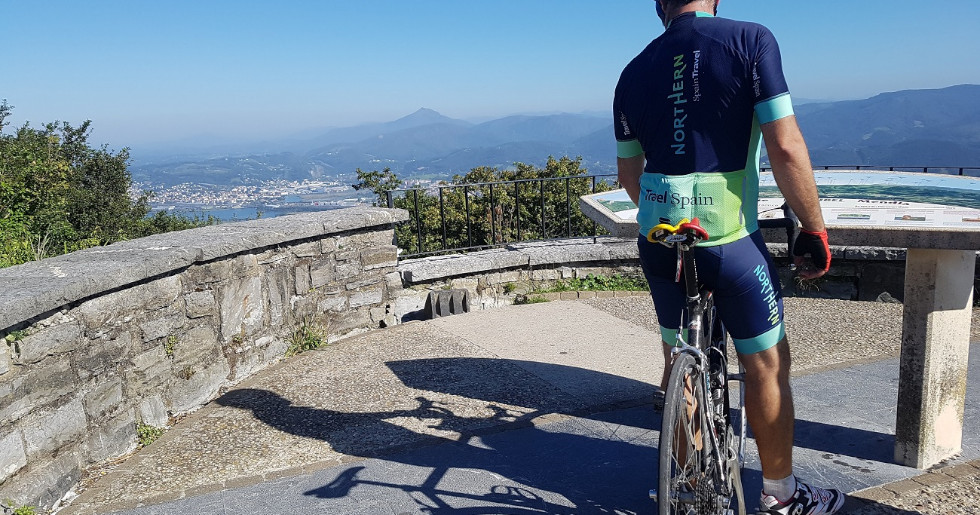
Written by Stephanie Mutsaerts Photos by Jesus Caso and Stephanie Mutsaerts Road bike cycling along the northern coast of Spain is among one of the most delightful and rewarding routes Spain has to offer. Not only does it provide endless views of seascapes along plunging cliffs and forested hills, but it brings you through an area of Spain that is spilling over with culture and world renowned gastronomy, Michelin starred restaurants, and delightful fishing villages serving up exquisite platters of seafood and locally made cider or txakoli. Roll along quiet coastal roads or push yourself on challenging routes with sustained climbs and steep hills, all in an area known for its wide empty beaches and dramatic views. At the end of the day the plentiful hotel and dining options range from charming and rustic to world-class luxury. Cycling the Northern Coast Camino de Santiago Cycling in the north of Spain, inevitably, brings riders in contact with the famous pilgrimage route of the Camino de Santiago, or Saint James Way. The Camino de Santiago follows a path that has existed since ancient times – and is even said to have been an early path following the Milky Way to the end of the Earth – but became an official Catholic pilgrimage route in the Middle Ages. Following yellow shell signs across the north of Spain, most people walk it, but the bicigrinos (bicycle pilgrims) are becoming more and more prevalent, with thousands completing the entire route each year. People travel from all over the world to walk, bike, or even ride horses – and hilariously enough occasionally camels – the several hundred kilometers across parts of France and Spain. Whether for spiritual or personal reasons, the challenge of completing the Camino is for some, if not most, the experience of their lifetime. One of the most beautiful routes for cycling the north of Spain coast, called the Northern Route, follows the northern coast of Spain down from the border of France, by Irun, through San Sebastian and past Bilbao. It continues for hundreds of kilometers, but the most spectacular parts are definitely the coastal parts. Joining this route even for a day or two is an experience of a lifetime, as you feel the joy of communion with the centuries of pilgrims before you. Cycling alongside a Food Culture on the Northern Coast Another great advantage of cycling around the north coast of Spain is without a doubt the spectacular gastronomy. Cycling from one incredible culinary city to the next, in an area with the second most Michelin starred restaurants in Europe, not to mention the delicious local cuisine and fresh ingredients from the earth and sea, it is nearly impossible to go wrong. Even the most simple dish seems to be infused with magic in this area and bursts with flavor. The local pintxo culture means evening meals can simply be drifting from bar to bar eating the varied and unique Basque tapas and sipping on local txakoli a sweet lightly sparkling white wine, or a glass of local cider. Whether you explore the sophisticated yet beachy San Sebastian seeking out the best pintxos after a day of riding, or sit for a five course three star meal at a top restaurant, or go rustic and enjoy a sidreria meal of wood fire grilled steak and bottomless cider, there is no end of ways to replenish your energy each day with the actual best food in the world. If you are looking for idyllic road biking, whilst exploring the culture, landscapes and authentic gastronomy this region has to offer, then Navarra to the Basque Coast is a road biking tour you are sure to love. La Vuelta España on the Northern Coast In 2020 Spain’s biggest bike race, usually just referred to as La Vuelta, will be running from August 14th to September 6th, is made up of 21 stages, and will cover a total distance of 3245 kilometers. Most of it will take place in the north of Spain (and a little bit in France and Portugal), with 5 mountain stages, and 6 hilly stages. Running through Pamplona as well as by Logroño and the Basque Country, these routes are accessible to everyone. One of the most beautiful routes they will cover is along the Basque coast from the border of France to a pretty village deep in the Basque countryside. The world renowned cycling team Movistar trains in this region for good reason and the Tour de France also regularly dips into this part of northern Spain, along this same coast. These road routes are undeniably some of the best in Europe. Whether you are a passionate pro rider or an enthusiastic novice, the north coast of Spain has enough bike paths of every kind from sleek roads to gravel and packed dirt to cobblestone or mud and rock. Taking you through stunning scenery and vibrant cities, along sweeping coastlines and enchanted forests, by empty beaches and quaint fishing villages, this area has everything. The opportunity to stay in top-notch hotels and eat at the best restaurants along with access to traditional ways of life and exposure to the wonderful and welcoming local culture, allows cyclists to really understand this part of the world, to experience its living history and to partake in its daily rituals. Cycling the north to the coast of Spain is one of the most rewarding trips you can experience. Here are some of our suggestions for exploring this amazing region: Biking La Rioja to the Basque Coast that takes you deep into the part of Spain where ancient routes cross golden fields and wind through medieval cities. Cycle from Rioja, through rolling vineyards, on parts of the legendary Camino de Santiago, skirting the foothills of the Navarran Pyrenees, and on to the Basque Coast and the town of San Sebastian on the sparkling blue sea. Biking Navarra to the Basque Coast which is the perfect combination of the best of cycling, gastronomy, culture, and refinement. Northern Spain Travel takes you road biking through Navarra and into the Basque Country with a final day on the coast in the elegant city of San Sebastian.
Easter Weekend
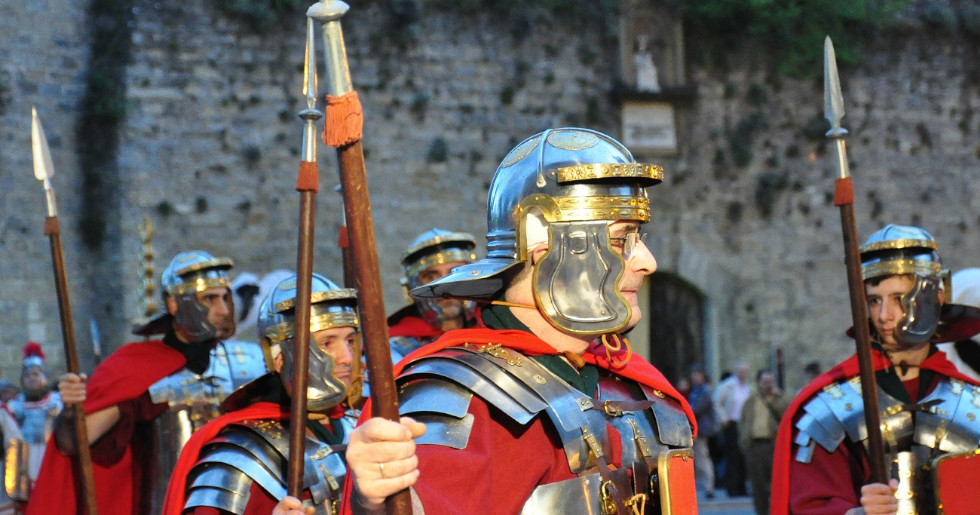
Written by Stephanie Mutsaerts Photos by Jesus Caso and Stephanie Mutsaerts Religious and not-so-religious activities The Easter Procession We came to northern Spain for the Easter weekend. Easter is a time of public religious celebrations – mostly in the form of processions through the ancient city. Groups, or guilds, carry heavy floats depicting scenes from the story of the passion, the stages of Christ’s arrest, trial, and crucifixion. Participants are dressed as Roman soldiers, residents of Jerusalem, or other characters that are part of the Easter story. Many carry lighted candles, palm fronds, weapons – whatever fits their part of the story. Musicians in bands also form part of the procession which moves slowly through the streets either to the beat of the music or to the beating of drums that set the pace. The floats are very heavy so frequent stops are made to allow the bearers to step aside and let new bearers take their place. While carrying the floats on shoulders is the traditional method, one of two floats on wheels that are pushed like hand carts have also been observed – these seem to lack the true sense of penance that is part of the Easter tradition however. We were able to observe a procession from the balcony of our luxury apartment in the old city centre. Lanz during Easter Pamplona is a city of ancient streets and buildings, surrounded by successful industries and some dense areas of apartment blocks. The greater city, in turn, is surrounded by rich green rolling hills, dotted with tiny villages and farms. On Easter Saturday our Northern Spain Travel guide took us to the local village of Lanz to get a feel for Navarran rural life. It was a fairly short journey to the village but the contrast between city and village life was striking. We walked the main (the only) street and enjoyed the stillness, the architecture, the bird song. It was definitely worth exploring this small, bucolic treasure, unwinding and relaxing before returning to the bustle of Pamplona. Easter Evening Mass in Spain That evening our guide picked us up and accompanied us to midnight Easter mass in the cathedral. As we walked uphill through narrow streets towards the cathedral we were startled by a very loud cracking and rattling. It sounded almost as though some sort of armed insurrection was underway! The noise we soon realized was coming from one of the cathedral towers from a huge wooden drum covered with wooden spikes which rattled as the drum was rotated – the signal to the town, at a time when the bells were silenced for the days leading up to Easter Sunday, that mass was about to start. The Easter weekend mass was quite a grand ceremony, spectacular with candles, bells, organ, singing, incense, costumes, processions etc. Bunkers from the Franco Era Easter weekend Sunday was a quiet day (our choice) but things became busy again on Monday (a holiday here in Spain). With our guide we drove out into the mountains making our first stop at a cafe on the Camino de Santiago (the pilgrim route to Santiago). Many pilgrims were already there, enjoying coffees, sausage, pastries, etc. outdoors in the sunshine. We talked to pilgrims from France, England, Canada, and Australia and wished them Buen Camino as they headed down the path, staff in hand, the symbolic scallop shell of Santiago pilgrims bouncing jauntily on their backpacks. With our guide we walked through a local nature preserve in search of bunkers that had been built during the Franco era. Franco had planned 10,000 of these bunkers all along the Pyrenees but only 6,000 were built. They were to deter the French, later the allies, and later still the Spanish who had fled from Franco during the civil war, from entering the country. The bunkers were never used and their existence was denied until about 10 years ago but now they have become of archeological interest and tours o bunkers, most of which are tucked into the mountain sides, are available. We found two of the bunkers – one in very good condition, the other all overgrown with weeds and brambles. In the years since they were built many have been used as animal shelters or storage barns by the locals who were aware of their existence despite the fact that they were supposed to be secret and hidden. Our guide was not only a history buff, but also a naturalist, archaeologist and general explorer of the area. He talked about plants, mushrooms, ferns, bird feathers – in many cases producing examples of the things he was talking about – a sort of Show and Tell of the area! One particularly unusual find he showed us was the remains of a tiny leather shoe that he had found in a mountain cave. After considering various possibilities regarding the possible history of the shoe, its shape and size, its construction, he hypothesized that it had probably belonged to a female dwarf who had perhaps been part of a travelling carnival troupe. Perhaps she had died in the area and her body left in the cave. Where were the bones? It may have been removed by wolves or other predatory animals that roamed the area until fairly recent times. A story without proof, but it made an interesting tale. Our walk also took us through meadows where beautiful horses grazed …. horses wearing bells with deep tones like the bells worn by mountain cattle. Alas, these lovely horses are bred to be eaten which is a sobering thought for any horse lover or admirer. Our walk ended with a yummy lunch of simple mountain food (no horse meat!!) This tour was tailor made by Northern Spain Travel, and reflects some of the elements of their Hidden Gems of the North Tour
Camino de Santiago with Kids
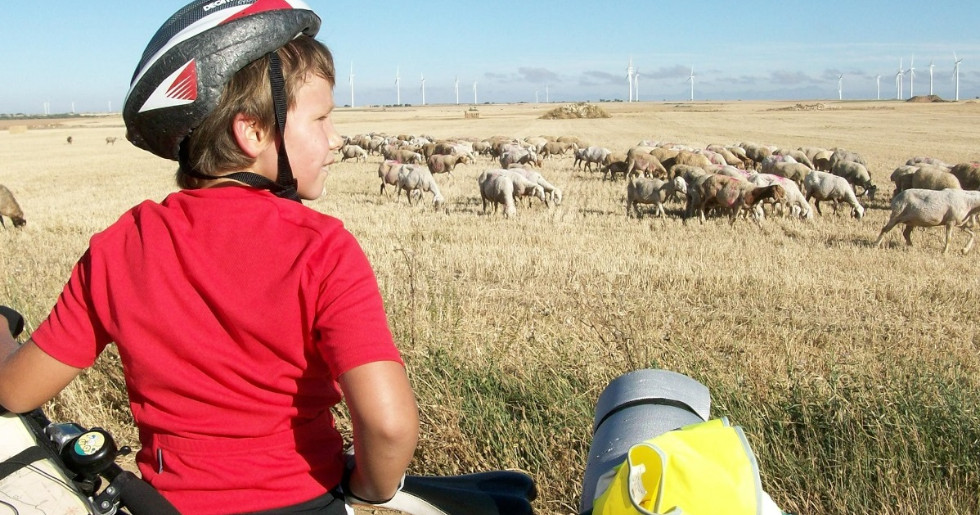
Camino de Santiago with Kids Written by Stephanie Mutsaerts Photos by Jesus Caso and Stephanie Mutsaerts Open their world to New Experiences One of the greatest things about travelling the Camino de Santiago with kids is the opportunity they have to interact with pilgrims from all walks of life, all the cultures and languages under the sun. Fostering chit chat along the Way and developing their international – friendly social skills is wonderful. We are social creatures and the Camino is the ideal playground for them to expand their horizons. My children made ‘amigos’ every day. Kids ride about the same speed as a walking pilgrim, so the days’ pathway would likely end in a shared dinner with the pilgrims we met and travelled with that day. What better way for kids to speak and share moments with people they would otherwise not have the chance to meet? Life-long learning It was a high priority for me that my children find joy in alternative travel, learn to appreciate a challenge, do their best to reach their goal with a smile on their face. And to find a comfort zone even when they are out of their element – broaden their horizons. It is about building their confidence through living experiences that are unique and life changing. Today their confidence reflects years of experience of, among other things, spending countless days (and nights) in the outdoors, cycling or hiking hundreds of kilometers, scaling the heights of vertical rock walls, or skiing and snow-boarding on challenging slopes. Monkey See Monkey Do Clearly there is a correlation between how you live your life and what your kids will choose to do and copy from it. That is to say, young kids tend to want to do what you do. So, if you spend your free time in front of the TV, in all likeliness and, given the ease in which one can fall into that routine or habit, your kids will become the next generation of couch potatoes. Make the effort to take your kids on a travel adventure and broaden their horizons, like doing the Camino de Santiago. You will have them cycling along country trails, skiing the white peaks of the Pyrenees, or climbing a ‘ferrata’ – let them be the next generation of adventurers in the family. If you yourself become enthralled in adventure they will follow in your footsteps! NST makes travelling with kids Better We would love you and your family to join us on the Camino. Find out more about what we can do for you and your little adventurers by writing us an email or plain old whatsapp me, Stephanie Mutsaerts. Let’s get connected! https://northernspaintravel.com/tour/camino-de-santiago-family-bike-tour/
Camino de Santiago with Kids – Slow Travel
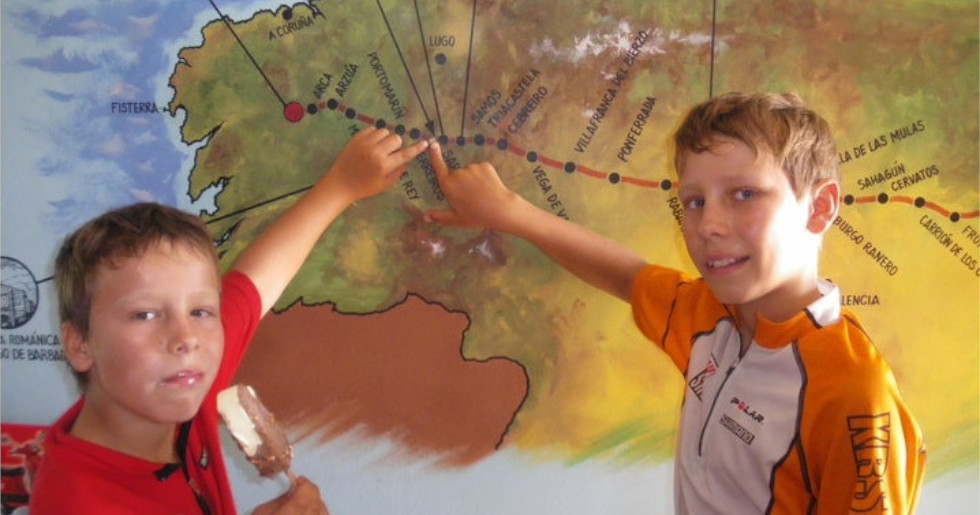
Camino de Santiago with Kids – Slow Travel Written by Stephanie Mutsaerts Photos by Jesus Caso and Stephanie Mutsaerts Viva Slow Travel with kids! For those of you who are contemplating slow travel the Camino de Santiago with your kids, whether by bike or on foot, our aim is to inspire you to take on the challenge and be pleasantly surprised at how much your family will enjoy and grow every peddle or footstep of the WAY. Taking the time to travel, as you can see in this “Camino de Santiago with Kids” sequel is a step in the direction of “going slowly”. Travelling with kids on the Camino provides moments that can be thought provoking or sweet and cozy, each day presenting plenty of time to be together, sharing a challenge, discussing an observation, feeling a thousand year old pathway beneath you, and all this as you travel at your own gentle pace. The significance of Slow Travel You have plenty of time to reach your destination, and revel in the day’s events, always remembering that it is the path, not the destination that matters. As stated in the famous poem by Antonio Machado – one of Spain’s most famous 20th century poets – “Walker, there is no path, you make the path as you go.” Slow Travel on the Camino with kids My name is Stephanie Mutsaerts, the founder of Northern Spain Travel, and these are my two Spanish–Canadian kids, Oliver, age 9, and Tasio, age 6, back in 2010. With all of the extra time on our hands due to the COVID situation, I have attempted to organize our many video files. In the process, I came across photos and footage that brought to mind many sweet memories of my experiences as a mother and adventurous traveller with young kids as we travelled along the Camino de Santiago by bike. Slow Down and Enjoy your Family Leave your worries at home. For the time being forget those things that interfere with your connecting with one another. As you and your kids travel on the Camino de Santiago your goal should not be just the single one of reaching the final destination, the beautiful city of Santiago de Compostela, but should include the many special moments to be experienced along the way. Help your kids find resilience within themselves Every Day is a Treasure Every day of the journey brings a special gift in the form of leisurely peddling or striding forward and feeling the kilometers pass beneath you as you follow the yellow arrows and concha shells, the Camino route markers, on the pathway. That sensation of moving forward as a family adds to the sense of adventure, of undertaking an authentic journey together with all the time in the world to take it slowly and savour every moment. The Adventurous Spirit This was our first Camino de Santiago trip and every day was an adventure. If you the boys today which of the many adventures we have experienced together is their favourite, they would, without doubt, select this particular journey on Saint James Way. They are now 22 and 19, and that spirit of adventurer that we developed as a family is with them to this day. NST makes travelling with kids Better We would love you and your family to join us on the Camino. Find out more about what we can do for you and your little adventurers by writing us an email or plain old whatsapp me, Stephanie Mutsaerts. Let’s get connected! https://northernspaintravel.com/tour/camino-de-santiago-family-bike-tour/
8-Day Luxury Walking Tour in Menorca
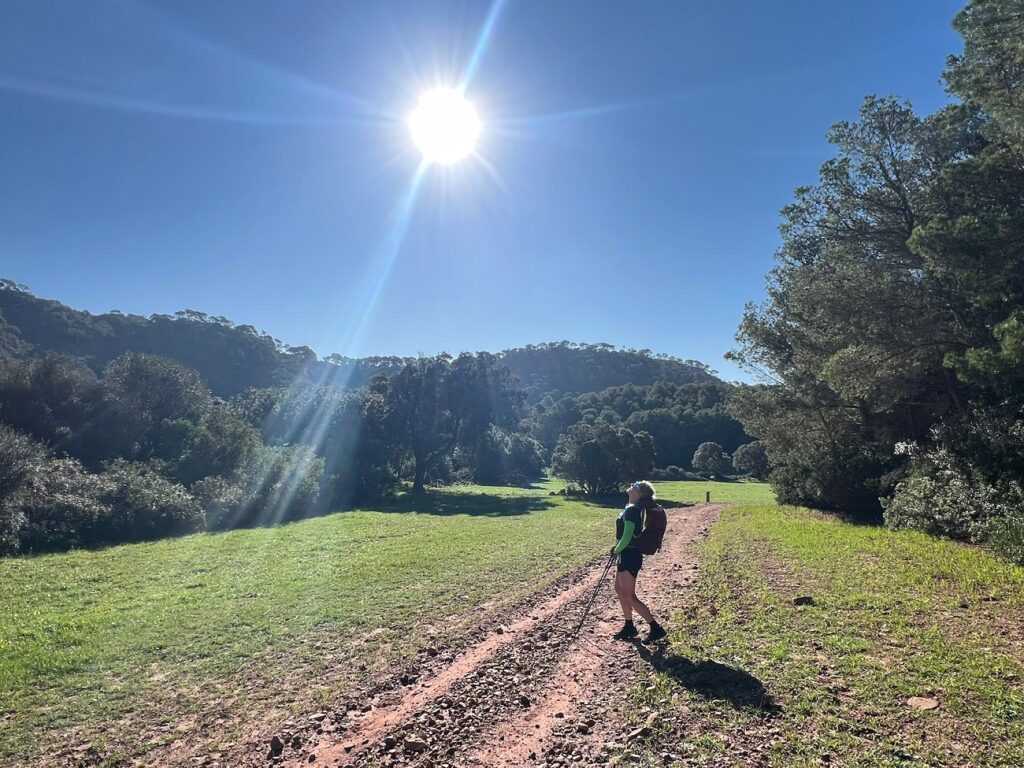
A Journeys with Soul: Menorca Article written by Stephanie Mutsaerts Northern Spain Travel Presents The 8-Day Walking Menorca Journey Learn more about this tour Journeys with Soul: Menorca A Walking Pilgrimage of Flavor, Silence, and Stone For eight days, Menorca unfolds not as a destination, but as a presence. You walk along its rugged coasts and through ancient pine forests, guided not by a map, but by the sound of wind in fig trees and the scent of wild rosemary. This is a journey for those who travel not to escape, but to encounter — the land, the silence, the self. Explore the lure of Menora with Northern Spain Travel. Menorca: A Hidden Jewel of Tranquil Luxury and Timeless Beauty Far from the bustling crowds of its Balearic sisters, Menorca is a sanctuary for discerning travelers seeking unspoiled nature, refined experiences, and quiet elegance. Designated a UNESCO Biosphere Reserve, the island offers a harmonious blend of wild Mediterranean landscapes, ancient history, and sophisticated charm. For hiking enthusiasts, Menorca is a dream. The legendary Camí de Cavalls, a historic coastal path encircling the island, guides you through a kaleidoscope of dramatic cliffs, pine forests, hidden coves, and rolling hills. Each step reveals a new vista — from turquoise waters framed by rugged rock formations to sweeping countryside dotted with wildflowers and ancient stone walls. Whether you’re trekking a gentle inland stretch or exploring cliffside trails with panoramic sea views, the serenity is unmatched. Gastronomy in Menorca is a deeply rooted and elegant affair. The island’s culinary tradition combines rustic authenticity with modern sophistication. Enjoy fresh-caught seafood, artisanal Mahón cheese, and local delicacies such as caldereta de langosta (lobster stew) in refined seaside restaurants or charming rural fincas. Pair every meal with excellent Balearic wines or a crisp gin tonic made with the island’s own Xoriguer gin, a nod to its British heritage. The true luxury of Menorca, however, lies in its peaceful rhythm. There are no loud parties, only sun-drenched days, golden sunsets over silent coves, and star-filled nights. It’s a place to slow down, reconnect with nature, and indulge in life’s simple yet profound pleasures — all in an atmosphere of understated elegance. Menorca is not just a destination — it is a retreat for the soul. Day 1: When Arrival Feels Like Belonging Mahón, is the island’s capital, where a soft light kisses honeyed stone walls. A private transfer takes you to a boutique hotel where linen curtains flutter with the sea breeze. The pace is already different here. In the afternoon, a private historian walks you through Mahón — its neoclassical façades, hidden staircases to the water, stories carved into limestone. As the sun drops, a private wine tasting offers the first sip of Menorca’s quiet richness. Whites cooled by sea air, reds rooted in clay. Local cheeses complete the ritual. Local Insight: Mahón’s history as a British stronghold lives in its architecture — and in its gin. Mahón’s history as a British stronghold lives on vividly in its architecture — and unmistakably in its gin. During the 18th century, when the British ruled Menorca, they left behind a distinct legacy: elegant Georgian-style buildings with sash windows and neoclassical facades that still define the town’s charm today. But perhaps the most enduring (and enjoyable) remnant is Xoriguer gin, a spirit crafted using traditional copper stills and infused with juniper berries. Originally created to satisfy the tastes of British sailors, Mahón’s gin has become a beloved symbol of the island’s unique cultural fusion and timeless character. Northern Spain Travel invites you not just to visit, but to experience Menorca — with heart, mind, and palate open. Day 2: Listening to the Wetlands From Cala Mesquida, the Camí de Cavalls leads into the s’Albufera des Grau Natural Park — a protected haven of marshes, cliffs, and hidden birdsong. Your guide moves slowly, letting the silence speak. Booted eagles soar above; lizards skitter below. By midday, you reach the stark elegance of the Favàritx Lighthouse. Here, the sea meets stone in a lunar dream. A picnic lunch tastes of olive oil, fresh bread, and the wild. In the afternoon, the Isabel II Fortress welcomes you with silence and wind — a monument to history and resilience. Northern Spain Travel Tip: Let the breeze at Favàritx guide your thoughts. It’s the kind of place that clears them. This is not a walking tour. It is a pilgrimage of senses. A journey with soul. Day 3: Clay Paths and Cliffside Wonder From the golden sands of Arenal d’en Castell, you trace the island’s northern spine — red earth underfoot, sea-glass waters to your right. The path climbs and curls through pine forests and dry stone terraces, toward Cavallería Beach. Here, you pause. Swim. Breathe. The clay cliffs are good for the skin and better for the soul. Afterward, you’re driven west to Ciutadella — a city of candlelit streets and Moorish echoes. A private walking tour with a local guide brings its stories to life. Evening suggestion: Let Ciutadella’s quiet alleys guide you to a tucked-away seafood tavern. No reservations. Just intuition. Day 4: Red Sands and the Geometry of Stone Today’s trail takes you from Cavallería to Cala del Pilar — one of Menorca’s wildest beaches. Reddish sands. Turquoise water. Silence layered in cicada song. Later, you visit Lithica — a former stone quarry turned labyrinth of art and shadow. You walk among carved geometry, cooled by walls that once held sea fossils. It’s not a monument. It’s a meditation. Local Hero: Margarita, the curator, speaks not of construction but of listening. “The stone knows more than we do,” she says. Evening is yours. Ciutadella waits, with its flickering lamps and open doors. Day 5: Memory Etched in Rock You hike along cliffs toward Cala Morell, where the past is carved into the earth. The Necropolis — a series of ancient burial caves — feels less like a ruin and more like a whisper from another time. Lunch arrives with sea views at a quiet cove. In the afternoon, choose your own experience: an archaeological walk, a tasting of Menorcan preserves and wines, or perhaps stargazing under skies that knew the Phoenicians. Flora Note: In spring, wild orchids line the trail like secrets waiting to bloom. Menorca is a haven for nature lovers, and one of its most enchanting treasures is the abundance of wild orchids that bloom across the island, especially in spring. With over 25 species found in its meadows, forests, and coastal paths, these delicate flowers add a splash of color to the island’s already rich biodiversity. From the striking Bee Orchid to the rare Man Orchid, each species reveals a glimpse into Menorca’s untouched ecological heritage. As part of its UNESCO Biosphere Reserve status, the island offers a uniquely protected environment where these botanical gems can flourish in serene, natural beauty. Day 6: Of Cheese, Stone, and Silence From Cala Morell, the trail winds toward the rugged west — past stone huts, grazing sheep, and a stillness shaped by wind. Punta Nati Lighthouse stands at the edge, unwavering. Your afternoon unfolds on a family-run estate. Beneath fig trees and tiled roofs, you taste artisan cheeses, sip local wines, and hear the stories of generations tied to this land. Travel Tip: Be sure to check out the circular dry stone constructions, a technique traditional to Menorca and other Mediterranean regions. This specific formation, with its stepped, circular, almost pyramid-like shape and surrounding curved wall, is a modern artistic interpretation or sculptural installation inspired by ancient Talayotic and dry stone architecture. It’s likely part of an interpretive or cultural walking route on the island — perhaps along the Camí de Cavalls, where art and nature often merge. These constructions celebrate Menorca’s UNESCO-recognized dry stone heritage, which uses no mortar and showcases the skill of shaping and balancing local stone. Day 7: Coves of Farewell On your final walk, you follow the island’s southern coast — Cala Macarella, Cala Turqueta, Son Saura. Water like cut glass. Sand fine as flour. Each cove is a farewell in slow motion. You lunch by the sea, your steps now measured not by distance, but by gratitude. Back in Mahón, your last night invites reflection — and perhaps one final toast. Day 8: The Quiet Departure You leave not hurriedly, but softly — with sun on your skin and salt in your hair. The landscapes of Menorca have walked with you. And you, with them. This is not just a holiday.It is a return — to stillness, to taste, to self. Photos by Stephanie Mutsaerts
Heming-WAY: Luxury Road Trip Tours Through Northern Spain in the Footsteps of Ernest Hemingway
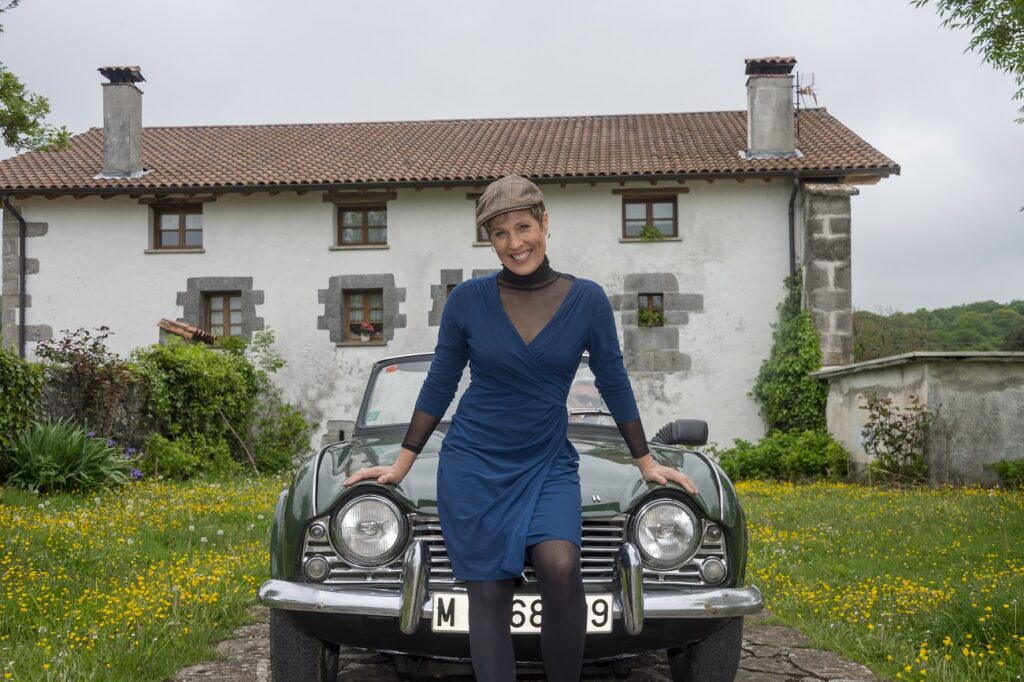
Our Hemingway Road Trip Tour is a purely experiential travel adventure. It is a road trip through Northern Spain full of diverse and local experiences connected to the life and writing of Ernest Hemingway. Heming-WAY: Luxury Road Trip Tours Through Northern Spain in the Footsteps of Ernest Hemingway If you’re dreaming of luxury travel in Northern Spain, there’s no better inspiration than Ernest Hemingway. The Nobel Prize-winning author fell deeply in love with the region’s raw beauty, fine wines, and warm hospitality. Our Heming-WAY Semi-Guided Tour is your invitation to follow in his footsteps on a curated luxury road trip through Spain, exploring the Basque Country, the La Rioja wine region, and Navarra—our jewel in the raw. With private local guides in select destinations, exclusive wine tastings, and boutique stays, this is a luxury tour of Spain with soul. Ready to travel the Heming-WAY?Let us design your luxury tour of Northern Spain, where every glass of Rioja, every sea breeze, and every cobblestone street tells a story worthy of Hemingway himself. Ask us for a paper copy of The Hemingway Traveler Magazine Send us a whatsapp at +34 628 601560 or send us an email at info@northernspaintravel.com Hemingway Traveler Magazine The magazine ‘Hemingway Traveler’ describes the journeys taken by Hemingway in each region, featuring the places known as ‘Hemingway’. It explains the development of the American writer and Nobel Prize winner’s ties to his beloved and admired Navarra, during his stays in Pamplona for San Fermin, Aoiz, Burguete; Orreaga / Roncesvalles, Selva de Irati; Lekunberri, Sunbilla and Tudela. In Gipuzkoa, he visited San Sebastian, Tolosa, Hondarribia, Irun, Txingudi Bay, Zarautz, Zumaia, Loiola, Deba (with its geopark on the Basque Coast), Markina, Etxebarri, Eibar (Armera Industry Museum). In Bizkaia he traveled to Bilbao, Ermua, Gernika, Urdaibai, Mundaka, Bermeo and Orduña. In Álava, Vitoria and Ollauri. In Iparralde he walked through the streets of Hendaia, and in La Rioja his stays are recorded in Logroño, Haro and Calahorra. The magazine presents photographs of all the locations that the writer visited from 1923 to 1960. Along with the images you can read Ernest Hemingway’s phrases highlighting the main characteristics and annual events of those municipalities. Recipes from some of the oldest restaurants in each region is also included – Gipuzkoa, Alameda de Hondarribia (1880); in Navarre, the Benta Miguel, from Ventas de Arraitz (1800); in Bizkaia, Los Fueros de Bilbao (1878); in Álava, El Portalón de Vitoria, which has been a post house and inn since the 15th century; and in La Rioja, Casa Terete, in Haro (1877). That the American writer and Nobel Laureate Ernest Hemingway was in love with Gipuzkoa and its bordering territories is no secret. uniqueness of Ernest Hemingway as the thread of its storyline, connects the links between Euskadi, Iparralde, Navarra and La Rioja through a variety of proposed trips and getaways. The places, people, parties, and customs that the Nobel Prize winner knew in these three neighboring autonomous communities left a strong mark on both his life and his writing. These experiences went beyond those of San Fermin which Ernest Hemingway made famous through the world with his first great novel, published in 1926 ‘The Sun Also Rises’ (titled ‘Fiesta’ in its Spanish version). Where Are We? Hemingway had a gift for finding places with a unique flavour and identity of their own — and our “Heming-WAY” territory is no exception. It spans three distinct cultural communities with more than 3,000 years of history to uncover, nestled in the angle formed by the Bay of Biscay and the Franco-Spanish border. In less than 300 kilometers, you’ll travel through: Two UNESCO biosphere reserves One of Europe’s best-preserved ancient forests A European Cultural Capital and a European Green Capital Some of the world’s most beloved festivals A dazzling variety of landscapes — from Atlantic beaches to vineyard hillsides — plus a culinary scene renowned across the globe. All this lies within a short trip from Europe’s great cities: 6 hours by train from Paris, 4 hours from Barcelona, 3.5 hours from Madrid. Day-by-Day Highlights of the Heming-WAY Tour From the Gipuzkoa Basque Coast to the rolling vineyards of La Rioja and the untamed Pyrenean valleys of Navarra, Hemingway discovered a Spain far from the tourist crowds—a place of deep tradition, authentic flavors, and landscapes that stir the imagination. On this semi-guided luxury tour, you’ll enjoy the freedom of your own pace combined with exclusive experiences only possible through our insider network. Day 1 – Pamplona: Pintxos, History & Private Hemingway Haunts Begin in Pamplona with a private guided walking tour of the charming Old Town, tracing the legendary bull run route, visiting the Cathedral of Santa María la Real, and pausing at Hemingway’s favorite spots. Step inside the historic Café Iruña and a members-only 1920s gastronomy club for a welcome drink, then indulge in gourmet pintxos paired with Basque cider or fine Navarra wine. Northern Spain Travel invites you not just to visit, but to experience the careful craft behind each cut of meat with rich marbling and natural flavor. Semi-guided tours SpainContact us to book your seat on this unforgettable road trip experience. Day 2 – La Rioja: Private Wine Tastings & Gourmet Dining Travel to La Rioja wine country, where Hemingway famously spent days exploring the vineyards. Visit handpicked wineries—some with centuries-old underground cellars—for intimate tastings of Gran Reservas and elegant blends. Savor a Michelin-worthy lunch at top hotels, surrounded by vineyard views. Day 3 – Navarra & the Pyrenees: Rustic Luxury in Wild Landscapes Experience Navarra’s “jewel in the raw” as you follow Hemingway’s fishing trails along the Irati River. Enjoy artisanal sheep cheese and txistorra sausage in the village of Aribe, then dine on freshly caught trout at Hemingway’s favorite hotel in Burguete—still run by the same family who served him nearly a century ago. Day 4 – Basque Country & San Sebastian: Culture, Coast & Culinary Bliss Immerse yourself in Basque traditions before arriving in San Sebastian, one of Europe’s top luxury coastal destinations. Enjoy a private pintxos and wine tour, discovering why this city is a global gastronomic capital. Relax on La Concha Beach or stroll the elegant Belle Époque promenade. Day 5 – Sailing the Basque Coast: A Hemingway-Style Escape Board a privately chartered antique sailboat from the fishing port of Pasajes. Cruise along the emerald Atlantic coastline toward San Sebastian, champagne glass in hand, just as Hemingway would have done. End the day with a curated bar hop to taste the city’s finest pintxos and wines. Why Choose a Semi-Guided Luxury Tour in Spain? Our Heming-WAY experience blends independent travel with exclusive guided moments, giving you the best of both worlds. You enjoy the freedom of a self-paced road trip, while we arrange the luxury stays, insider access, and gourmet experiences that make the journey unforgettable.