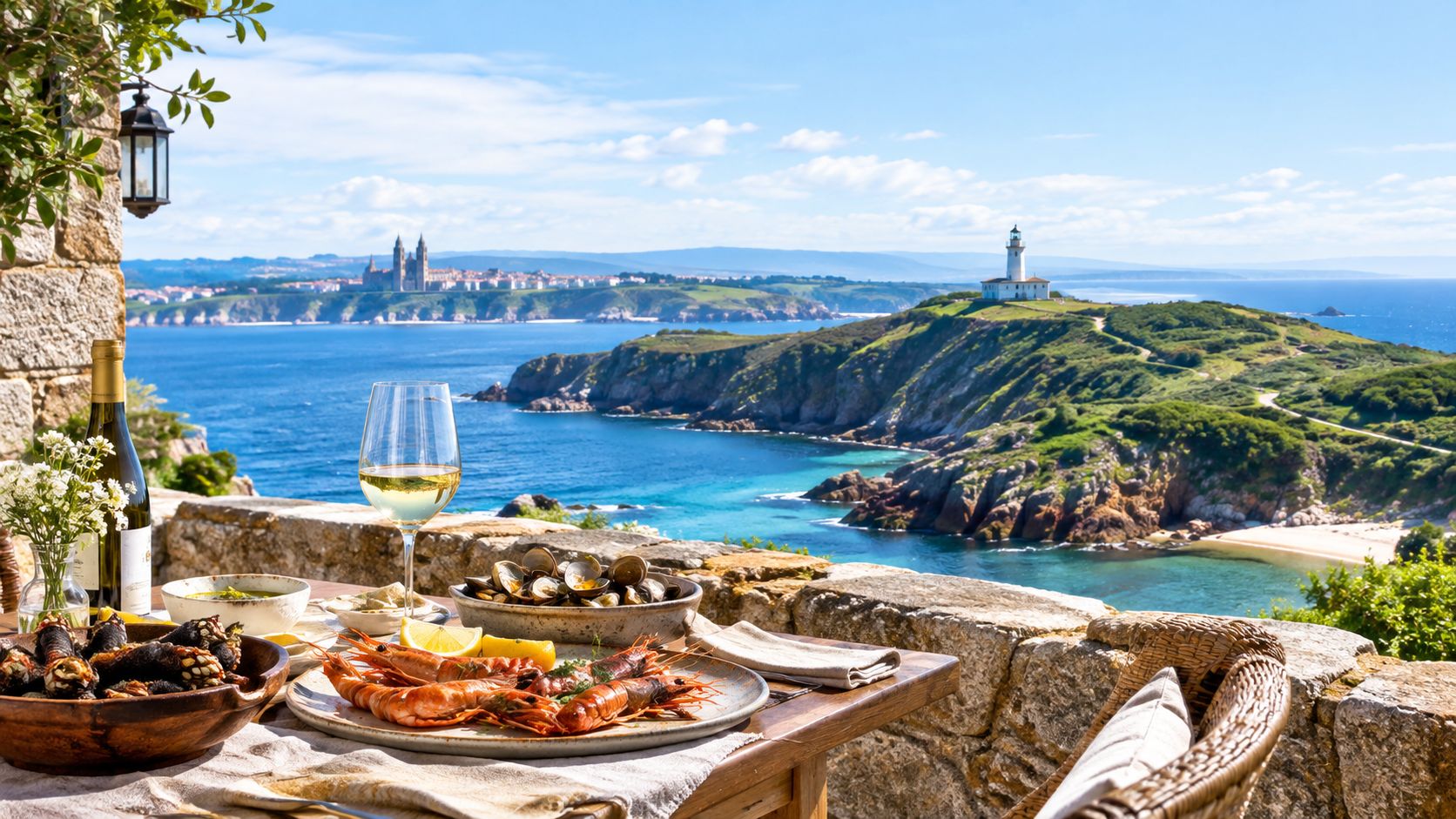
The most popular advice about Basque Country wine is also the easiest way to miss half the story: start with txakoli and assume you've understood the region. The fresh, often gently spritzy coastal white is an essential introduction, but Basque wine also includes the vineyards and red-wine estates of Rioja Alavesa, in southern Álava. A rewarding wine journey treats these as two distinct terrains, then chooses how to bring them together.
Table of Contents
- Why Basque Country Wine Has Two Distinct Faces
- Building a Map of Basque Wine Appellations
- Comparing Getaria Bizkaia and Álava Txakoli
- Tasting Txakoli Through Acidity and Atlantic Character
- Discovering Rioja Alavesa Beyond Txakoli
- Choosing Examples That Tell the Regional Story
- Planning Private Wine Visits Across the Seasons
- Designing Your Bespoke Basque Wine Journey
Why Basque Country Wine Has Two Distinct Faces
The Atlantic coast and inland Álava offer different answers to the question, “What does Basque wine taste like?” Near the sea, cool, wet conditions shape txakoli, a wine closely associated with indigenous Hondarrabi Zuri and bright acidity. Farther south, Rioja Alavesa belongs to the internationally recognized Rioja Qualified Designation of Origin, with a large vineyard area and a strong red-wine tradition. The Basque Government's account of Rioja Alavesa describes its scale and production history as part of this broader inland identity (Rioja Alavesa and the Basque wine sector).
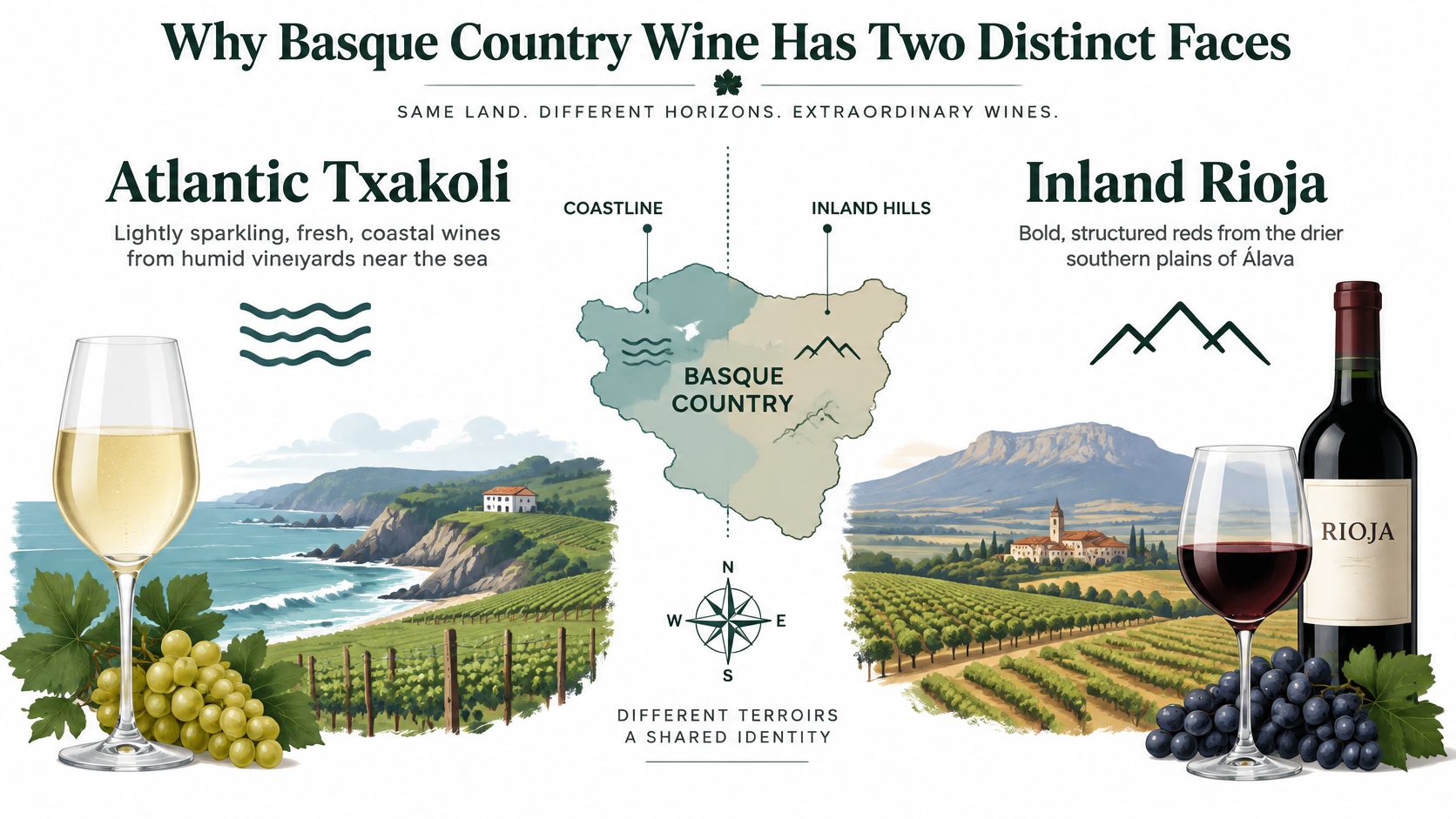
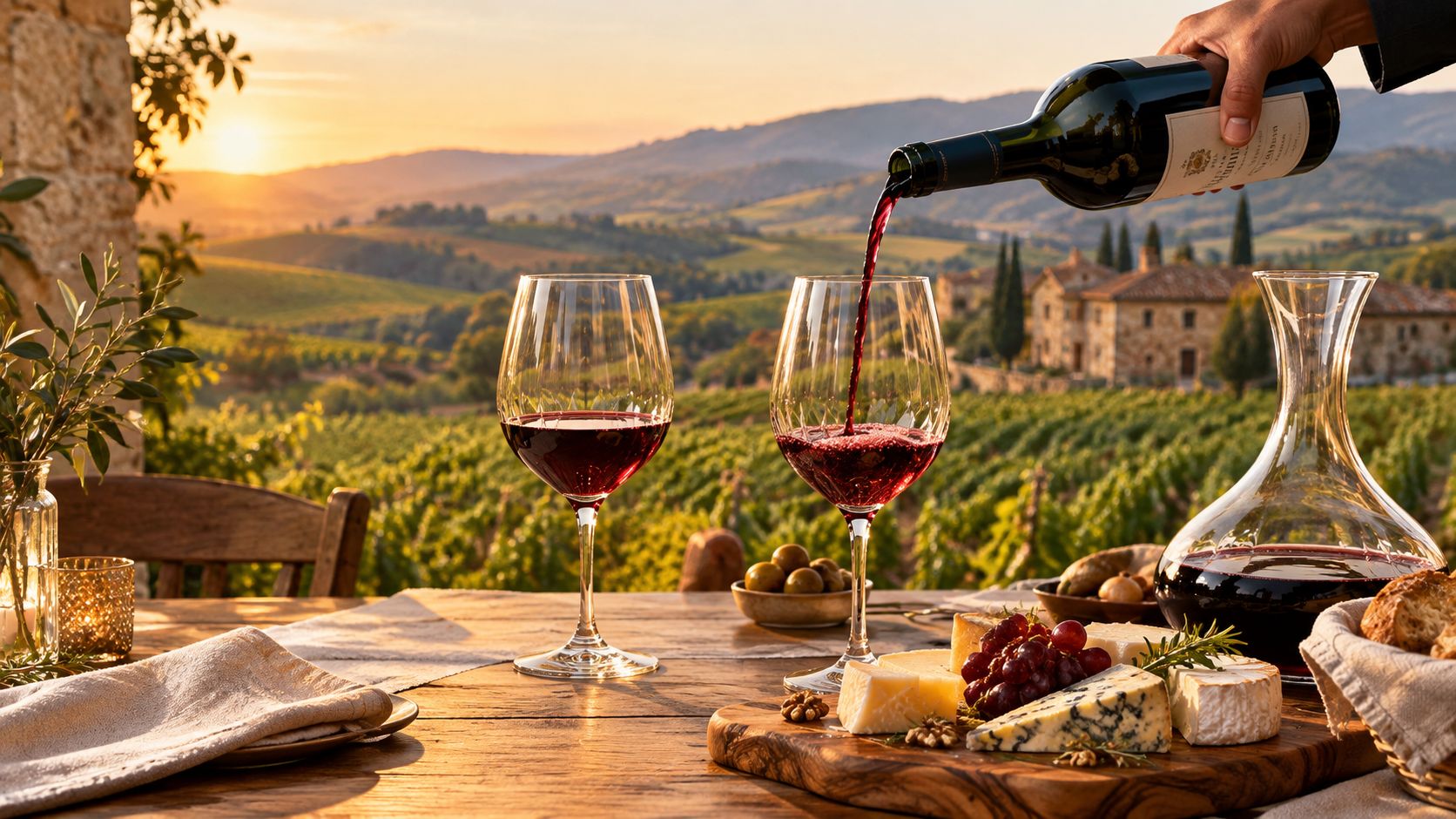
That contrast changes more than what's in the glass. Coastal visits pair naturally with fishing villages, maritime food, and vineyards set against a green Atlantic backdrop. Inland, cellar visits unfold among vineyard-covered slopes and villages, with a focus on red wines, estate history, and the character of Álava. These are complementary experiences, not competing versions of the same tasting.
The useful planning question isn't whether you like white or red wine. It's whether you want a coastal day built around fresh wines and seafood, an inland day centered on Rioja estates, or a private route that gives each place time to make an impression. Travel between them requires planning, so don't treat the map as a checklist of nearby tasting rooms.
A practical rule: Choose the landscape and experience you want first. Then choose the bottles that express it.
Building a Map of Basque Wine Appellations
Start with the three txakoli designations: Getaria, Bizkaia, and Álava. Each makes wines shaped by Atlantic influence, but the names help distinguish place and production rules. The wider Basque wine picture also includes Rioja Alavesa, which belongs to DOCa Rioja and is a different inland chapter rather than a fourth txakoli designation.
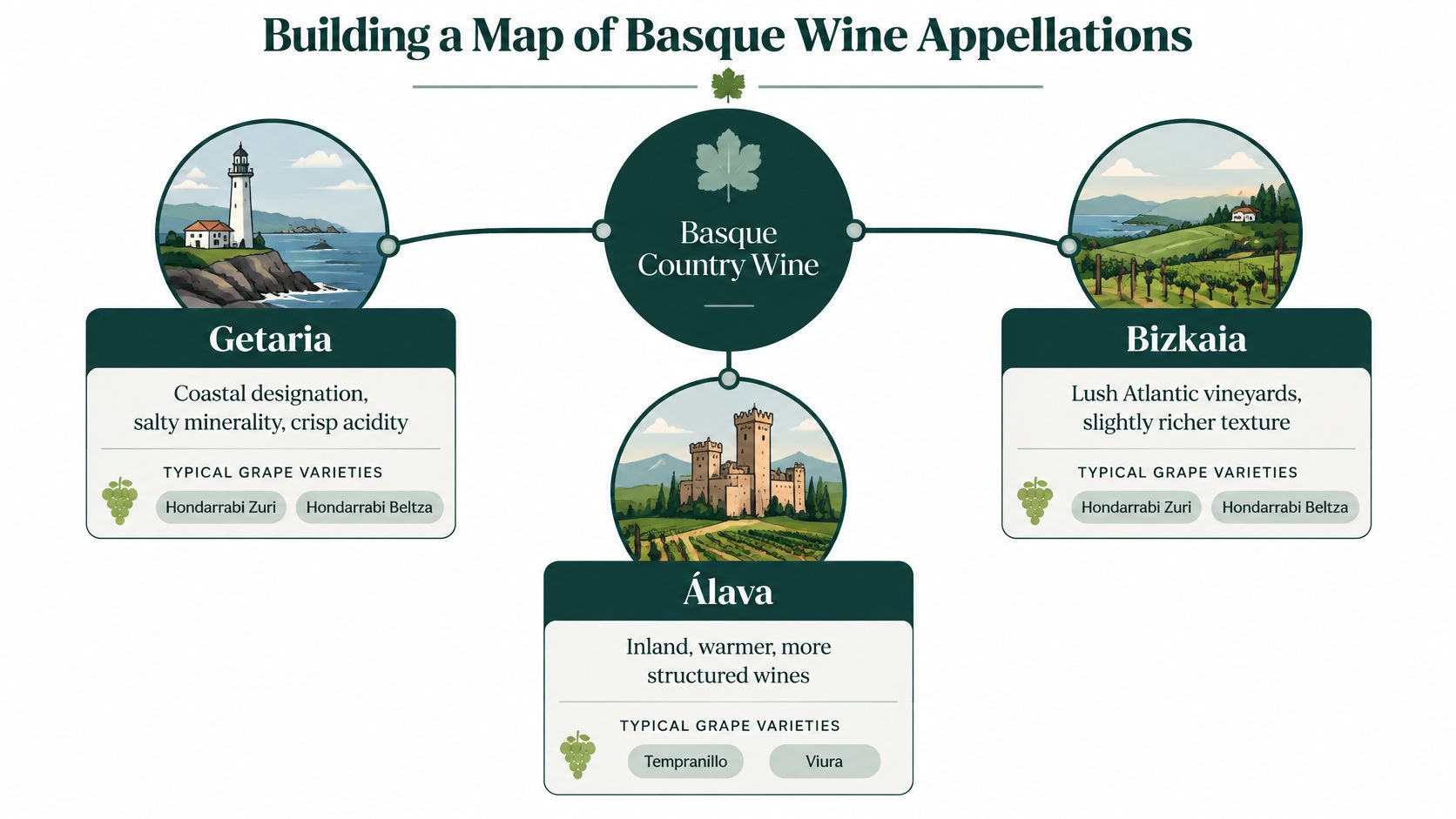
Hondarrabi Zuri is the central white grape to know when exploring txakoli. Its role makes sense in the cool, damp coastal setting, where the style is known for freshness and lively acidity. Other authorized grapes can appear in blends, but the applicable rules restrict their use. For instance, Bizkaiko Txakolina's specifications set minimum total acidity at 6.0 grams per liter for white wine and 5.5 grams per liter for rosé, alongside minimum acquired alcohol levels of 10% for both styles (Bizkaiko Txakolina specifications).
A visitor doesn't need to memorize regulations to taste well. Use the designation as a starting clue, then ask the producer how the wine was made and what they want you to notice. A stainless-steel-fermented white may emphasize fruit and freshness, while time on lees or fermentation in barrel can add texture. In Rioja Alavesa, ask about the red grapes and the estate's approach to maturation. The appellation gives context; the glass tells you how that context was interpreted.
Try these questions at a tasting:
- Which designation is this? Getaria, Bizkaia, Álava, or Rioja Alavesa?
- Which grapes are in the bottle? Ask about Hondarrabi Zuri in txakoli and the red-wine blend inland.
- What happened in the cellar? Find out whether the wine was made in tank, aged on lees, or fermented or matured in barrel.
- What should I taste for? Invite the host to point out acidity, aroma, body, oak, or the finish.
Comparing Getaria Bizkaia and Álava Txakoli
“Txakoli” describes a family of wines, not one fixed flavor. A designation can help you anticipate the style, while the producer's choices around ripeness and maturation explain why two bottles from different areas may feel quite different. Official Getaria rules set a minimum acquired alcohol level of 9.5%, limit authorized varieties to no more than 20% of the vineyard area processed by each winery, and require at least 85% of the named recommended grape in a single-variety-labeled wine (Getariako Txakolina requirements).
| Appellation | Distinctive character | Cellar or age emphasis | Best tasting position |
|---|---|---|---|
| Getaria | Often sharply fresh, with a saline edge | Begin with a young bottling; compare it with a later-harvest or more textured example if available | First, to set a crisp Atlantic baseline |
| Bizkaia | Can show a more structured white-wine shape | Ask about lees work or barrel fermentation; the appellation's rules set a higher minimum alcohol for barrel-fermented white | After Getaria, to explore added texture |
| Álava | A broader range of ripeness and maturation styles | Seek a more mature or oak-influenced bottle as a contrast | Last among the txakoli, before moving inland to Rioja Alavesa |
That progression is a tasting suggestion, not a ranking. A lively young Getaria gives your palate a clear reference point. A fuller Bizkaia or barrel-fermented white can then show how cellar choices affect weight and texture without erasing the wine's Atlantic character. An older or oak-influenced Álava bottling lets you finish the txakoli flight with a different balance of freshness and maturity.
When booking a tasting, request contrasts rather than several bottles chosen only because they share a label. Ask the host to pour examples that differ in age or production method, then compare acidity, body, and finish. If the producer's available range doesn't match this order, follow the bottles they can offer and ask what makes each one distinctive.
Tasting Txakoli Through Acidity and Atlantic Character
To understand txakoli, taste beyond the bubbles. Some bottlings have a light spritz, but the style's defining impression is often its fresh, high-acid balance. Moderate ripeness and naturally high acidity can give the wine restrained alcohol, with white-fruit, floral, and herbaceous aromas. When a wine is bottled early, a subtle trace of dissolved carbon dioxide may add a fizzy impression without making it a full sparkling wine.
Hondarrabi Zuri is the principal white variety to ask about. Complementary varieties, which can include Riesling, Chardonnay, Sauvignon Blanc, and others, are permitted under relevant frameworks but generally restricted to a minority share. The exact rules vary by designation, so ask the winery about its blend rather than assuming every txakoli tastes alike.
For a simple tasting exercise, take a small sip and pause before swallowing. Notice whether the acidity feels like a clean lift across the tongue or a more pointed, mouthwatering edge. Then look for fruit and herbs, consider how much weight the wine has, and see whether any spritz is present. These details help separate a crisp, early-drinking style from one with extra texture or maturation.
The same structure explains why txakoli works so naturally at the table. Acidity can refresh the palate alongside rich or fried food, while its restrained alcohol can leave delicate seafood in the foreground. Try it with shellfish, fried fish, salty snacks, or pintxos. To explore tasting method and observation, use these wine tasting tips for comparing wines.
A useful premium tasting isn't simply a more expensive bottle. It's a comparison that reveals a difference you can recognize.
Ask to compare a young, high-acid txakoli with a lees-aged or barrel-fermented example. The second may feel rounder or more textured, while still retaining a sense of its Atlantic origin. Taste the wines side by side with the same food, and notice whether the added weight changes what you'd pair with each.
Discovering Rioja Alavesa Beyond Txakoli
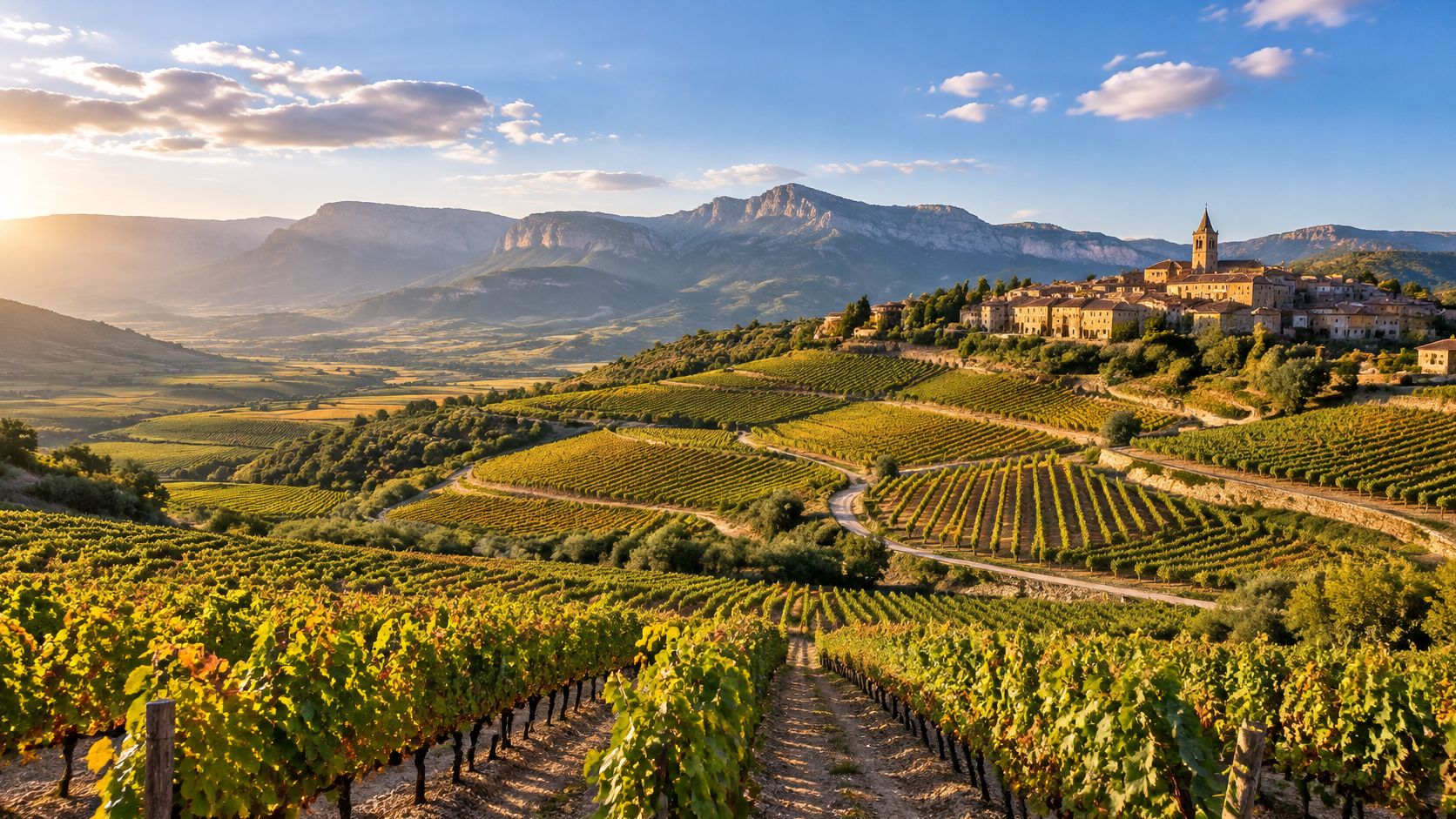
Rioja Alavesa reveals the second climate. Leave the coast, drive into southern Álava, and the vineyards belong to DOCa Rioja while the villages, family estates, and terrain keep a distinctly Basque character. The area rewards its own visit rather than being folded into a generic Rioja itinerary.
The scale difference is measurable. The Basque Government figures cited earlier put Rioja Alavesa at 12,700 hectares of vineyards, roughly 20.5% of the vineyard area protected by DOCa Rioja. Wines produced in Álava under DOCa Rioja exported more than 20 million liters during the first eleven months of 2023, worth €146 million in export value. These numbers describe an established inland red-wine economy working at a very different scale from the small coastal txakoli houses.
A visit here changes the tasting conversation. With txakoli you listened for acidity, salinity, and lift. With an Alavesa red, listen for body, darker fruit, and the dry grip of tannin across your gums. Ask the host how long the wine rested in oak and what that time was meant to add, then decide whether you taste it in the glass.
The cellar itself often carries the lesson. Producer-led tastings here tend to revolve around maturation, so the barrel room can explain as much as the bottle.
For travelers joining the coast and the interior in one private journey, Rioja Alavesa works as the fuller-bodied second half of the story. Route ideas that link estates into a coherent day appear in this guide to bespoke Rioja wine tours. A private visit rewards unhurried time in the cellar, where the history of the estate sits alongside the tasting itself.
Choosing Examples That Tell the Regional Story
Build a tasting around contrasts, not prestige labels. A flight that moves from coastal white wine to inland red wine lets you notice how place and cellar decisions change the glass. Begin with a fresh Getaria txakoli, follow with a more textured Bizkaia or barrel-fermented white, and then turn to Rioja Alavesa. If the host can offer a younger red and a more mature bottle, ask to compare them rather than tasting either in isolation.
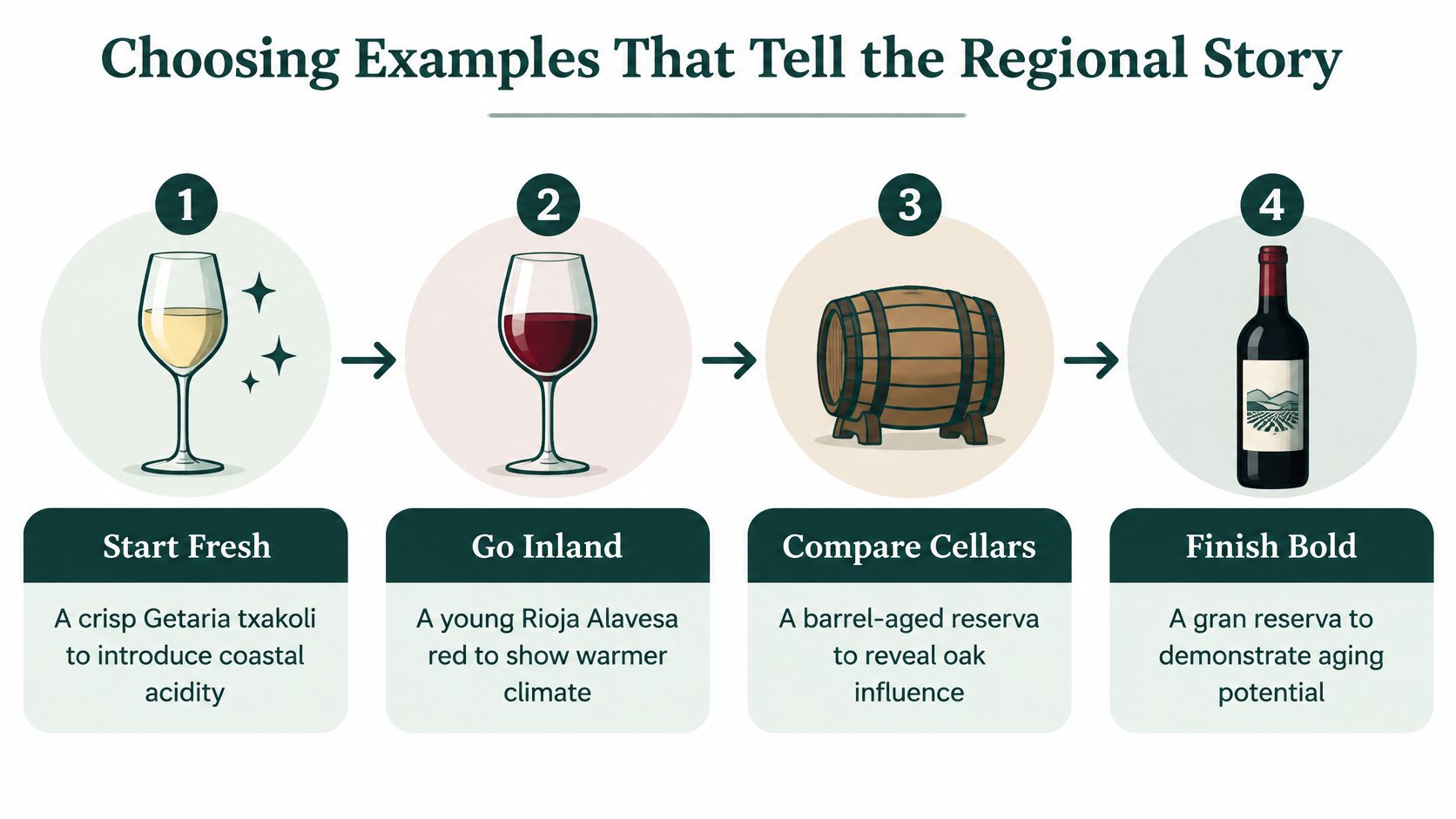
For each wine, focus on a few useful details: aroma, acidity, alcohol, body, oak, tannin, finish, and any apparent carbonation. You don't have to use specialist vocabulary. “This feels sharper,” “this has more weight,” or “the oak stays in the background” are good observations. Ask the producer what they intended, then see whether your impression matches.
A thoughtful tasting order keeps the palate clear. Move from the lightest, freshest white toward more textured whites, then pour the reds. Within the reds, a younger wine can serve as a reference before a more mature or oak-influenced example. For the most revealing comparison, keep the food consistent across a pair of wines and change one variable at a time.
If the producer has a limited release or older bottle, ask whether it's available and why they chose to keep it. A library selection can make a tasting feel special, but its value lies in what it teaches about the estate, not its age or rarity. The same principle applies to a bottle list: each wine should add a new idea.
For readers who enjoy approachable introductions to unfamiliar drinks, this maxijournal.com starter guide offers a useful parallel in how a beginner can compare styles without needing expert vocabulary. Bring that open-minded approach to the tasting table. Choose wines that reveal the region, not just names that look impressive on a menu.
Planning Private Wine Visits Across the Seasons
There isn't one ideal moment for every Basque wine trip. The right timing depends on what you want to experience: coastal scenery and txakoli, estate visits inland, seasonal food, or the energy of harvest activity. These priorities can pull in different directions, so begin with your interests and let the calendar shape the route rather than assuming that one season guarantees the right experience.
A private itinerary works best when it allows room for the terrain between tastings. You might base yourself near the coast for a day of txakoli and seafood, then continue inland for a Rioja Alavesa estate visit. Or, if reds are your main interest, give the inland section more time and use a coastal stop as a contrasting chapter. The goal isn't to collect appointments. It's to arrive with enough time to talk, taste, eat, and enjoy the surroundings.
A guide to private winery tours in Spain can help you think through what to request before confirming a visit. A discerning traveler may want a winemaker-led tasting, cellar access, a comparison of different production methods, or food chosen to complement the wines. Private transfers and flexible pacing matter too, especially when the day includes multiple regions or a long lunch.
Use this checklist to compare proposals:
- Access: Does the visit include time with a producer or guide who can answer specific questions?
- Tasting design: Are the wines selected to show a meaningful contrast, or presented as a standard flight?
- Food: Does the plan account for seafood, pintxos, or a meal that fits the wines?
- Pace: Is there room for a relaxed visit and a scenic stop, rather than back-to-back appointments?
- Flexibility: Can the day change if weather, timing, or your energy calls for a slower rhythm?
Northern Spain Travel offers fully private, tailor-made journeys across the region, including wine experiences and private transfers. It's one option for travelers seeking a route shaped around their preferred pace and interests. Before you book with any operator, ask how the proposed visits fit together and what genuine access each one provides.
Designing Your Bespoke Basque Wine Journey
For a coastal-first visit, make txakoli the centerpiece. Choose a tasting that compares a fresh bottling with a more textured or mature example, then pair the day with regional food and time in a coastal village. The point is to experience the wine in its setting, not to rush through appellations.
Red-wine enthusiasts may prefer to give Rioja Alavesa the leading role. A visit to an estate can bring the region's cellar culture and red-wine styles into focus, with txakoli reserved for contrast. If you're curious about how rosé fits into a broader wine vocabulary, this IFM Gourmet Food Store guide to rosé provides a useful point of comparison without confusing it with txakoli.
For a balanced private journey, combine the coast and inland vineyards while giving each enough time. Before booking, decide what matters most: wine style, food, time with a producer, scenery, a leisurely pace, or a particular level of private service. Then work with a specialist to choose visits that offer real access and a clear reason to be on the itinerary.
Understand the regional contrast before choosing the cellar. That simple principle will help you build a Basque wine journey with more depth than a tour focused on txakoli alone.
Plan a private Basque Country wine journey with Northern Spain Travel, combining coastal txakoli, Rioja Alavesa estates, regional food, and private transfers at a pace that suits you. Visit Northern Spain Travel to start shaping a custom route through both wine regions.