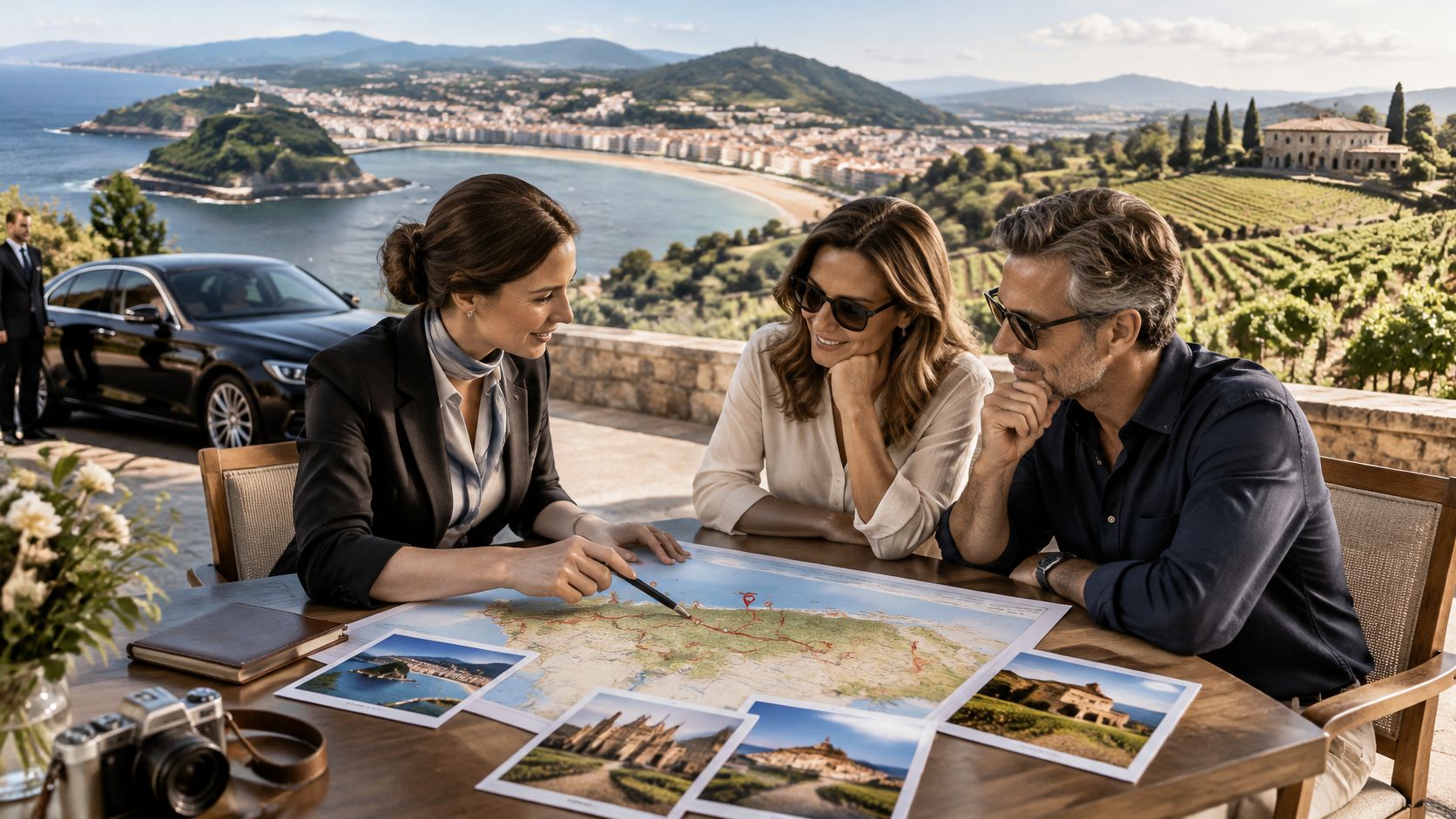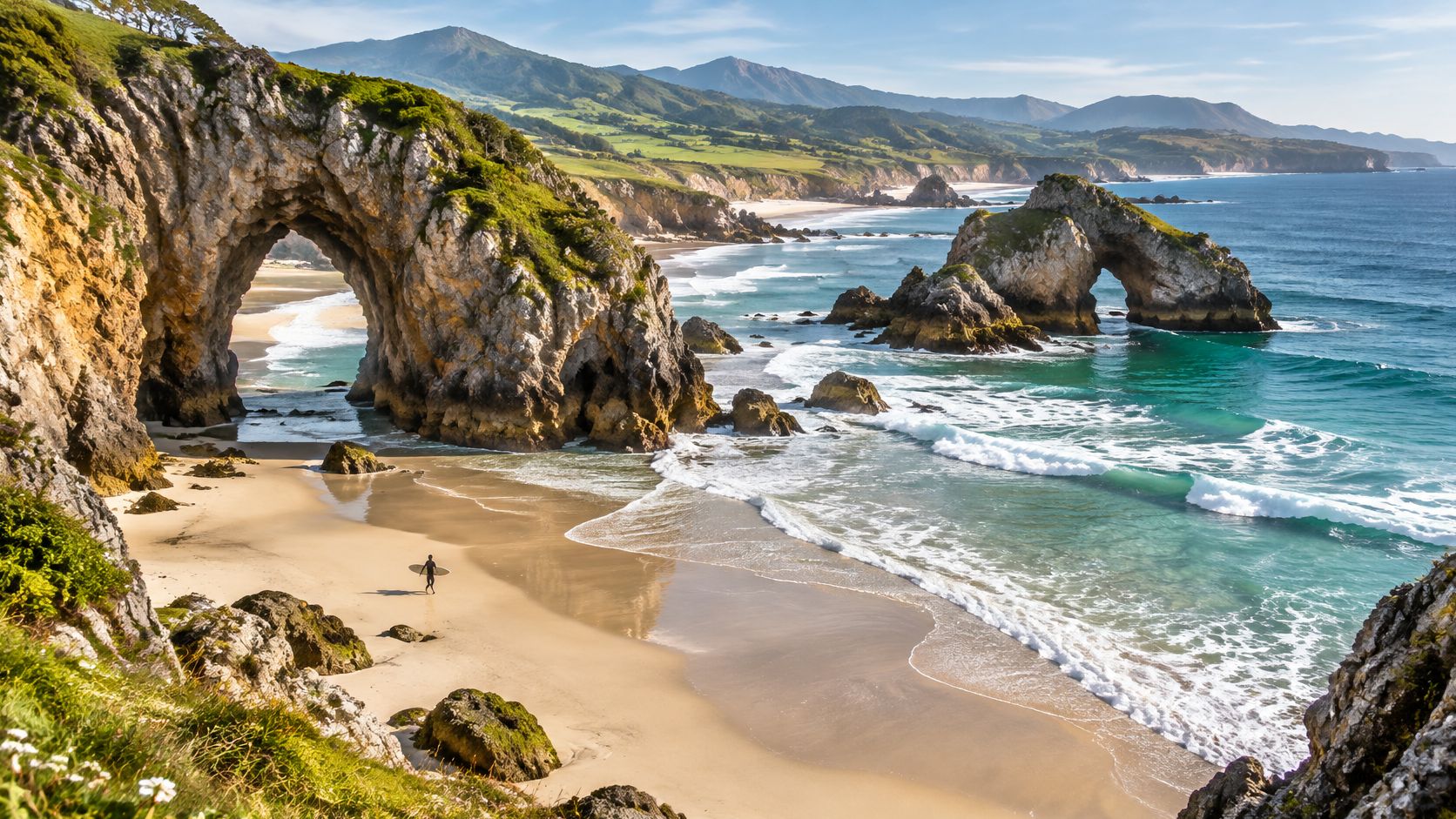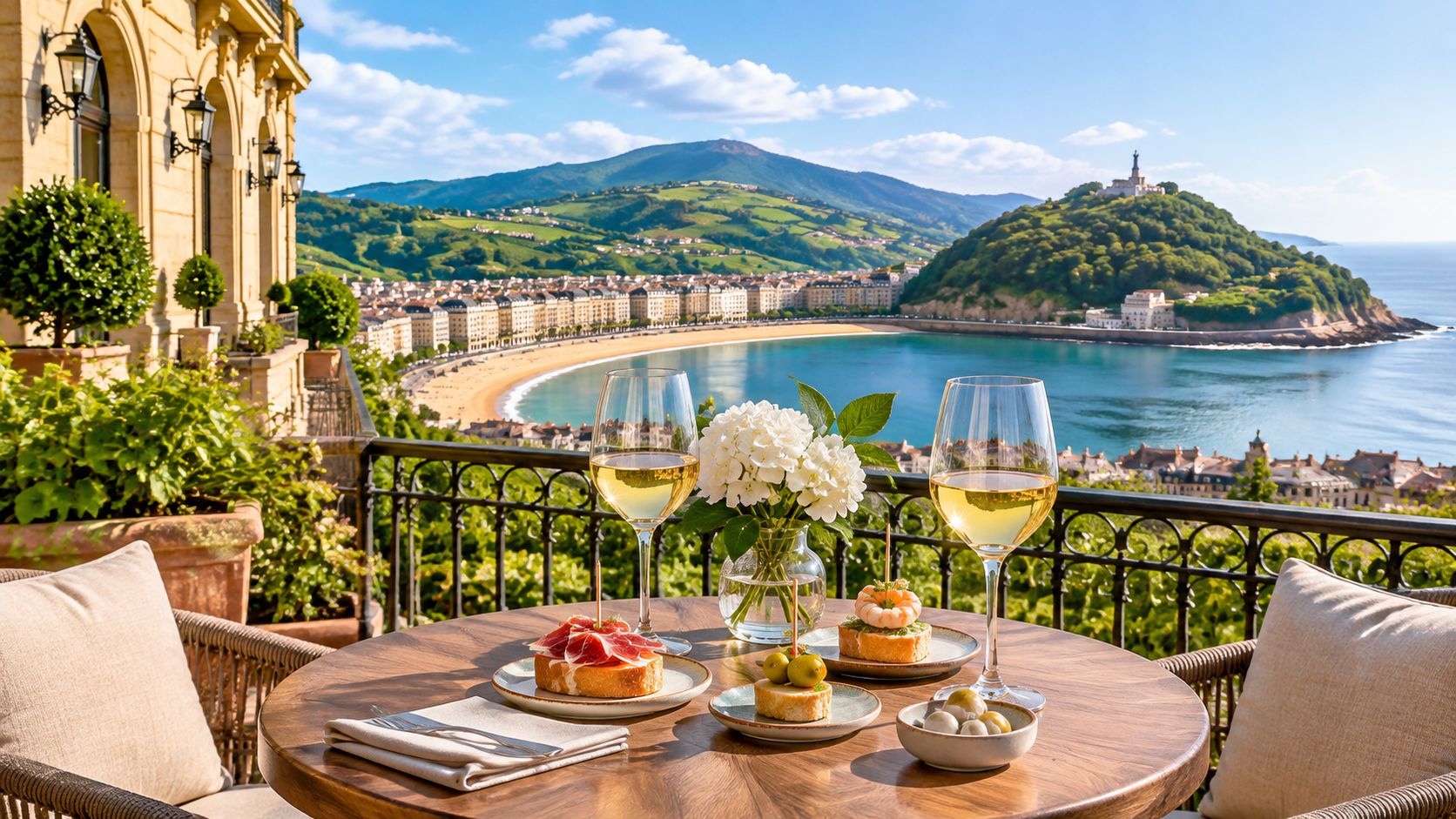
You've chosen a Rioja winery, saved a San Sebastián restaurant and found a beautiful hotel on the coast. Then the practical questions start: will the cellar receive you that day, who's driving after the tasting, and what happens if your flight arrives late? A trip can look effortless on a map and still be difficult to make work on the ground.
Table of Contents
- What a DMC in Spain Actually Does
- Core Services From Logistics to VIP Access
- How a DMC Plans a Private Northern Spain Trip
- Northern Spain Regions and the Best Months to Visit
- How to Evaluate a Spain DMC Before You Hire
- Accessibility, Sustainability and Real Local Access
- Confirm the DMC Before You Commit
What a DMC in Spain Actually Does
Say a couple builds their trip around a Rioja cellar visit and a San Sebastián dinner, only to discover that the winery is closed on their chosen day and the restaurant has no tables. Neither booking works in isolation. Someone needs to coordinate the whole journey.
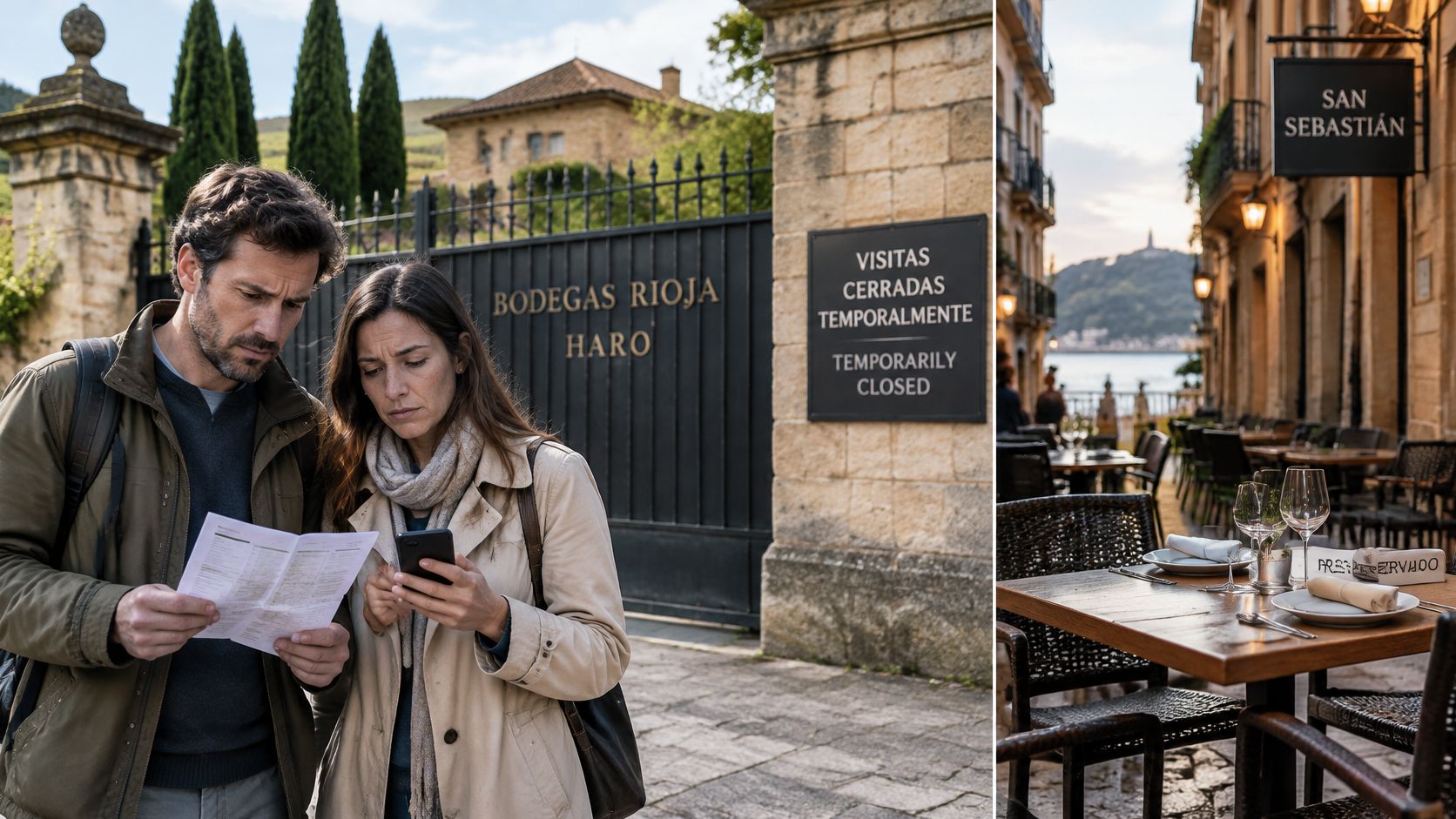
A destination management company, or DMC, is a local ground operator that designs and runs travel within a destination. It coordinates hotels, transfers, guides, reservations and help when arrangements change.
Think of a stage production: a travel agent sells and advises on the ticket, a tour operator assembles the packaged performance, and the DMC acts as the stage manager, coordinating the people behind the scenes. Businesses can overlap these roles, so the contract should identify who resolves local problems.
Spain's wider supplier ecosystem is substantial: tourism accounted for 12.6% of national GDP in 2024, according to Spain's National Statistics Institute. A DMC's value lies in selecting and coordinating appropriate suppliers, not just accessing a large directory.
Travel advisors, concierges and direct clients use DMCs for private, multi-region and event-led journeys. International airfare may need separate expertise; Passport Premiere's guide to luxury vacations without inflated airfare addresses that distinct planning task.
If your trip depends on access you can't book online, ask a DMC to coordinate it.
Core Services From Logistics to VIP Access
| Service | What It Covers | Northern Spain Example |
|---|---|---|
| Logistics and transfers | Private drivers, airport pickups, luggage handling and multi-stop routing | Chauffeured transfer from Bilbao airport to a Rioja hotel |
| Accommodation | Boutique room-type matching and early contracting before peak periods | Small hotel in San Sebastián's old town reserved ahead |
| Expert guides | Private guides selected for language, specialty and group needs | Guided Picos de Europa walk adapted to mixed-ability hikers |
| VIP access | Restaurant tables, cellar tastings and event tickets arranged through supplier relationships | Private La Rioja cellar tasting outside public hours, subject to the winery's agreement |
| Local partner network | Wineries, chefs, cider houses and fishing-village hosts | Asturias cider house evening with the producer present |
| On-the-ground support | Named contact and out-of-hours cover for changes, delays and emergencies | Replacement transport coordinated after a delayed flight |
What good coordination looks like
Transport starts with the passengers and luggage, not the vehicle photograph. A Bilbao airport pickup needs the right luggage capacity, an agreed meeting point and a driver who knows the hotel's actual access arrangements. A chauffeured transfer can remove train changes, but it also means paying for dedicated vehicle time.
Accommodation requires similar precision. A charming old-town hotel might suit a couple seeking atmosphere but disappoint someone who needs quiet, lift access or adjoining rooms. The useful question isn't which hotel is available, but which room category meets the brief and what compromises come with its location.
Guide selection goes beyond finding someone who speaks English. A family walking in the Picos de Europa needs a guide who can adjust terrain and pace, while a wine enthusiast may prefer detailed discussion of production methods. Specialist knowledge and suitability for the group don't always come together automatically.
Access needs boundaries
A relationship can help a DMC arrange a private cellar appointment or discuss an unusual request with a restaurant. It doesn't guarantee unavailable tables, unrestricted access or exceptions to safety rules. A credible proposal distinguishes confirmed arrangements from requests awaiting approval.
The local network adds depth when the host has a meaningful role. An Asturias cider producer explaining the process offers something different from a guide delivering a memorized introduction. The trade-off is availability: working producers have responsibilities beyond receiving travelers.
Support also needs a clear scope. A local contact can reorganize transport and speak to suppliers, but travelers still need appropriate insurance and should use emergency services when necessary.
Practical rule: Judge the handovers. The driver, guide, hotel and host should each know what happens next.
At Northern Spain Travel, we manage accommodation, transport, logistics, luggage, guides and experiences from first contact until clients return home. We also provide 24/7 on-the-ground support during journeys.
Our guide to transportation coordination for luxury travel in Northern Spain explains why these connections deserve attention before individual excursions are selected. List the services your journey needs, then use the table to identify who owns each responsibility.
How a DMC Plans a Private Northern Spain Trip
A DMC turns a vague wish list into a confirmed itinerary through a clear sequence of decisions.
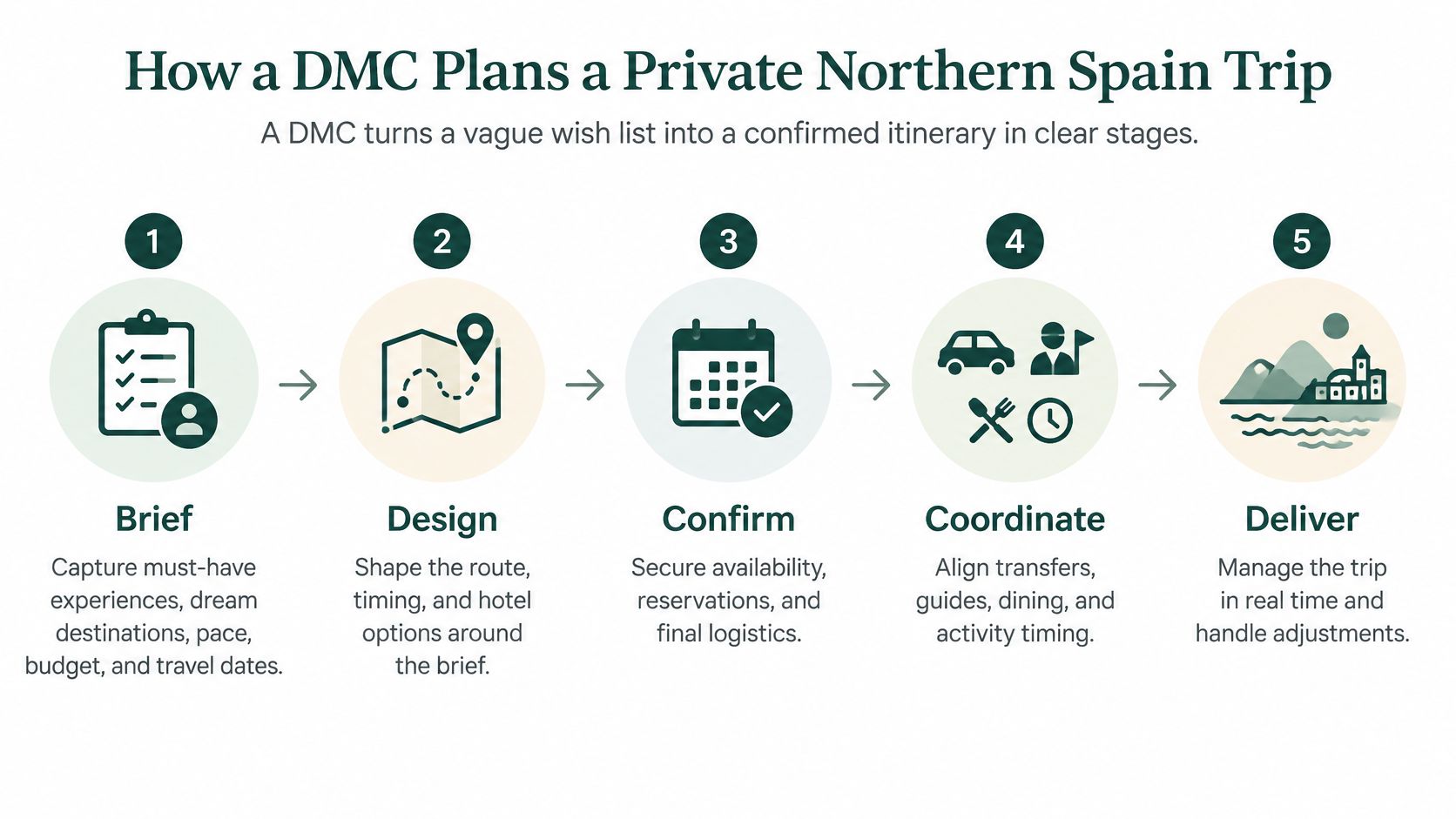
From preferences to workable bookings
-
Build the brief. Share must-have experiences, dream destinations, preferred dates, group makeup, budget and desired pace. At Northern Spain Travel, we use clients' experience checklist and imagined journey style to create a personalized draft; the common mistake is collecting destinations without identifying what matters most.
-
Match suppliers to the travelers. Choose hotels, guides and drivers for regional suitability and actual availability. A brochure favorite is a poor match if the available room requires stairs or the guide's specialty doesn't fit the group.
-
Route the days. Group geographically compatible stops and give each day a clear purpose. For example, a Rioja Alavesa tasting day should allow time for lunch and conversation rather than becoming a race back to an unrelated coastal reservation.
-
Confirm arrangements in writing. Record dates, room categories, meeting points, inclusions and supplier conditions. Treat a verbal assurance as unfinished work, and distinguish a provisional hold from a confirmed booking.
-
Draft and revise. Review the day-by-day plan with the travelers, including free time and meal timing. The usual slip is approving an itinerary because every desired place appears, without noticing that there's no room to enjoy any of them.
-
Operate and adjust. Agree how the local team will communicate during the journey and what happens when weather, closures or delays affect a day. Daily check-ins can help, but they should suit the travelers rather than interrupt their holiday.
Treat journey time as part of quality
International visitors spent €134.712 billion in Spain in 2025, with international transport representing 20.0% of total expenditure, according to INE's tourist expenditure survey. That category concerns international transport, not private driving within Northern Spain, but it reinforces how much of a travel budget goes into reaching and moving through a destination.
A premium hotel can't compensate for a badly routed afternoon. Ask the planner to show door-to-door journey time, including loading luggage, meeting guides, parking and walking from the drop-off.
Consider a coastal lunch followed by a winery appointment inland. The itinerary needs a realistic departure time, room for an unhurried meal and confirmation that the cellar can accommodate the arrival. A scenic stop helps only if it fits, not if it creates another deadline.
Judge the finished plan by journey time, hotel changes and transfer punctuality. These are practical ways to assess whether the itinerary protects your time instead of merely filling it.
Northern Spain Regions and the Best Months to Visit
| Region | Best For | Best Months to Consider | Logistics Note |
|---|---|---|---|
| Basque Lands, including Gipuzkoa and Bizkaia | Pintxos, fine dining and coastal towns | May to June or September to October for a food-and-culture brief | Use rail where convenient between cities and a driver for dispersed coastal stops |
| Wine & Heritage, La Rioja | Cellar visits and wine heritage | April to June for a general wine trip; consider September to October for a harvest-focused request | Confirm winery operations before choosing travel dates |
| Wine & Heritage, Navarra | Pamplona, festivals, wine and food | May, June or September for general touring; choose event dates separately | Build event-led stays around confirmed access and hotel availability |
| Atlantic Green, Cantabria | Coast, seafood and historic towns | May to September as a planning starting point | Allow breathing room on scenic coastal routes |
| Atlantic Green, Asturias | Cider houses and Picos de Europa walks | May to October, with route selection matched to conditions | Coordinate mountain walks and pickups carefully |
| Atlantic Green, Galicia | Rías Baixas wine and Atlantic seafood | May to June or September for a slower food-and-wine brief | Keep indoor alternatives available |
| Pyrenees & Northern Frontiers | Mountain villages, hiking and Andorra | June to September for a hiking brief; December to March for a skiing brief | Verify snow, trail and lift conditions before confirming activities |
These are planning recommendations, not weather guarantees or fixed operating seasons. A restaurant's opening pattern, a mountain route's condition or a producer's working calendar can matter more than the month printed on the itinerary.
Choose a cluster before choosing hotels
We organize Northern Spain Travel's destinations into Basque Lands, Wine & Heritage, Atlantic Green, and Pyrenees & Northern Frontiers. Our coverage includes the French Basque Country within Basque Lands, Navarra and La Rioja within Wine & Heritage, and Cataluña and Andorra within the northern frontier area.
The clusters help travelers make choices, but they aren't equally compact. San Sebastián and nearby Basque coastal towns can support a relatively settled stay; covering Cantabria, Asturias and Galicia requires more selective routing. Treating the entire Atlantic coast as a single convenient base is a common planning error.
Interest in the north doesn't establish how long an individual should stay. Reporting by i newspaper cited 47.4% growth in British arrivals to Galicia between 2024 and 2025 and an average Basque hotel stay of 2.13 nights in August 2025. Those figures describe different visitor measures, not an ideal private-trip duration.
Match the season to the purpose
For a harvest-focused Rioja journey, confirm what the winery can host while its team is working. In Navarra, an event-led visit requires a different accommodation and access strategy from an ordinary cultural stay. Don't assume the same proposal works for both.
Atlantic weather calls for flexibility rather than pessimism. A coastal walk can have a cellar tasting, cooking class or indoor food experience as its alternative, provided the substitute is available and appeals to the group.
Choose the experience you'd most regret missing, then organize the season and route around it.
As a hypothetical comparison, a couple interested in Basque food and Rioja wine could choose a compact combined itinerary instead of adding Galicia merely to complete a destination list. A family drawn to mountains and cider might find greater depth by concentrating on Asturias.
Use our guide to the best months to visit Northern Spain to refine the seasonal brief. Choose the cluster first, the activity conditions next and the trip length last, allowing enough time for the days you actually want.
How to Evaluate a Spain DMC Before You Hire
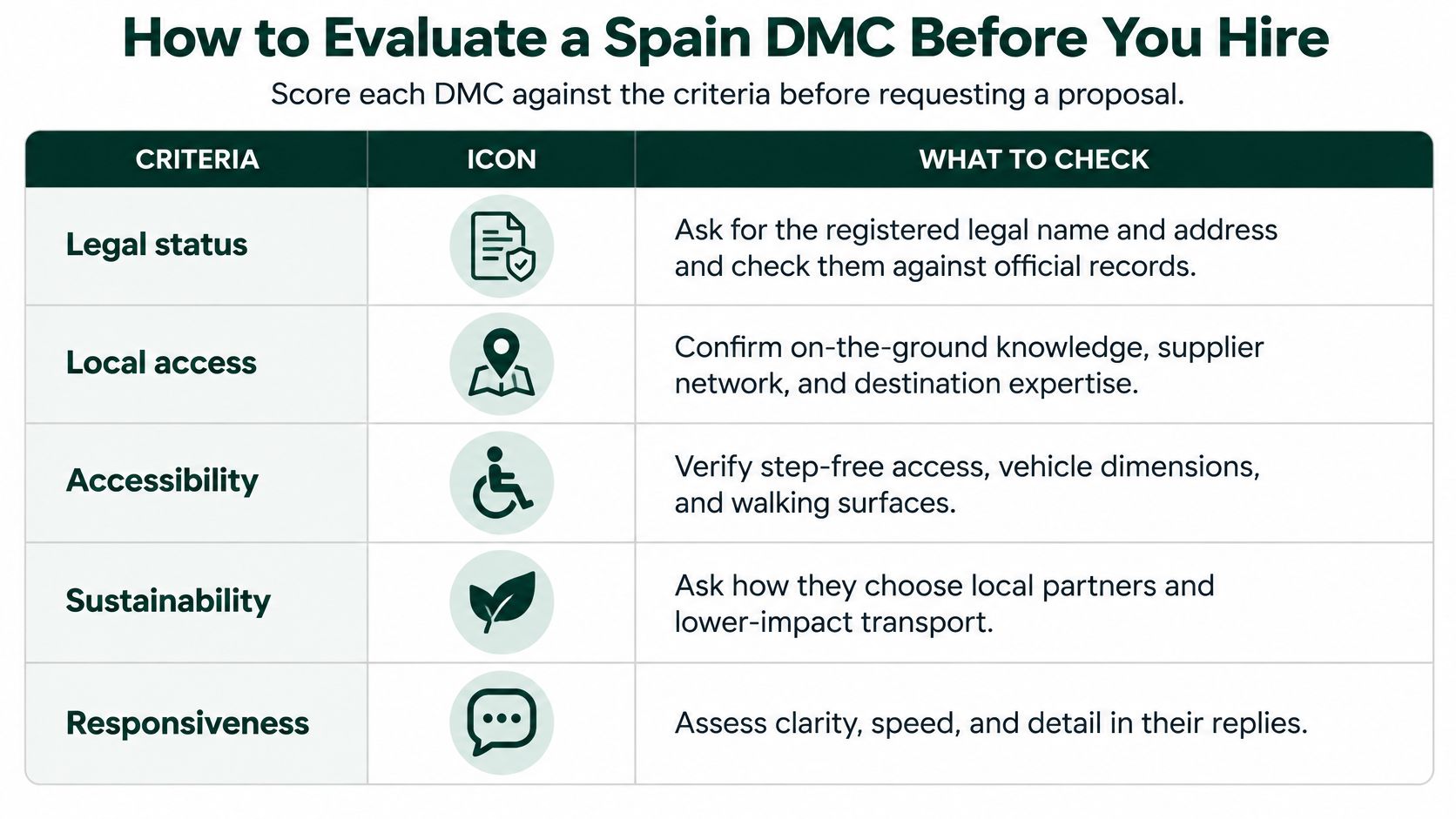
Use this checklist before requesting a detailed proposal. Mark each answer as documented, pending or unanswered rather than relying on the quality of the photographs.
| Criterion | What to Verify | Red Flag |
|---|---|---|
| Legal status | What are the registered Spanish company name and address? | No legal name or address |
| Licensing | Can the company provide its applicable Spanish travel licence or registration details? | Evasive or vague credential claims |
| Regional depth | Which named partners support each region on your route? | Generic recommendations without regional explanation |
| References | Can it show sample itineraries for comparable couples, families or event guests? | Only destination photos, with no usable itinerary example |
| Capacity planning | Which suppliers are confirmed, held provisionally or still unrequested for your dates? | An apparently final quote that conceals unverified availability |
| Support model | Who answers during the journey, including outside office hours? | No clear out-of-hours responsibility |
Verify identity and operational depth
The contracting company should be identifiable before money changes hands. Match the legal name and address across the proposal, contract and company information, and request credential details you can check independently.
We're a licensed Spanish travel company, and the legal entity behind Northern Spain Travel is OBM Luxury Ventures S.L. That gives travelers a specific entity to verify rather than only a trading name.
Regional depth needs a different test. Ask why a proposed guide, hotel or host fits your particular route and group. A company needn't disclose private supplier agreements, but it should explain its choices beyond describing every property as charming.
Sample itineraries should reveal pacing, not private client information. Look for how the planner handles children's interests, older guests' comfort or event-day restrictions. A beautiful destination list doesn't demonstrate those skills.
Test the answer when something fails
Ask these diagnostic questions:
- Restaurant closure: If the featured restaurant closes on our arrival day, which alternative would fit our preferences, and how would you confirm it?
- Weather disruption: If rain makes the outdoor part of our winery day unsuitable, what remains possible and what would replace it?
A strong answer names a suitable alternative and explains its availability status. A weak answer promises that someone will handle it.
An indicative proposal isn't necessarily a confirmed itinerary. Suppliers may require deposits before committing, so insist on accurate booking labels rather than demanding impossible certainty at the first enquiry.
Ask how the DMC earns its income: supplier commissions, a separate service fee, a markup on net rates or a combination. Request an itemised quote showing inclusions, exclusions and the charging basis, while recognizing that a bundled price may not disclose confidential supplier rates.
Our guide to private tours in Europe and how to choose them offers further context for comparing proposals. Before paying, get the deposit schedule, cancellation terms and booking conditions in writing.
Accessibility, Sustainability and Real Local Access
Private doesn't automatically mean suitable. A dedicated guide and vehicle won't remove a winery staircase, uneven village paving or a difficult boat boarding.
Make suitability verifiable
Take specific questions into the planning call:
- Step-free access: Is there an accessible route through every planned part of each stop, including entrances and tasting rooms?
- Vehicle fit: What are the door opening, step height and usable space, and can the vehicle accommodate the traveler's mobility equipment?
- Walking conditions: Are surfaces cobbled, steep, loose or slippery, and where can someone rest?
- Restrooms: Are suitable facilities available during the visit, not just at the hotel?
- Boats and drop-offs: What does boarding involve, and how far is the restaurant table from the permitted vehicle stop?
- Food requirements: Can the kitchen handle the stated allergy, dietary restriction or child's needs, and what limitations remain?
Request written answers within the itinerary. If a venue can't verify a requirement, the planner should say so and propose a suitable alternative rather than offering general reassurance.
Test responsibility as carefully as comfort
The CBI luxury-tourism market guide cites Booking.com's 2026 research, in which 85% considered sustainable travel important or very important, while 69% wanted to leave destinations better than they found them. Those expectations become useful only when travelers ask what a proposed journey does.
Look for locally owned partners, regional food sourcing and visits timed to avoid pressure on busy places. Consider rail where it serves the route well, and compare chauffeured transfers with flight connections on practical grounds; a private car isn't automatically the lower-impact choice.
Access test: A named producer who explains their own work is more meaningful than an experience described only as secret or exclusive.
A famous restaurant, festival or coastal viewpoint may be central to your interests, but it can also concentrate visitors in a small area. Plan appropriate arrival times, respect local access rules and avoid treating residential streets as a private backdrop.
Genuine local access involves the host's consent and participation. Ask who receives you, what they'll share and whether the arrangement fits their working day.
Confirm the DMC Before You Commit
Build a shortlist using the verification checklist, then send each company the same brief. Include travel dates, group makeup, must-have experiences, preferred pace, dietary needs and accessibility requirements so the proposals answer the same problem.
Compare what you can verify
- Request a usable draft: Look for named regions, realistic transfer timings and a contingency for each essential experience.
- Read the omissions: Identify meals, tickets, guide time, luggage handling and other services that aren't included.
- Separate booking stages: Establish what's requested, provisionally held and confirmed, together with any expiry conditions.
- Approve the terms: Understand fees, deposits and cancellation rules before authorizing payments or supplier commitments.
Don't select the longest itinerary or the proposal with the most exclusive-sounding descriptions. Choose the team that explains its decisions and acknowledges constraints.
The decisive test is specificity. If the answers to the restaurant-closure and weather-disruption questions remain vague, pause rather than paying to discover the operating plan later.
Northern Spain Travel offers fully customized private journeys, including private driver tours, across the region's food, wine, cultural and natural destinations. Visit Northern Spain Travel to share your brief through Enquire Now or Request a Private Consultation, or call +34 747 473 529 to discuss the route, access requirements and support your journey needs.