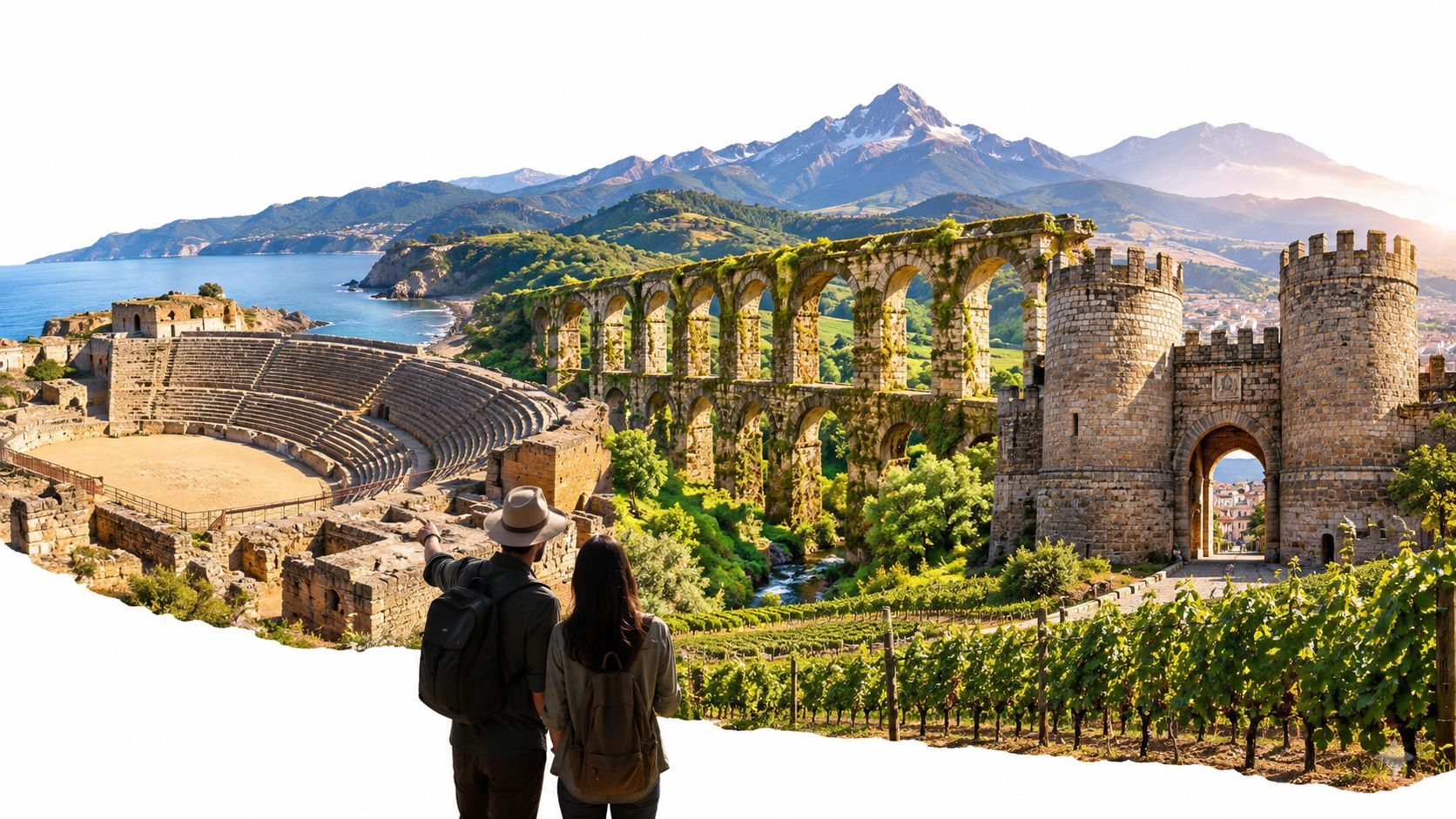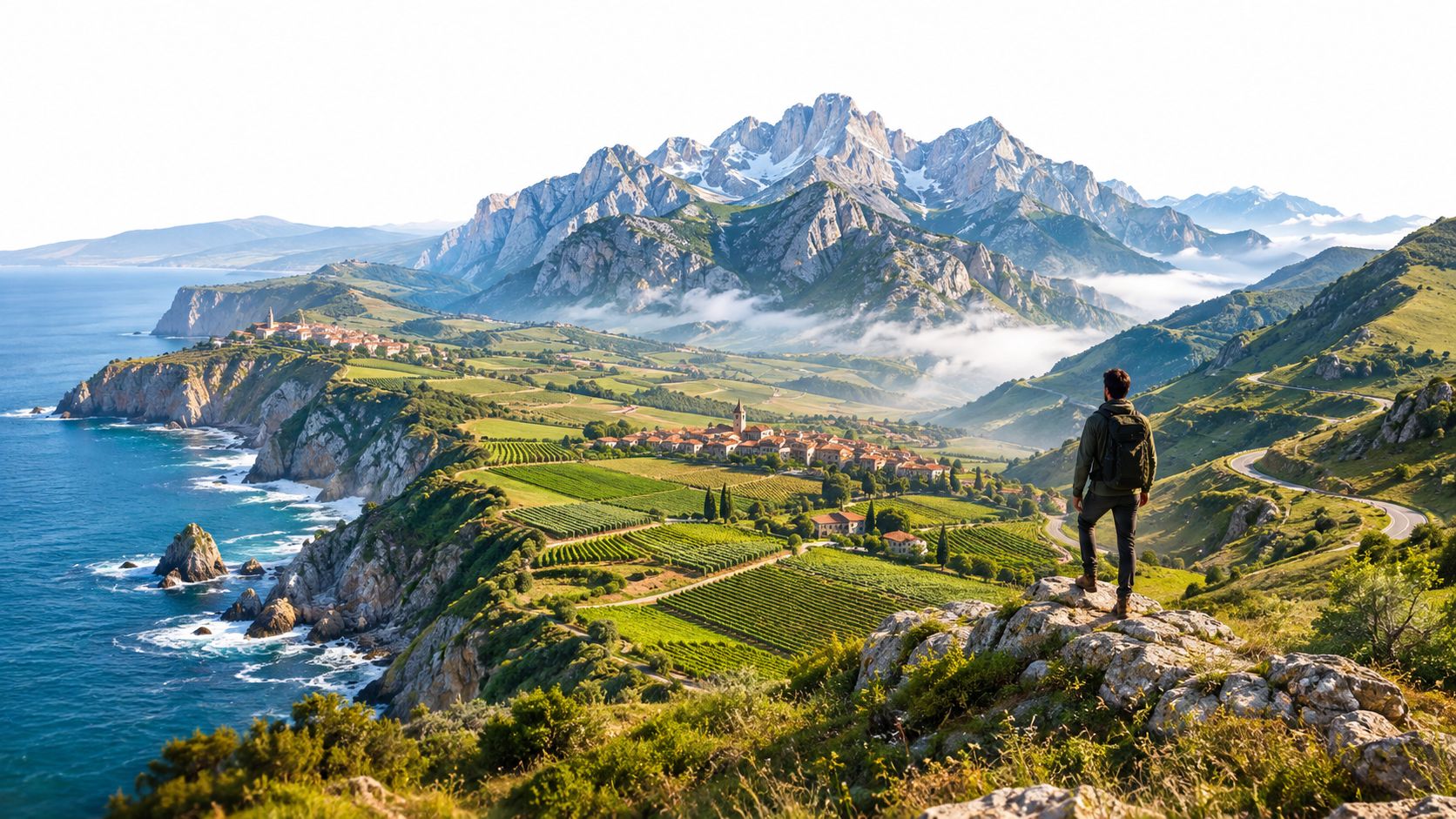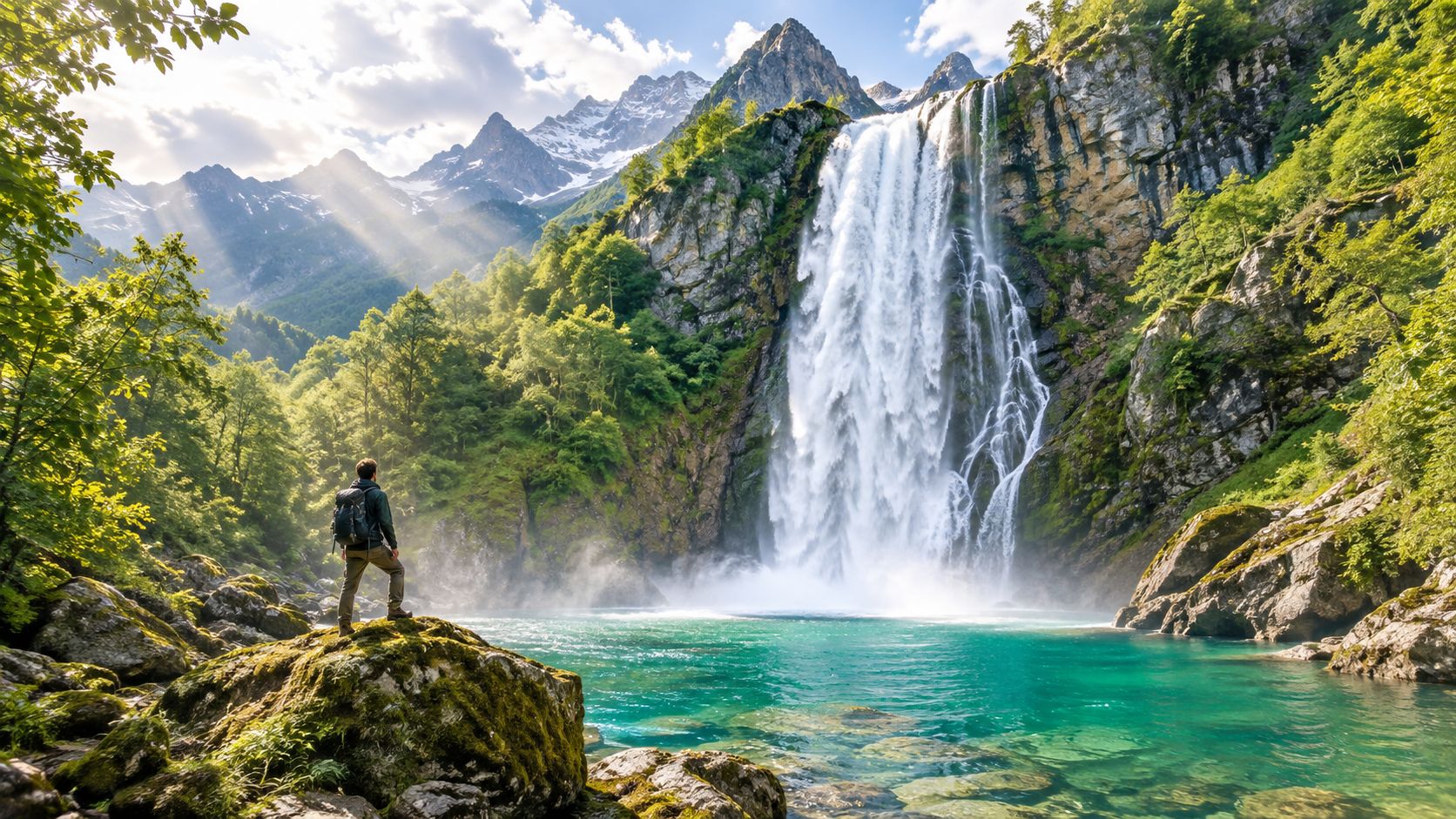
Northern Spain's garden story surprises people who think Spain means only Moorish courtyards or grand southern estates. The country's modern garden tradition was shaped early and seriously. Madrid's Real Jardín Botánico was founded in 1755 by King Ferdinand VI, relocated in 1774 by Charles III, and inaugurated on its current site in 1781 as part of a broader “City of Sciences” vision, helping establish Spain's gardens as both scientific and ceremonial spaces (historic account of the Real Jardín Botánico). That matters in the north, where the best gardens aren't one style at all. They're Atlantic, alpine, urban, edible, scholarly, and sometimes private.
That's why the best gardens in Northern Spain are worth treating as a route rather than a checklist. A good plan moves by region and purpose. One stop might suit a design-minded couple staying in San Sebastián. Another works better for a family wanting open space, wildlife, and an easy lunch. A third only makes sense with a driver, a guide, and an overnight nearby.
This selection follows that logic across seven broad settings, from Pamplona and Rioja to Galicia, Cantabria, Asturias, and the Pyrenean edge. I've favored places with clear character, strong pairing potential, and realistic access over generic “pretty park” recommendations. For travelers who want the logistics handled properly, luxury travel planning blog ideas are useful, and Northern Spain Travel can arrange private guides, drivers, tastings, and tailor-made combinations around these stops.
Season matters. Mobility matters more. So do privacy, garden type, and what sits nearby: wine cellars, Michelin dining, coastal towns, museums, or mountain scenery. Start with that lens, then choose sharply.
Table of Contents
- 1. Real Jardín Botánico de la Universidad de Navarra
- 2. Jardines de Marquesal
- 3. Jardín de la Taconera
- 4. Parque de la Naturaleza de Cabárceno
- 5. Real Jardín Botánico de Vigo
- 6. Jardines de Santa Catalina
- 7. Huerta de la Fruta and Botanical Heritage Gardens
- 8. Jardines de Casa de Soria
- Top 8 Northern Spain Gardens Comparison
- Turn a Garden List Into a Private Northern Spain Route
1. Real Jardín Botánico de la Universidad de Navarra
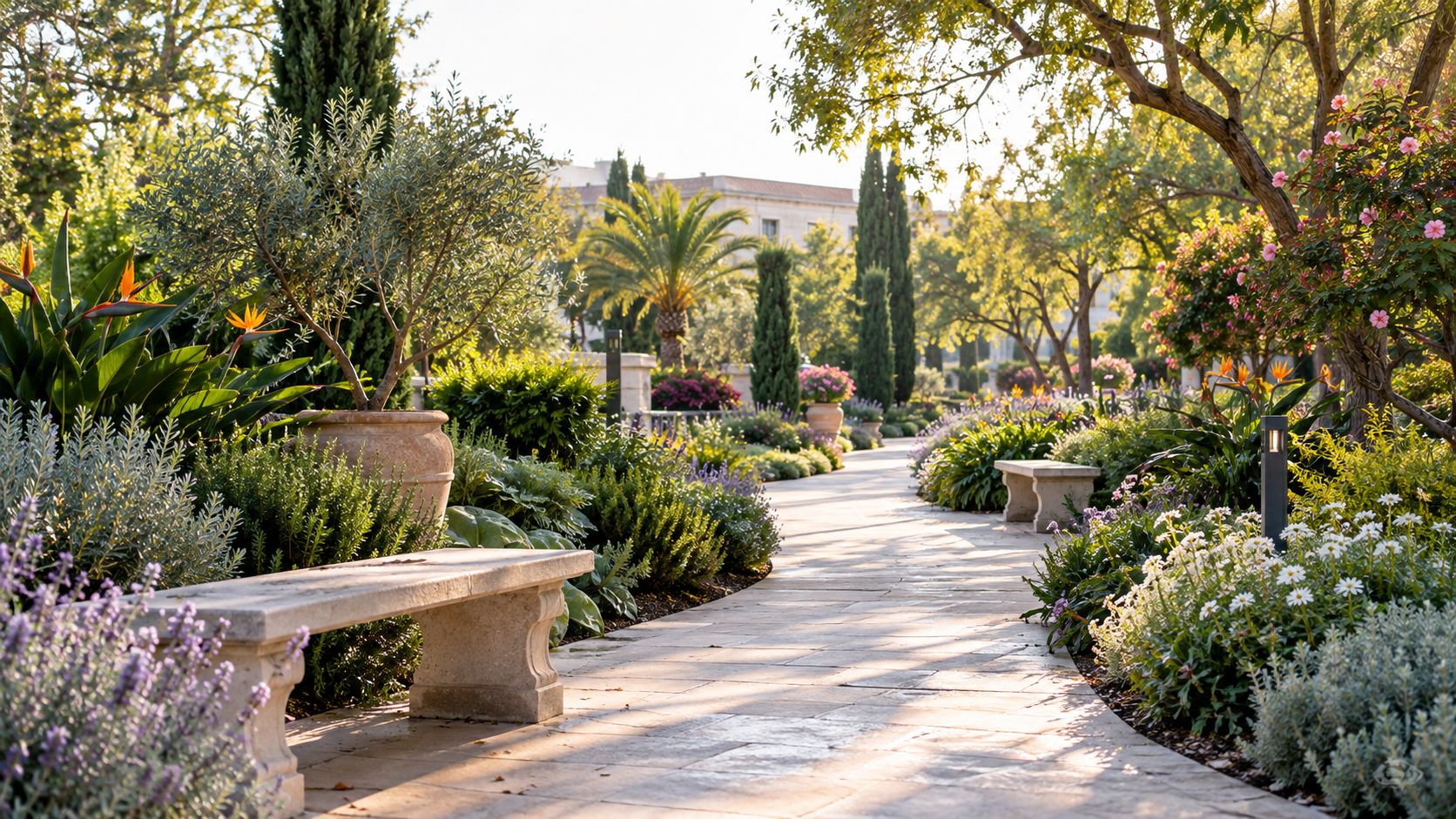
Pamplona has two garden moods. Taconera gives you history and urban elegance. The University of Navarra garden gives you botany with structure, quiet, and intellectual depth. Choose this one when you want a cultivated walk that feels reflective rather than ceremonial.
Its appeal is the combination. Academic setting, broad plant range, and a calm layout make it ideal for travelers who like gardens but don't want a purely decorative experience. It works especially well on a private transfer day between San Sebastián and Rioja, with Pamplona as a refined stop rather than just a lunch break.
Why it earns a place
This is the right garden for travelers who want labels, interpretation, and a sense of geographical range. The university context changes the tone. You're not strolling through a civic park. You're walking through a place that makes more sense with a guide who can connect species, climate, and design.
A private sunrise visit works well here if you're staying in Pamplona. Light is softer, paths are quieter, and the experience feels more exclusive even without formal exclusivity. Afterward, keep breakfast simple and nearby, then continue into the old town or out toward the Rioja border.
Practical rule: Request a guide whose expertise matches your interests. Horticulture for plant lovers, landscape history for design-focused travelers, and family-friendly interpretation for teenagers who need something more interactive than names on plaques.
Best pairing strategy
Use this garden as part of a half-day cultural sequence, not as an isolated attraction. The cleanest version is garden first, then a walk through Pamplona's more historic fabric. If you have grandparents or slower walkers in the group, this is easier than a long city circuit and more stimulating than another monument visit.
A few combinations work particularly well:
- For couples: Early garden visit, slow coffee, then a private old-town walk before lunch.
- For families: Plant-identification activity with a specialist guide, followed by an easy city stop and a relaxed meal.
- For transfer days: Morning visit en route between Basque Country and Rioja, with a driver handling luggage and timing.
Book guidance in advance if you want substance. Without it, the garden is pleasant. With it, it becomes memorable.
2. Jardines de Marquesal
Choose Marquesal for a Rioja day with shape and restraint. It suits travelers who want more than a tasting circuit and less than a museum stop. The appeal is the combination: formal planting, old stone, vineyard order, and the quieter rhythm of a private estate rather than a public garden.
It works especially well for couples, small celebratory trips, and anyone building a short northern Spain route around wine, garden history, and low-friction transfers between stops.
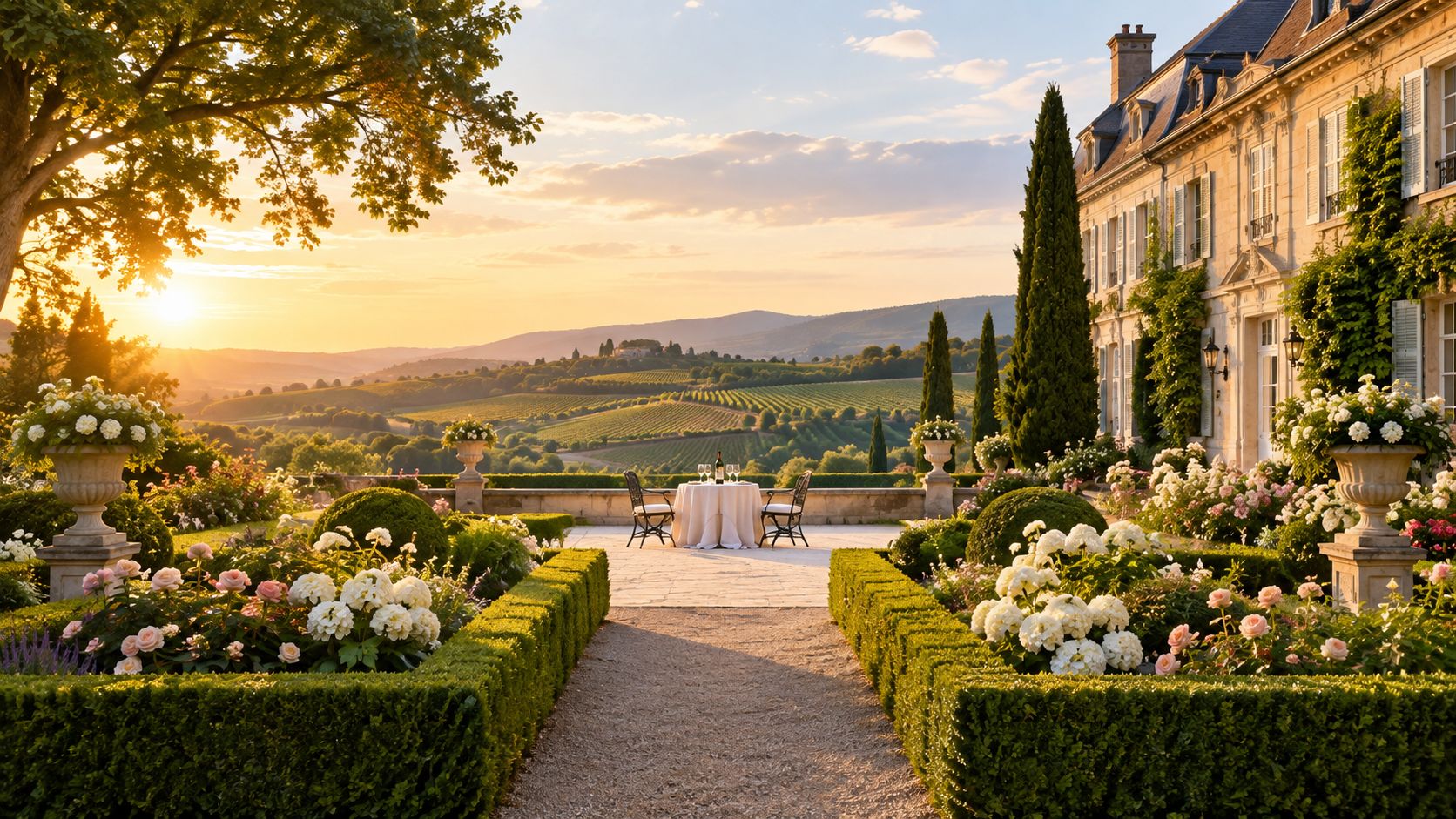
Skip the mistake many Rioja visitors make. Do not cram this between two cellar visits. Marquesal earns its place by changing the tempo of the day. You walk first, notice proportions and planting, then settle into wine with a clearer sense of the estate as a whole. That sequence makes the visit feel intentional rather than decorative.
Spring is strongest for structure and fresh growth. Early autumn is nearly as good, especially if you want vines, gardens, and lunch terraces all working in your favor. Midday heat can flatten the experience in summer, so book for morning or the last part of the afternoon.
A smart order is simple:
- Begin with a guided garden walk.
- Follow with a seated tasting tied to the estate's identity, not a rushed pour-by-pour session.
- Finish with lunch or an early dinner nearby, or stay on the property if privacy matters more than variety.
Use a private driver here. Rural winery days run better when someone else handles access roads, parking, and timing, especially if Marquesal is one stop within a broader Rioja segment. If you're connecting regions, this is also the kind of estate visit that works nicely between urban design-focused gardens and orchard or mountain properties later in the trip.
If you're choosing where to base yourself for this part of the trip, use this guide to where to stay in Rioja wine region. Stay close enough to keep the day calm. A short return drive preserves the point of coming here.
3. Jardín de la Taconera
If you have time for one garden in Pamplona, make it Taconera.
It shows the city at its most composed. Broad promenades, mature trees, statuary, railings, and the edge of the old fortifications give it the kind of urban order that many travelers miss if they only focus on the old town or San Fermín. This is less about rare plants and more about civic style done properly.
Use it for a precise purpose. Taconera suits arrival days, half-days, and anyone who wants a cultured stop without committing to a major excursion. A well-paced visit takes around 60 to 90 minutes, which is exactly why it works so well between hotel check-in, lunch, and a museum, or before a road transfer east or west.
The timing matters more here than at larger destination gardens. Go in the morning, while the paths are still quiet and the light sharpens the formal lines. During festival dates, that advice becomes stricter. Pamplona changes character fast once the city fills.
What you are reading here is an urban design experience, not a collector's botanical stop. That distinction helps you decide. Choose Taconera if your group cares about atmosphere, city planning, and graceful walking. Skip it if you want plant labels, specialist horticulture, or a full standalone garden day.
A private guide improves this visit more than you might expect. Without one, you get a pleasant park. With one, you understand how the garden relates to the walls, viewpoints, sculpture, and Pamplona's self-image. That added context is especially useful for travelers building a route across contrasting northern Spanish gardens, from university botany and winery estates to wildlife settings and private mountain properties.
Three travelers get particular value here:
- Photographers should arrive early for clean perspectives and softer light on stone and foliage.
- Multigenerational groups benefit from central access, gentler walking, and plenty of places to pause.
- Festival visitors should use Taconera as a calm reset before breakfast or in the evening once the city starts to exhale.
One practical rule. Do not overextend the stop.
Walk the main axes, take the fortification views seriously, then leave while the mood still feels polished. After that, go into the old town for coffee, or let your driver collect you for the next regional leg. Taconera is strongest as part of a smart Pamplona segment, not as a day that tries to prove too much.
4. Parque de la Naturaleza de Cabárceno
Choose Cabárceno for space, terrain, and animal habitat on a scale no formal garden in northern Spain can match. It belongs in this article because a strong garden route should not stay trapped in parterres, labels, and ornamental borders. Cantabria earns its place through a different kind of designed nature experience.
The setting matters as much as the wildlife. Former mining ground has been reshaped into a vast park of lakes, rocky slopes, open meadows, and long views, which gives the day a visual drama that many botanical collections cannot offer. If your wider route already includes university botany in Navarra, urban promenades in Pamplona, or later Atlantic planting in Galicia, Cabárceno provides the clearest contrast.
Do not treat it as a casual stop off the road to Santander.
Cabárceno is large enough to become tiring and mediocre if you arrive late, improvise the route, and try to cover everything. The right approach is selective and structured. Start early, use a driver, and decide in advance whether your day is about family ease, photography, or a broader wildlife-focused Cantabrian outing.
A good private guide changes the quality of the visit, but for a different reason than in the city gardens. Here, the value is not historical storytelling. It is judgment. A guide helps you avoid dead time, choose the strongest sectors, time viewpoints well, and keep children or slower walkers from spending too much energy on transitions.
The park suits three kinds of travelers particularly well:
- Families with high standards who want a nature day that still feels organized and comfortable.
- Couples or adult groups who prefer scenery, scale, and fresh air over another formal estate garden.
- Travelers building a varied northern Spain itinerary who want one stop that shifts the mood from cultivated design to wildlife and landscape.
Timing decides whether Cabárceno feels refined or overextended. A half day works if you stay disciplined and pair it with lunch or an evening in Santander. A longer visit makes sense for families or travelers who want to linger at several habitats and viewpoints. In both cases, keep the rest of the day light.
One practical recommendation. Do less.
Pick the strongest circuits, allow for a proper lunch, and leave before the park turns into an endurance test. Cabárceno is at its best as the wildlife and big-sky chapter within a broader northern Spain garden journey, not as a marathon stop that tries to prove total coverage.
5. Real Jardín Botánico de Vigo
Choose Vigo for a garden day with salt air, useful botany, and a strong lunch. If you want parterres, ceremony, or a grand estate mood, spend your time elsewhere.
This stop earns its place in a northern Spain garden route because it represents a different travel purpose. Navarra gives you academic botany. Cantabria gives you scale and wildlife. Vigo is the Atlantic chapter. Expect medicinal plants, aromatic species, humid greenery, and a setting that makes more sense when you connect it to markets, seafood, and the Rías Baixas rather than treating it as an isolated horticultural trophy.
Galicia supports that approach. Spain's official tourism board highlights the region's depth in historic gardens in its overview of historic gardens in Spain. The practical takeaway is simple. Be selective here. One well-chosen botanical visit, followed by a food or wine plan, works better than trying to collect garden names.
The smart version of Vigo starts early. Go in the morning, while the air still feels fresh and the visit stays focused. Then turn outward. A herbal or medicinal specialist can make the garden much more legible, especially for travelers who care about cooking, local remedies, or plant use rather than labels alone.
Use the rest of the day in one of two ways:
For food-led travelers: botanical visit first, then a serious seafood lunch in Vigo, then a slow afternoon with Albariño in the Rías Baixas.
For coastal explorers: botanical visit first, then harbors, estuary viewpoints, and a lighter lunch that keeps the day moving.
Both versions work. The first is stronger if you want Galicia's garden culture tied directly to the table. The second suits travelers already balancing several tastings and needing more air and scenery.
One warning. Do not overbuild this stop.
The garden is rewarding because it is specific. Once you force too many cellar visits, viewpoints, and urban detours into the same day, that specificity disappears. Keep the sequence tight, use a driver if you plan to drink at lunch or in the afternoon, and let Vigo play its proper role within the wider route. It is the botanical gateway to Galicia's edible, coastal identity.
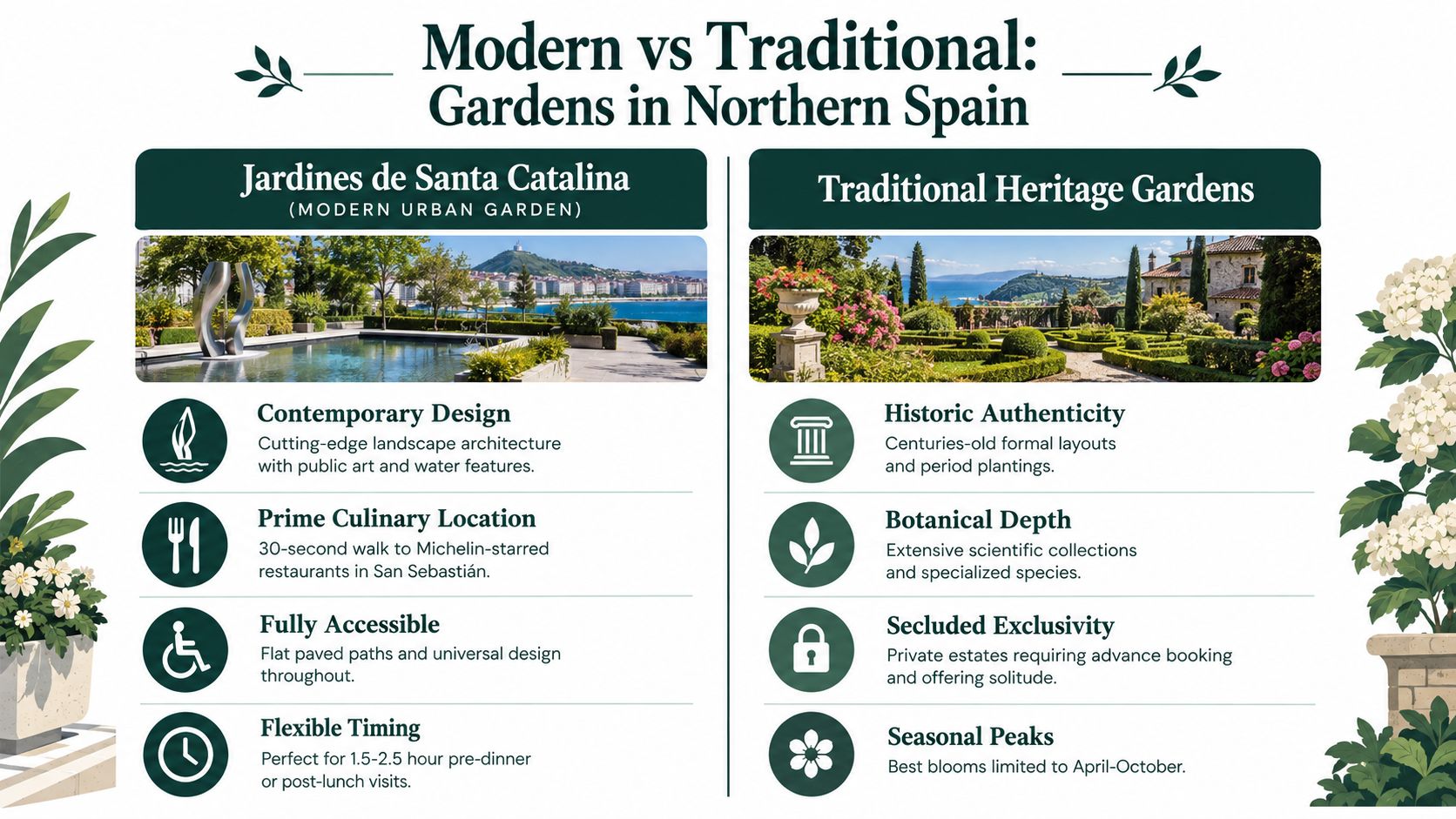
6. Jardines de Santa Catalina
Jardines de Santa Catalina earns its place on this list for one reason. It solves San Sebastián.
This city is dense with pleasures and poor at giving you space between them. Meals run long, museum visits stack up, and even a polished coastal promenade can start to feel performative. Santa Catalina cuts through that. Near the Kursaal, it gives you a clean, contemporary pause without sending you across town or turning half a day into transit.
Choose it if your Basque stop is urban, design-led, and short.
Public art, architecture, planting, and street rhythm come together here in a way that suits San Sebastián better than a more elaborate garden on the outskirts ever could. You are not coming for historic horticulture or rare botanical collections. You are coming for proportion, placement, and timing. In a city with strong food gravity, that matters.
Late afternoon is the right slot. Light softens, the waterfront atmosphere improves, and the visit fits naturally between a serious lunch and evening plans. Arrival day also works well, especially if you want to get oriented on foot before committing to galleries, shopping, or a long pintxos circuit.
A good San Sebastián itinerary needs one reset point. This is one of the few that feels intentional rather than accidental.
Use Santa Catalina as part of a tight urban sequence:
- before dinner, if you have booked a tasting menu and want to arrive refreshed rather than overfed from bar hopping
- after lunch, if the day needs air before wine, retail stops, or a concert
- on arrival afternoon, if you want something elegant and low-effort close to the center
Skip the temptation to overstate it. This is not the garden you build a regional detour around. It is the garden you use to improve a city stay that already includes the Kursaal, the seafront, or a strong cultural plan. For travelers with only one full day in San Sebastián, that is exactly its value. It keeps the city balanced.
7. Huerta de la Fruta and Botanical Heritage Gardens
Asturias earns its place on this list for a different reason. It offers the strongest garden experience for travelers who care as much about cultivation as display.
Come here for orchard culture. Come here for old fruit varieties, cider apples, kitchen gardens, monastery plots, and country estates where planting still serves a purpose. If you want clipped formality or a single headline garden, choose another stop in northern Spain.
That practical, cultivated character sits comfortably beside the region's more formal botanical work. In Gijón, the Atlantic Botanical Garden presents northern-latitude biodiversity through research, conservation, and interpretation rather than pure ornament, which helps explain why Asturias tends to treat gardens as living systems instead of isolated attractions (background on the Atlantic Botanical Garden in Gijón).
The right way to use Asturias is as a short rural sequence with a driver. Base yourself in the countryside for two nights, add one serious cider-focused lunch, and combine two or three visits that show different sides of the region: a productive orchard, a heritage garden, and one food producer or small estate with planting worth seeing. That creates a richer day than forcing a single destination to carry the whole category.
Who should prioritize it? Travelers with a food-first itinerary. Couples who prefer a country-house stay over a city hotel. Families who want outdoor time with purpose, especially in harvest periods. Private groups do well here too, because timing is easier to control when access depends on the season, the producer, or a private appointment.
Be selective with timing. Spring brings blossom and soft weather. Early autumn is stronger if cider culture is part of the plan. Midday visits can feel flat unless they end at a table, so build the route around lunch, tastings, or a relaxed return to your hotel rather than treating these places like quick scenic stops.
The key trade-off is convenience. Asturias rewards planning, but it rarely rewards spontaneity. Opening times can be narrow, and some worthwhile stops operate more like working properties than standard visitor sites. Check each venue directly before you go and have your hotel, driver, or local guide confirm access the day before. That small step avoids wasted mileage on rural roads and turns this from a pleasant idea into one of the most grounded garden experiences in northern Spain.
8. Jardines de Casa de Soria
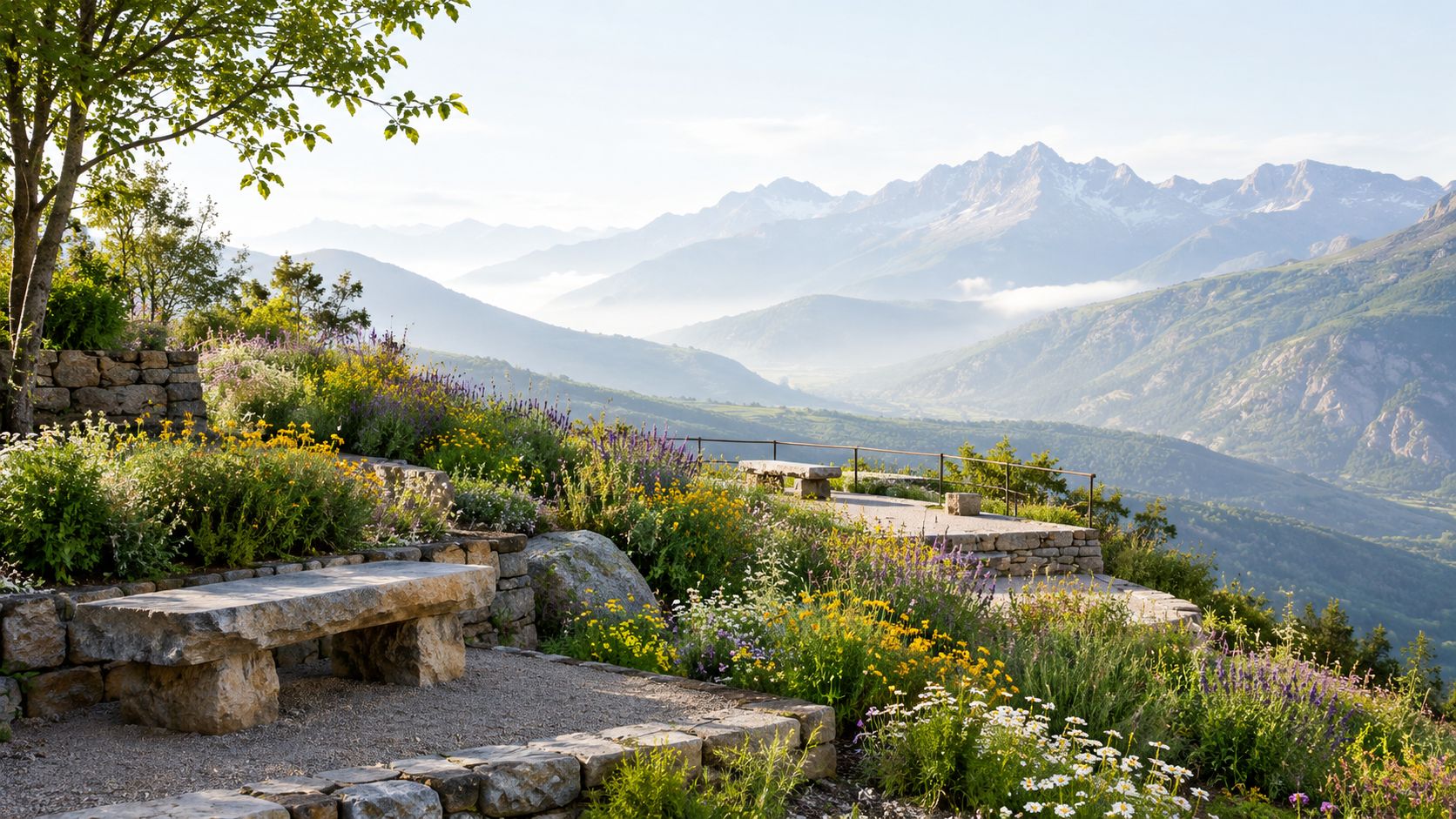
This is the most private and least casual recommendation on the list. That's the point. In the Pyrenees foothills, a private estate garden with alpine character offers something the rest of northern Spain rarely does. Seclusion with botanical depth and mountain atmosphere.
Casa de Soria is for travelers who want a garden experience that feels like a retreat. Not a stop between attractions. Not a public stroll. A place where the setting, the access, and the privacy are part of the value.
Who should choose it
Couples celebrating something meaningful will get the most from this. So will small family groups who want a mountain base with gentle walking, strong views, and a sense of being removed from standard travel flow. It also works for travelers who've done the coast and wine country before and now want altitude, silence, and a different botanical register.
The garden's mountain context matters as much as the planting. That shift in air, light, and pace creates a completely different emotional effect from the Atlantic gardens farther west.
How to justify the effort
This is not a detour for a quick look. It only makes sense as part of a short stay, ideally with a driver for the entire mountain segment. Roads can be tiring, and self-driving steals attention from the surroundings. The experience improves immediately when transport, timing, and meals are handled for you.
Use it as part of a broader mountain route, or combine it with other northern upland areas through ideas like these Picos de Europa itinerary ideas for luxury travel. The common thread is selective pacing. Fewer stops, longer stays, better access.
Restricted-access estates need earlier planning than most travelers expect. If the garden is central to the trip, organize it first and build the surrounding nights around that commitment.
Top 8 Northern Spain Gardens Comparison
| Site | 🔄 Implementation complexity | ⚡ Resource requirements | ⭐📊 Expected outcomes | 💡 Ideal use cases | ⭐ Key advantages |
|---|---|---|---|---|---|
| Real Jardín Botánico de la Universidad de Navarra (Pamplona) | Medium, seasonal planning; private guide optional | 2–3 hrs; guide/driver recommended; limited dining on-site | ⭐⭐⭐⭐, scholarly botanical depth; serene, photogenic settings | Culture-focused visitors; morning/afternoon leisure; photo shoots | Academic collections; curated routes; quiet, refined atmosphere |
| Jardines de Marquesal (La Rioja) | High, exclusive venue; advance booking (4–8 weeks) required | 3–4 hrs; private tasting/driver; on-site dining via partners | ⭐⭐⭐⭐⭐, integrated wine + garden luxury; memorable private events | Private groups; milestone celebrations; wine+horticulture immersion | Historic formal gardens; vineyard integration; private tastings |
| Jardín de la Taconera (Pamplona) | Low, walk-in friendly; flexible timing | 1–3 hrs; fully accessible; cafés nearby | ⭐⭐⭐⭐, urban cultural immersion; museum pairing; family-friendly | Quick cultural stops; museum visits; pre/post-event strolls | Central location; accessibility; year‑round relevance |
| Parque de la Naturaleza de Cabárceno (Cantabria) | Medium, half/full-day planning; optional cable car | 4–5 hrs; moderate walking; cable car tickets; parking/driver | ⭐⭐⭐⭐, nature + wildlife education; broad multigenerational appeal | Family nature days; soft adventure; wildlife photography | Large naturalistic habitats; botanical + wildlife mix; educational programs |
| Real Jardín Botánico de Vigo (Galicia) | Medium, guide recommended for herbal focus | 2–3 hrs (garden); 4–5 hrs with integrated culinary activities | ⭐⭐⭐⭐, botanical‑herbal insight; culinary and wellness links | Food & wine lovers; wellness retreats; Galician cultural immersion | Atlantic flora focus; medicinal plant emphasis; intimate scale |
| Jardines de Santa Catalina (San Sebastián) | Low, walk-in; coordinate with cultural programming | 1.5–2.5 hrs; fully accessible; immediate proximity to dining | ⭐⭐⭐⭐, contemporary design emphasis; cultural reset near gastronomy | Pre/post dining walks; design-focused visitors; accessible family visits | Contemporary landscape + public art; Michelin-district location; full accessibility |
| Huerta de la Fruta & Botanical Heritage Gardens (Asturias) | High, multi-site coordination; multi-day itinerary advised | 2–3 days recommended; private driver/guide; variable accessibility | ⭐⭐⭐⭐, authentic agritourism; seasonal hands‑on learning and terroir insight | Agritourism retreats; cider/apple-focused foodies; multigenerational trips | Heirloom varieties; working-farm authenticity; artisanal food production |
| Jardines de Casa de Soria (Pyrenees foothills) | Very high, private access via partnerships; long lead time | 2–4 hrs daily; 2–4 night packages typical; specialized guides & transport | ⭐⭐⭐⭐⭐, exclusive alpine botanical immersion; secluded luxury | High-net-worth couples; milestone retreats; mountain botany enthusiasts | Alpine collections; exceptional exclusivity; mountain vistas + research center |
Turn a Garden List Into a Private Northern Spain Route
The right garden route depends less on botanical obsession than on travel style. If you want urban culture with easy pacing, choose Pamplona and split your time between the University of Navarra garden and Taconera. If wine is the anchor, Rioja is the clear priority, because an estate garden there adds beauty and structure to a cellar-focused stay. If design and dining matter most, San Sebastián is the cleanest fit. Santa Catalina won't dominate the trip, but it will improve its rhythm.
Galicia suits travelers who want scent, herbs, Atlantic planting, and food with a stronger regional identity. Cantabria is the better choice for open space, wildlife, and multigenerational ease. Asturias is for people who prefer working settings to ornamental formality. That's where orchards, cider, and rural food culture turn a “garden visit” into something more grounded. The Pyrenees foothills belong to travelers who want privacy, mountain air, and a stop that feels curated from the outset.
Season should shape the route. Spring is the most broadly forgiving across the north. Early autumn is often just as attractive, especially when wine, orchards, and softer temperatures matter more than peak bloom. Summer works well on the coast and in the mountains, but cities need better timing and more careful midday planning. If your group includes slower walkers or older relatives, treat terrain and transfer length as seriously as hotel quality.
Private guides and drivers are worth arranging early, especially when the trip includes harvest periods, remote properties, restricted-access estates, or multiple one-night stops. Good planning in northern garden travel isn't extravagant. It's practical. A driver keeps timing clean. A specialist guide prevents beautiful places from becoming generic walks. The more varied your route is, the more this matters.
One useful benchmark when planning botanical stops in Spain's Atlantic orbit is visitor pressure. The Puerto de la Cruz Botanical Gardens in Tenerife attract around 400,000 visitors annually, while the Viera y Clavijo Botanic Garden recorded 168,114 visitors in 2019, fell to 46,605 in 2020, and recovered to 76,189 in 2021, showing how garden demand can fluctuate with seasonality and broader travel shocks (visitor figures for Puerto de la Cruz and Viera y Clavijo). The lesson for northern Spain is simple. Build in flexibility, avoid assuming every garden functions like a major all-season attraction, and confirm access close to travel.
Service design matters too. A recent study of the Viera y Clavijo Botanic Garden found no statistically significant satisfaction gap between resident and non-resident visitors, with nationality versus visit satisfaction showing a p-value of 0.06, while infrastructure, accessibility, and flora diversity emerged as the strongest practical levers shaping satisfaction (visitor satisfaction study on Viera y Clavijo). For northern itineraries, that's a useful filter. Choose gardens not just by reputation, but by ease, comfort, and how well they fit the rest of the day.
Before you book, check seven things: the guide's actual expertise, the languages needed in your party, walking surfaces and gradients, weather backup for outdoor-heavy days, meal reservations near each stop, hotel location relative to the route, and realistic transfer timing between regions. If you want the route shaped privately around those details, Northern Spain Travel is one relevant option for building it around your pace and priorities through their Northern Spain itinerary planning.
Northern Spain Travel designs fully private itineraries across Pamplona, Rioja, Galicia, Asturias, Cantabria, San Sebastián, and the Pyrenees, with drivers, specialist guides, tastings, and carefully chosen stays built into one coherent route. If you want the best gardens in Northern Spain woven into a trip that also includes food, wine, coast, and mountain scenery, start with Northern Spain Travel.