The popular advice is to drive the northern Spain coast in summer, stop wherever the view looks attractive, and collect Bilbao, Santander, Oviedo and Santiago as if they were points on a map. That approach produces photographs, but it misses the region's real luxury: time, access and atmosphere. The coast is cooler, wetter and more physically varied than Spain's southern shores, with working harbors, estuaries, mountain foothills and dining cultures that reward lingering rather than rushing.
Northern Spain's northern and north-western coastline totals 2,429 km, a substantial part of Spain's 7,905 km coastline, according to regional reporting on the Cantabrian coast. You're not planning one beach holiday. You're planning an Atlantic journey through four distinct regions, each with its own rhythm, character and definition of indulgence.
Table of Contents
- Why the Northern Spain Coast Is Not One Trip But Four
- The Geography and Climate That Shape the Coast
- The Four Coastal Regions and Their Luxury Personalities
- Sequencing a Slow Coast-to-Coast Itinerary
- Signature Towns, Stays and Experiences Along the Way
- Seafood and Culinary Identity From Basque Country to Galicia
- Transport, Logistics and the Reality of Getting Around
- When to Go and How to Plan the Journey Well
Why the Northern Spain Coast Is Not One Trip But Four
The northern Spain coast rewards regional thinking, not a checklist. Its character shifts from the Basque Country through Cantabria and Asturias to Galicia, and each region deserves its own pace, priorities and base. Try to cover all four as one scenic drive, and motorway hours and luggage changes will displace the experiences that make the journey worthwhile: long lunches, private visits and spontaneous coastal walks.
Build a four-region luxury circuit, or choose one region and explore it thoroughly before adding another. May, June, September and early October are my preferred windows, when villages are quieter, walking is more comfortable and the dining scene feels less compressed. That timing supports the slow, coast-to-inland combinations this journey demands.
Four regions, four promises
- Basque Country is culinary theater. Give San Sebastián an evening for pintxos, then pair Getaria with txakoli vineyards, grilled fish and its maritime culture.
- Cantabria offers refinement without spectacle. Santander, Comillas and the estuary coast suit travelers drawn to elegant architecture, historic houses and quiet sophistication.
- Asturias delivers the strongest mountain-meets-sea drama. Its fishing villages and cider houses deserve a slower base, with time to reach the Picos de Europa.
- Galicia carries the deepest maritime soul. Santiago supplies cultural weight, while the Rías Baixas and Costa da Morte bring shellfish, wine, granite villages and a wilder Atlantic mood.
The four regions work best as connected but distinct journeys. Move from the coast into vineyards, mountain valleys or historic towns instead of treating the shoreline as a continuous sightseeing route.
My pacing rule: Give important bases two or three nights. A luxury itinerary needs room for weather, appetite and the occasional discovery that deserves more time.
Use this guide to a luxury Atlantic coast road trip in Spain for orientation, then adapt the route to your interests. Start with the region that matters most to you and arrange the others around it. The northern Spain coast is a chain of distinct sub-journeys, joined by geography but defined by different food, scenery and rhythms.
The Geography and Climate That Shape the Coast
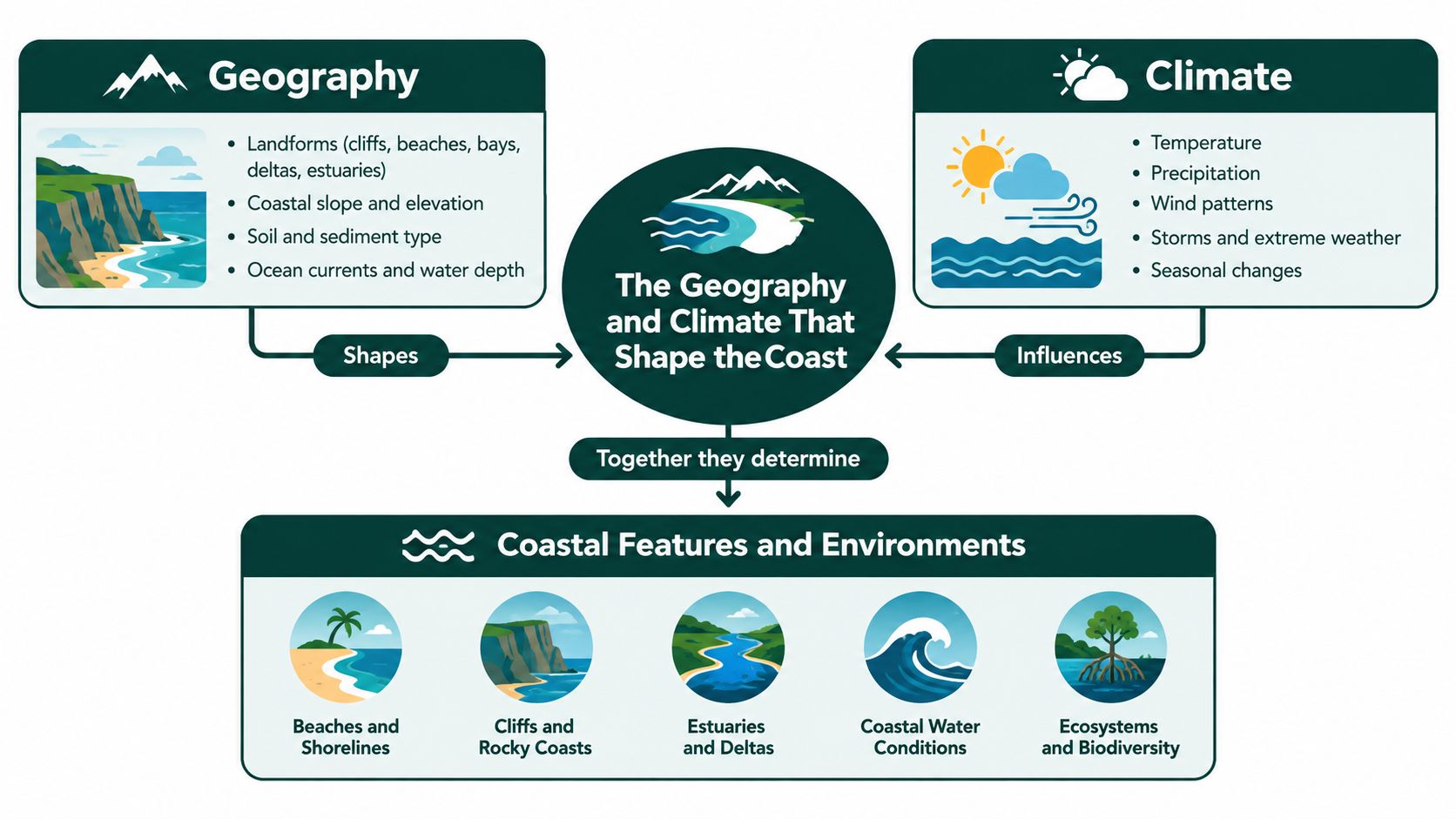
Plan this coast around its physical forces, not a string of towns. The Basque and Asturian shores face the exposed Bay of Biscay, while Galicia is shaped by Atlantic estuaries known as rías. Behind much of the shoreline, the Cantabrian Mountains create the green terrain that separates northern Spain from the drier interior and south. That geography makes coast-to-inland combinations more rewarding than a purely waterfront itinerary.
The five coastal provinces across northern and north-western Spain cover 46,294 km², hold about 4.6 million residents, and average 100 inhabitants per km², according to an overview of the Cantabria coast. The figures explain the region's character: it is a corridor of cities, villages, estuaries and rural hinterlands, not one continuous resort strip.
Three forces to understand
Atlantic exposure brings swell, shifting cloud and rapid changes in visibility. Pack a waterproof layer, comfortable walking shoes and clothing suited to a cool morning followed by a brighter afternoon. Build the trip around atmosphere and flexibility, not guaranteed beach weather.
Mountain proximity produces the emerald scenery that defines much of the coast. In Asturias, the coastal plain can give way quickly to the Picos de Europa. Inland Cantabria adds valleys, caves and mountain villages within easy reach of the sea. Reserve at least one inland pairing, rather than linking waterfront hotels night after night.
Upwelling shapes the seafood. From late May to September, north-easterly winds can drive coastal upwelling along the Spanish continental margin of the Bay of Biscay. Colder deep water rises and carries nutrients toward the surface. The process occurs most often and intensely west of Cape Peñas, as described in reporting on marine heatwaves and European fisheries. Summer sea temperatures can therefore feel cool while marine life remains highly productive.
Galicia has a wet temperate oceanic climate. Britannica's climate overview of Spain gives the Galician coast an annual mean temperature of about 13.1°C, winter temperatures near 8°C, summer temperatures around 18°C, and roughly 1,370 mm of annual precipitation. Expect green hills, soft light and changing skies. Shoulder-season travelers should welcome those conditions, which give Galicia its texture and keep the journey focused on scenery, food and inland culture rather than sun alone.
The Four Coastal Regions and Their Luxury Personalities
The four regions deserve separate treatment because they satisfy different kinds of traveler. Basque Country is the natural choice for food-first journeys. Cantabria fits clients who want graceful architecture and low-key coastal beauty. Asturias is for dramatic scenery and rich local traditions. Galicia suits travelers drawn to seafood, pilgrimage culture and the edge of the Atlantic.
Basque Country
San Sebastián is the culinary anchor, but the experience isn't limited to formal dining. Its old-town pintxos bars create a social, mobile form of eating, while Getaria adds fishing heritage, txakoli and serious grilled seafood. I'd pair a refined city hotel with a private coastal day rather than spend every night in a restaurant.
Choose the Basque Country if you want culinary intensity, design, history and polished service. Add Rioja Alavesa inland for cellar visits and vineyard scenery.
Cantabria
Cantabria is quieter and more intimate. Santander brings a belle époque waterfront and a natural bay, while Comillas combines aristocratic history with distinctive architecture. The region's appeal lies in its density of small experiences, a restored ancestral house, a fishing harbor, a cave visit, an estuary paddle, rather than one dominant attraction.
Choose Cantabria if you value privacy, heritage and understated elegance. It's particularly effective for couples who don't need nightlife or a famous restaurant every evening.
Asturias
Asturias has the most convincing sea-to-mountain transition. Cudillero, Lastres and Llanes offer different versions of the fishing-village ideal, while the Picos de Europa supply the active counterpoint. Food is hearty and regional, from fabada to cachopo, with cider culture providing its own social ritual.
Choose Asturias if you want scenic drama, gentle adventure and unvarnished local character. A slow estate stay works better here than a sequence of town-center hotels.
Galicia
Galicia is the most maritime of the four. Santiago gives the journey cultural gravity, while the Rías Baixas provide Albariño, shellfish and sheltered water. Farther west, the Costa da Morte feels raw, spacious and elemental.
Choose Galicia if you want seafood, wine, pilgrimage history and Atlantic solitude. The strongest itineraries continue beyond Santiago instead of treating the cathedral as the finish line.
The comparison is also useful when choosing between neighboring regions. This guide comparing Asturias and Cantabria for luxury travelers helps clarify whether your priorities lean toward mountain drama or quieter coastal refinement.
| Region | Defining Personality | Signature Towns | Anchor Luxury Experience | Best Suited For |
|---|---|---|---|---|
| Basque Country | Culinary, polished and maritime | San Sebastián, Getaria, Bilbao | Private pintxos and txakoli-focused day | Food and design lovers |
| Cantabria | Historic, restrained and coastal | Santander, Comillas, Santillana del Mar | Restored palace stay and estuary exploration | Couples seeking calm |
| Asturias | Wild, mountainous and convivial | Llanes, Lastres, Cudillero, Oviedo | Picos excursion paired with cider culture | Active luxury travelers |
| Galicia | Atlantic, spiritual and gastronomic | Santiago, Combarro, Cambados, Muxía | Ría boat lunch and shellfish itinerary | Seafood and culture travelers |
Sequencing a Slow Coast-to-Coast Itinerary
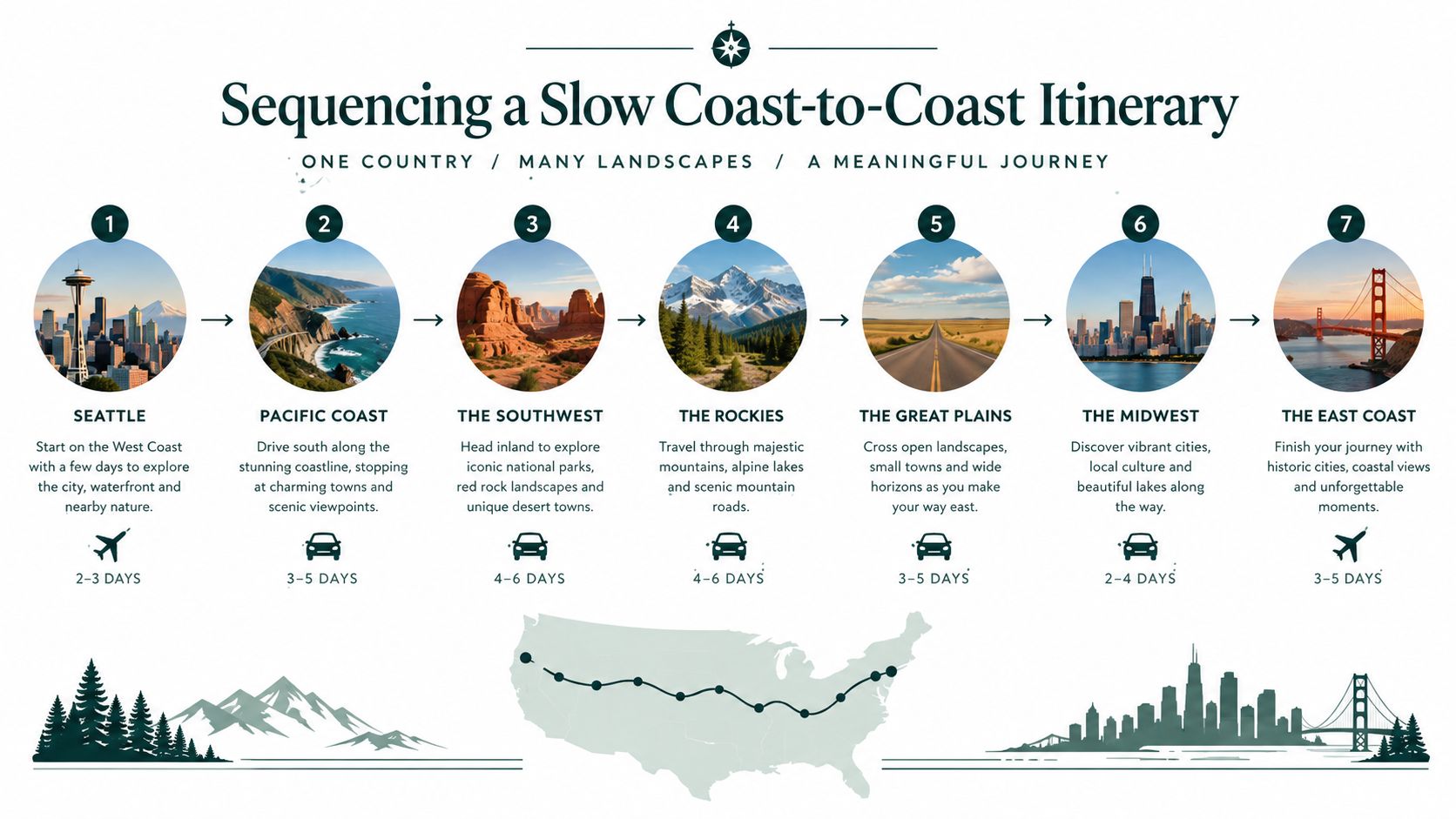
For a first full journey, I prefer an east-to-west route, beginning in the Basque Country and ending in Galicia. It follows the coastline's cultural progression and gives the trip a satisfying sense of arrival in Santiago or the Rías Baixas. It also makes it easier to add inland detours without repeatedly retracing the same roads.
A 10 to 14 day itinerary can work if the bases are chosen carefully. I'd prioritize San Sebastián, a Cantabrian base near Comillas or Santander, Llanes or Cudillero in Asturias, and Santiago with the Rías Baixas. Don't try to place every major city and village into the schedule.
The route I recommend
- Basque Country: Start with three nights in San Sebastián. Use one day for the city and food, one for Getaria, Zumaia or the French Basque border.
- Cantabria: Move west for two or three nights. Build in Comillas, Santander or the estuaries, then add an inland heritage or cave experience.
- Asturias: Spend three nights around Llanes, Lastres, Oviedo or Cudillero. Reserve one full day for the coast and one for the Picos.
- Galicia: Finish with Santiago followed by the Rías Baixas, or choose the Costa da Morte if raw coastal scenery matters more than wine.
The expensive mistake: Using Asturias and Galicia as one base. The geography may look manageable, but you'll lose the slow rhythm that makes both regions worthwhile.
Keep most transfers below three hours where possible. Use two nights for settlement, dining and walking, then one day for a private boat, coastal hike, vineyard visit or mountain excursion. Rioja Alavesa fits naturally near the Basque beginning. The Picos belong with Asturias, not as a rushed detour between coastal hotels.
Don't compress Bilbao and Santiago into one week unless one of them is only an arrival or departure point. Both deserve attention, and neither improves when treated as a box to tick.
Signature Towns, Stays and Experiences Along the Way
Luxury on this coast isn't defined by the most famous hotel. It comes from choosing a base that reveals the surroundings and arranging an experience that would be difficult to reproduce independently.
Basque Country
In San Sebastián, I favor a Belle Époque-style hotel overlooking La Concha for travelers who want the city immediately outside the door. The setting makes early walks and late dinners effortless. Pair it with a private txangurro tasting arranged through a fisherman's cooperative or a guided day through Getaria and Zumaia, where food, fishing and geology become one coherent story.
Getaria is especially strong for travelers who dislike staged experiences. The harbor remains central to the town's identity, and a seafood lunch here should be leisurely rather than slotted between museum visits.
Cantabria
Near Comillas, choose a restored palacio or ancestral house over a generic resort property. These stays give the region its sense of place, with gardens, stone architecture and a relationship to the surrounding villages. A guided paddle through the San Vicente estuary adds movement without turning the day into an endurance activity.
The best Cantabrian days often combine one structured visit with open time. See Comillas in the morning, linger over lunch, then let the estuary or coast determine the afternoon.
Asturias
Lastres suits travelers who want a design-led base with dramatic views and access to the eastern coast. Cudillero works better for clients drawn to fishing-village character and a western itinerary. From either base, a private sea-kayak outing toward the Bufones de Pría can be timed around tides and sea conditions.
The blowholes are not a guaranteed performance, which is exactly why they work as a luxury experience. A knowledgeable guide reads the coast, chooses the right conditions and keeps the outing safe rather than promising spectacle on demand.
Galicia
Outside Combarro, a coastal pazo gives the Rías Baixas a sense of cultivated history. Combine it with a mussel-boat lunch on the Arousa ría, where the meal is connected directly to the water and local production. The experience should feel like an invitation into a working coastline, not a floating restaurant.
What I look for in a stay: A hotel should improve the route, not merely interrupt it. If reaching the property adds friction without adding character, choose a simpler base.
Seafood and Culinary Identity From Basque Country to Galicia
The culinary story changes as you travel west. The Basque Country turns eating into a social performance. Cantabria emphasizes harbor produce and mountain comfort. Asturias connects sea and upland farms. Galicia makes shellfish the central event.
Basque Country
Start with pintxos, but don't reduce them to tapas. The format encourages slow grazing across old-town bars, with kokotxas, turbot, txangurro and seasonal preparations appearing in small, precise servings. Add txakoli from the coastal hills, then reserve one formal meal for grilled fish at a restaurant such as Elkano in Getaria.
The luxury lies in contrast. A technically ambitious dinner matters more after an evening spent standing at a neighborhood bar, choosing one bite at a time and watching local dining habits unfold.
Cantabria and Asturias
Cantabria's table moves between the sea and the mountains. Santoña anchovies are the obvious coastal reference, while cocido montañés provides the inland answer. The region suits travelers who prefer provenance and technique over elaborate presentation.
Asturias is more rustic and more exuberant. Fabada, cachopo and mountain cheeses belong to a substantial food culture, while cider houses add the theater of escanciado. Don't schedule a delicate tasting menu immediately after a traditional Asturian lunch. The region rewards appetite and generous spacing.
Galicia
Galicia is where the seafood itinerary reaches its climax. Percebes, vieiras, pulpo and mussels should be ordered according to the day's catch and the location, not forced into a predetermined menu. In the Rías Baixas, pair shellfish with Albariño and let a coastal comedor or boat lunch carry the experience.
For a deeper regional breakdown, use this guide to northern Spain's regional specialties when deciding where to place formal meals and market visits.
| Region | Signature Dishes & Format |
|---|---|
| Basque Country | Pintxos, kokotxas, turbot and txangurro, paired with txakoli |
| Cantabria | Santoña anchovies, cocido montañés and harbor seafood |
| Asturias | Fabada, cachopo, mountain cheese and poured cider |
| Galicia | Percebes, vieiras, pulpo, mussels and a traditional mariscada |
Transport, Logistics and the Reality of Getting Around
A private car with driver is the most comfortable way to experience the northern Spain coast. Self-drive also works well if you enjoy winding coastal roads, but the N-634 and A-8 should be treated as connective infrastructure, not as the entire experience. The best villages, estuaries and inland viewpoints often require flexible routing.
The FEVE narrow-gauge railway can be appealing for a leisurely stretch between Bilbao and Ferrol, but it isn't a substitute for a fully flexible itinerary. Rail services and high-speed connections are more useful between major cities than for remote coastal access, particularly in Asturias and Galicia.
Logistics that affect the experience
- Arrival and departure: Use regional airports such as BIO, SDR, OVD, SCQ and LCG when they fit the route. An open-jaw plan usually beats returning east to Madrid.
- Parking: San Sebastián and Santiago can be awkward with a large vehicle. Drop passengers near the hotel, then arrange secure parking or let a driver handle the vehicle.
- Hotels: Coastal boutique properties often sit outside town centers. That's a benefit for privacy, but it means dinner transfers should be planned.
- Time-sensitive travel: For travelers with very limited time, a helicopter transfer between regions, such as Bilbao to A Coruña, can make sense when it protects several valuable days.
Families bringing a dog should also plan documentation and transport well in advance. A practical resource on pet travel from the US to Spain can help organize the administrative side before you begin booking hotels and transfers.
My candid advice: Don't over-engineer the journey around trains and buses. A beautiful rail segment is worthwhile, but a rigid public-transport itinerary can turn a flexible coast into a timetable exercise.
When to Go and How to Plan the Journey Well
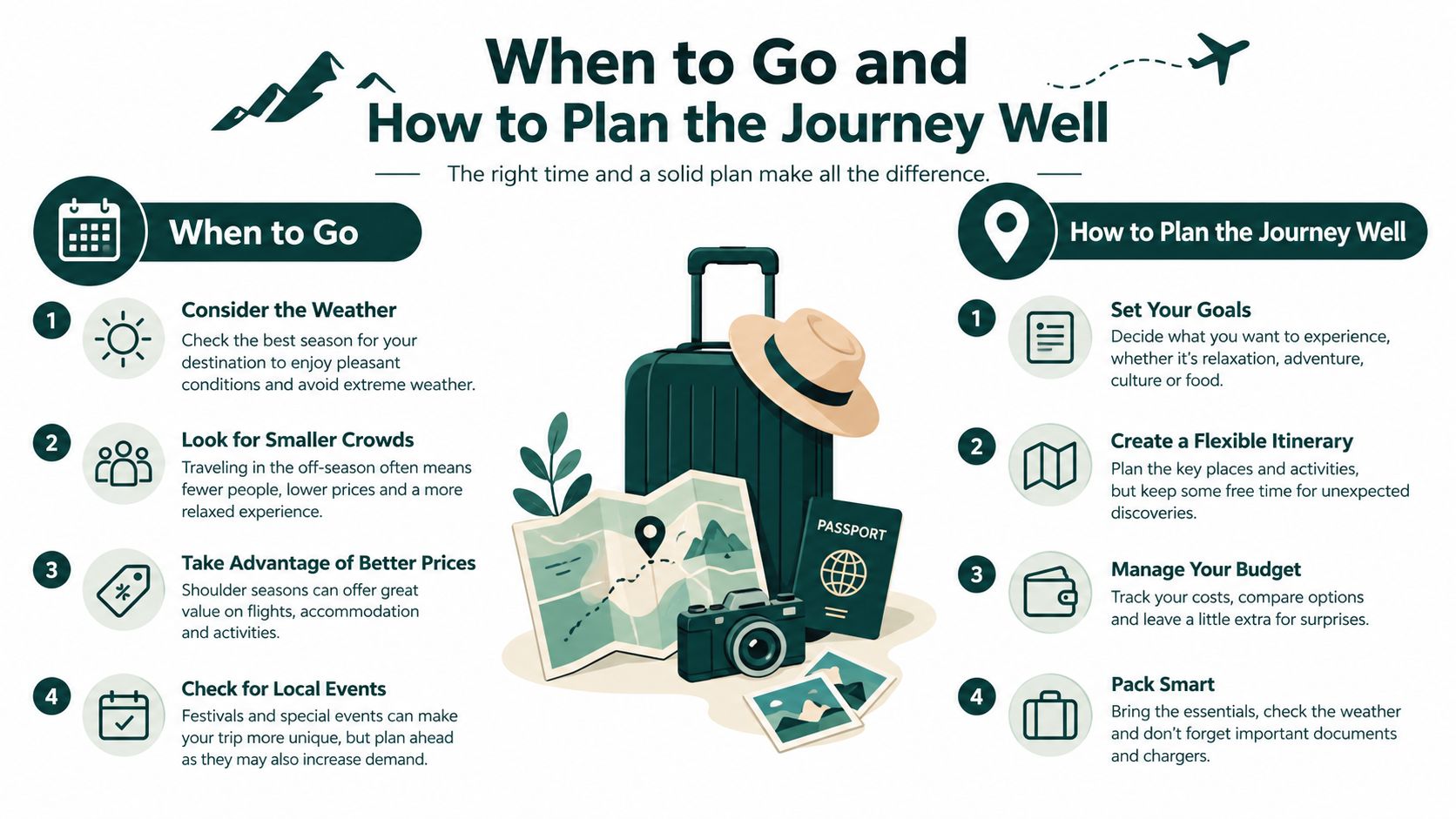
Choose May, June, late September or early October for the richest balance of light, access and manageable crowds. July and August bring stronger demand, higher rates and busier coastal towns. The northern Spain coast remains oceanic and changeable, with Atlantic swell, sudden mist and shifting light. Pack for brief weather changes, then use the conditions to your advantage: the same moisture that complicates a beach day gives the coast its green character.
Demand is moving toward spring and autumn while the July and August peak flattens, according to reporting on the changing European travel wave. That shift creates real competition for the best tables and rooms, so treat a three-to-six-month booking window as firm. Galicia can feel gentler in July, while the Basque Country is generally busiest and most expensive in summer. For a first circuit, I recommend late September unless a festival or family calendar sets the dates.
Reserve flagship restaurants such as Elkano or Casa Gerardo at least three months ahead, and secure distinctive boutique hotels six to nine months out. Build one rest day for every three driving days, particularly when coastal walks or mountain excursions are part of the route. Multigenerational groups should consult this ultimate planning guide for multigenerational travel before selecting room layouts, activity levels and transfer times.
Plan around weather, pacing and access, rather than school holidays. Northern Spain Travel creates private, tailor-made journeys across the Basque Country, Cantabria, Asturias and Galicia, pairing coastal drives with boutique stays, private guides, food, wine and well-timed local experiences. Visit Northern Spain Travel to shape an itinerary around your season, preferred pace and appetite.