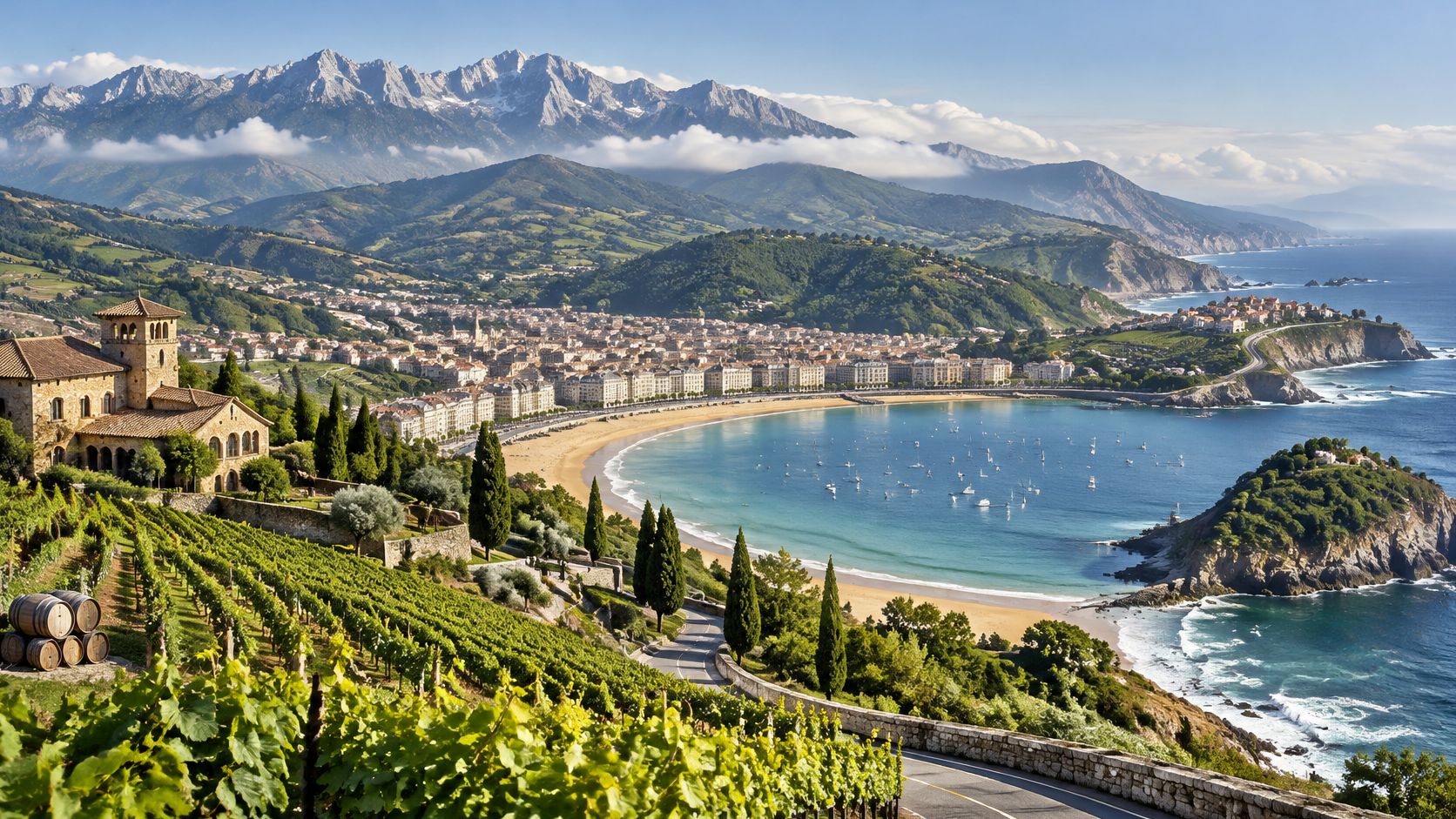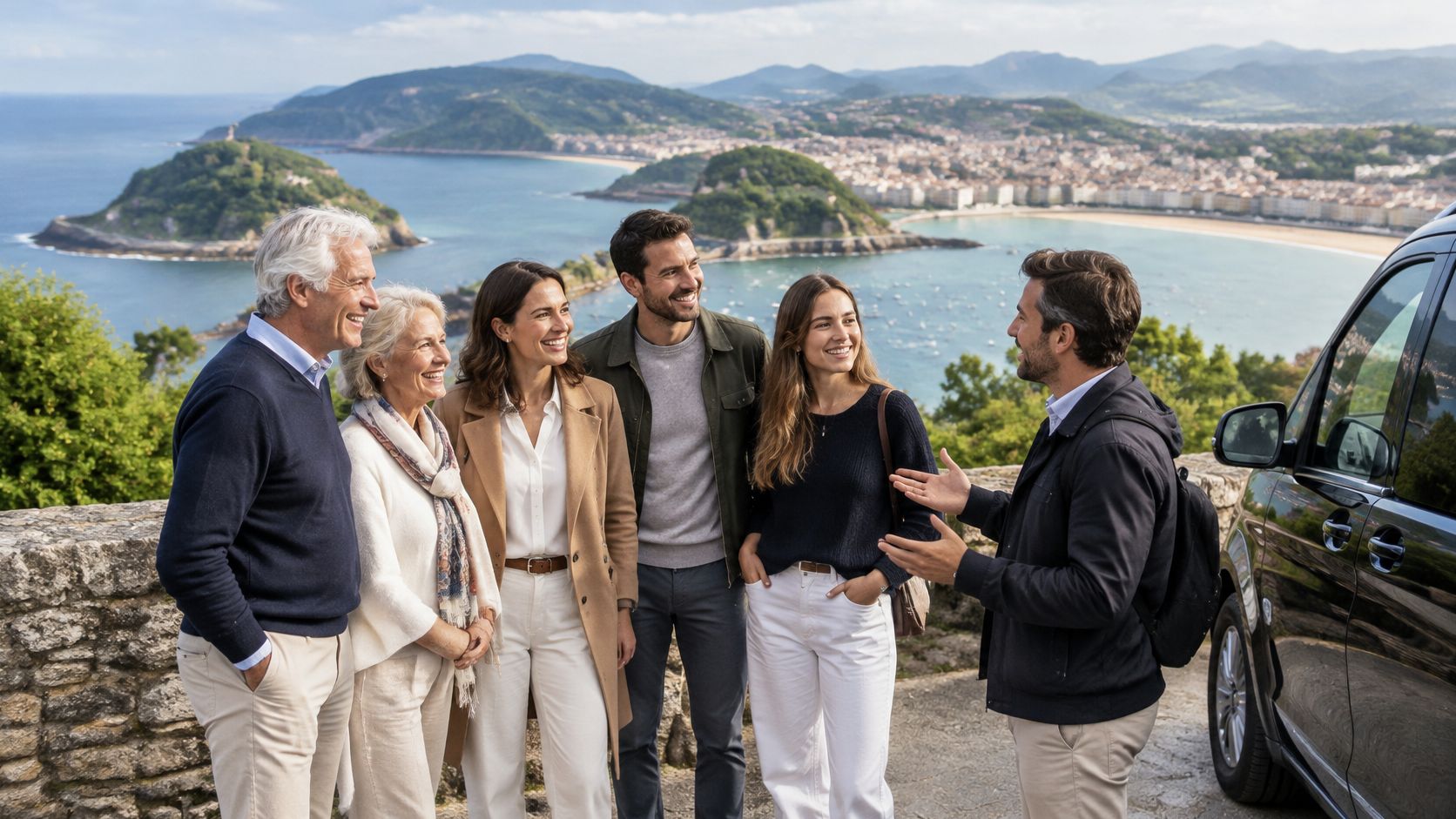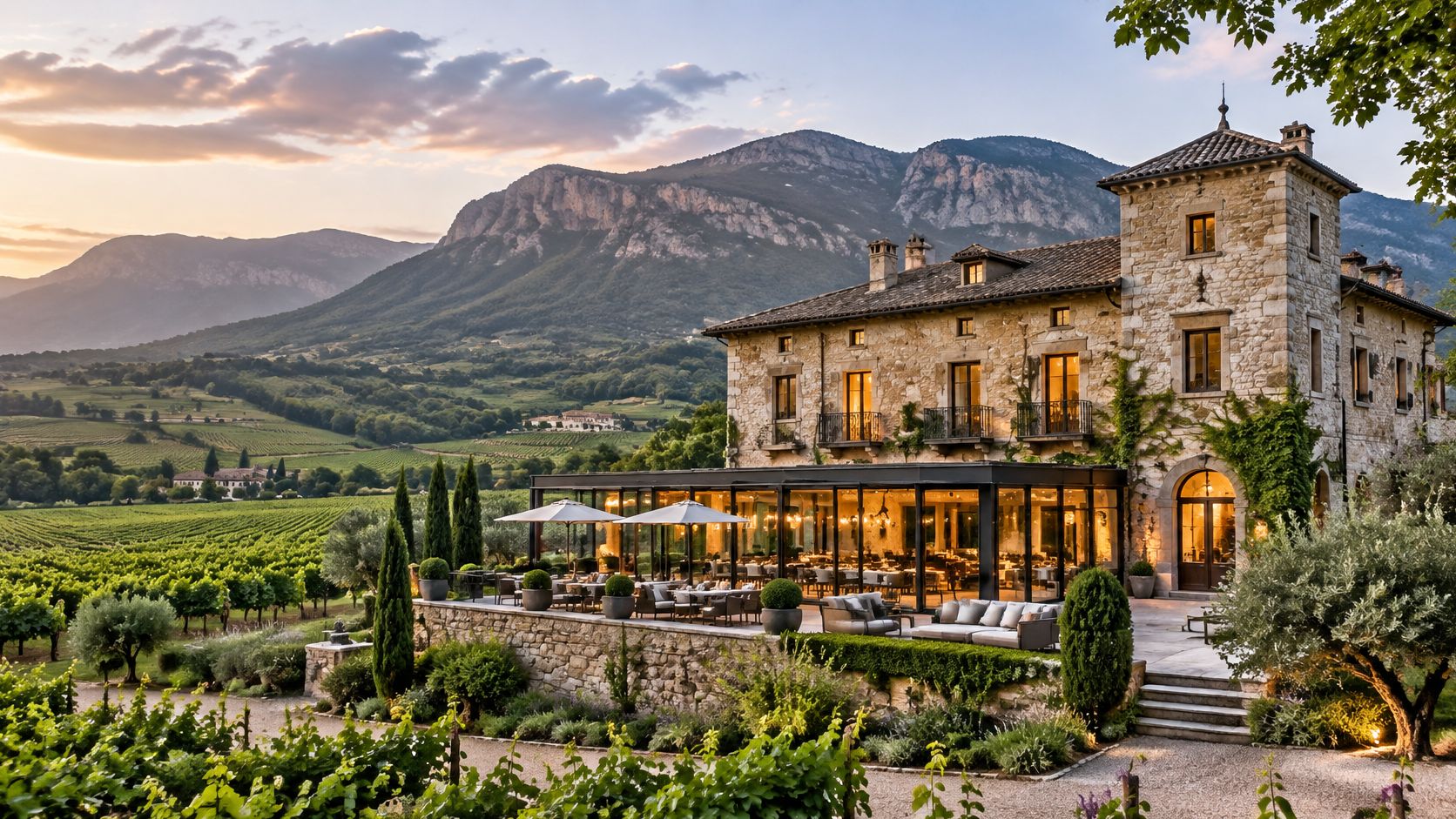
You've done Madrid in the heat, queued in Barcelona, and had the same hotel breakfast everyone else photographed. Now you're looking at a map of the north and wondering which of these green, coastal places work for a private trip, and which ones only look good for an afternoon. That's the right question. The best luxury travel places in Northern Spain aren't defined by a famous view. They're defined by access, whether that's a cellar door opened after hours, a chef who walks you through a market, or a driver who knows which mountain road closes first when weather turns.
Demand gives you a reason to plan early. UN Tourism's 2024 recovery report recorded approximately 1.4 billion international travelers, equivalent to 99% of the pre-pandemic level, with Europe generating approximately USD 725 billion in international tourism receipts, or 42% of the global total. Northern Spain sits inside that demand, but it spreads visitors across villages, valleys and small ports rather than one overloaded center.
Europe also leads affluent intent. Preferred Hotels & Resorts' Luxury Travel Report coverage found 77% of respondents named Europe as their top region for luxury travel. Use that to your advantage. Book the scarce table, balcony, guide or boat first, then build quieter days around it. For most couples, May to June and September to October give you the best balance of light, temperature and access.
Table of Contents
- 1. San Sebastián (Donostia), Gipuzkoa
- 2. Rioja Alavesa and Elciego, Basque Country
- 3. Pamplona and Navarra (San Fermín)
- 4. Bilbao and the Guggenheim Museum
- 5. Picos de Europa National Park
- 6. Santillana del Mar and the Cantabrian Coast
- 7. Asturias Fishing Villages and Cider Culture
- 8. Galicia Rías Baixas and Santiago de Compostela
- 9. Pyrenees Ordesa and Benasque
- 10. Getaria and the Txakoli Country
- How the 10 Northern Spain Luxury Destinations Compare
- Turning These Places Into Your Private Northern Spain Journey
1. San Sebastián (Donostia), Gipuzkoa
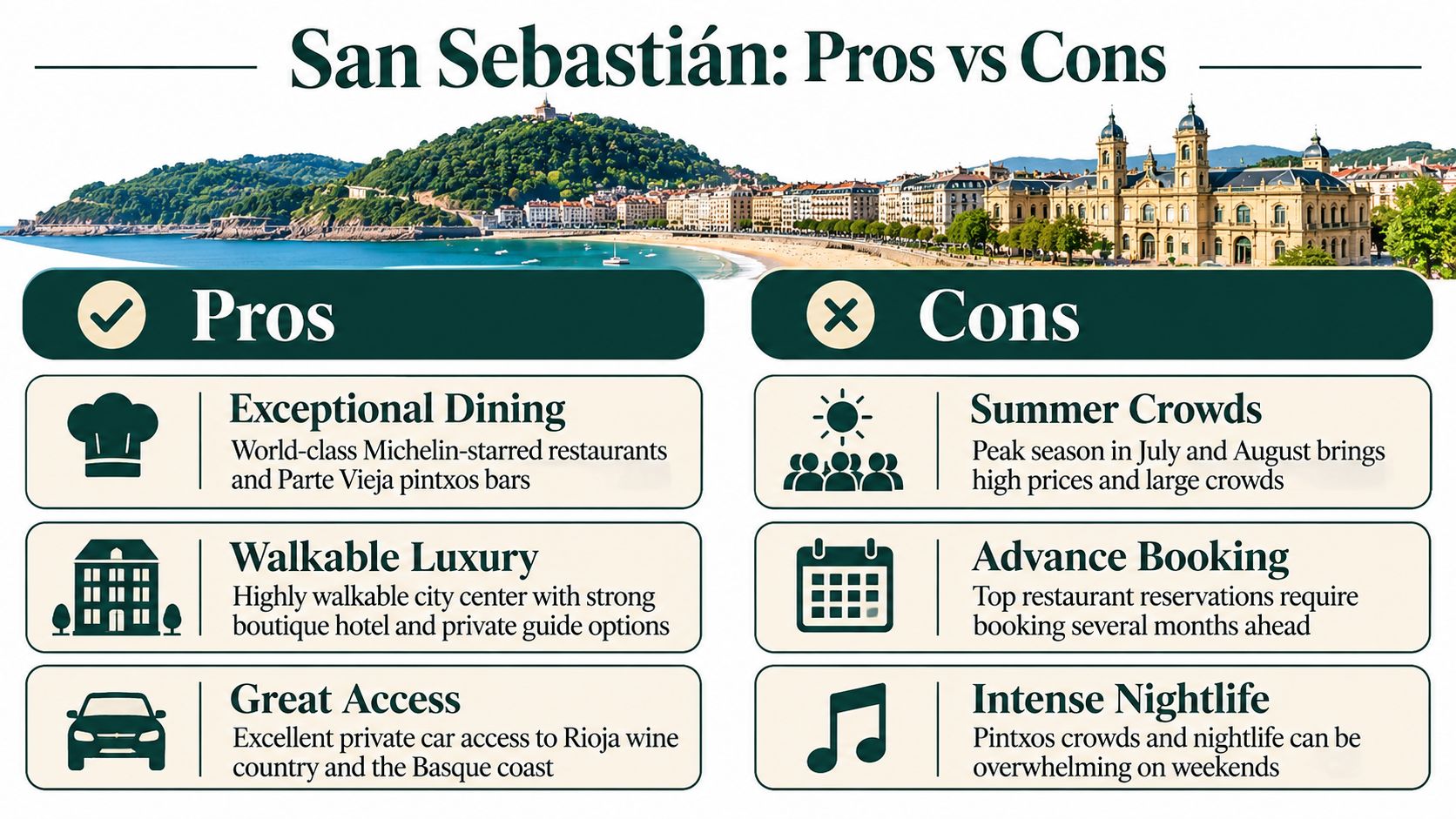
San Sebastián works because you can eat exceptionally well without spending every evening in a formal dining room. Base near La Concha bay for morning walks, then use the Parte Vieja for pintxos in short, planned bursts. Go late afternoon with a local chef or food writer, order two or three items per bar, and leave before the lanes fill. That's more luxurious than fighting for counter space at peak hour.
The access that matters
Reserve Arzak, Akelarre or Mugaritz in nearby Errenteria 3 to 6 months ahead through your hotel concierge or advisor. Don't book two long tasting menus on consecutive nights. You'll enjoy both less. I recommend one flagship dinner, one chef-led pintxos evening, and one simple seafood lunch, spaced across three days.
A typical use case is a food-focused couple staying four nights. Day one is arrival and a guided pintxos crawl. Day two pairs a market walk with a relaxed lunch. Day three uses a private driver to Getaria and Hondarribia. Day four ends with sunset from Igeldo or Ulia before your reserved tasting menu.
Best season: May to June, September. Lead time: 3 to 6 months for top tables. Trade-off: August brings beach energy, but it also brings the crowds you're paying to avoid.
2. Rioja Alavesa and Elciego, Basque Country
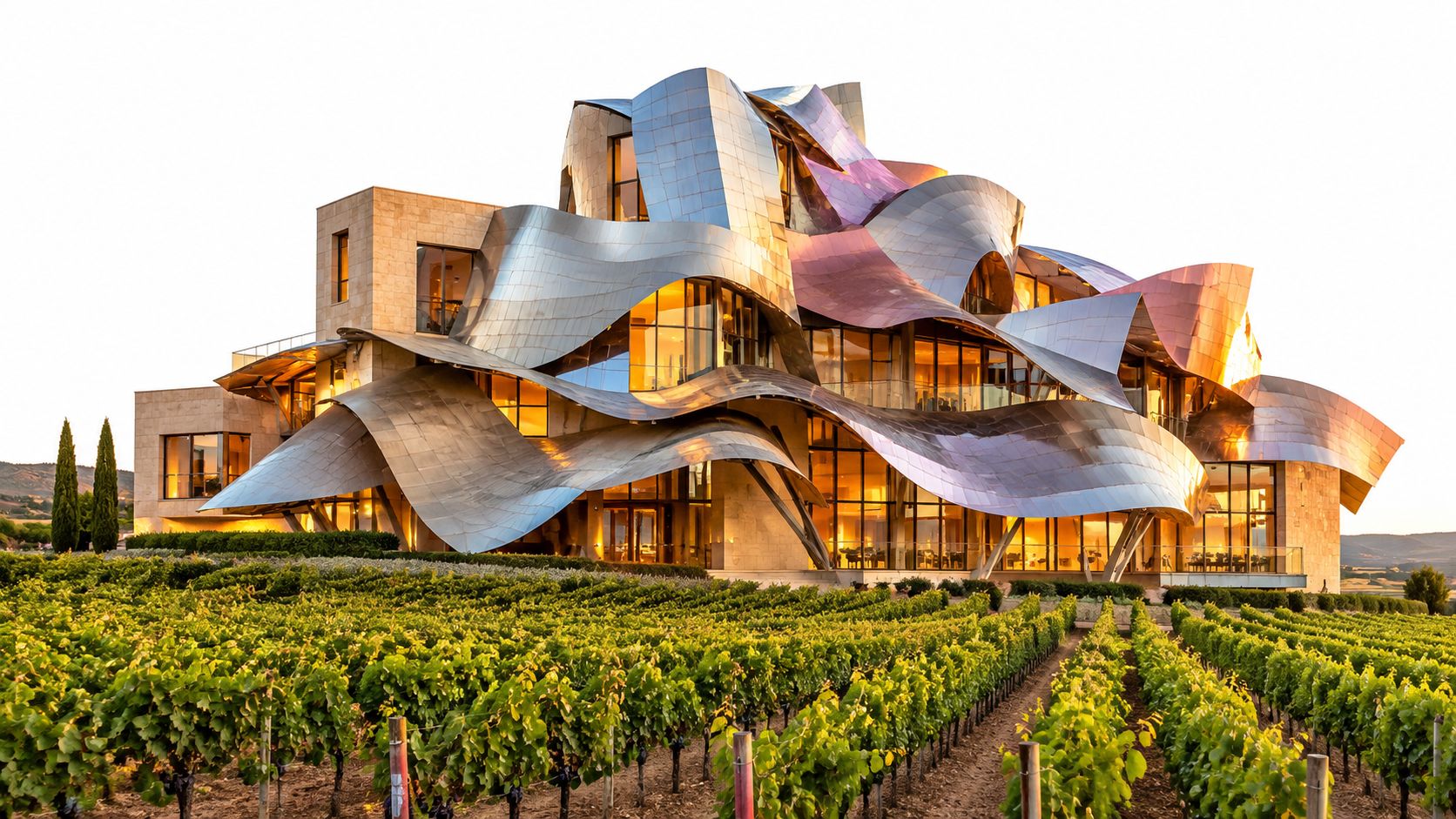
Stay in Elciego if wine is the reason for the trip, not an add-on. The Marqués de Riscal estate and its Frank Gehry-designed hotel give you private tastings, vineyard views and dinner without a transfer afterward. Ask for vertical flights of Reserva and Gran Reserva wines, because vintage comparison teaches you more than a standard three-glass pour.
Use Laguardia for a slower counterpoint. Walk the medieval lanes early, take a long lunch paired with local reds, then visit a smaller family producer in the afternoon. For route ideas that sequence villages without backtracking, see these Rioja itinerary ideas for a bespoke wine escape. If you're comparing regions before you commit, this overview of Spain's vineyards with McLaren Vale Cellars helps you place Rioja beside Ribera del Duero and Priorat.
- Hire a driver: Everyone tastes, nobody handles rural roads after lunch.
- Book cellars early: Reserve several weeks ahead, and earlier during harvest.
- Walk at dawn: An early vineyard walk beats a midday tour in summer heat.
The wider context favors this style of stay. A 2024 luxury travel market estimate valued the market at approximately USD 2.19 trillion and projected it to reach USD 4.07 trillion by 2034. Growth alone doesn't make a trip good. Private access to a working cellar does.
Best season: September to October for harvest, May to June for quiet. Lead time: several weeks, months for harvest weekends.
3. Pamplona and Navarra (San Fermín)
Pamplona in July is a logistics exercise first and a festival second. If you're coming for San Fermín, secure a private balcony or box seat and watch the run from a safe location. Don't plan to join it, and don't rely on finding a viewing spot on the morning. Accommodation, drivers and credible balcony access need booking many months in advance.
Balance festival mornings with quieter Navarra days. Take a guided Old Town walk when streets are calmer, drive to Olite castle, and arrange a private tasting at Bodegas Chivite. A milestone group often does two festival mornings, one winery day, and one long lunch outside the center. That pace keeps the event vivid without turning the whole trip into crowd management.
That is how a trusted advisor earns the fee. A 2025 Harris Poll study covered by TravelAge West found 84% of affluent U.S. travelers said a trusted travel advisor was more valuable than time-consuming online research, and 90% believed the best trips should feel effortless while still being expertly crafted.
Practical rule: During San Fermín, fix your viewing location, driver pickup point and restaurant bookings before you choose anything optional.
Best season: early July for San Fermín, May or September for Navarra without festival pressure. Lead time: many months for festival access. Trade-off: outside July, Pamplona is calmer and better for wine, but it won't have the same event energy.
4. Bilbao and the Guggenheim Museum
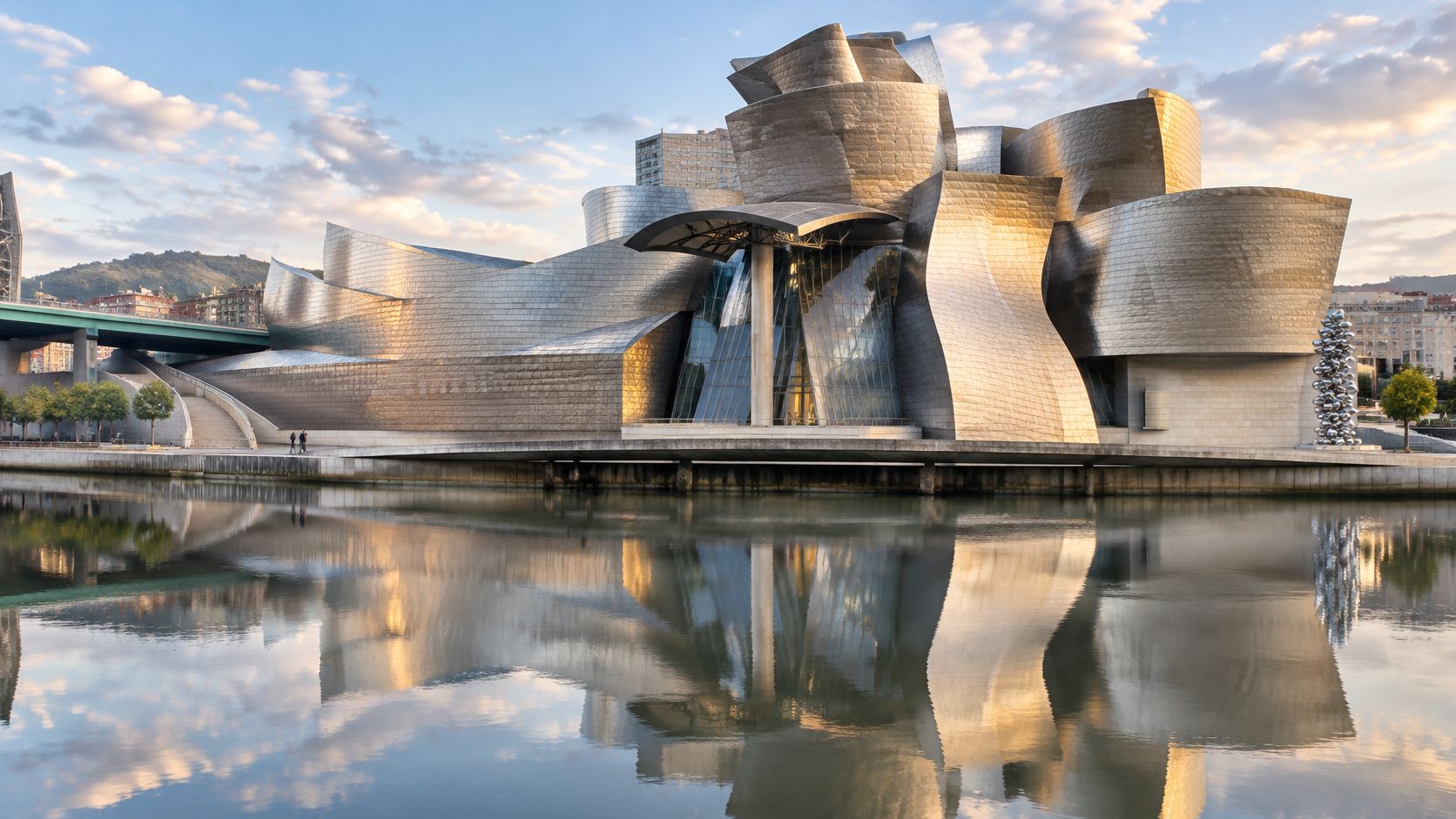
Use Bilbao as your cultural anchor, not necessarily your only base. Arrive here, sleep one or two nights, and give the Guggenheim Museum Bilbao a private tour with a curator-level guide. Pre-book it, because private and after-hours slots are limited. You'll notice more in Gehry's titanium curves and the riverfront galleries when you're not moving with a general-admission flow.
Pair the museum with a morning at Mercado de la Ribera, when fish and produce selection is strongest. A private architecture walk then connects the old quarter, the river bridges and the newer waterfront. Finish with a coastal drive toward Getxo for a seafood lunch and a slower afternoon.
Personalization is the difference between a good city stop and a generic one. Marriott's 2025 survey reported by TTG Asia found 93% of 1,750 affluent travelers expected every trip detail to be customized. In practice, that means your guide should know whether you want contemporary art in depth, architecture only, or forty-five focused minutes before lunch.
A common use case is a couple flying into Bilbao, spending two nights for art and dining, then moving to San Sebastián or Rioja with a driver. Best season: April to June, September to October. Lead time: weeks for private museum access, longer around major exhibitions.
5. Picos de Europa National Park
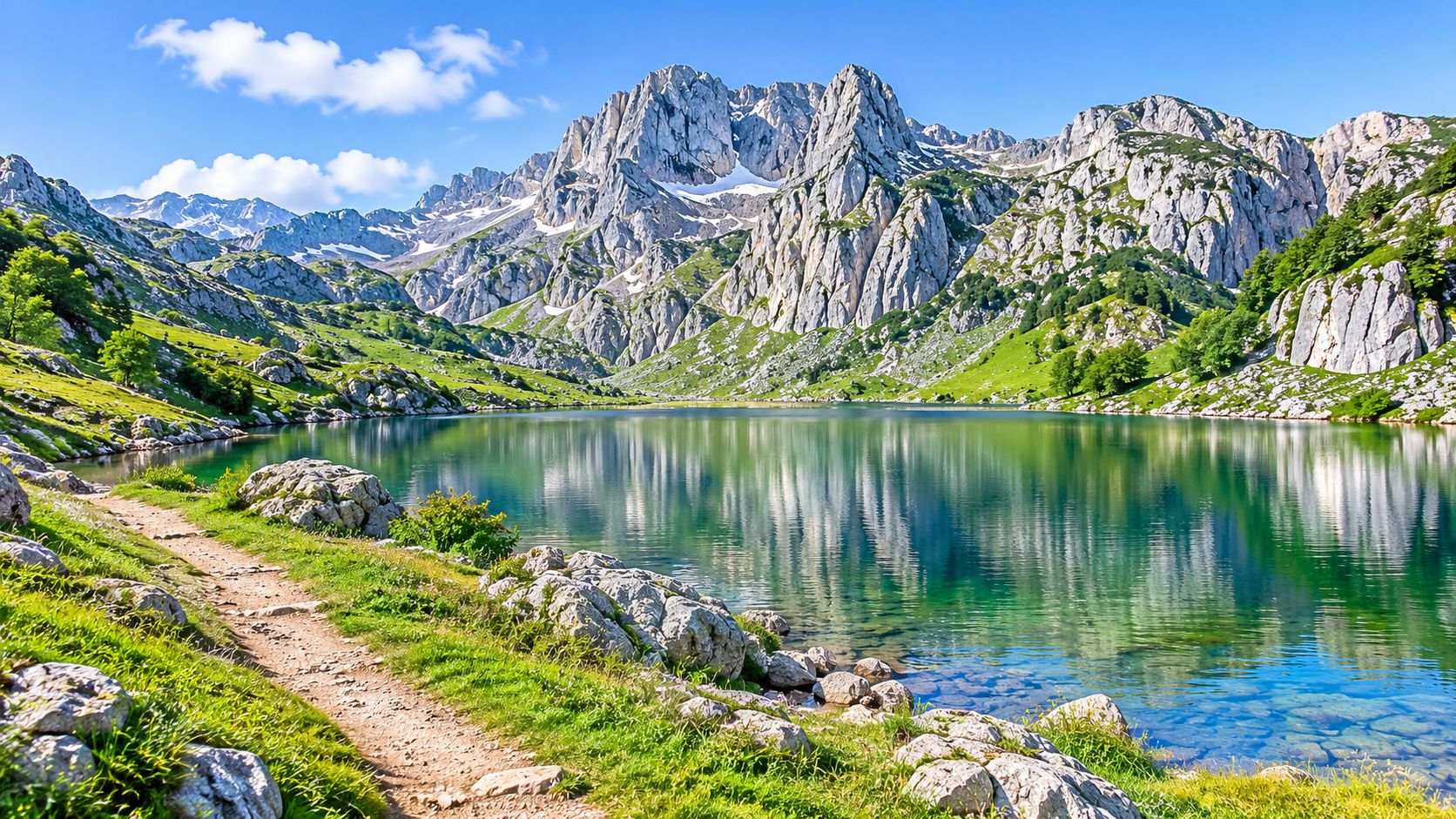
The Picos reward early starts. Limestone peaks, the Cares Gorge, alpine lakes and Cabrales cheese villages sit close together on a map, but mountain roads make distances deceptive. Hire a private driver, start hikes early, and keep one flexible half day for weather. Luxury here isn't a grand lobby. It's a guide who changes the route before clouds close the viewpoint.
Book cable car tickets online in advance in peak season. Pack layers and waterproofs even in August. For wooded trails and meadow edges, sensible preparation includes checking guidance on tick repellents for outdoor adventures and reapplying as directed after rain or a long picnic stop.
A day that works
Drive early to the trailhead, walk a guided section of the Cares Gorge, and stop for a picnic rather than rushing back for lunch. Visit a small dairy for Cabrales cheese in the afternoon. Return to a boutique rural hotel for a hot shower, a short rest and a proper dinner.
Climate is part of the appeal. A 2026 Prophet luxury travel analysis reported 39% of luxury travelers now deliberately choose cooler destinations or travel periods to avoid extreme heat. The Picos give you summer walking without southern temperatures, provided you respect fast-changing mountain conditions.
Best season: June, September. Lead time: weeks for guides and cable cars in peak season.
6. Santillana del Mar and the Cantabrian Coast
Santillana del Mar is beautiful, and that's exactly why timing matters. Stay overnight in a restored palace or manor house instead of arriving with day visitors at noon. Walk the cobbled streets early or after dinner, when stone houses and small squares feel residential again. Use the middle of the day for the coast or a booked visit nearby.
Reserve the Altamira Neocave in advance because daily capacity is limited. In Comillas, a private guide makes El Capricho and the palaces easier to read, especially if you're traveling with teenagers or grandparents who need a shorter, focused visit. Plan coastal walks for early morning or late afternoon, then sit down to local anchovies, cheese and a seafood lunch without rushing.
Sustainability claims need specifics here. Hilton's 2025 Trends Report found 73% of surveyed travelers said minimizing environmental impact while traveling is important. The useful response isn't a slogan. It's staying longer in one base, choosing family-run properties, eating seasonal Cantabrian seafood, and spreading visits beyond the busiest hour.
A quiet overnight in Santillana is worth more than three rushed village stops in one afternoon.
A family use case works well over two nights, with the Neocave one morning and Comillas the next. Best season: May to June, September. Lead time: weeks for Neocave entry and small palace hotels. Trade-off: it's a gentle base, not a nightlife destination.
7. Asturias Fishing Villages and Cider Culture
Cudillero's houses rise steeply above a working harbor, while Llanes pairs a livelier old town with beaches and access toward the Picos. Choose two villages rather than trying to cover the whole coast in one drive. Eat in one, then leave time for a harbor walk in the other.
Use this guide to the best fishing villages in Northern Spain to shape a route. For cider, arrange a private evening at a cider house with a local maker. Sidra is poured from a height and shared quickly, and the maker can explain the custom as you taste. Early evening brings the cider house to life.
The video below offers a look at the Asturian coast before you settle on a route.
For a multigenerational trip, put the budget into a driver, a guide and a small rural hotel rather than adding extra stops. Coastal roads can be winding, so driver-based day trips reduce time behind the wheel and leave afternoons open.
Best season: June or September. Lead time: Book boutique rural hotels early, since they have limited rooms.
8. Galicia Rías Baixas and Santiago de Compostela
Split Galicia into two moods and don't rush either. In Rías Baixas, the day revolves around Albariño, estuaries and seafood in Cambados or Vigo. In Santiago de Compostela, it revolves around the cathedral, stone streets and the end of the Camino. A private driver lets winery tastings flow into a harbor lunch without anyone watching the clock or the pours.
Take a private guide for the cathedral. You'll understand the Portico, the pilgrim rituals and the old town layout far better than you will from a signboard. Reserve historic hotels in Santiago early, especially if you want quiet rooms near the center. If the Cíes Islands are on your list, plan well ahead because daily access is limited and weather can still change the day.
- Pair wine with lunch: Albariño tastings work best before seafood, not after a heavy meal.
- Stay two bases: Two nights near the rías, two in Santiago beats daily long transfers.
- Walk a short Camino section: A guided half day gives context without turning the trip into a trek.
Trip frequency supports a slower route. Preferred Hotels & Resorts' 2025 Luxury Travel Report reported affluent U.S. travelers planned an average of eight leisure trips during the year, including three international journeys. Galicia suits travelers who can return to Spain and want a distinct region, not a greatest-hits repeat.
Best season: May to June, September. Lead time: early for Santiago hotels and Cíes access.
9. Pyrenees Ordesa and Benasque
Choose the Pyrenees when you want altitude, silence and a lodge dinner after a real walk. Ordesa y Monte Perdido National Park delivers big valley scenery, while Benasque gives you a mountain town base with village stops and scenic drives. The mistake is treating this as a quick detour. Transfers are long, weather shifts fast, and the best guides book out in peak hiking weeks.
Build days around one main hike, a picnic lunch and an unhurried evening. If you're comparing guided routes and comfort levels, start with these luxury Pyrenees hiking tours in Spain for 2026 and then match distance to your group's slowest walker. That last point matters for multigenerational trips. A shorter route everyone finishes happily is more luxurious than a heroic route that splits the group.
Who counts as a luxury traveler also shapes expectations. Deloitte's 2025 Holiday Travel Survey reported 25% of surveyed travelers met its definition of luxury travelers, having stayed at a property they considered luxurious and booked hotels costing at least $400 per night on two or more leisure trips. In the Pyrenees, that spend should buy guiding, transfers and recovery time, not just a room.
Pack layers, hire a driver for mountain roads, and check conditions the night before. Best season: June to early July, September for hiking. Lead time: weeks for private guides, longer for small lodges. Trade-off: outside ski season trails are quieter, but some services run reduced hours.
10. Getaria and the Txakoli Country
Getaria is the day trip I recommend most often from San Sebastián, and sometimes the better overnight for travelers who want a small harbor over a city base. It's the birthplace of Juan Sebastián Elcano, a working fishing town, and home to txakoli, the light, slightly sparkling white poured from height into flat glasses. Come early for a harbor walk in good light, then taste before lunch.
Book Elkano and other harbor restaurants weeks in advance if grilled fish is the point of the visit. Pair a private txakoli bodega tasting with a coastal lunch, then either return to San Sebastián by driver or continue slowly along the Basque coast. A private boat trip works on calm days, but don't make it the only plan. Atlantic weather can cancel the water while leaving the food and wine day intact.
How to use Getaria well
A couple based in San Sebastián can leave after breakfast, taste txakoli mid-morning, eat grilled seafood at lunch, and be back for a rest before evening pintxos. A wine-focused group should do the opposite order and stay for dinner, with the driver handling the return.
Booking note: In Getaria, the restaurant reservation is the anchor. Build the bodega and boat around it, not the other way.
Best season: May to June, September. Lead time: weeks for Elkano and private bodegas. Trade-off: it's intimate and food-led, so travelers who want museums and shopping should keep San Sebastián as the base.
How the 10 Northern Spain Luxury Destinations Compare
| Item | Best For | Best Time to Visit | Nearest Airport | Signature Experience |
|---|---|---|---|---|
| San Sebastián (Donostia), Gipuzkoa | Food and wine lovers; couples | May to early July and September to October | San Sebastián Airport (EAS), with connections via Madrid and Bilbao | Pintxos crawl through Parte Vieja |
| Rioja Alavesa and Elciego, Basque Country | Wine lovers and architecture enthusiasts | April to June and September to November | Bilbao Airport (BIO), about 1 to 1.5 hours by car | Private cellar tasting at Marqués de Riscal |
| Pamplona and Navarra (San Fermín) | Festival seekers and wine lovers | July 6 to 14 for San Fermín; May to June and September for quieter visits | Pamplona Airport (PNA), or Bilbao and Zaragoza airports | Private viewing of the San Fermín bull run from a safe vantage point |
| Bilbao and the Guggenheim Museum | Art, architecture, and fine-dining enthusiasts | May to October | Bilbao Airport (BIO), about 15 minutes from the city centre | Expert-led private tour of the Guggenheim |
| Picos de Europa National Park | Nature lovers and soft-adventure travelers | June to September for hiking; May and October for quieter trails | Asturias Airport (OVD) or Santander Airport (SDR) | Guided walk along the Cares Gorge |
| Santillana del Mar and the Cantabrian Coast | History, coastal scenery, and boutique stays | May to June and September | Santander Airport (SDR), about 30 to 40 minutes away | Guided visit to Santillana's medieval streets and historic sites |
| Asturias Fishing Villages and Cider Culture | Seafood lovers and travelers seeking authentic village life | June to September | Asturias Airport (OVD), about 1 hour from Cudillero and Llanes | Cider-house visit with a local cider maker |
| Galicia: Rías Baixas and Santiago de Compostela | Seafood and wine lovers; culture seekers | May to September | Santiago de Compostela Airport (SCQ) or Vigo Airport (VGO) | Albariño tasting at a Rías Baixas winery |
| Pyrenees: Ordesa and Benasque | Hikers and mountain-lodge travelers | June to September for hiking; December to March for skiing | Zaragoza Airport (ZAZ) or Barcelona El Prat (BCN), with long transfers | Guided hike in Ordesa National Park |
| Getaria and the Txakoli Country | Seafood and wine lovers seeking a small coastal town | May to October | San Sebastián Airport (EAS), about 30 minutes away | Txakoli tasting paired with a coastal lunch |
Turning These Places Into Your Private Northern Spain Journey
Start with the experiences you can't replace. That might be a private Rioja cellar tasting during harvest, a San Fermín balcony with a safe view, an after-hours Guggenheim tour, or a chef-led pintxos evening in San Sebastián. Fix those anchors first. They set your dates, your route and your booking lead time. Hotels and scenic drives are easier to adjust around scarce access than the other way around.
Then be honest about pace. Northern Spain looks compact, but mountain roads, winery lunches and coastal stops stretch every transfer. Two bases in a week usually feel luxurious. Four bases usually feel like packing practice. Say you're a couple who loves food and gentle walking. Bilbao for two nights, San Sebastián for three, and Rioja Alavesa for two gives you art, pintxos, Getaria by driver, and a cellar stay without a daily hotel change. A family with grandparents might trade Rioja for Asturias, keep drives shorter, and add a cider house evening that everyone can join.
Season is a planning tool, not a footnote. Choose May to June for green hills, long evenings and easier restaurant access. Choose September to October for harvest, seafood and calmer villages. Choose July only when an event or school calendar makes it necessary, and then protect the trip with private drivers, timed entries and rest built into the middle of the day. If heat is your concern, the Atlantic coast, Picos and Pyrenees give you options that southern city touring can't match in midsummer.
Responsible choices work best when they don't feel like a compromise. Stay longer in fewer places. Eat what's seasonal and local. Use family-owned wineries, independent guides and small rural hotels where your spending stays visible. Ask direct questions about sourcing, staffing and transport rather than accepting a vague green label. Comfort and responsibility can share the same itinerary when routing is efficient and hosts are chosen for substance.
Small details keep a private trip feeling personal. Tell your planner about dietary needs, walking tolerance, wine knowledge, hotel atmosphere, children's interests and how late you like to eat. Even custom luggage tags with personal flair can help a multigenerational group spot bags quickly during driver transfers, which removes one more minor friction from arrival day. Good personalization is mostly friction removed before you notice it.
We design these routes as fully private journeys, crafted by local specialists around food, wine, culture, nature and events. To start, share your must-have experiences, dream destinations, preferred travel dates and the style of journey you imagine. Northern Spain Travel then designs a personalized draft itinerary from that checklist, with boutique stays, private drivers and insider access placed where they'll change the trip most. One client described their result as superb, saying the trip designed for them gave an unforgettable experience in each town visited. That's the standard to plan toward, a route that feels calm on the surface because the hard decisions were made early.
Northern Spain Travel designs fully private, tailor-made journeys across the Basque Country, Rioja, Navarra, Cantabria, Asturias, Galicia and the Pyrenees, with boutique hotels, private drivers, expert guides and rare local access built around your pace. Tell us your must-have food, wine, coast, culture or event experiences and your preferred dates, and we'll turn these luxury travel places into a draft itinerary shaped for you. Start planning with Northern Spain Travel today.