The Camino del Baztán, also called the Camino Baztanés, is a branch of the Camino de Santiago that links Bayonne with Pamplona through the Baztán valley. It measures between 103 and 111 km, is usually walked in six stages over five or six days, and has one hard day, the crossing of the Belate pass.
Walkers get their first stamp at Bayonne cathedral and leave the old town by rue d’Espagne, which tells you most of what you need to know about direction. Within the hour the city is behind them and the path follows the Nive, flat and quiet, past farmhouses and vegetable gardens. It is short, it is green, and it is little walked.
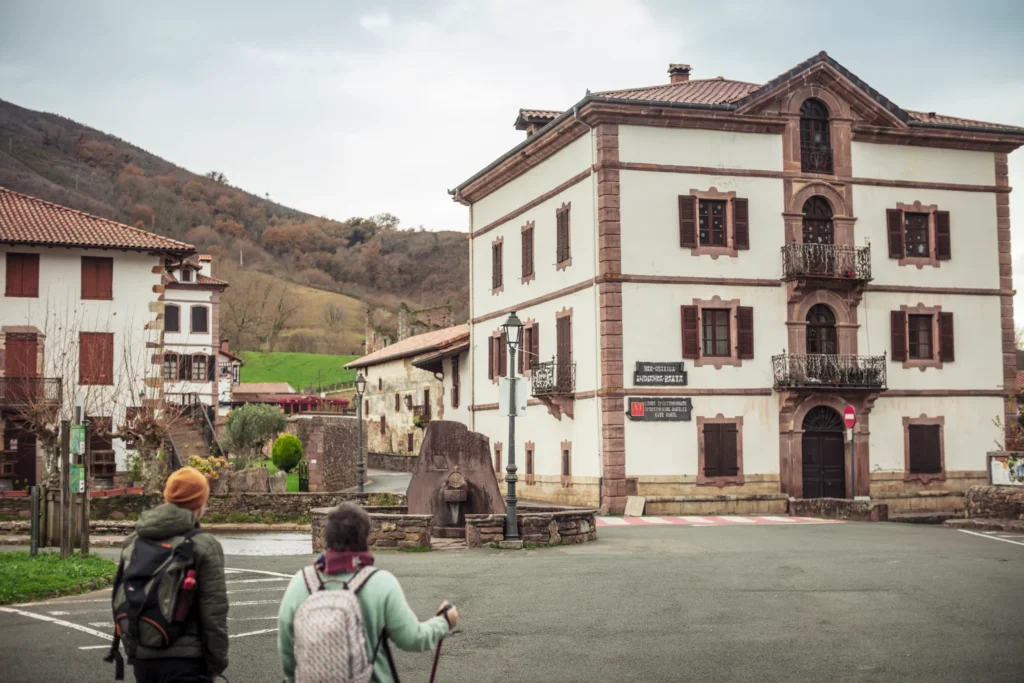
© Mikel Murz
How many days does the Camino del Baztán take?
Depending on where you count the end, the route measures between 103 and 111 km. The Camino itself finishes at La Trinidad de Arre, where it joins the Camino Francés, and the walls of Pamplona are about five kilometres further on. Most guides divide it into six stages, and so do we. Strong walkers can do it in five, though the extra distance lands on the days with the most climbing.
The six stages of the Camino Baztanés
The usual division, at a glance:
StageRouteDistanceDifficulty
| 1 | Bayonne to Ustaritz | About 14 km | Easy |
| 2 | Ustaritz to Urdax | About 22 km | Moderate to demanding |
| 3 and 4 | Urdax to Berroeta, via Amaiur and Elizondo | About 28 km in total | Moderate |
| 5 | Berroeta to Olagüe, over the Belate pass | About 20 km | High |
| 6 | Olagüe to La Trinidad de Arre | About 20 km | Medium to low |
The first stage is the gentlest: about 14 km from Bayonne to Ustaritz along the Nive. You arrive in time for a long lunch, which is the right way to begin a walk like this.
The second is the longest, about 22 km from Ustaritz to Urdax, with some 475 metres of climbing spread across the day. Lanes and cobbled stretches rise through oak and chestnut woods, pass Souraïde and the white village of Ainhoa, and cross into Navarra at Dantxarinea. Urdax has a monastery and a set of caves, and it is a good place to stop.
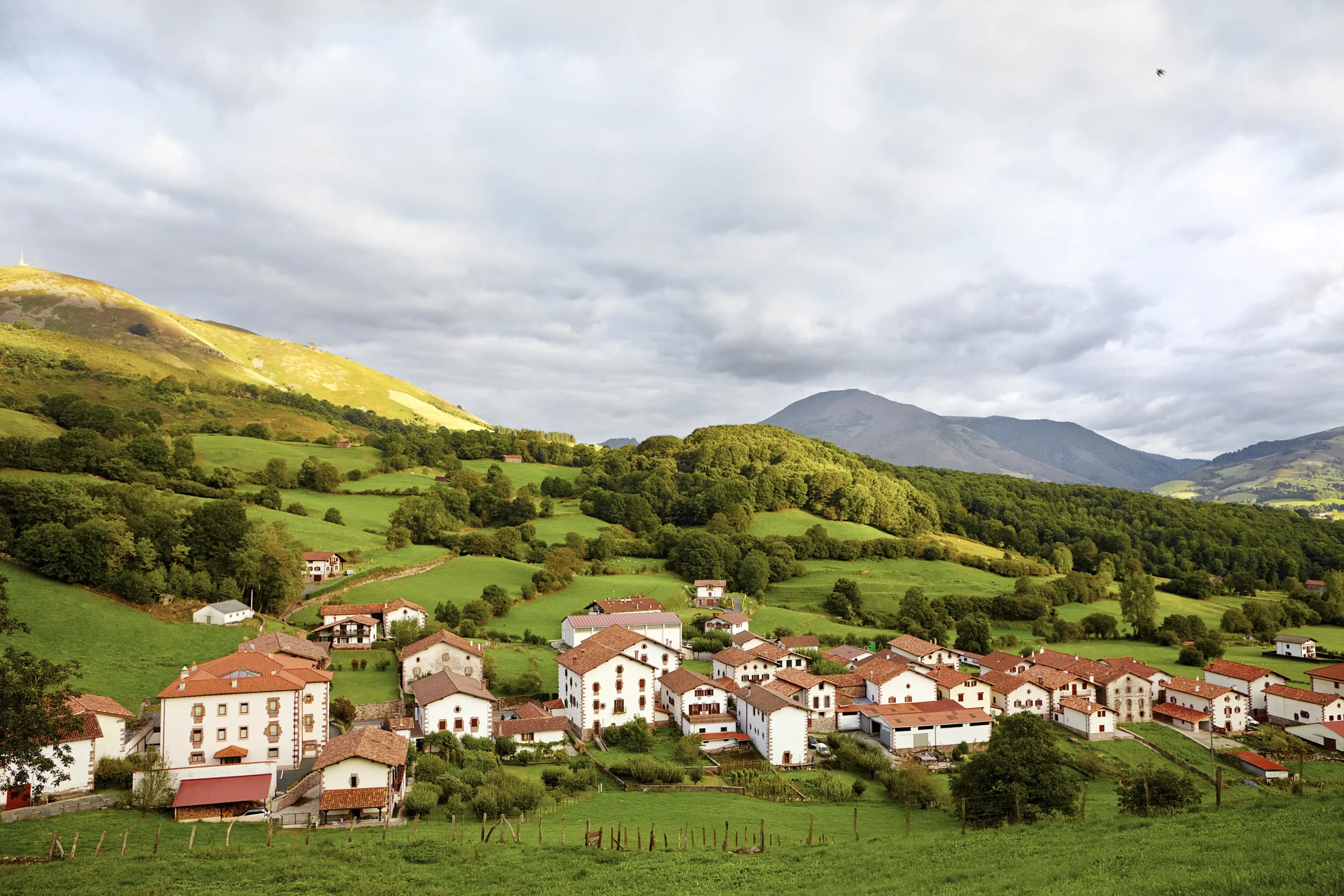
© Javier Campos
The next two stages cover the heart of the Baztán valley between Urdax and Berroeta, about 28 km in all, usually split at Amaiur or at Elizondo depending on where you sleep. Beech forests and old shepherds’ tracks lead to Amaiur, where the ruins of a castle mark the last stand of the Kingdom of Navarre in 1522. Elizondo, the main town of the valley, has manor houses along the Baztán river and a chocolate house, Malkorra, that is worth planning an afternoon around. Beyond it the path climbs through meadows and woods, with the medieval palaces of Irurita and the lookout at Ziga on the way.
The fifth stage is the one people remember. From Berroeta to Olagüe it is about 20 km, and it crosses the Belate pass at 847 metres. The ruins of a medieval pilgrims’ hospital and monastery stand near the top, and a small hermitage of Santiago has been rebuilt for walkers. The mountains of the Navarrese Pyrenees open in every direction. On the way down you pass Lanz, a village known for its carnival.
The sixth stage, again about 20 km, runs from Olagüe to La Trinidad de Arre. The country changes: meadows give way to holm oak, the Anue valley widens, and the land flattens toward Pamplona. At La Trinidad de Arre the Camino del Baztán meets the Camino Francés that arrives from Roncesvalles, and the last kilometres are shared with walkers who started in Saint-Jean-Pied-de-Port.
How hard is the Camino del Baztán?
Two passes give the route its character, Otsondo and Belate, and Belate is the harder. Even so, the Camino del Baztán is moderate overall. Belate reaches 847 metres, well below the Napoleon route over the Pyrenees, and the paths are mostly rural tracks and forest trails. The long second stage and the Belate day are the two to train for. The rest is walking, not climbing.
Camino del Baztán or Camino Francés?
© Francis Vaquero / Turismo de Navarra
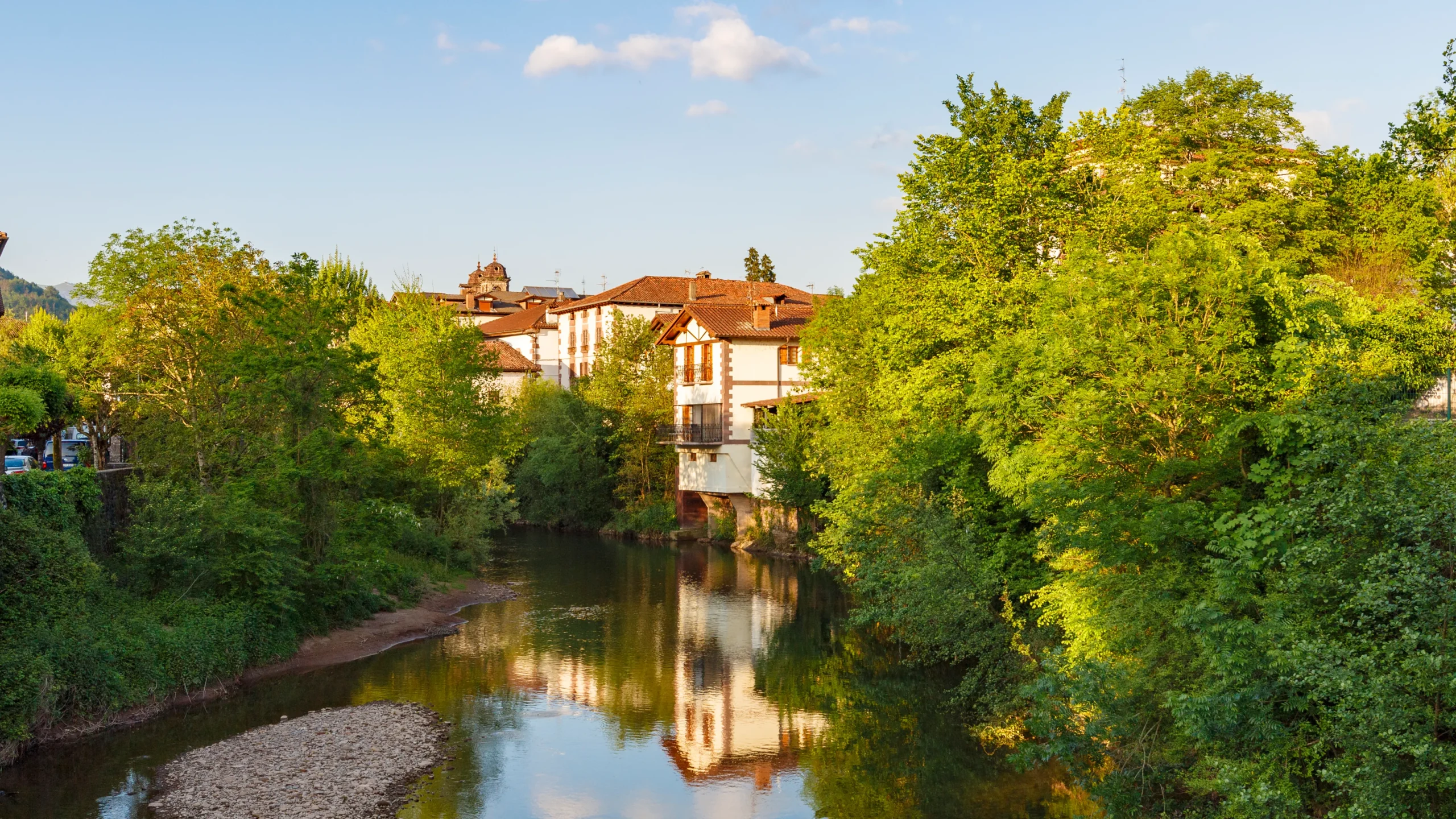
The Camino Francés crosses the Pyrenees from Saint-Jean-Pied-de-Port to Roncesvalles and carries hundreds of walkers a day in high season. The Camino del Baztán is quieter by a long way. Villages are small, beds are fewer, and booking ahead matters. In exchange you get a valley with its own architecture, its own food and a Basque language that is still spoken in the street.
Where to sleep and when to go
Albergues exist along the route but are unevenly spaced, so many walkers book small hotels and rural houses in Ustaritz, Urdax, Elizondo, Berroeta and Lanz or Olagüe. April to June and September to October are the best months, with green valleys in spring and cooler days in autumn. July and August are hotter and busier.
We run this route as a private walk called The Baztán Way: six walking days, luggage moved between stays, and a local table at the end of most of them, from sheep’s cheese in Urdax to a chocolate tasting in Elizondo.
Frequently asked questions
How many days does the Camino del Baztán take?
Six days is the usual division, and strong walkers can do it in five. The route measures between 103 and 111 km, depending on whether you finish at La Trinidad de Arre or at the walls of Pamplona.
Where does the Camino del Baztán start and end?
It starts at Bayonne cathedral in the French Basque Country and ends at La Trinidad de Arre, where it joins the Camino Francés about five kilometres from the centre of Pamplona.
How hard is the Camino Baztanés?
Moderate overall. The hardest day is Berroeta to Olagüe over the Belate pass at 847 metres, and the longest is Ustaritz to Urdax at about 22 km.
When is the best time to walk it?
April to June and September to October. Spring has the greenest valleys, autumn has cooler days, and July and August are hotter and busier.
Do I need a pilgrim credential?
Walkers who plan to sleep in pilgrim albergues need one, and the first stamp can be collected at Bayonne cathedral.