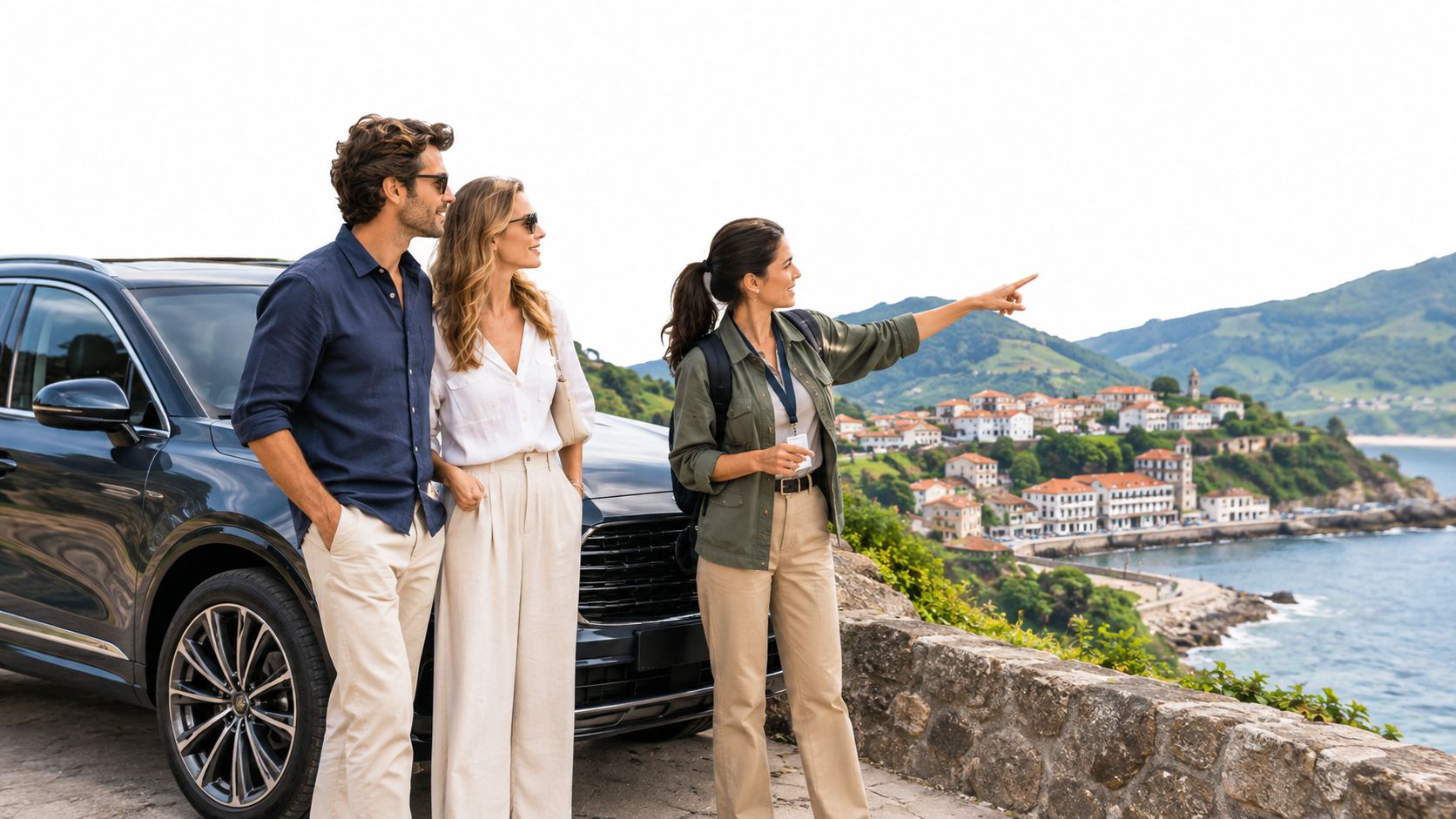
The most popular advice for Europe is also the worst slow travel advice. It says pick a famous train, linger over coffee, and the trip will somehow become slow. It won't. If you're still changing hotels every second night, racing between headline cities, and arriving in July when everyone else does, a scenic train just gives you a prettier view of a rushed itinerary.
Slow Travel Europe works when you treat it as engineering, not mood. You set the right number of bases, match each leg to the transport that fits it, choose a season on purpose, and verify access before you book. That's especially true in Northern Spain, where the Basque Coast, La Rioja, Cantabria, Asturias and the Picos de Europa reward time in place but punish constant moving.
Table of Contents
- Slow Travel in Europe at a Glance
- What Slow Travel Gives Luxury Travelers
- Setting Your Pace With Bases and Nights
- Matching Each Leg to Rail, Driver or Car
- Timing Your Trip Around the Seasons
- Three Slow Itineraries Through Northern Spain
- Adapting Slow Trips for Families and Active Clients
- Confirm Your Pace Before You Book
Slow Travel in Europe at a Glance
Slow travel means staying longer in fewer places, moving less often, choosing surface transport where it works, and treating the journey as part of the trip. It isn't a smaller version of a normal tour. Think of a long lunch. It's not a reduced meal, it's a different way of eating, with time for conversation, a second course, and food that can't be rushed.
That distinction matters when you're judging an itinerary someone has labelled slow. Walking everywhere while changing town every night isn't slow. Neither is a ten day route with six hotels and three internal flights, however charming the hotels are. What makes the difference is structure. Nights in place, transfers between places, and what you can do once you're settled.
The Scale Behind Slower Overland Travel
You're not betting on a fringe habit. According to the Eurostat tourism trips data for 2024, EU residents made nearly 1.2 billion tourism trips involving at least one overnight stay, and rail accounted for 13.2% of all trips. That made rail the third largest transport mode after private or rented motor vehicles at 64.1% and air travel at 16.2%.
The split inside those numbers is more useful for planning. Rail represented 16.1% of domestic trips but only 6.1% of foreign trips, while air travel dominated foreign trips at 49.8%. In plain terms, rail already works well inside a country and between neighbouring regions. It gets weaker the moment an itinerary keeps jumping borders and scattering stops. A slow route that stays in Northern Spain, or links it sensibly to Madrid, Barcelona or southern France, plays to that strength.
Fast city-hopping versus slow travel, side by side
| Planning factor | Fast city-hopping | Slow travel |
|---|---|---|
| Base changes in 10 days | 5 to 7 hotels | 2 to 3 hotels |
| Typical nights per place | 1 to 2 nights | 3 to 5 nights |
| Main transfers | Short-haul flights and airport checks | Rail, private drivers and scenic roads |
| Packing and check-in time | Repeated with every move | Concentrated on 1 or 2 transfer days |
| Local access | Headline sights and the best-known restaurants | Markets, winery appointments, village events |
| Best suited to | First visits and checklist trips | Repeat visitors, multigenerational groups and milestone trips |
Notice what the table doesn't promise. Slow travel doesn't add destinations. It trades them for depth, and that trade has to be deliberate. In Northern Spain, three nights based in San Sebastián lets you eat in the old town, return to a market with a guide, and still take a day on the coast without repacking. One night gives you dinner and a departure.
Practical rule: Count the moves and the nights in each place. If moves outnumber nights, the trip is fast.
Apply that test before you look at photos or hotel names. It cuts through marketing language in seconds. An itinerary that fails it can sometimes be fixed by deleting one base and redistributing nights. An itinerary that passes it still needs work on legs and seasons, but at least the bones are right.
What Slow Travel Gives Luxury Travelers
Think of the regular at a neighbourhood bistro versus the passerby studying the menu outside. The regular gets a table without drama, hears what's good that day, and stays for a second course. The passerby isn't doing anything wrong. They just haven't given the place enough time to offer more than a menu.
Luxury travel works the same way. Money buys excellent hotels and private drivers anywhere. Time in place buys the things that rarely appear on a one night stop.
Four Gains You Can Actually Feel
Depth comes from return visits. Three nights near Haro in La Rioja means a first cellar tasting can lead to a second, more personal visit with the winemaker, or a walk in the vineyard you tasted yesterday. With one night, you get the standard tour and leave. The second encounter is usually where the interesting conversation happens.
Access gets easier to secure. Private guides, cooking workshops, cider houses and small wineries plan around limited capacity. When you're anchored in one base for several nights, your planner has options if Tuesday is full. They can take Wednesday morning instead. A one night stay offers no fallback, so a single closed door changes the whole day.
Comfort is less glamorous and more valuable. Fewer check ins mean fewer bags to track, fewer early starts, and more genuine rest between demanding days. That matters for older travellers managing energy, and for families who know a tired child can undo the most expensive afternoon. You also unpack properly, learn where breakfast is, and stop living out of a suitcase.
Privacy improves too. A quieter fishing village such as Getaria or Cudillero feels different when you're there for an evening after day visitors leave. Boutique hotels have more room choice outside peak weekends. Restaurants aren't only the famous ones with queues. None of that requires exclusivity for its own sake. It follows from not needing everything to happen at the busiest hour on the only day you're in town.
Slow travel converts time into access.
Now the cost, stated plainly. You'll see fewer places. You'll skip sights other people will ask about when you get home. If this is your first trip to Spain and you haven't seen Madrid or Barcelona, that trade may frustrate you. Slow travel suits repeat visitors who've already done Madrid, Barcelona and Andalusia and now want a region in depth. It also suits milestone trips where being together comfortably matters more than coverage.
So run a self test before you choose this style. Which gain matters most to you, depth, access, comfort or privacy? If you can't name one, you may be choosing slow travel because it sounds virtuous. If you can name one immediately, design the trip around it and let the skipped places go without apology.
Setting Your Pace With Bases and Nights
The most common mistake is simple. People say they want a slow trip, then book a new hotel every two nights. Two nights sounds relaxed until you live it. You arrive late afternoon, get one full day, then pack again the next morning. Multiply that by four hotels and the trip becomes a packing exercise with sightseeing in between.
I would start instead with a hub and spoke model. Choose two or three multi night bases and take private day excursions inside a set radius from each one. You sleep in the same bed, your driver collects you after breakfast, and you're back for dinner without dragging luggage through every village.
How the Model Works in Northern Spain
San Sebastián works as a coastal and food base for the Basque Country. La Rioja works as a wine base, whether you stay near Haro, in a vineyard hotel, or in a smaller village. Asturias or Galicia can anchor a longer route west. If you're weighing where to sleep among the wine towns, this guide to the best bases for staying in the Rioja wine region lays out the trade offs by town and hotel style.
The logic isn't only comfort. Data on Eurostat characteristics of tourism trips show air was the main mode for foreign trips at 49.8%, compared with 36.4% for motor vehicles and 6.1% for rail. For a visitor flying into Europe, the practical move isn't pretending you won't fly. It's cutting secondary flights and fragmented ground logistics after arrival. Fewer bases mean fewer vehicle kilometres spent relocating and more time spent where you wanted to be.
Bases and nights by trip length
| Trip length | Bases | Nights per base | Day excursions per base |
|---|---|---|---|
| 5 days | 1 to 2 | 4 nights, or 3 and 2 | 1 to 2 |
| 7 days | 2 | 3 to 4 | 1 to 2 |
| 10 days | 2 to 3 | 3 to 4 | 2 |
| 14 days | 3 to 4 | 3 to 5 | 2 to 3 |
| 21 plus days | 4 to 5 | 4 to 6 | 2 to 3 |
Read the seven day row first, because it's where most trips go wrong. Two bases give you three to four nights in each, enough for an arrival day, one anchored excursion, and one flexible day. Add a third base only when the trip passes about ten days, or when the bases are so far apart that day excursions become punishing drives. A five day trip with one base isn't timid. It's often the most luxurious version, because nothing is wasted on moving.
Fewer moves also make packing simpler, and that's worth planning rather than hoping for the best. If you're trying to keep luggage light across rail and car legs, it helps to choose lightweight bags for carry-on travel that fit overhead racks and smaller vehicle boots without a daily struggle.
The final argument is resilience. Multigenerational groups face weather changes, tired legs, a child who needs a quiet morning, or a winery that reschedules. In a fast itinerary, one disruption cascades into the next hotel and the next transfer. In a longer stay, you swap Tuesday's coastal walk for Thursday and lose nothing. That slack is not empty time. It's what keeps the whole plan standing.
Matching Each Leg to Rail, Driver or Car
Use this principle and most transport decisions sort themselves out. Rail is the backbone, private transport fills the gaps. Problems start when travellers force one mode to do every job, taking trains to places trains don't serve well, or hiring cars for long city to city legs a train handles better.
There's an environmental reason to get the backbone right. The European Environment Agency assessment of rail and waterborne transport identifies rail as the most efficient passenger transport mode in the EU, with greenhouse gas emissions per passenger kilometre only a fraction of those produced by most other modes. Passenger flights and private cars sit among the least efficient. Replacing a short haul flight or a solo car transfer with a well used train cuts the footprint per guest and turns dead logistics time into usable leisure time.
Leg by Leg in Northern Spain
Which transfer suits each leg in Northern Spain
| Leg | Best mode | Why | Watch for |
|---|---|---|---|
| Gateway city to Basque Country | Rail where a line runs, driver for the last mile | Lower emissions per passenger-kilometer and no repeat airport transfer | Confirm the station is step-free and luggage space is adequate |
| Basque Country to La Rioja wineries | Private driver | Rural wineries rarely have practical rail links | Book one round-trip vehicle, not a separate car per winery |
| Between coastal villages in Cantabria and Asturias | Private driver, or rail where a line runs | Coast roads are slow, so combine stops in one vehicle | Check ferry and boat schedules outside peak season |
| Picos de Europa valleys and mountain villages | Private driver | Rail rarely reaches the valleys | Confirm road closures and gradients in winter |
| Multigenerational group with heavy luggage | Private van with driver | Space, seating and easier step-in height | Reserve a larger vehicle early |
| Single-day excursion from a base | Driver on a day rate | Keeps the base fixed while covering distance | Agree the return time before departure |
Use rail for high capacity legs such as access from Madrid, Barcelona or France toward the Basque Country, where stations, frequency and luggage handling are built for volume. Then switch modes without sentiment. A private driver earns their cost reaching rural wineries around Haro, mountain valleys near Potes, coastal villages where the station sits far from the harbour, and boutique hotels down narrow lanes. For a fuller breakdown of how these options compare on comfort and cost, see this guide to transportation in Spain for luxury travellers.
Self driving sits between the two and suits confident drivers who want scenic roads on their own schedule. It's less relaxing than it looks on a map. Coastal and mountain roads in Northern Spain are slow, parking in old towns is tight, and the driver misses the view everyone else enjoys. For wine days, self driving also removes the person who most wanted to taste.
A train isn't automatically the greener choice on every leg. Judge it before you book it.
Judge each leg on three things. First, passenger kilometres, meaning how far each person actually travels by that mode. Second, occupancy, because a half empty service loses much of its advantage. Third, first and last mile distance, because a rail leg that needs a long second car at each end may be worse than one consolidated private transfer. Consolidate road trips where you can. One vehicle visiting two wineries and a village beats three separate cars doing the same ground.
Timing Your Trip Around the Seasons
Here's the contrarian point most slow travel advice avoids. A longer summer trip often delivers a worse slow experience than a shorter shoulder season trip. Summer is treated as the default, yet it's when space, local interaction and unhurried exploration are hardest to find.
The pattern is measurable. The Eurostat tourism statistics for 2024 report that roughly one-third of European tourism nights were concentrated in July and August in 2024. Travellers aged 65 and over showed a less pronounced seasonal pattern and were more likely to travel in spring and autumn. If your schedule is flexible, that second group has the right idea. They're not avoiding summer out of habit. They're buying the same destinations with fewer people in them.
Season by Season Trade Offs in Northern Spain
| Season | Crowds and pace | Weather and driving | What to expect locally |
|---|---|---|---|
| April to June | Moderate, rising through June | Mild and changeable, long days for scenic drives | Wineries and markets open; coastal walks at their best |
| July and August | Highest; peak nights across Europe | Warm and busy on coastal and mountain roads | Everything open, festivals in full swing, booking pressure at its highest |
| September and October | Moderate, quieter after school holidays | Mild days, cooler nights, rain more likely | Grape harvest in Rioja and txakoli season; strong for wine-led trips |
| November to March | Lowest | Cold and wet on the Atlantic coast, shorter days | Some coastal restaurants and villages cut hours; confirm before booking |
April to June gives you long daylight for scenic drives along the Green Coast and into the Pyrenees, markets in full swing, and wineries open without harvest pressure. Weather changes quickly on the Atlantic side, so plan outdoor anchors with an indoor alternative nearby. June is the sweet spot for many couples, warm enough for the coast but before school holidays reshape every village.
July and August bring the busiest calendar and the fullest hotels. Pamplona during San Fermín from July 6 to 14 is the clearest example of peak crowding, thrilling if that's why you've come, exhausting if you wander in expecting a calm Navarra base. Coastal roads slow down, prized restaurant tables go early, and the slow promise steadily fades. If summer is your only window, protect the trip with fewer bases and earlier bookings rather than more stops.
September and October are built for food and wine travellers. The Rioja harvest brings activity you can't see in May, from picking teams to cellars at their busiest, and txakoli country around Getaria has its own seasonal energy. Days stay mild, nights cool, and rain becomes more likely, which matters for mountain driving. For a month by month view of these trade offs, this seasonal guide to the best time to visit Northern Spain is worth reading before you fix dates.
November to March is the honest test of the quiet versus closed distinction. A quiet fishing village offers deeper contact with residents, easy parking and hotel availability. A closed one offers two restaurants on reduced hours, no boat trips, and limited buses if your driver has a day off. Both look peaceful in photographs. Only one supports a comfortable multi night stay.
Quiet is a benefit. Closed is a logistics problem. They are not the same thing.
So verify before you book, in writing. Confirm opening hours for the wineries, restaurants and markets you care about most, not generically for the region. Confirm boat and ferry schedules outside peak season, since a summer timetable tells you nothing about October. Ask your hotel which village services run on your exact dates.
Then choose the season by activity, not by habit. If harvest matters most, go in autumn and accept rain risk. If coastal walking matters most, take late spring and longer days. If a festival is the point, embrace July crowds and design around them. The season is a planning decision with real consequences, not a footnote after the route is drawn.
Three Slow Itineraries Through Northern Spain
Routes make the principles concrete. Each one below uses a named base pattern, a stated transfer mode and a season chosen on purpose. Each also follows the same daily rhythm, one anchor per day, so afternoons stay open for rest, wandering or a second helping of whatever worked at lunch.
A slower route through Basque villages looks less like a checklist and more like this.
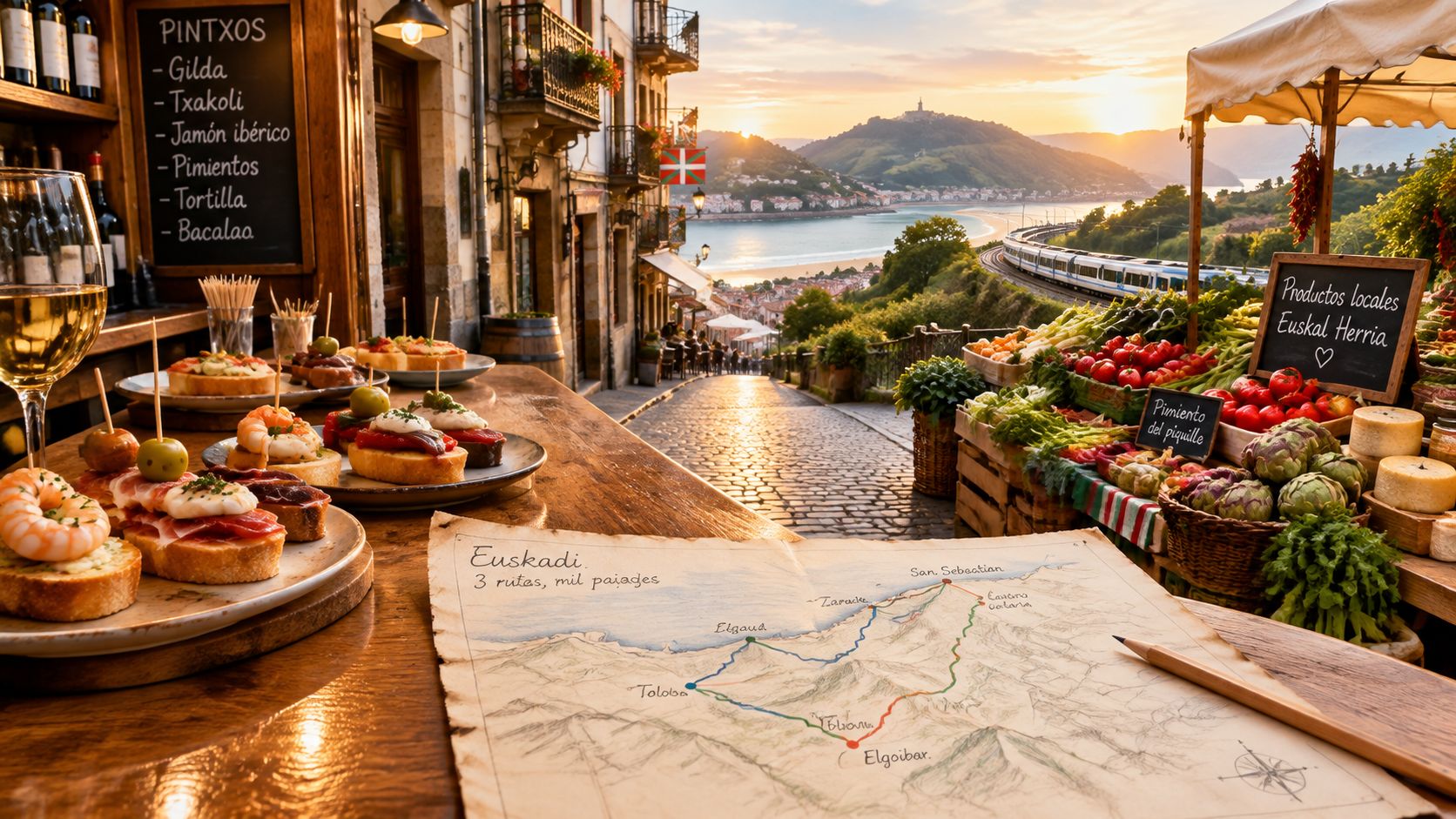
Seven Days in San Sebastián and La Rioja
Spend three nights in San Sebastián eating your way through pintxos bars in the old town, starting one morning at a seasonal market with a guide, and taking a day in the fishing village of Hondarribia. Then move to La Rioja for three nights, with a private cellar tasting in Haro and winery visits paced at one or two per day, not four. Rail brings you from the gateway city, and a driver handles the Haro winery visits. Run it in May, June or September.
Ten Days on the Green Coast and in the Picos
Base four nights in Cantabria near Santillana del Mar and Comillas, then three nights in Asturias with a day in Cudillero, then three nights in the Picos area using Potes or Cangas de Onís. Gentle walks around the Covadonga lakes anchor the mountain days, with nothing scheduled after lunch unless the weather begs for it. A private driver covers each coast to mountain leg. Late spring or September suits it best, avoiding the August peak on coastal roads.
This short film gives a feel for the Atlantic light and village pace these routes are designed around.
Twelve Days Through Navarra, the Pyrenees and the Coast
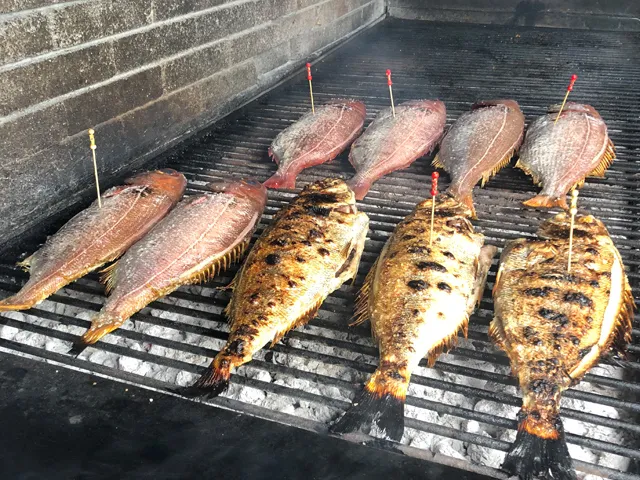
Stay four nights in Navarra including time in Olite, three nights in the Roncal valley in the Pyrenees, and four nights in Getaria for txakoli, grilled fish and slow harbour evenings. Rail covers the first leg to Pamplona, then a driver takes the Roncal valley and the move to Getaria. Travel from April to June or September to October, and avoid July for Pamplona unless San Fermín is the reason you're there.
Compare the three and the pattern is obvious. None of them tries to include Galicia as well. None wastes a day relocating for a single night. The luxury isn't in how much ground they cover. It's in how rarely you think about logistics once the trip begins.
Adapting Slow Trips for Families and Active Clients
For mixed age groups, one rule does most of the work. Plan one anchored activity per day and leave afternoons open. Grandparents rest or take coffee in the village square while teenagers cycle or walk with a guide. Nobody has to perform enthusiasm for eight straight hours, and nobody misses the one experience the day was built around.
Split the group where interests genuinely diverge. Send older guests to a seated winery tasting in Rioja while younger ones take a surf lesson on the coast or a cycling route with support. Bring everyone back together for dinner, when each half has something to report. Forcing one shared programme on three generations usually produces one compromise nobody loves.
Accessibility Needs Route Level Verification
Vague language does real harm in exactly this area. Accessible slow travel is rarely planned as a complete journey, and labels like easy or accessible tell you nothing about a cobbled lane, a winery gravel yard, or a boat boarding step. The evidence for taking this seriously is stark. A 2025 survey reported by the European Network for Accessible Tourism of 3,473 travelers with accessibility needs in France, Germany, Italy, Spain and the UK found that more than 8 in 10 experienced transportation problems on their most recent trip. The same research reported accessibility related costs can represent 10% and sometimes up to 30% of the travel budget, and flagged inconsistent accessibility information as a major barrier before departure.
Turn that into a checklist for every leg and base, answered in writing.
- Step-free access: Confirm lifts and level boarding at each station, not just at the gateway.
- Vehicle access: Check a private vehicle can reach the rural hotel door and turn safely.
- Surfaces and gradients: Ask for honest descriptions of paths, slopes and distances at wineries and historic sites.
- Restrooms and boarding: Verify bathroom availability on excursions and how boat boarding really works.
- Advance assistance: Book rail and venue assistance ahead, and agree a backup plan for delays.
Budget for what this costs rather than discovering it mid trip. A larger vehicle, a ground floor room and pre booked assistance aren't upgrades. They're the logistics that make the itinerary real.
Keeping Active Guests Satisfied Without Speeding Everyone Up
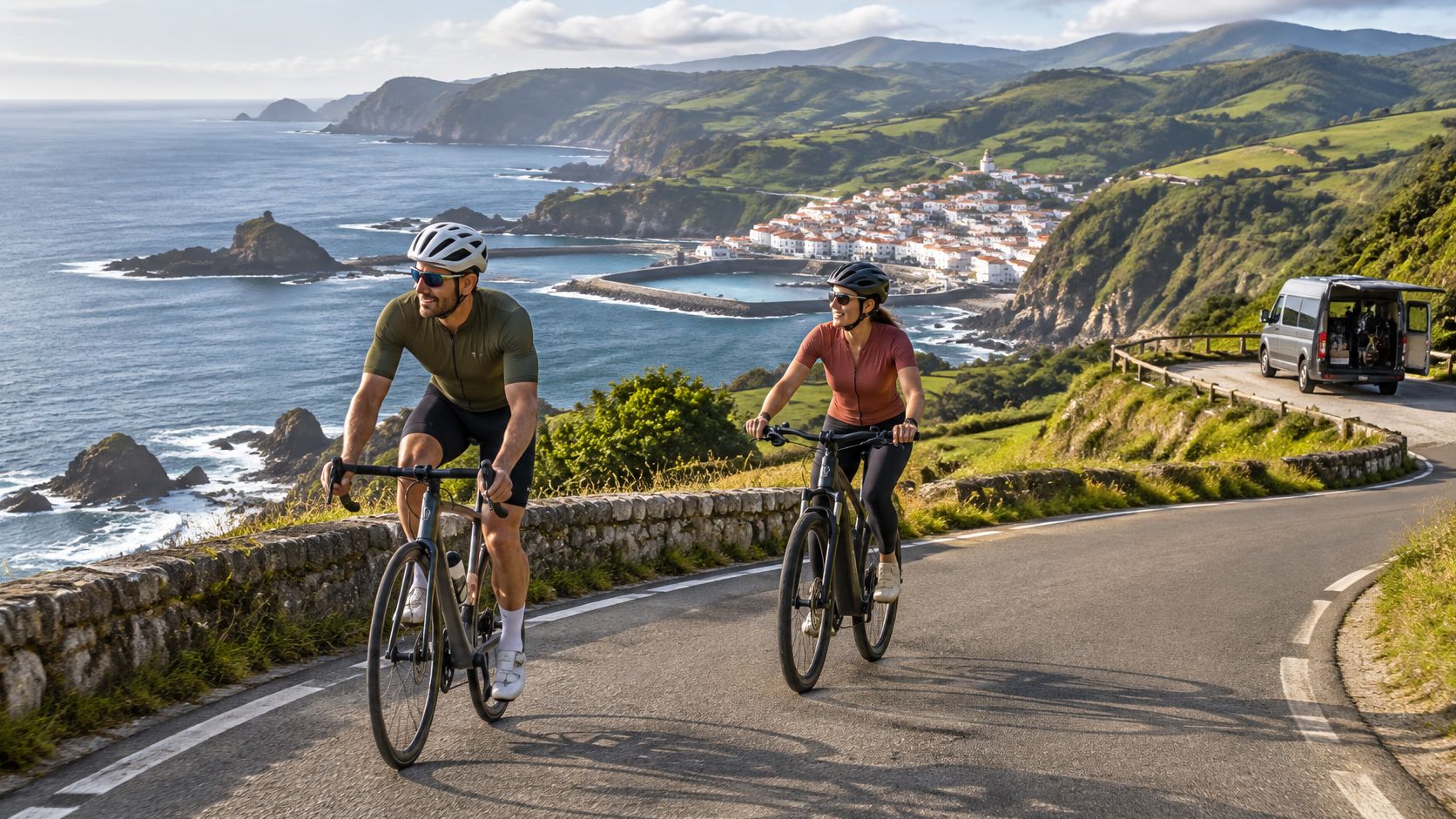
Active luxury guests don't need a faster trip. They need better mornings. Gentle hiking in the Picos de Europa, cycling along the Green Coast, a round of golf, light surf with an instructor, or a scenic Pyrenean drive with short walks all fit inside the one anchor rule. The key is grading each option candidly by surface, distance and climb, then letting guests opt in or out without splitting the whole day. Slow pacing and physical activity aren't opposites. Rushed pacing and enjoyment usually are.
Confirm Your Pace Before You Book
Set the route before you commit money. Hotels can wait until the trip's shape works on the ground.
- Pick the base count from the bases table for your trip length, and keep each base at three nights or more unless the trip is five days or shorter, where one base is usually the best choice.
- Assign a transfer mode to every leg using the leg table, including the last mile from station to hotel.
- Choose the season around the activities that matter most, such as harvest, coastal walking or a named festival.
- Get written confirmation of opening hours, boat schedules and step-free access at each base for your exact dates.
- Add one buffer day for weather, delays or a tired group.
That extra day protects the experience you planned. In San Sebastián or Getaria, it can become a long lunch and a harbour walk; if rain disrupts an excursion, it gives you room to adjust without compressing the rest of the route.
If checking stations, vehicle access, winery appointments and seasonal openings feels like another job, a private tailor-made planner can handle that groundwork and support you during the trip. Northern Spain Travel designs private itineraries across Northern Spain, with drivers and guides arranged around each group's pace.
To start, send your planner three details: your trip length, your group's mix of ages and interests, and the months you can travel. Use them to set the bases first, then confirm the transfers and bookings that make the pace workable.
Northern Spain Travel creates private, tailor-made journeys across the Basque Country, La Rioja, Cantabria, Asturias and beyond, checking bases, transfers, seasonal openings and access before you book. Share your trip length, group mix and travel months to begin planning a route with fewer moves and more time in each place: Northern Spain Travel.