The standard advice for family travel in Spain is wrong. It tells you to cram Madrid, Barcelona, a beach stop, and a handful of headline sights into one trip, then calls the result “balanced.” It isn't balanced. It's exhausting, especially when you're traveling with grandparents, children, and anyone who values a civilized pace.
The smarter approach is to stop designing a family holiday like a scavenger hunt. Spain rewards families who choose fewer bases, better hotels, private logistics, and regions that can absorb mixed ages without constant friction. That matters even more now, because a 2025 family-travel survey reported that 47% of travelers are choosing multigenerational family trips, while 58% of Millennial and Gen Z parents plan to bring extended family on vacation (Condor Ferries family travel statistics). Family travel in Spain isn't just about keeping children busy anymore. It's about making the trip work for three generations with different rhythms, appetites, and stamina.
That means route design, accommodation strategy, and regional choice matter more than ticking off famous names. It also means budgeting needs realism. If you want a grounded sense of what daily expenses look like when planning a longer or more layered trip, Implications of Spain's cost of living is a useful starting point.
Table of Contents
- Rethinking Your Spanish Family Adventure
- Choosing the Right Spanish Destination for Your Family
- Sample Spain Itineraries for Every Family
- Seamless Logistics Accommodations and Transport
- Activities and Experiences for All Ages
- Navigating Spanish Dining Culture with Your Family
- The Bespoke Difference Private Guides and Exclusive Access
- Frequently Asked Questions About Family Travel in Spain
Rethinking Your Spanish Family Adventure

Why the checklist trip fails
Most families don't need more cities. They need less movement.
The classic mistake is building a trip around famous names instead of daily comfort. That produces early alarms, constant packing, overheated afternoons, and children melting down in queues while grandparents pretend they're fine. You can survive that kind of trip once. You won't call it luxurious, and you probably won't repeat it.
Spain can absolutely work for families across generations, but only if you stop treating it like a race. The rise in multigenerational travel makes that obvious. When nearly half of travelers are choosing multigenerational trips, and younger parents are increasingly bringing extended family, the old one-size-fits-all itinerary stops making sense.
Practical rule: If a day requires everyone to move hotels, travel intercity, and sightsee seriously, the day is overplanned.
What affluent families should optimize for instead
For high-end family travel in Spain, I'd optimize four things before anything else:
- Fewer hotel changes: Two or three strong bases are better than five rushed ones.
- Private space: Villas, suites, and adjoining rooms matter more than lobby glamour.
- Flexible days: Not every relative wants the same pace, and they shouldn't have to.
- Crowd control: Good timing and smart regional choices protect the whole trip.
A memorable Spain itinerary should let one part of the family linger over lunch while another heads to the beach, museum, or market. It should allow grandparents to skip a steep walking route without feeling they're missing the trip. It should also leave room for downtime. Affluent families usually understand this in theory, then abandon it the moment they start booking headline sights.
The better version of family travel in Spain feels calmer from the first day. It's not less interesting. It's more intelligent.
Choosing the Right Spanish Destination for Your Family
Spain is not one family destination. It's several different trips disguised as one country. Choose badly and you spend the week reacting to heat, crowds, and transfers. Choose well and the same country feels effortless.
The obvious regions and their tradeoffs
Andalusia works well for families who want history, atmosphere, and strong visual payoff. Seville, Córdoba, and Granada deliver quickly. The downside is pace management. Heat, walking, and popular monuments can make the region harder on very young children and older relatives if you try to do too much.
Catalonia is compelling for first-timers who want architecture, food, and city energy. Barcelona remains a powerful draw, and Costa Brava can soften the urban tempo. But this is not where I'd send a family that wants calm in peak season.
The Balearics can be excellent for villa-based holidays, especially for families prioritizing sea access and downtime. Still, island popularity comes with tradeoffs. If you're debating whether Mallorca in August is wise, these Mallorca August travel alternatives are worth reviewing before you commit.
With Spain welcoming a record 94 million international visitors in 2024, and with major cities like Barcelona moving to phase out tourist apartments by 2028 to address overtourism, less-traveled regions can give families a materially easier experience with less crowd stress and logistical friction (The Points Guy on why families should travel to Spain).
Why Northern Spain is the stronger choice
If your family wants a refined trip rather than a crowded one, I'd look north.
The Basque Country, Asturias, Cantabria, Galicia, and nearby inland wine regions suit multigenerational travel unusually well. You get cooler Atlantic energy, elegant coastal towns, serious food, green scenery, and a pace that doesn't punish slower walkers or overstimulate children. You also avoid much of the overexposed Spain that dominates generic family blogs.
Northern Spain is especially strong for families who want:
- Mixed-age appeal: Beaches, gentle walks, food markets, boats, countryside, and culture all coexist.
- Discretion and comfort: Boutique hotels and country estates often feel more private than big-city luxury properties.
- Better rhythm: Days are easier to structure around drives, scenic lunches, and half-day experiences.
The right region should reduce family negotiations, not create more of them.
Here's the comparison I use when advising families:
| Region | Best For | Pacing | Crowd Level (High Season) |
|---|---|---|---|
| Andalusia | History, architecture, classic first-time highlights | Energetic | High |
| Catalonia | Art, city culture, design, coast add-ons | Fast to moderate | High |
| Balearic Islands | Villa stays, beach time, easy downtime | Slow to moderate | High |
| Basque Country and Green Spain | Food, coast, nature, multigenerational ease | Slow to moderate | Moderate |
| Madrid and Central Spain | Museums, royal history, urban day trips | Fast to moderate | High |
If you want one direct recommendation, here it is. For affluent families who've either done Spain before or want to do it better the first time, Northern Spain is the superior choice.
Sample Spain Itineraries for Every Family
A good itinerary is not a list of cities. It's a sequence that protects energy. That matters even more with children and grandparents, because the trip only feels luxurious when movement is controlled.
A widely used first-time two-week structure often anchors on Barcelona, Seville, and Madrid because those hubs offer strong rail or air links and dense day-trip options, which helps reduce transfer friction for mixed-age groups (Ciao Bambino family vacation in Spain tips). That logic is sound. The problem is that many families then overload each stop.

Seven days for first-timers who want culture without chaos
This itinerary suits families who want iconic Spain without turning the week into a transport exercise.
Days 1 to 3, Madrid
Start in Madrid. It's efficient, legible, and easier than Barcelona for a family finding its feet. Stay in a centrally located hotel with suites or connecting rooms, and keep the first day intentionally light. Retiro Park, a gentle old-city stroll, and one high-value cultural visit are enough.
Days 4 to 7, Seville
Take the train to Seville and settle in for four nights. It's during this stay that many families make the wrong call by adding Córdoba and Granada too aggressively. I'd choose one day trip or none. Seville itself is rich enough, and the reward for staying put is a trip that still feels like a holiday.
Best fit:
- Families with school-age children
- Grandparents who prefer elegant cities over beach logistics
- First-time visitors who want classic Spain done properly
Ten days for families who want coast plus substance
This version works for families who want one major city and one softer coastal finish.
Days 1 to 4, Barcelona
Use Barcelona as an arrival base, but keep the city focused. Prioritize architecture, one market visit, one family-friendly museum or park, and slow neighborhood wandering. Don't attempt every famous site.
Days 5 to 10, Costa Brava or Mallorca
Then shift into a coastal stay with space. A villa or resort residence works better than a standard hotel room block. Once you're by the sea, the trip should open up. Beach mornings, boat outings, long lunches, and one or two cultural half-days are enough.
This is the right structure when you want:
- One headline city.
- A proper second phase with breathing room.
- A trip that keeps teenagers and younger children equally content.
If your family likes the coast, don't save the beach for a rushed final day. Build the trip around it.
Fourteen days for a slower and more distinctive Spain
This is the itinerary I'd choose for discerning families who want depth, not just coverage.
Days 1 to 4, San Sebastián and the Basque coast
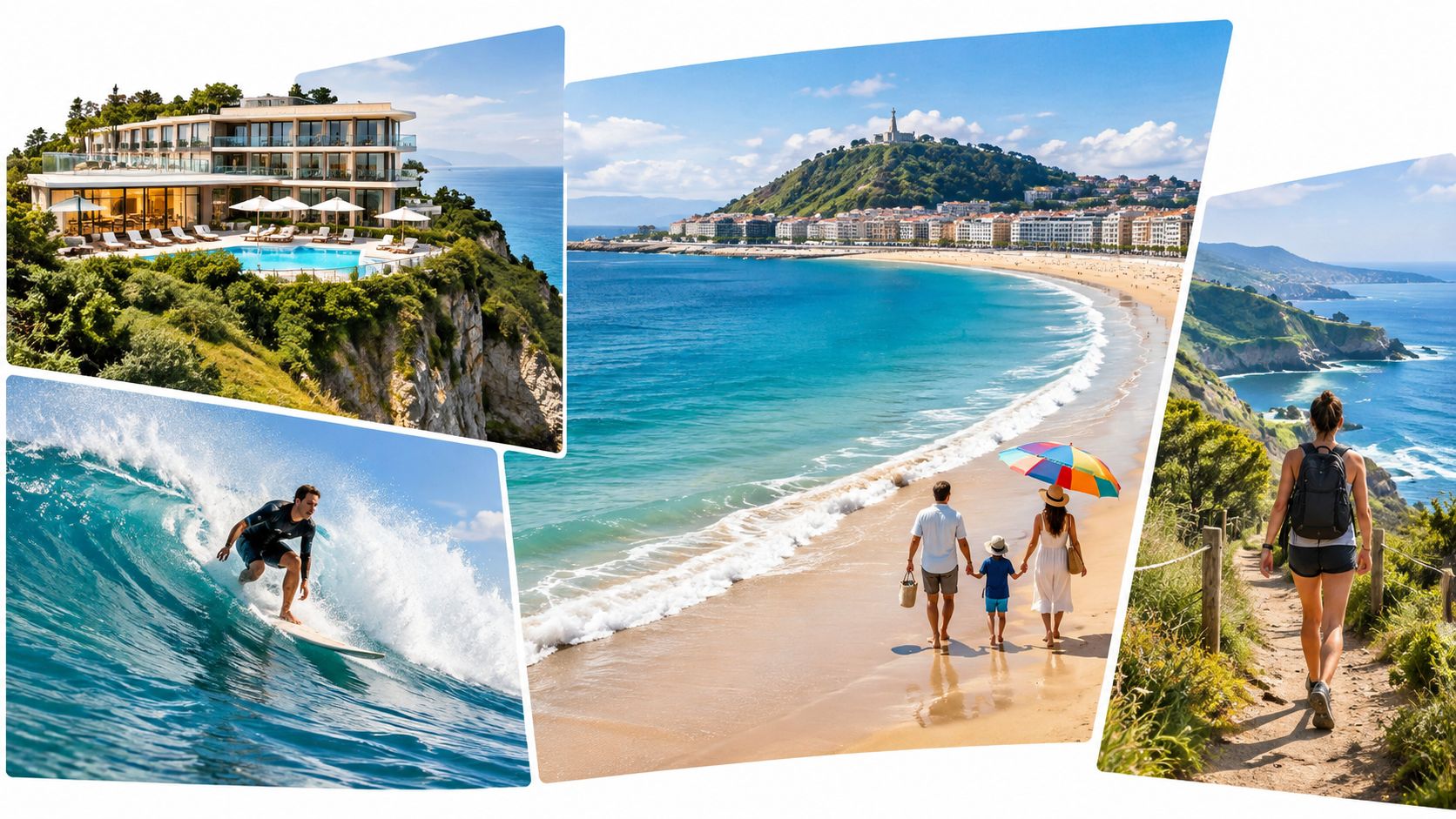
Begin with a polished coastal base. San Sebastián gives you beach access, food, easy promenades, and strong day-trip possibilities. Younger children can alternate between sand and simple urban wandering. Teenagers usually respond well to the food culture, surfing, and independence of the seafront.
Days 5 to 8, Cantabria
Move west into Cantabria for greener surroundings, calmer towns, and a villa or country-house stay. Here, a multigenerational trip starts to breathe. Families can split the day naturally. Some head to the coast. Others take a scenic drive, visit a village, or rest.
Days 9 to 11, Picos de Europa edge stay
Do not over-romanticize mountain travel with children. Stay on the edge of the mountains, not deep inside a remote route that turns every outing into a logistical test. Use the area for short scenic walks, long lunches, and fresh air.
Days 12 to 14, Rioja or Bilbao finish
End with either wine country for adults plus relaxed countryside living, or Bilbao for a softer urban finale. Both work. The choice depends on whether your family wants a polished city ending or a final stretch of estate-style relaxation.
For families drawn to meaningful walking rather than forced sightseeing, this perspective on slow family travel along the Camino de Santiago with kids is especially relevant. It shows what Spain looks like when the journey is designed around rhythm instead of volume.
Seamless Logistics Accommodations and Transport
Luxury family travel is won or lost in the invisible parts. Not the cathedral. Not the beach. The handoff at the station, the room configuration, the luggage flow, the dinner plan when everyone is tired. That's where trips either hold together or unravel.

How to choose the right accommodation format
Not every family should book a villa. Not every family should stay in a hotel.
A villa is strongest when privacy matters, children need space, and the family expects to spend real time together at the property. It also helps when grandparents need downtime without retreating to a standard guest room. The tradeoff is service. If you want breakfast handled, a concierge on call, and smoother daily support, a hotel or branded residence may be easier.
A boutique hotel with suites or connecting rooms works well for urban stays. It gives everyone separation without making daily logistics harder. This is often the smartest city choice.
A casa rural or restored farmhouse is ideal in Northern Spain. It softens the pace, supports outdoor time, and feels more rooted than a generic resort. For longer stays, that authenticity matters.
Useful packing decisions affect comfort more than most families expect. This guide on what to pack for Spain with a Northern Spain focus is a helpful planning reference, especially if your itinerary includes Atlantic weather, rural stays, or mixed city-and-country travel.
How to move around Spain without draining the group
For intercity travel, rail is often the cleanest solution. Spain's train system is efficient for major routes, and stations are usually easier than airports for families hauling luggage, strollers, and extra bags.
For regional touring, I strongly prefer private drivers and pre-arranged transfers over self-driving for multigenerational groups. One person shouldn't spend the holiday navigating mountain roads, urban parking, and luggage loading while everyone else relaxes. Private transport turns transfers into recovery time.
This short overview gives a useful sense of the travel style many families aim for once logistics are simplified:
My rule is simple:
- Use trains for major city pairs.
- Use private transfers for airport days, countryside moves, and family groups with luggage complexity.
- Avoid rental cars unless your route is rural enough to justify the hassle.
Activities and Experiences for All Ages
A strong family trip doesn't force everyone into the same activity. It creates overlap. That's the secret.
What works for younger children
Younger children rarely care that a site is famous. They care whether they can move, snack, splash, or watch something lively. In Spain, that usually means parks, beach time, open plazas, small boats, and hands-on food moments.
A good day for this age group might start with a market visit where they can taste fruit or pastries, continue with a beach or garden, and end with an early informal meal. In Cantabria or Asturias, calm stretches of coast are often more rewarding than dragging a toddler through another cathedral.
What keeps teenagers engaged
Teenagers need participation, not just observation.
In the Basque Country, a pintxos-focused food experience lands far better than a formal lecture-style tour. In coastal areas, surfing or a boat excursion usually works. In Andalusia, older children often respond well to places with cinematic drama, rooftop views, and evening flamenco. They want stories and a sense of independence.
Let teenagers choose one anchor experience in each destination. They engage more when they have ownership.
What gives grandparents real enjoyment
Grandparents are usually the easiest travelers to please and the easiest to accidentally overwork.
The right experiences are seated tastings, scenic drives, private garden visits, gentle promenades, and unrushed lunches in beautiful settings. In Rioja, a well-run winery visit can satisfy adults across generations if the children also have space, snacks, and room to move. Along the north coast, a village harbor and a long seafood lunch often outperform any “must-see” attraction.
The point is not compromise. It's layering. The best family travel in Spain gives each age group a reason to love the same day.
Navigating Spanish Dining Culture with Your Family
Families often struggle with Spain for one simple reason. They try to eat on their home schedule without adjusting the structure of the day.
How to handle late meal times
Lunch is the anchor meal. Treat it that way.
If your children can't make it to a later Spanish dinner, don't force a formal restaurant booking at the wrong hour. Build in a solid afternoon snack, then use tapas, simple grilled dishes, or room-service style dining earlier in the evening. For villa stays, a private chef dinner can solve this neatly on selected nights.
A smart family rhythm looks like this:
- Late breakfast: Especially useful after long travel days.
- Proper lunch: Make it the main social meal.
- Merienda-style snack: Essential for children and very useful for adults.
- Flexible dinner: Light, casual, and not overly ambitious.
What to order when tastes vary wildly
Spain is easier for picky eaters than parents fear, as long as you order strategically. Go for grilled fish, roast chicken, croquetas, tortilla, bread, simple rice dishes, and fresh fruit. Don't make every meal a cultural test.
For adults, this is also a chance to make food more regionally meaningful. If you're building a culinary route, understanding Spain's olive regions adds useful context to menus, tastings, and ingredient-driven meals.
One more practical point. Book ambitious tasting menus sparingly on family trips. A long formal dinner can be wonderful once. Repeating it is usually a mistake.
The Bespoke Difference Private Guides and Exclusive Access
What private planning changes
The difference between a standard trip and a bespoke one is friction. Private planning removes it.
A private guide changes the entire feel of a major monument. You enter with context, move at your family's pace, and avoid the stop-start rhythm of group touring. A driver changes a transfer day from a chore into dead time you barely notice. The right villa turns breakfast, naps, and evening downtime into pleasant parts of the holiday rather than logistical problems.
For families interested in fully private journeys, Northern Spain family trips and bespoke planning is one example of a service built around custom itineraries, private logistics, and locally arranged experiences.
I'm opinionated on this. If you're traveling across three generations, bespoke planning is not indulgence. It's operational sanity. It protects energy, preserves goodwill, and makes room for the kind of access that ordinary booking platforms don't deliver well.
Frequently Asked Questions About Family Travel in Spain
Do we need a stroller everywhere
No. In many historic areas, a stroller is more burden than help.
Bring one if you need it for airports, promenades, and larger city parks. But in old quarters with cobblestones, hills, and steps, a lightweight carrier is often the better tool. If your trip includes old towns, bring both if your child is at that stage.
Can we buy baby supplies locally
Yes. You can buy basics locally, and you should not overpack consumables for a long trip.
Still, bring enough for arrival day and the first stretch of travel. The exact brand you prefer may not be available, and the first evening is the wrong time to start searching. Specialty items matter more than basics, so pack those.
How should we handle car seats and transfers
Don't leave this vague.
For private transfers, request car seats in advance and confirm them again close to arrival. If you're moving often and are particular about seat type or fit, some families prefer bringing their own travel seat. The key is clarity before the trip starts, not improvisation at the curb.
Is Spain a good fit for grandparents with limited mobility
Yes, but destination choice matters.
Flat seafront towns, polished city hotels, private drivers, and carefully selected guides make a huge difference. Steep historic quarters and overpacked sightseeing days do the opposite. If mobility is a concern, design around comfort from the outset instead of trying to patch it later.
How many stops should we plan
Fewer than you think.
For a week, two bases are usually enough. For a longer trip, three well-chosen bases often outperform a busier route. The more generations you add, the more this matters. Family travel in Spain improves when the itinerary breathes.
Is Northern Spain better than the classic south for families
For many affluent families, yes.
If you value food, scenery, lower crowd pressure, flexible pacing, and a more private-feeling trip, Northern Spain is often the stronger fit. If this is your first Spain trip and you want the classic icons, the south still works. Just don't overbuild it.
Should we self-drive
Usually not for a multigenerational luxury trip.
Self-driving can work in very rural areas, but it adds mental load and fragments the experience. Trains plus private transfers tend to be smoother, especially when multiple generations are traveling together.
If you want a Spain trip that feels calm, private, and intelligently paced, Northern Spain Travel designs tailor-made journeys across the Basque Country, Rioja, Cantabria, Asturias, Galicia, Navarra, the Pyrenees, and beyond, with private guides, drivers, boutique hotels, and family-friendly logistics built around your group rather than a template.