Most advice on fun family vacations is wrong. It treats “family-friendly” as shorthand for loud resorts, overbuilt entertainment districts, and schedules designed entirely around keeping children occupied. That model usually leaves grandparents tired, parents overworked, and older kids bored the moment the novelty wears off.
A stronger approach starts from a different question. Not “What will impress the children for a day?” but “What kind of trip lets three generations move easily, eat well, discover something together, and still have room for different energy levels?” That underserved angle matters because family travel works better when you minimize friction with short driving days, smooth transfers, and enough variety to keep different ages engaged, rather than forcing everyone into a theme-park or resort-only template, as noted in this perspective on multi-age family travel planning.
Northern Spain answers that brief better than almost anywhere in Europe. It gives you beaches without the brute-force crowds of the Mediterranean, mountains without punishing logistics, serious food that still works for picky eaters, and towns with actual character instead of generic holiday infrastructure. If you want ideas beyond the usual resort circuit, Hiccapop's family travel guide is a useful broad starting point. But if your family wants substance, elegance, and less logistical drag, Northern Spain is where the conversation gets interesting.
Table of Contents
- Redefining Fun Family Vacations Beyond the Theme Park
- Why Choose Northern Spain for Your Next Family Journey
- Designing Your Itinerary Two Sample Journeys
- Curating Activities for Every Age and Interest
- Seamless Logistics The Secret to a Truly Relaxing Vacation
- Practical Planning Timing Packing and Budgeting
- Crafting Your Family's Next Great Story
Redefining Fun Family Vacations Beyond the Theme Park
The old model says a family holiday succeeds if the children are exhausted by bedtime. I disagree. A good family trip should leave everyone more available to each other, not less.
That's why the standard theme-park formula falls apart for multi-generational travel. It's efficient at delivering stimulation, but poor at handling different walking speeds, different appetites, different nap needs, and different definitions of fun. A grandmother who wants a beautiful square and a proper lunch doesn't need the same day as a ten-year-old who wants sand, boats, and room to move.
Shared discovery works better than forced consensus
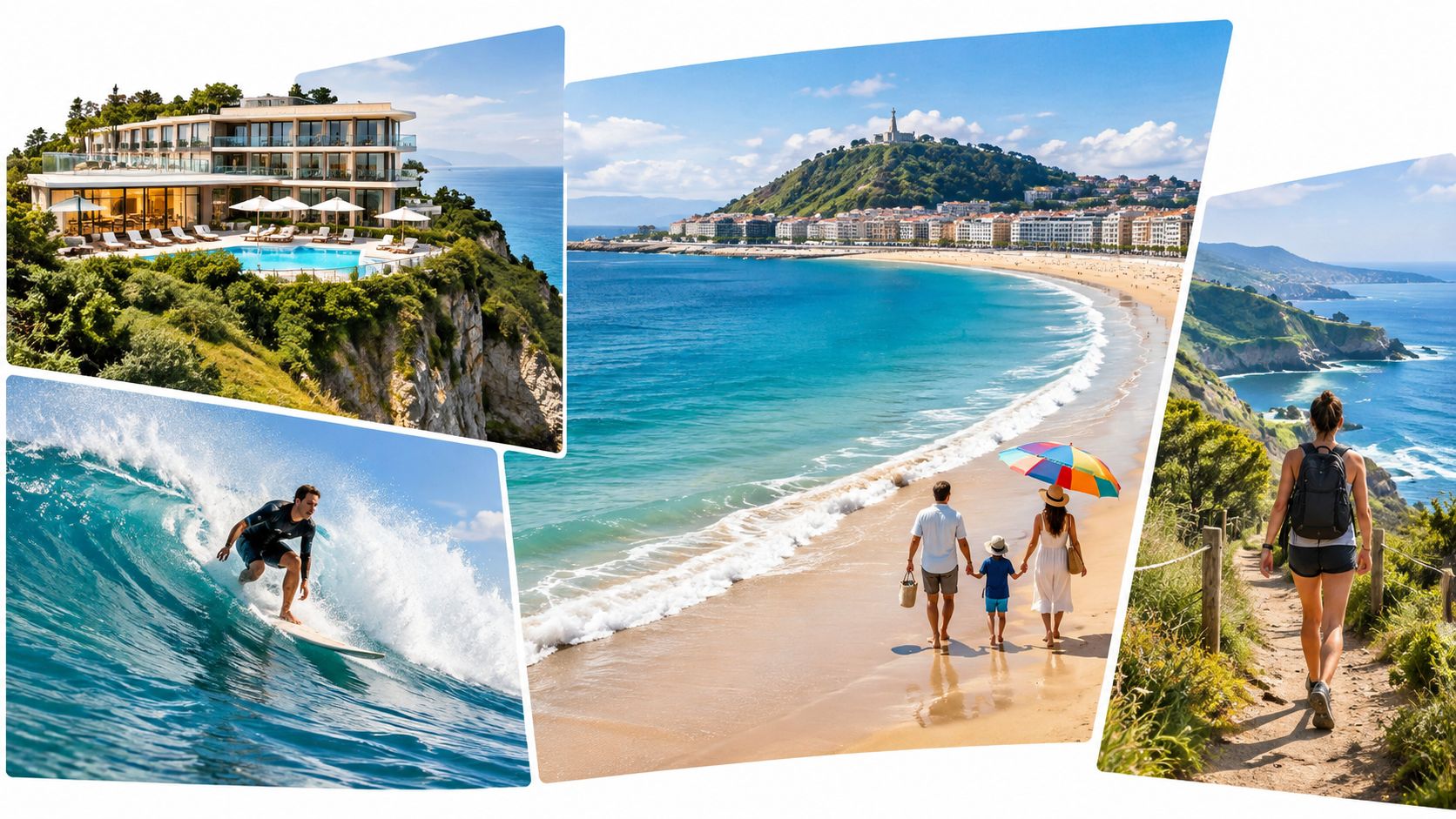
Northern Spain is ideal because it doesn't demand one single travel identity. Families can have a morning market visit in San Sebastián, a calm lunch by the sea, an afternoon on the beach for children, and an aperitif or museum visit for adults. That's not compromise. That's intelligent sequencing.
Practical rule: Build each day around one shared anchor, then give each generation a different way to enjoy the same destination.
In practice, that might mean everyone goes to a fishing village together. The children watch boats and collect shells. Teenagers photograph harbor life and drift toward gelato. Grandparents sit on a shaded terrace. Parents get the kind of lunch they'll remember. Nobody feels dragged.
Sophistication matters more than spectacle
Many “fun family vacations” guides confuse activity density with quality. Families don't need more attractions. They need fewer bad transitions. Northern Spain is strong precisely because the experiences are layered, not frantic. You can move from beach to old town, from mountain road to cider house, from vineyard to medieval village, without turning the day into an endurance test.
That's what affluent families usually want, even if they don't phrase it that way. They want privacy, good food, handsome hotels, sensible driving times, and experiences that don't insult adult taste in the name of child-friendly planning.
A family holiday should feel curated, not crowded. It should have local texture, not generic entertainment. And it should respect the fact that parents and grandparents are on the trip too.
Why Choose Northern Spain for Your Next Family Journey
Northern Spain is a better canvas for family travel than the usual Spanish shortlist. If your only reference points are Barcelona, Marbella, or Mallorca, the north can come as a surprise. It's greener, calmer, more nuanced, and better suited to families who want a private, high-comfort trip without surrendering every day to crowds.

A region with range, not repetition
The first strength is variety within manageable distance. On one trip, you can combine elegant coastal cities, working fishing ports, vineyards, dramatic mountain roads, Belle Époque architecture, medieval villages, and wild Atlantic beaches. The scenery changes quickly, but the logistics don't become punishing if you plan the route properly.
The second strength is food that works across generations. Northern Spain is one of Europe's great eating regions, but it isn't precious about it. Pintxos in the Basque Country are perfect for families because they let everyone eat differently at the same table. Children can choose straightforwardly. Teenagers can graze. Adults can enjoy the region's culinary depth without committing every meal to formality.
The third is culture that doesn't require academic patience. You don't need to drag children through museums all day to make the trip meaningful. Culture in the north lives in food markets, seafront promenades, village festivals, old quarters, cider houses, and the rhythm of public life. Even younger travelers absorb it almost by accident.
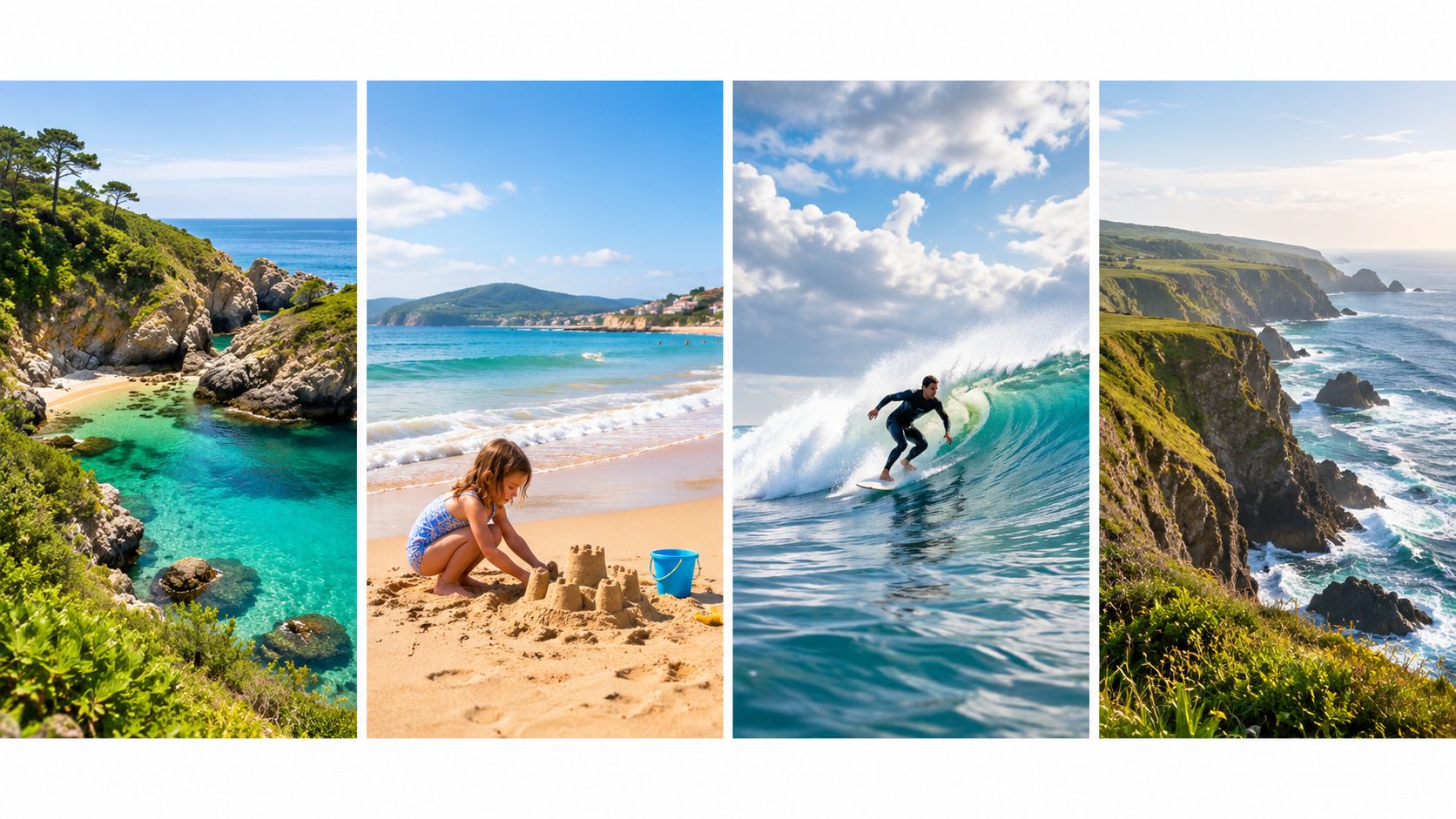
A short visual introduction helps bring the region into focus:
The memory advantage
Family trips matter because they stay with people. A U.S. Travel Association report found that 64% of American adults said memories from childhood family vacations remain vivid well into adulthood, according to the association's executive summary on family travel memories. That's exactly why place choice matters. You're not only booking accommodation and transport. You're shaping the visual language of future family memory.
Northern Spain gives families something better than packaged fun. It gives them stories with texture.
I recommend the region most strongly for families who value these five qualities:
- Ease without boredom: The north is easy to travel through if you keep the route disciplined, but it never feels flattened into a generic holiday corridor.
- Natural beauty with civilised infrastructure: You can have beaches, cliffs, and mountains, then return to polished hotels and excellent restaurants.
- Adult pleasure built into family days: Good coffee, serious wine, handsome architecture, and intelligent dining don't need to be separate from the family trip.
- Teen credibility: Older children usually respond better to places that feel real, stylish, and visually rich than to anything obviously engineered for them.
- Grace for grandparents: Historic centers, scenic drives, promenades, and long lunches are part of the destination itself.
If your family wants high-energy spectacle, go elsewhere. If you want one of the most elegant ways to do fun family vacations well, Northern Spain is the obvious choice.
Designing Your Itinerary Two Sample Journeys
The biggest mistake families make is trying to “see Northern Spain” in one sweep. Don't. The region rewards editing. Choose a shape for the trip, give each stop enough time to breathe, and let the route match the family rather than the other way around.
For multi-generational groups, the operational benchmark is space and simplicity. Guidance for this style of travel recommends larger lodging formats and itineraries built around one shared anchor activity plus modules specific to each age group, and 85% of parents say family travel brings the family closer together in the source material behind this multi-generational travel guidance. That principle is what makes the following journeys work.

The Coastal Explorer
This route suits families with younger children, first-time visitors to the region, or anyone who wants sea air, soft structure, and low-stress transitions.
Base one is San Sebastián. Stay long enough to use it properly. Spend the first full day lightly. A private pintxos walk through the old town works well because it doubles as lunch and local orientation. Follow it with beach time at La Concha or a short funicular ride for views. Children get movement. Adults get the city.
Day two should stay local. Choose one principal outing only. The aquarium is easy and well-paced for younger kids, then keep the afternoon free for the promenade, a park, or returning to the hotel pool if you've chosen one with family-friendly facilities.
Then move west slowly toward Bilbao. Stop en route in a coastal village rather than treating the drive as dead time. The north particularly shines in this regard. The transfer itself becomes part of the day, not a gap between attractions.
The Multi-Generational Discovery
This route is stronger for three-generation groups or families with teens who need more contrast and depth.
Start in Bilbao, but don't overwork the city. One good museum, one good old quarter walk, one relaxed meal. That's enough. The city gives the trip architectural confidence and a clear arrival point, but it shouldn't dominate.
From there, continue into La Rioja for a countryside shift. Adults can enjoy a private winery visit or cellar tasting while children and teenagers do better with a village square, a family lunch, open natural spaces, and space to move. Here, a well-planned private itinerary proves its worth. The family doesn't need to stay together every minute to share the day.
For families considering a fully customized version of this kind of route, bespoke Northern Spain itineraries can be structured around exactly that balance of private transfers, selective guiding, and age-specific pacing.
A strong family itinerary doesn't ask everyone to love the same thing. It asks everyone to enjoy the same trip.
The final shift is into the Picos de Europa or their foothills. This gives the journey emotional breadth. After cities and vineyards, the mountains reset the pace. A gentle scenic walk, a cable car if conditions suit, a long lunch in a stone village, and time on a terrace usually work better than any ambitious hiking plan.
How to choose between the two
Use this quick filter:
- Choose the coast-first route if your family includes younger children, early bedtimes, beach lovers, or travelers who dislike frequent hotel changes.
- Choose the culture-and-mountains route if you have teens, grandparents who enjoy scenic drives and historic towns, or adults who want wine and food woven into the trip.
- Avoid combining both routes fully on a short trip. That's how you turn a refined holiday into a parade of suitcases.
The best itineraries in Northern Spain are selective. Families remember the days that felt easy, not the places they “managed to fit in.”
Curating Activities for Every Age and Interest
Families don't need one big headline attraction. They need a smart mix of experiences that can absorb different moods, appetites, and attention spans. The technically strong way to design fun family vacations is to prioritize activity diversity with easy logistics, because high-satisfaction family trips tend to combine variety with lower planning friction, as discussed in this guidance on stress-free luxury family travel.
Food that doesn't feel like a compromise
Food is one of Northern Spain's greatest advantages, but only if you handle it correctly. Don't book every meal as an event. Alternate between polished dining and casual local eating.
For younger children, markets, pastry stops, and simple grilled fish lunches work better than long tasting menus. For teens, informal pintxos bars are ideal because they can choose what looks good without ceremony. Grandparents usually appreciate seated lunches in old-town restaurants or seaside dining rooms with pace and comfort.
If your family enjoys experience-led food planning, ideas from outside Spain can also be useful. This guide on how to plan unique family experiences in the UK is a good reminder that interactive meals, local producers, and hands-on formats often work better than passive sightseeing.
Active days with flexible entry points
The best activities in the north are adjustable. That's the point.
A gentle surf lesson in Cantabria can work for teens and adventurous adults, while younger children stay on the sand with another family member. A countryside cheesemaking visit gives children something tactile, gives adults regional context, and avoids the stiffness of a conventional tour. In Asturias, cave interpretation centers and prehistory-focused visits can be engaging if you keep them brief and pair them with an outdoor lunch or coastal stop.
For teens, choose experiences with a point of view. They don't need “kid activities.” They need something they can own. Street photography in Bilbao, a boat outing along the coast, a cooking workshop, or a guided e-bike ride through vineyard country usually lands better than anything that feels sanitized.
If you're traveling with older children specifically, this roundup of family vacations with teens in Northern Spain offers useful route ideas and activity combinations.
Give teenagers one thing per day that feels independent, stylish, or skill-based. Their engagement changes immediately.
Northern Spain Activity Planner by Age and Interest
| Interest | Young Children (4-10) | Teenagers (11-17) | Adults & Grandparents |
|---|---|---|---|
| Food | Market tastings, hot chocolate, simple pintxos, bakery visits | Pintxos hopping, cooking classes, casual food halls | Winery lunches, private tastings, slow seafood meals |
| Nature | Beach play, short boardwalk walks, animal parks, gentle boat rides | Surf lessons, coastal hikes, kayaking, scenic viewpoints | Garden visits, scenic drives, easy promenades, terrace lunches |
| Culture | Aquariums, castle walks, village squares, local festivals | Architecture trails, street photography, interactive museums | Cathedrals, historic quarters, private guides, artisan workshops |
| Hands-on | Cheesemaking, pottery, farm visits | Cooking, e-bikes, sailing, regional craft sessions | Cellar visits, market tours, private culinary demonstrations |
| Downtime | Hotel pool, park time, ice cream stops | Beach clubs, independent shopping time, café breaks | Spa time, reading terraces, elegant aperitifs |
A few rules keep activity planning clean:
- Protect mornings for key outings: Energy is higher, crowds are lighter, and children are easier before the day frays.
- Leave afternoons partially open: Families need elasticity. A nap, swim, snack, or unplanned stroll is often the difference between a pleasant evening and a minor collapse.
- Never stack two “must-do” activities: One anchor is enough. Add only one secondary option.
- Let place do some of the work: A beautiful harbor, a lively market, and a good hotel solve more family tension than an overbuilt excursion calendar.
That's how Northern Spain becomes fun for everyone without becoming childish for anyone.
Seamless Logistics The Secret to a Truly Relaxing Vacation
Luxury family travel isn't defined by thread count or a chauffeured car alone. It's defined by the absence of friction. If the trip runs smoothly, everyone seems easier, kinder, and more interested in each other. If it doesn't, no suite category will save it.

A recent family-travel survey found that 81% of parents planned to increase or maintain travel spending, the average family spent about $8,052 on travel in 2024, and 73% still said affordability was a challenge, according to NYU's 2025 family travel survey summary. That tells you something important. Families aren't only buying travel. They're buying relief from wasted time, poor routing, and decision fatigue.
Pacing is the luxury
Stay longer in fewer places. That's the rule.
Three or four nights in one base almost always beats a fast-moving loop. Children settle. Grandparents recover properly. Parents stop repacking every morning. The destination starts to feel inhabited rather than consumed.
Working principle: If a day includes a hotel change, keep the sightseeing light and make the transfer part of the experience.
Choose lodging that absorbs stress
Room count matters less than layout. For many families, connecting rooms are better than a large suite with poor separation. For others, a private villa or a refined countryside house is more practical because it gives early risers, napping children, and grandparents their own rhythm.
Look for these features first:
- Separation with proximity: Families need privacy without losing easy access between rooms.
- Outdoor space: A terrace, garden, or balcony changes the feel of downtime.
- Walkable surroundings: Being able to stroll to the seafront, a square, or a café reduces dependence on constant transport.
- Reliable breakfast and flexible dining: The day starts better when nobody has to improvise immediately.
Transport should disappear into the background
Self-driving sounds romantic until luggage, parking, mountain roads, and multiple opinions arrive. For a sophisticated multi-generational trip, private transport usually makes more sense. It removes navigation stress, simplifies luggage handling, and lets the family enjoy the scenery instead of managing it.
That doesn't mean you need guiding every hour. In fact, the most elegant trips use support selectively. A private driver on transfer days, a local specialist for a food market or winery visit, then independent time where it matters.
One practical option for families who want this level of structure is working with a specialist such as Northern Spain Travel, which designs fully private itineraries across the region with drivers, guides, and family-adapted pacing.
The secret isn't doing less. It's making the movement between things feel effortless.
Practical Planning Timing Packing and Budgeting
A polished trip still needs sober planning. Northern Spain is easy to enjoy when you respect the climate, pack for movement, and understand where to spend and where not to.
When to go
For most families, late spring and early fall are the sweet spots. The weather is often more comfortable for walking, lunches outdoors, and scenic driving than the height of summer. Coastal towns also feel more civilised when they aren't at their busiest.
Summer can still work well, especially for beach-oriented trips with school-age children, but you'll want stronger advance planning for hotels, restaurants, and drivers. Winter suits a narrower traveler profile. It can be atmospheric and gastronomic, but it's less ideal for families whose trip depends heavily on beaches, long outdoor days, or mountain viewpoints.
A sensible timing framework looks like this:
- Late spring: Good for gardens, green scenery, cooler walking weather, and city-plus-country combinations.
- Summer: Best for beach time, school holidays, and families who want more outdoor hours.
- Early fall: Excellent for food, wine, easier pacing, and a more relaxed atmosphere.
- Low season: Best only if your family values culture, dining, and privacy more than seaside energy.
What to pack
Northern Spain rewards adults who pack like grown-ups and punish those who pack for a fantasy version of Spain. This is not the dry, relentlessly hot image many travelers carry from the south. The north can shift quickly. Layers matter.
Bring a light waterproof jacket, comfortable walking shoes that can handle old stone streets and damp promenades, and clothing that works across a range of temperatures in one day. Even on a polished itinerary, you'll move between coast, city, and countryside. Pack for mobility first, elegance second, then blend them.
For a destination-specific checklist, this guide on what to pack for Northern Spain is a practical reference.
I also recommend packing with the trip rhythm in mind:
- For travel days: Soft layers, one easy-change outfit for children, and a small essentials bag kept separate from main luggage.
- For dining: Smart-casual pieces that can move from a terrace lunch to a serious dinner without costume-level effort.
- For children: One comfort item, one compact diversion for transfers, and footwear they've already broken in.
- For grandparents: Lightweight outerwear, supportive shoes, and a small day bag that doesn't become cumbersome.
Budgeting with clear eyes
Affluent families often make one of two mistakes. They either underbudget for a private, high-comfort trip and end up shaving off exactly the services that would make it enjoyable, or they overspend on the wrong things and leave logistics underpowered.
My advice is simple. Spend first on the elements that reduce friction:
- The right accommodation
- The right transport
- The right route
- Selective private guiding
- A few memorable meals and experiences
Don't start with the flashiest hotel and then economize on transfers or pacing. A beautiful property can't compensate for a poorly sequenced itinerary, awkward check-in times, or a family dragged through long driving days.
Budgeting for luxury family travel in Northern Spain should be framed as an investment in ease, not only in indulgence. The families who come home happiest are rarely the ones who tried to cram in the most. They're the ones who paid for calm.
Crafting Your Family's Next Great Story
The best fun family vacations don't feel like a children's program with nicer luggage. They feel generous, layered, and easy to inhabit. That's why Northern Spain works so well. It offers elegant towns, Atlantic beaches, mountain air, vivid food, and enough variation to keep grandparents, parents, teenagers, and younger children engaged without splitting the trip into separate worlds.
Family travel also has a long afterlife. The small rituals matter. The harbor where everyone lingered after lunch. The bakery a child insisted on revisiting. The hilltop village your father photographed at sunset. If you want to extend that spirit once you're home, this parent's guide to storytelling activities offers smart ways to help children turn travel memories into stories of their own.
Good trips entertain. Well-designed trips become family language.
If you want a private journey through Northern Spain that suits the whole family, Northern Spain Travel can help design it from the ground up. Think custom routing, discreet logistics, family-appropriate hotels, private guides, and experiences shaped around your pace rather than a standard template.