Northern Spain turns contemporary architecture into a reason to travel slowly. The region pairs internationally recognized museums with wine estates, adaptive reuse, waterfront concert halls, mountain visitor centers, and site-specific interventions, then places them beside exceptional cuisine, Atlantic coastlines, rugged peaks, and vineyards. The result is more compelling than a list of isolated buildings.
Bilbao proves the point. The Guggenheim Museum Bilbao welcomed 1,307,065 visitors in 1998, its first year, far above the initial expectation of 400,000, and reported 1,301,343 visitors in 2024, evidence that the building remains a major cultural draw nearly three decades after opening. The museum's activity report also records that 60% of visitors came from outside the Basque Country in 2024.
This selection focuses on architectural significance, regional character, visitor value, and the ability to anchor a private journey. It moves from Bilbao's landmark culture to Rioja's wine architecture, San Sebastián's Atlantic setting, Galicia's vineyard-covered terrain, and Asturias's mountains and coast. Northern Spain Travel can shape the route around private guides, drivers, tastings, culinary reservations, carefully chosen stays, and access that suits your pace.
Table of Contents
- 1. Guggenheim Museum Bilbao
- 2. Marqués de Riscal Winery
- 3. Kursaal Convention Centre and Concert Hall
- 4. Ribeira Sacra Mirador
- 5. Picos de Europa National Park Visitor Centre
- 6. Pont-Ala Contemporary Art Museum
- 7. Azkuna Zentroa
- 8. Txakoli Wineries in Getaria and Zarautz
- Top 8 Contemporary Architecture in Northern Spain, Comparison
- Build the Route Around the Architecture
1. Guggenheim Museum Bilbao
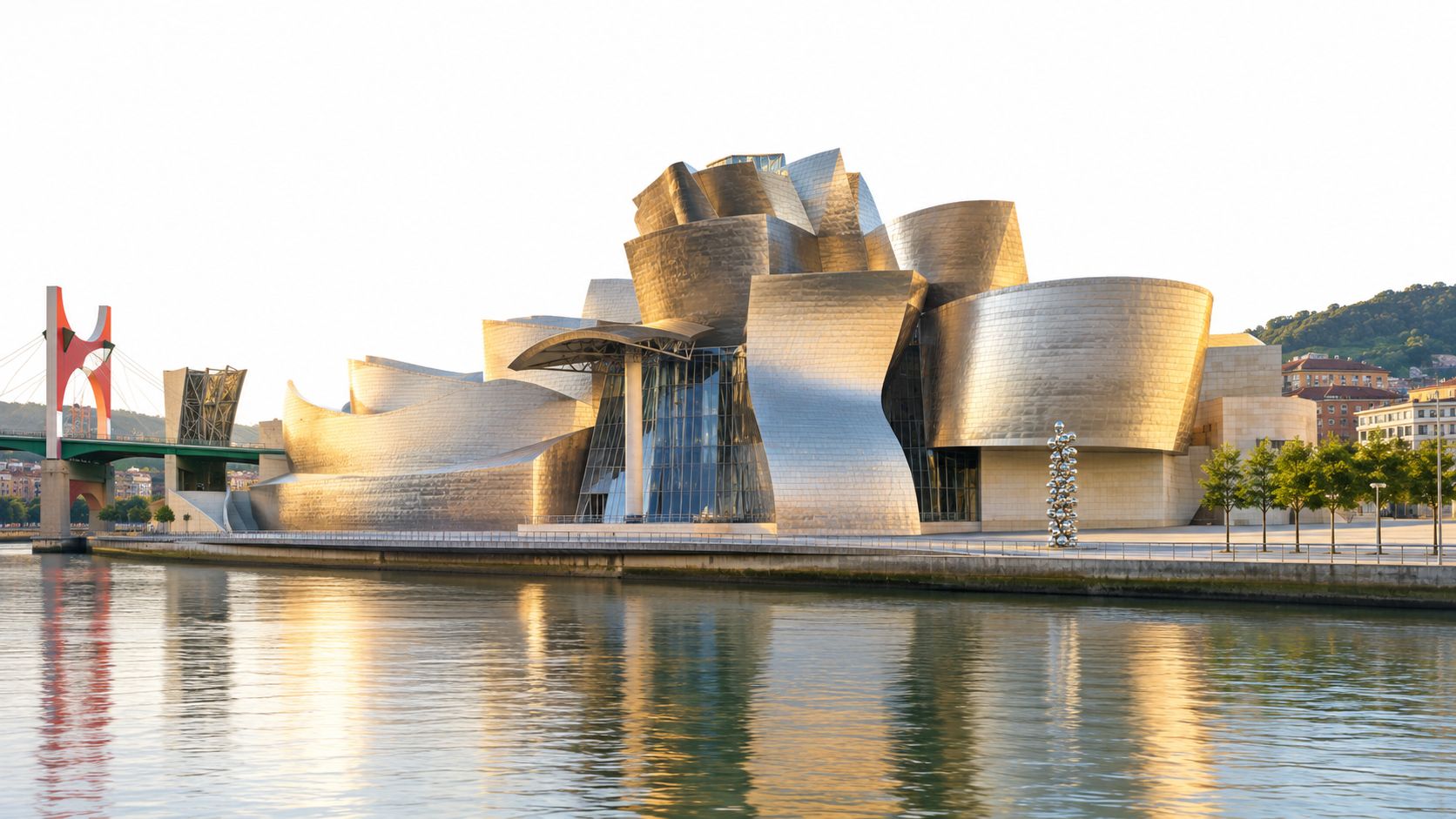
Bilbao's Guggenheim is the essential starting point for anyone researching the best contemporary architecture in northern Spain. Completed in 1997 and designed by Frank Gehry, the museum's titanium-clad curves rise beside the Nervión River in a composition that changes with weather, water, and daylight. Gehry's design doesn't merely house contemporary art. It turns the building itself into a cultural event.
The museum became the defining contemporary architecture landmark in northern Spain and one of the clearest examples of the so-called Bilbao effect. A study of its first years found that about 80% of visitors came from outside the Basque Country, while average annual non-Basque visitation reached about 800,000 compared with fewer than 100,000 before the museum opened. The economic analysis of the museum's early impact illustrates how one building helped reposition Bilbao from an industrial city into an internationally recognized cultural destination.
How to experience Gehry's Bilbao
Start outside. Walk along the riverfront and approach the museum from different angles before entering. The broad curves near the water feel monumental, while the limestone, glass, and titanium surfaces reveal finer details at pedestrian level. A private architecture guide can explain the relationship between the former industrial waterfront, Gehry's sculptural language, and Bilbao's wider urban renewal.
Inside, a private docent-led visit gives the building proper context rather than treating it as a backdrop for photographs. Families benefit from a guide who can connect large-scale installations to different ages and interests, while collectors and design-focused travelers may prefer a deeper discussion of the museum's exhibitions and spatial sequence. Bilbao's transformation through industrial history and modern architecture makes a strong foundation for a broader city itinerary.
Practical rule: Reserve timed entry and private guiding in advance, then place the visit early or late in the day so the museum remains the anchor rather than the source of itinerary pressure.
Pair the Guggenheim with a walk beside the Nervión, the Casco Viejo, and a carefully selected Basque lunch. It also works exceptionally well as the first cultural stop before continuing to San Sebastián for culinary experiences.
2. Marqués de Riscal Winery
The Hotel Marqués de Riscal in Elciego makes a strong case for wine architecture as a central part of a Northern Spain journey. Designed by Frank Gehry, the building sends titanium and steel ribbons across the vineyard, creating a visual dialogue with the rows of vines and the traditional Rioja setting. It's flamboyant, but the best experience comes from understanding the building as part of a working wine estate rather than viewing it as a standalone sculpture.
This is a destination for travelers who want architecture, gastronomy, and accommodation in one carefully composed stop. The property combines wine production, a museum, hotel rooms, dining, and tastings, so it can support a slower stay instead of a brief photograph-and-departure visit. The contrast with traditional bodegas in nearby Rioja Alavesa is especially valuable. Contemporary form becomes more legible when set against older cellars, stone villages, and the disciplined geometry of vineyards.
Make the winery a complete Rioja experience
Stay overnight if the itinerary allows. Dawn and evening reveal a quieter relationship between the building and the land, while a daytime architecture visit can focus on Gehry's materials, the hotel's dramatic volumes, and the way the structure frames the surrounding wine country. A private driver can connect the estate with neighboring bodegas without forcing anyone to manage rural roads after tastings.
For a milestone celebration, request a private cellar dinner or a sommelier-led tasting. Couples may prefer an architecture-and-gastronomy day, while multigenerational groups can divide the experience between wine education, a guided design visit, and time in the hotel.
- Add architectural contrast: Combine Marqués de Riscal with a traditional winery rather than visiting only contemporary estates.
- Prioritize private interpretation: Ask for a guide who can connect Gehry's design to Rioja's winemaking culture.
- Build around the table: Reserve a refined lunch or dinner in advance, especially when the estate is the centerpiece of a special occasion.
The Elciego guide to architectural marvels and natural beauty helps place the winery within a wider setting of vineyards, villages, and food. During harvest, the working character of the estate becomes more apparent, although schedules and production access must be confirmed before travel.
3. Kursaal Convention Centre and Concert Hall
San Sebastián's Kursaal is defined by a disciplined relationship between building and ocean. Designed as two translucent glass cubes beside the Atlantic, the complex gives the city a contemporary landmark without overwhelming its beaches, historic center, or dramatic coastal setting. Completed in 1999, it functions as a convention center and concert hall, but its public presence matters just as much as its program.
The Kursaal is best experienced at the edge of the day. At sunset, the glass catches changing light and the building's hard geometric form becomes less static. The surrounding public spaces are easy to combine with a walk along Zurriola Beach, the Parte Vieja, and an evening reservation in one of San Sebastián's pintxos bars. The architecture therefore works as part of the city's rhythm, not as a detached museum visit.
Pair waterfront design with food
Check the event calendar before planning the visit. A concert, cultural program, or major festival can transform the building from an exterior landmark into a complete evening. Travelers interested in photography should allow time to observe how the translucent façades respond to sky and water rather than rushing directly to dinner.
The most effective Kursaal visit starts outdoors, continues through the public spaces, and ends with music or food.
San Sebastián also gives the building a particularly strong culinary context. A private guide can explain the city's evolution as a cultural capital before leading guests toward the Old Town, while a driver can make it possible to combine the Kursaal with coastal viewpoints or nearby txakoli estates. Families can use the plaza and waterfront for an accessible architectural stop, then adapt the evening around different energy levels.
The Kursaal works especially well in a route that connects Bilbao and the Basque Coast. Bilbao offers industrial transformation and Gehry's expressive forms. San Sebastián provides a more restrained, ocean-facing counterpoint, where glass, public space, beaches, and cuisine carry equal weight.
4. Ribeira Sacra Mirador
Ribeira Sacra's mirador makes contemporary architecture the starting point for a private journey through Galicia's wine country. A minimalist steel-and-glass platform projects over the Sil River canyon, framing terraced vineyards, steep slopes, and the dark line of water below. The structure remains deliberately restrained, allowing the terrain to supply the drama.
Visit for the view, then stay for the relationship between design and place. Clear morning light reveals the geometry of the vineyards and the scale of the gorge. Late afternoon brings warmer tones and stronger conditions for photography. Mist and cloud create a quieter, more atmospheric experience. A local guide can explain how viticulture, difficult terrain, and rural settlement have shaped one another.
Weather should determine the timing. Keep the day flexible rather than treating the mirador as a fixed photo stop.
Private transportation suits Ribeira Sacra. Rural roads connect widely spaced viewpoints, wineries, villages, and restaurants, so a driver turns a complicated day into a measured one. The strongest itinerary pairs the platform with a private estate visit in the terraced vineyard area, followed by a local meal chosen for its setting and regional cooking. Guests can enjoy tastings without making the return journey a concern.
- Choose the weather window: Protect visibility by keeping the visit adaptable.
- Connect architecture with wine: Follow the mirador with a private tasting among the vineyards.
- Set the right pace: Add a gentle walk for active travelers, or focus on viewpoints, scenic drives, and food.
The mirador works for travelers who see architecture as a way of looking. Its value lies in the precise contact it creates between contemporary design and an ancient agricultural region. The platform does not attempt to explain all of Ribeira Sacra. It gives the terrain a carefully framed moment.
Photographers and couples will find the stop especially rewarding. Families comfortable with heights can enjoy it too, provided the day includes generous travel time and easy transport. Pair the visit with a guide who understands both the built intervention and the cultural history of Ribeira Sacra, then continue into Galicia's wine, cuisine, and river valleys rather than returning immediately to the viewpoint.
5. Picos de Europa National Park Visitor Centre
The Picos de Europa visitor center in Cabrales gives contemporary architecture a different responsibility. Here, the building must introduce visitors to a demanding mountain environment while remaining subordinate to it. Local stone and modern materials create a practical gateway to the national park, where the architecture supports orientation, interpretation, and access rather than competing with the peaks.
The project works particularly well for travelers who want active luxury without sacrificing comfort or cultural depth. A private mountain guide can use the center as the starting point for a hike adapted to the group's fitness, age range, and interests. Families may focus on the local environment and traditions, while experienced walkers can use the visit as a prelude to a more ambitious route through the limestone terrain.
Connect the building to mountain culture
Cabrales is as important for its food culture as its natural setting. Arrange time for a local cheese experience and Asturian cider alongside the visitor center and a guided walk. These encounters give the architecture a stronger context. The center explains the environment, while the cheese, villages, and mountain roads reveal how people continue to live within it.
For families: Plan the mountain day around flexible activity levels, not a single fixed hike. A private guide can keep the group together while offering different options.
Stay in or near villages such as Cabrales or Arenas de Cabrales, choosing comfort and access over an aggressive same-day transfer. Clear weather improves views and photography, but the region's changing conditions make local guidance especially useful. Confirm trail conditions, road access, and the center's opening hours before departure.
This is one of the strongest choices for multigenerational travel because it allows architecture, nature, food, and gentle adventure to share one itinerary. The building may not have the instant recognition of the Guggenheim, but it reveals a more grounded direction in northern Spanish design, one concerned with environmental setting, education, and responsible access.
6. Pont-Ala Contemporary Art Museum
Pont-Ala Contemporary Art Museum in Ponte, Asturias, deserves a place on a private Northern Spain itinerary built around contemporary culture rather than famous names alone. Its bold geometric forms and contemporary materials make the building part of the artistic experience, while its coastal setting keeps the architecture tied to Asturias. The museum offers a useful counterpoint to Bilbao's major institutions, showing how regional identity can shape a smaller cultural venue.
Plan the visit around the museum's seasonal program. Exhibition rotations determine whether the galleries are fully open, so check the official schedule before fixing your date. Talks and artist events can add depth, but the building remains worthwhile when approached with a specialist guide who can explain its architectural language and place it within Asturias's creative scene. For collectors, it also provides a practical starting point for discovering regional artists and independent institutions.
Build the day as a coastal journey, not a museum transfer.
Pair Pont-Ala with a fishing village, a seafood lunch, and a scenic drive along the coast. This combination connects design with the region's working culture and cuisine. Choose a local restaurant known for Asturian seafood, then leave time for viewpoints or a short walk before returning to the gallery program.
- Check the seasonal program: Confirm exhibition access and event times before setting the date.
- Add coastal context: Combine the museum with nearby villages, viewpoints, and an unhurried meal.
- Request specialist guiding: A contemporary art guide can clarify the building and the regional scene for travelers who rarely visit smaller museums.
Pont-Ala suits couples and private groups who value discovery over architectural celebrity. It is a deliberate choice for travelers who want to see how Asturias uses contemporary culture to interpret its coastline, local identity, and changing creative community.
Allow enough time for both the museum and its surroundings. The strongest itinerary lets the building anchor a full Asturian day, linking gallery space with coastal scenery, local food, and a more grounded view of Northern Spain's architectural culture.
7. Azkuna Zentroa
Azkuna Zentroa is Bilbao's clearest lesson in urban repair. Philippe Starck converted a former wine warehouse in the city centre into a cultural complex containing exhibition spaces, a cinema, library, gym, and public programme. The intervention retains the building's industrial memory while giving it an active civic role.
Its importance lies in daily use. Azkuna Zentroa is not a single-purpose architectural attraction competing with the Guggenheim Museum. It brings exhibitions, screenings, public rooms, and local life into the same structure, showing how Bilbao's renewal continues through ordinary cultural activity. For a private Northern Spain itinerary, it connects design with the city's commercial history, restaurants, and evening culture.
Make it part of an urban evening
Arrive late in the afternoon and check the programme before you go. A screening, exhibition, talk, or cultural event gives the visit a clear focus and may justify staying into dinner. During a quieter daytime visit, concentrate on Starck's adaptive-reuse strategy and the building's relationship with central Bilbao.
The interior deserves close attention before any scheduled event. Its contrasting columns and public spaces make the transformation legible, while the surrounding district places the project within Bilbao's continuing cultural life. Arrange a specialist guide for a private group if you want the former warehouse connected to the city's industrial history, changing commercial districts, and local food culture.
Afterward, walk toward the Siete Calles for an aperitif or a carefully chosen dinner. This pairing works better than treating Azkuna Zentroa as a brief photo stop. It gives the architecture a social setting and lets Bilbao's design story continue through its streets, markets, and dining rooms.
- Begin with the conversion: Study how the warehouse became a public complex before selecting an exhibition or event.
- Use the calendar: Choose cinema, talks, or cultural programming that matches your interests.
- Stay for the district: Build in time for an aperitif, market visit, or dinner in the old town.
Azkuna Zentroa earns its place among northern Spain's strongest contemporary projects because it makes usefulness architectural. Include it when your journey needs a more grounded counterpoint to Bilbao's landmark museum, connecting design with the city's industrial past and present-day cultural life.
8. Txakoli Wineries in Getaria and Zarautz
Txakoli wineries around Getaria and Zarautz provide the most convincing architecture-and-terroir experience on this list. Their modern materials, production spaces, tasting rooms, and terraces sit within Basque coastal terrain, using Atlantic views and vineyard slopes as part of the design. Regional building traditions remain visible, but they are interpreted for contemporary agriculture and hospitality.
Make these estates the organizing thread for a slower private day. Begin with a reserved winery visit, then follow the coast to Getaria for grilled fish and a walk above the water. Continue to Zarautz if you want the route to widen into beaches, hills, vineyards, and Basque culinary culture. The result connects architecture with the surroundings and food that give it meaning.
Plan for access, not volume
Smaller wineries often have limited capacity. Arrange the visit in advance and request a sommelier-led tasting that compares txakoli with other regional wines. Ask whether the itinerary includes production areas, vineyards, and architectural spaces rather than only the tasting room. Harvest season can reveal more of the working process, while opening schedules and access vary.
A private guide adds value when they can explain how contemporary design responds to Basque architectural references. For a discreet luxury itinerary, pair the winery with a prearranged coastal transfer and a table in Getaria, avoiding a rushed sequence of short stops.
- Reserve ahead: Smaller estates may not accept spontaneous visitors.
- Set lunch as the anchor: Getaria's seafood tradition gives the day a clear culinary finish.
- Walk part of the coast: The path connects the buildings with the terrain shaping the wine.
- Confirm the program: Check production access, tasting format, transport, and non-drinking options before arrival.
Use the Zarautz guide to Basque grills, seafood, and txakoli to shape the food portion of the day. Couples get an elegant slow-travel experience. Families can combine scenery, food, and accessible wine education with coastal activities that do not involve drinking.
Txakoli wineries belong on this route because contemporary architecture here serves agriculture, hospitality, and local identity together. Include them when you want design to lead into the working culture of Northern Spain, not remain isolated from it.
Top 8 Contemporary Architecture in Northern Spain, Comparison
| Item | 🔄 Implementation Complexity | ⚡ Resource Requirements | 📊 Expected Outcomes | 💡 Ideal Use Cases | ⭐ Key Advantages |
|---|---|---|---|---|---|
| Guggenheim Museum Bilbao | High, complex titanium curves and museum systems | Very high, capital, curatorial staff, security, IT | Major cultural landmark; strong tourism and educational impact | Luxury cultural itineraries; architectural pilgrimages; VIP museum tours | Transformative regional icon; world-class collections ⭐⭐⭐ |
| Marqués de Riscal Winery | High, integrated hotel, restaurant, production and exhibition spaces | Very high, hospitality team, Michelin kitchen, cellar operations | Luxury all-in-one wine, gastronomy and design experience | Multi-day wine escapes; milestone celebrations; chef/sommelier-led programs | Unique combination of architecture, Michelin dining and exclusive tastings ⭐⭐⭐ |
| Kursaal Convention Centre & Concert Hall | Medium–High, large auditoria and event infrastructure | High, event management, technical and front-of-house teams | Consistent cultural programming; festival and conference draw | Concerts, festivals, conferences; architectural photography | Iconic waterfront design with large-capacity event capability ⭐⭐⭐ |
| Ribeira Sacra Mirador | Medium, structural cantilever and safety engineering | Medium, maintenance, controlled visitor management, access logistics | High experiential impact; dramatic views and photo opportunities | Soft-adventure and photography itineraries; wine-region add-ons | Unparalleled vertiginous views; strong emotional/visual impact ⭐⭐ |
| Picos de Europa Visitor Centre (Cabrales) | Medium, sustainable mountain integration and interpretive design | Medium, educational staff, guides, modest facilities | Educational gateway to park; supports guided outdoor activities | Family nature trips, guided hikes, eco-conscious tourism | Sustainable design with strong interpretation programs ⭐⭐ |
| Pont-Ala Contemporary Art Museum | Medium, gallery programming with sculptural architecture | Medium, curatorial team, exhibition logistics, modest operations | Emerging cultural exposure; supports regional artists | Art- and design-focused itineraries; collector scouting trips | Sculptural architecture, quieter contemporary program, regional focus ⭐⭐ |
| Azkuna Zentroa (Alhondiga Bilbao) | Medium, adaptive reuse with mixed cultural programming | Medium, multi-disciplinary staff, event and facility management | Local cultural hub; promotes urban regeneration and varied programming | Authentic neighborhood cultural immersion; evening rooftop visits | Versatile programming, strong local engagement, rooftop amenities ⭐⭐ |
| Txakoli Wineries (Getaria & Zarautz) | Low–Medium, small-scale contemporary interventions respecting vernacular | Low–Medium, small staff, limited production capacity, transport needs | Intimate tastings and authentic production insights; regional culinary pairings | Small-group wine tours; coastal food-and-wine days; design-aware tastings | Direct winemaker access, coastal settings, intimate experiences ⭐⭐ |
Build the Route Around the Architecture
The strongest Northern Spain itinerary treats architecture as its organizing thread, not as a collection of detours. Begin in Bilbao with the Guggenheim and Azkuna Zentroa. Together, they show two sides of the city's transformation, one an internationally recognized landmark and the other an adaptive-reuse project embedded in everyday urban life. Add the Nervión riverfront, the Casco Viejo, and carefully chosen dining for a complete cultural opening.
Continue east toward San Sebastián and the Basque Coast for waterfront design, pintxos, seafood, and txakoli. The Kursaal provides the architectural focus, while Getaria and Zarautz extend the route into working vineyards and Atlantic food culture. This pairing is particularly effective for couples and private groups because the days can move naturally between galleries, coastlines, tastings, and long lunches without excessive transfers.
Rioja offers a different register. Marqués de Riscal makes the vineyard itself part of the architectural experience, and the region rewards travelers who stay overnight, compare contemporary wineries with traditional bodegas, and reserve private cellar or chef-led experiences. A driver is essential for a relaxed route through the wine country.
Galicia and Asturias should be planned around terrain rather than density. The Ribeira Sacra mirador connects contemporary design with terraced vineyards and river gorges. In Asturias, the Pont-Ala museum provides a coastal cultural anchor, while the Picos de Europa visitor center links architecture to mountain life, local cheese, cider, and guided walking.
Bilbao's broader travel market reinforces the value of this approach. The city drew 1,396,841 tourists in 2025 and recorded 2,723,725 overnight stays, while international visitors represented 52.7% of arrivals from January through November 2025. The same reporting places the average stay at around 1.93 days. The tourism report on Bilbao's 2025 performance makes the practical implication clear. Travelers need tightly curated routes that connect several meaningful stops instead of relying on a generic top-ten list.
Before traveling, confirm opening hours, exhibition and event schedules, weather, private access, winery capacity, trail conditions, and transport arrangements. Faro Santander, a David Chipperfield-designed cultural destination in a historic waterfront building, is scheduled to open on 8 September 2026, so travelers considering a future itinerary should verify the latest access information directly through current planning resources. The project's reported opening plans make it a potential addition to a later Cantabrian route, not a currently available stop.
Northern Spain Travel can turn selected buildings into a fully private journey matched to your pace, interests, dining priorities, accommodation style, and desired level of local access. The agency's approach suits travelers who want private guides, drivers, winemakers, chefs, boutique hotels, and flexible planning across the Basque Country, La Rioja, Cantabria, Asturias, and Galicia. Architecture becomes the framework, while food, wine, coast, mountains, and local relationships give the route its character.
Northern Spain Travel designs fully private, tailor-made journeys that connect the region's most compelling contemporary architecture with wineries, coastal villages, mountain experiences, fine dining, and discreet local access. Visit Northern Spain Travel to begin shaping an architecture-led Northern Spain itinerary around your interests, preferred pace, and travel style.