Is Cape Town in June too wet for a luxury holiday, or are conventional weather summaries asking the wrong question? The answer matters because the month isn't defined by rain alone. It rewards travelers who understand timing, local geography, and the difference between a weather-sensitive plan and one designed to absorb change.
Cape Town weather in June demands a more intelligent approach than just packing a coat and hoping for sunshine. The city enters its cool, wet Mediterranean winter, but passing fronts can give way to crisp air, clear mountain views, vivid light, and excellent conditions for private cultural, culinary, and wine-focused experiences. The right itinerary won't ignore the weather. It will use it.
Table of Contents
- Reframing Your Expectations for a June Visit
- Understanding the Key Temperature and Rainfall Averages
- Daylight Hours and Winter Photography Opportunities
- Wind Patterns and Atlantic Sea Conditions
- Navigating Cape Town's Localized Microclimates
- Essential Luxury Travel Packing Strategy
- Designing a Flexible Winter Itinerary
- Top Winter Activities that Thrive in June
Reframing Your Expectations for a June Visit
What makes a June visit successful is not a promise of sunshine, but an itinerary built to stay excellent when conditions change.
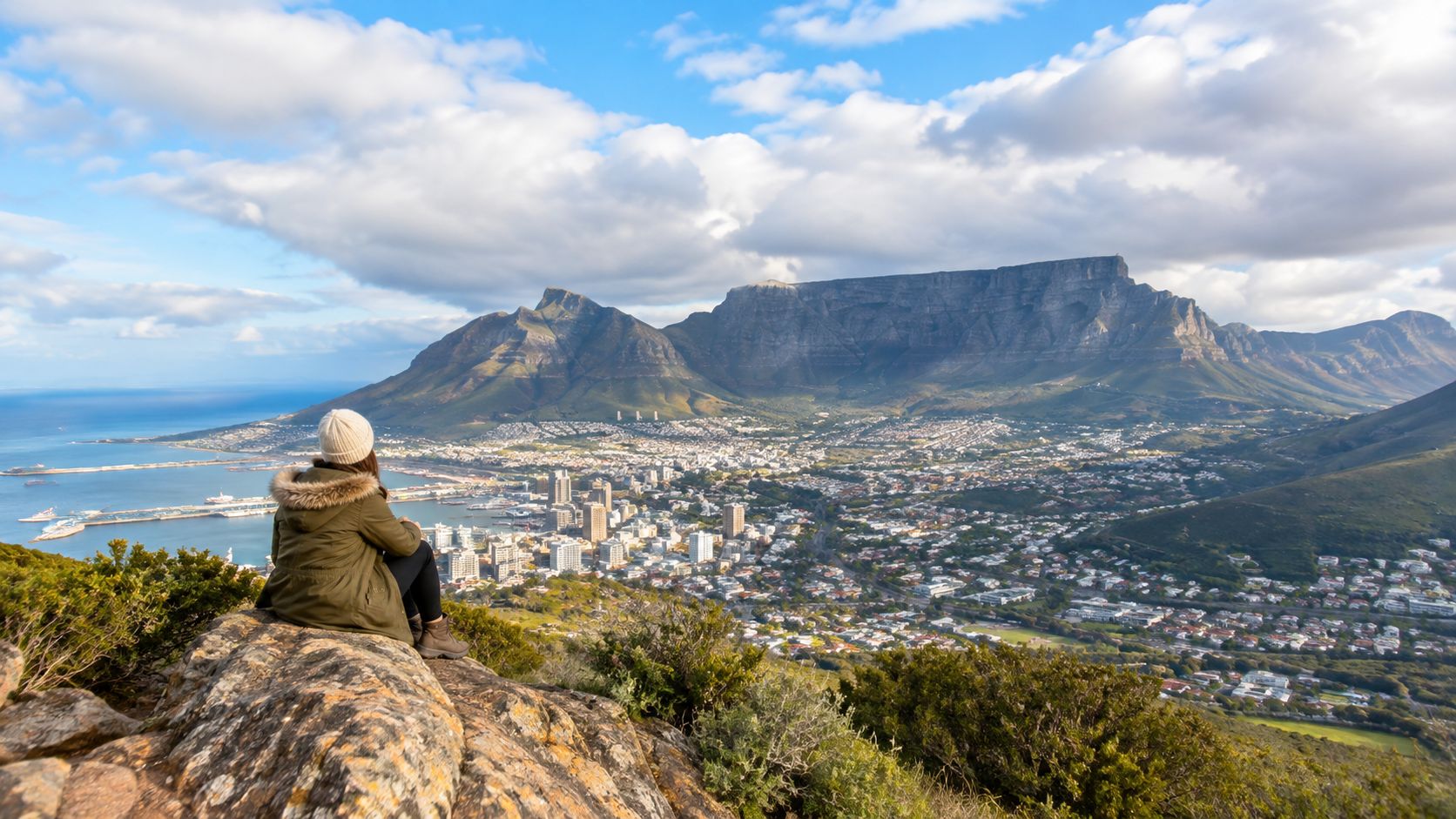
Cape Town in June offers a more atmospheric version of the city, with cool days, shifting skies, and a stronger case for adaptive luxury travel. The label “cold and wet” is too blunt to guide good decisions. It can lead travelers to overprotect the schedule, when the better approach is to match each experience to its best weather window and keep a polished alternative ready.
Long-term climate averages confirm that daytime conditions remain cool rather than severe, with detailed temperature figures covered in the next section. Cape Town's long-term climate averages provide useful context, but averages cannot decide whether a particular morning suits a coastal drive, a mountain visit, or a long lunch indoors. Use the forecast to sequence the day, not to judge the entire trip.
Rain changes the design, not the value
June is among Cape Town's wettest periods, but historical datasets differ considerably because stations, locations, and measurement methods vary. The practical conclusion is straightforward: plan for rain without allowing it to dictate every decision.
A private driver, flexible restaurant reservations, and guides who can reorder experiences protect the trip's quality. Schedule exposed viewpoints, scenic touring, and vineyard visits when the forecast is strongest. Keep galleries, museums, wellness appointments, private tastings, and standout restaurants available for wetter intervals. A well-chosen hotel also matters, particularly one with attractive dining, spa facilities, and comfortable spaces for an unhurried afternoon.
Practical rule: Judge June by the flexibility of your itinerary, not by a single weather forecast.
The month suits travelers who value private tastings, galleries, museums, restaurants, wellness, and scenic touring alongside outdoor sightseeing. After a front, clear air can sharpen mountain and coastal views. Plan for that opportunity, while ensuring the day remains worthwhile if the clouds stay.
Understanding the Key Temperature and Rainfall Averages
How should you use Cape Town's June averages when planning a private trip? Treat them as planning parameters, not a promise. Cool mornings, milder afternoons, and damp evenings favour layered clothing, sheltered dining, and an itinerary that can shift between exposed and protected experiences.
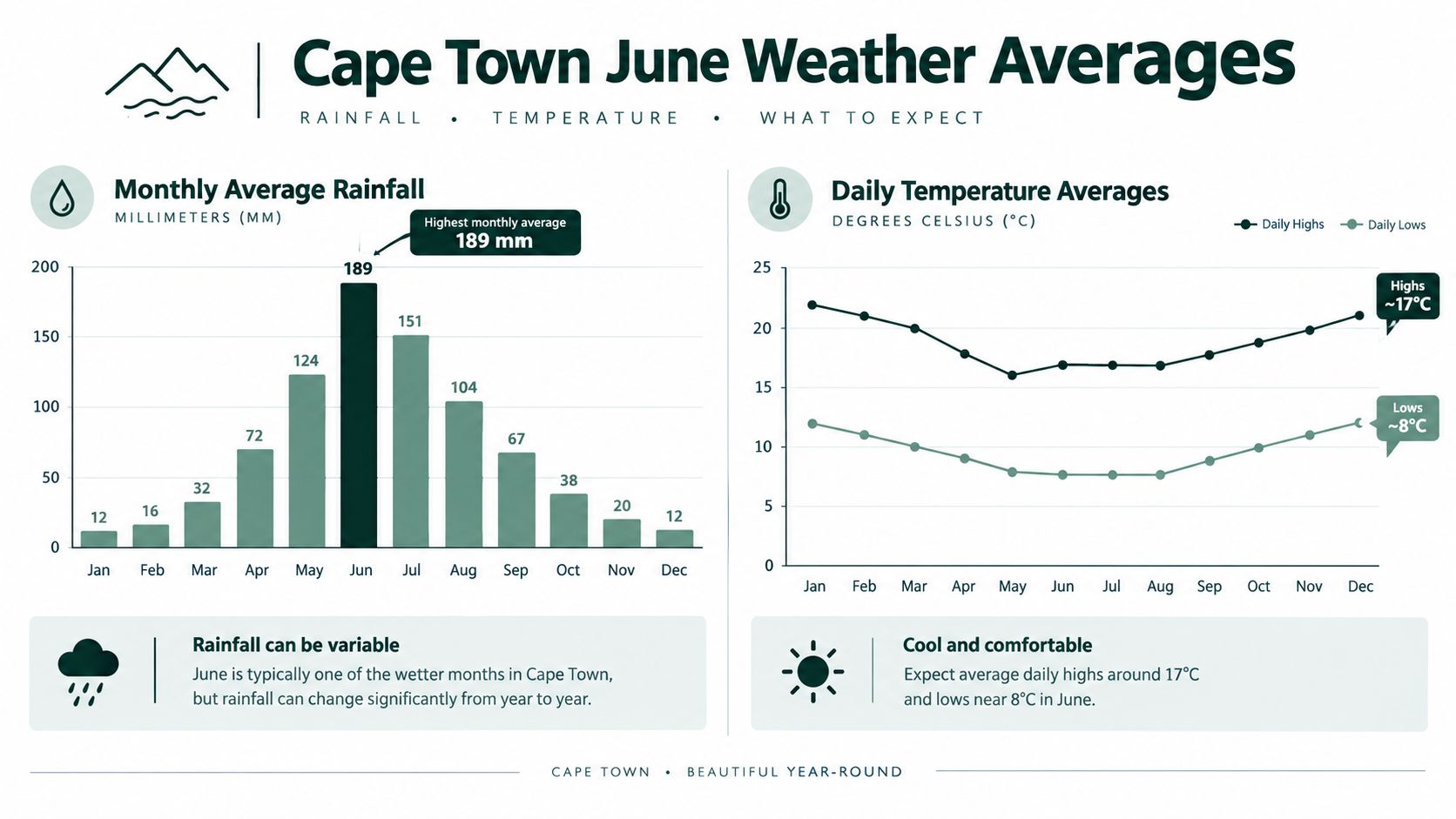
Typical daytime maximum temperatures sit around 17–18°C, while nighttime minimums fall to about 8–11°C, according to historical Cape Town climate data. Mornings feel crisp beside the ocean and at elevation. By afternoon, a sheltered restaurant terrace or inland touring route can feel comfortable when the sun breaks through between fronts.
Rainfall requires more context than a single monthly total.
Read the averages by location
One historical compilation places June rainfall at approximately 189 mm, with about 13 days of measurable precipitation. Another records roughly 74 mm, using a different station and rainfall threshold. These figures describe different measuring conditions, so neither should dictate your itinerary.
Mountain-facing areas, including parts of Kirstenbosch and Constantia, can receive substantially more rain than the City Bowl or Atlantic seaboard. You may find wet gardens and clouded mountain slopes while the coast stays bright, windy, and suitable for sightseeing. Arrange private transfers and guides so the day can move between those conditions without wasting time.
| Planning question | Practical interpretation |
|---|---|
| What should you expect in the morning? | Crisp air and a higher chance of needing a warm layer |
| What should you expect in the afternoon? | Potentially mild conditions during a clear interval |
| Which locations need more caution? | Mountain roads, exposed viewpoints, and coastal walks |
| What should remain flexible? | Table Mountain, boat routes, and long scenic drives |
June sits at the heart of the region's rainfall season. Approximately 70% of annual rainfall arrives between June and September, and June averages roughly 85–130 mm depending on the observation station, according to Cape Town rainfall records and station comparisons. Historical records also range widely, from a June monthly minimum of 16 mm in 1959 to a maximum of 330 mm in 2025.
Use the forecast you have, not the average you read before departure. Keep one weather-proof experience available each day, and avoid placing every major outdoor highlight inside one narrow window. That structure protects private tastings, scenic touring, and standout dining from a single wet afternoon.
Daylight Hours and Winter Photography Opportunities
How should a luxury itinerary use Cape Town's limited June daylight? Build around the strongest light first, then reserve weather-proof alternatives for the remaining hours. June offers around 10 hours of daylight, with sunshine commonly estimated at roughly 5 hours per day, according to the Cape Town climate overview. Early starts give photographers the best control over the day.
Schedule scenic drives, mountain viewpoints, and coastal routes for the morning. This creates time to adjust if cloud settles over Table Mountain or visibility shifts around the peninsula. The afternoon can then accommodate a private tasting, museum visit, spa appointment, or long lunch, all of which remain rewarding when conditions change.
Why winter light earns the early start
Low winter sunlight gives the Cape a sculptural quality. Mountain ridges gain definition against broken cloud, wet streets reflect architectural detail, and the coastline can appear especially dramatic after rain clears. Changing skies add texture and atmosphere, so keep the camera ready during transitions.
Private guides and drivers add real value for photography-focused days. Ask them to assess conditions across the City Bowl, Atlantic seaboard, and southern suburbs before selecting a route. A flexible plan can move toward the clearest viewpoint, strongest reflections, or most dramatic cloud without sacrificing the rest of the day.
Luxury travel works best with two versions of each outdoor plan. Pair a viewpoint or scenic drive with a nearby gallery, cellar tasting, or private cultural visit. If the light weakens, the itinerary still feels deliberate rather than improvised.
For photographers: Prioritize the experiences that depend on visibility early, then let the weather determine whether the afternoon belongs to the coast, the vineyards, or the city's interiors.
Earlier darkness should also shape dinner planning. After a long outdoor excursion, reserve a restaurant, cellar tasting, or cultural experience that remains appealing once daylight fades. June rewards an unhurried pace, with photography, comfort, and adaptable private arrangements built into the same day.
Wind Patterns and Atlantic Sea Conditions
The thermometer doesn't tell the whole story on Cape Town's coast. June wind conditions are reported at approximately 14.5–20 km/h, while humidity generally sits near 77–81%, according to Cape Town's seasonal wind, humidity, and sea conditions. Together, those conditions can make exposed locations feel markedly cooler than an inland temperature reading suggests.
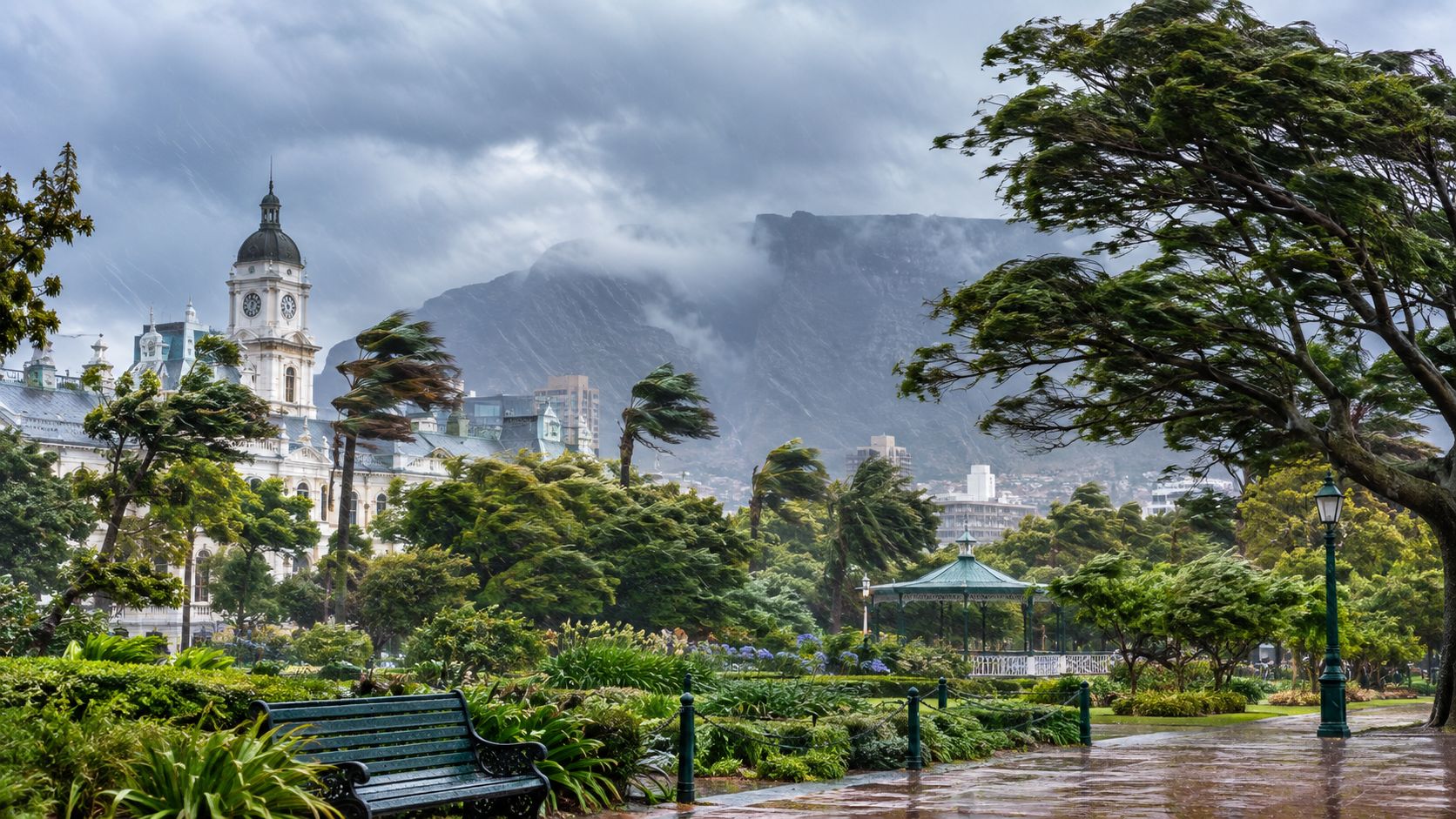
The Atlantic seaboard is the clearest example. A walk along the Promenade or a stop at Clifton can be visually rewarding, but wind exposure changes the comfort calculation. A polished wool layer may be pleasant in the City Bowl and inadequate beside the water unless paired with a wind-resistant outer shell.
Separate coastal sightseeing from swimming
June sea temperatures around Cape Town average approximately 15°C, making unprotected swimming uncomfortable for many travelers. The practical distinction is simple: choose the coast for views, photography, architecture, and scenic driving unless you specifically enjoy cold-water conditions or have suitable equipment.
False Bay and more sheltered coastal settings can feel different from the Atlantic side, but no beach should be assumed comfortable because the air is mild. Wind direction, cloud cover, and local exposure can change the experience within a short drive.
For private travel, operators should verify marine and mountain forecasts on the day of an exposed excursion. Boat routes, high viewpoints, and coastal walks all deserve a go or no-go decision based on current conditions rather than the morning's temperature alone.
A strong coastal plan has an immediate alternative:
- If the Atlantic is too exposed, shift to a sheltered garden, gallery, or culinary visit.
- If a boat route is disrupted, replace it with a vehicle-based viewpoint or private coastal drive.
- If the wind makes a beach stop unpleasant, retain the coastline as a photographic route rather than a swimming destination.
The same principle applies to families and older travelers. A weather-proof alternative isn't a consolation prize. A private wine visit, gallery tour, or carefully chosen restaurant may be more comfortable and more memorable than forcing an exposed activity in poor conditions.
The following video offers useful visual context for the city's changeable winter mood:
Navigating Cape Town's Localized Microclimates
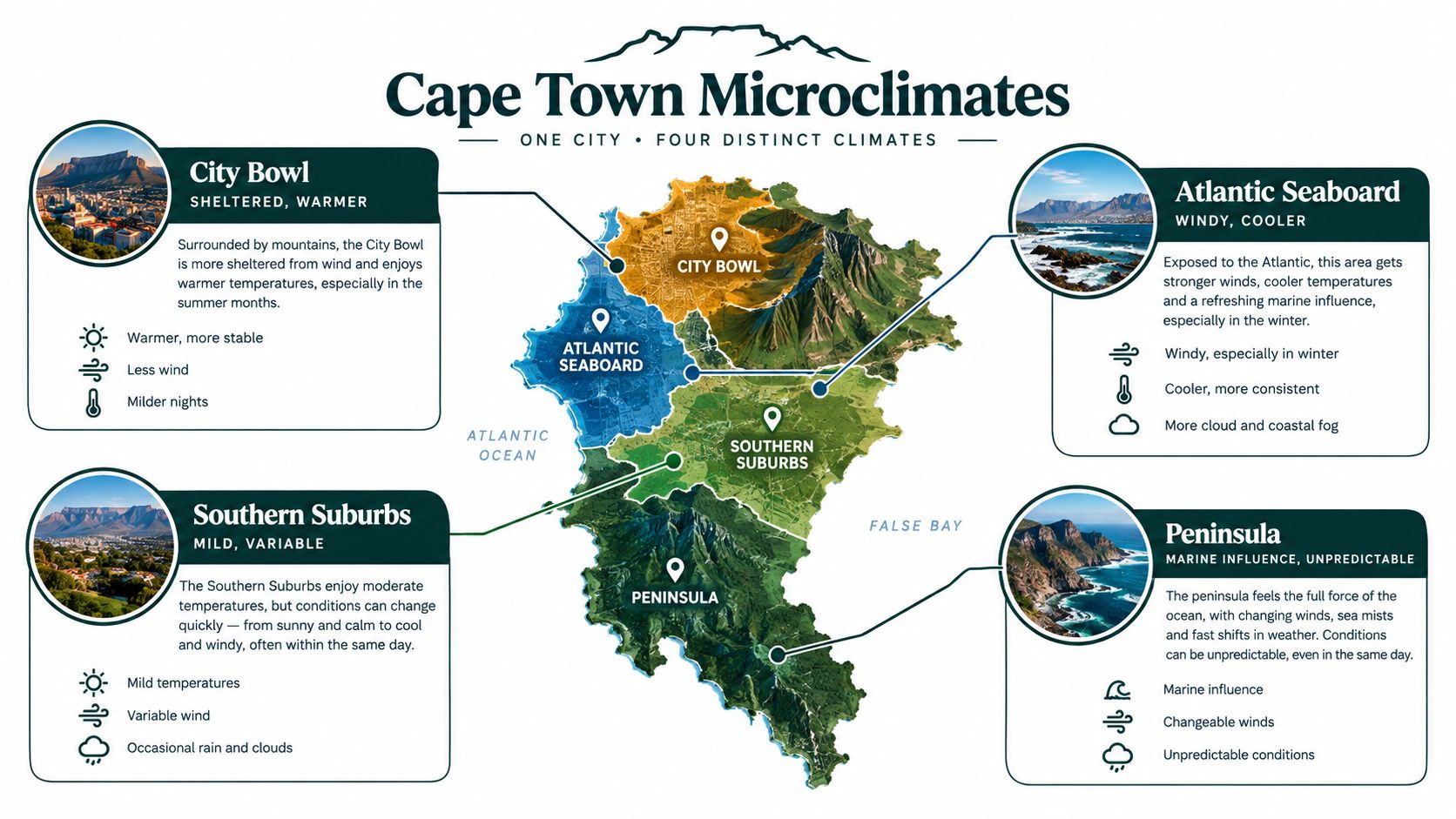
Cape Town's neighborhoods don't share one reliable weather pattern. Mountain slopes, ocean exposure, and inland valleys create meaningful differences over a single day, so the best base and route depend on what you want to do rather than on a citywide forecast.
Four zones with different planning logic
The City Bowl is often the most convenient compromise for winter sightseeing. It offers access to museums, restaurants, galleries, and sheltered urban experiences, while mountain cloud can still affect nearby viewpoints. If your priority is variety, this area gives a private driver more options when conditions change.
The Atlantic seaboard delivers dramatic coastal scenery but greater exposure to wind. Camps Bay, Clifton, and the Promenade can be attractive during clear breaks, yet they should not carry the entire day's plan. Pair the coast with an indoor stop rather than treating it as a guaranteed full-day outing.
Constantia and the southern suburbs provide a greener, more sheltered setting for wineries, gardens, and long lunches. Rain can be heavier near mountain-facing areas, particularly around Kirstenbosch and Constantia, so check local conditions before departing rather than assuming the coast's weather will follow you inland.
The Cape Peninsula is the most operationally unpredictable of the four. Marine influence, wind, cloud, and exposed roads can combine to alter the experience quickly. A private vehicle and flexible routing are more valuable here than a tightly timed group excursion.
| Area | Best winter use | Main caution |
|---|---|---|
| City Bowl | Culture, dining, galleries, urban touring | Mountain visibility can change |
| Atlantic seaboard | Scenic drives and coastal photography | Wind and exposure |
| Constantia | Tastings, gardens, and leisurely meals | Mountain-facing rain |
| Peninsula | Flexible scenic touring | Marine conditions and route changes |
Travelers comparing destinations can also consider how localized weather affects other island and coastal regions in this guide to Kauai's June temperatures, rain, and microclimates. The broader lesson is useful in Cape Town: a regional forecast rarely tells you enough to choose the right neighborhood or departure time.
Essential Luxury Travel Packing Strategy
June packing should look refined, not expeditionary. The winning formula is a compact layering system that moves easily from a damp morning drive to a polished dinner without forcing you to carry a bulky winter coat all day.
Start with three functional layers:
- Base layer: Choose breathable shirts or fine merino pieces that remain comfortable indoors and under knitwear.
- Warm mid-layer: Cashmere, wool, or a smart fleece adds insulation without the bulk of a heavy coat.
- Waterproof outer layer: A polished shell or raincoat protects against passing fronts and wind on exposed viewpoints.
A scarf earns its place because it adds warmth, improves a simple dinner outfit, and packs flat. Lightweight gloves can be useful for mountain viewpoints and early departures, while comfortable water-resistant shoes are more practical than delicate suede for wet gardens or uneven paths.
Build around transitions
Luxury travel often involves frequent changes between vehicle, pavement, cellar, restaurant, and open viewpoint. Pack pieces that look intentional in each setting. A dark waterproof jacket, fine knitwear, well-fitted trousers, and clean leather or technical shoes create more combinations than a single oversized coat.
Don't rely solely on summer-weight clothing. At the same time, don't fill your luggage with heavy pieces that become inconvenient when the afternoon clears. The best capsule wardrobe handles a temperature shift without requiring a full change.
Reliable connectivity supports the same flexible approach. A South Africa eSIM from RedSim can help travelers access updated forecasts, communicate with drivers, and manage last-minute changes without depending on hotel Wi-Fi.
Pack a small day bag with a compact rain layer, sunglasses, lip balm, and a phone power bank. This is especially useful when a scenic morning develops into an unplanned indoor lunch or a revised route through the vineyards. For broader inspiration on building an elegant, functional travel wardrobe, see this luxury safari packing guide, while adapting the heavier items to Cape Town's milder winter conditions.
Designing a Flexible Winter Itinerary
A June itinerary should be fallback-first. That means identifying the weather-sensitive experience, reserving a nearby alternative, and deciding in advance who has authority to change the plan. Rigid scheduling creates unnecessary stress because a single cloud bank can affect a cable car, viewpoint, boat route, or mountain road.
Classify experiences before booking
Weather-sensitive experiences include Table Mountain access, exposed Cape Peninsula viewpoints, long coastal walks, and boat-based activities. Book them with movable timing where possible, and avoid placing every major scenic highlight on the same day.
Weather-proof experiences include private wine tastings, cellar visits, galleries, museums, restaurants, wellness appointments, and indoor culinary encounters. These shouldn't be treated as filler. They are the foundation that keeps a high-value trip enjoyable when outdoor conditions deteriorate.
A practical sequence looks like this:
- Reserve the experiences with limited availability. Secure sought-after guides, drivers, restaurants, and tastings first.
- Keep exposed activities movable. Leave room to shift Table Mountain or a peninsula drive to the clearest suitable day.
- Pair every outdoor plan with a nearby alternative. A coastal route might be paired with a gallery or private lunch, while a Constantia outing can include a cellar experience.
- Make the decision locally. Check the forecast and visibility close to departure, then let the guide or operator recommend the strongest route.
This framework protects more than comfort. It protects access. A last-minute change can become difficult if the replacement restaurant, guide, vehicle, or tasting wasn't considered in advance.
The luxury is not avoiding weather. It is having enough expertise and flexibility that weather never dictates the quality of the day.
A private group should also agree on what matters most. One couple may prioritize dramatic photography, while another may prefer food and wine. Families may need a shorter exposed outing and a reliable indoor anchor. A well-designed plan accommodates those differences without making everyone follow the least adventurous option.
Travelers who enjoy planning around seasonal rhythms can find useful inspiration in this guide to journeys by month. For Cape Town, the principle remains direct: don't build a sequence of bets. Build a sequence of choices.
Top Winter Activities that Thrive in June
June improves some Cape Town experiences precisely because it removes the pressure of hot, bright summer weather. City touring becomes more comfortable in cool conditions, moderate walks are easier to enjoy, and winter skies can create a stronger sense of place than uniform sunshine.
A private cultural day is an excellent example. Begin with a city walk while the air is fresh, then move indoors for a gallery, museum, or carefully chosen lunch. If rain arrives, the day still has shape and purpose. You haven't lost the experience because its central value never depended on an uninterrupted view.
Winter highlights worth prioritizing
Dramatic mountain and coastal photography
Passing fronts can produce layered cloud, sharp breaks of light, and rich contrast around Table Mountain and the coast. Photographers should keep the route movable and be ready to change viewpoints when visibility opens.
Private wine and culinary experiences
Rain outside a glass-walled restaurant or cellar can make the Winelands feel intimate rather than inconvenient. A long tasting, chef-led meal, or private cellar visit suits June's slower rhythm and gives travelers a rewarding alternative when gardens or viewpoints are wet.
Moderate walking and scenic touring
Cooler conditions can make city exploration and manageable hikes more comfortable than during warmer periods. Choose routes with sensible shelter options, and use a private vehicle to shorten or redirect the outing if the weather turns.
Sheltered coastal drives
The coast remains valuable even when swimming doesn't. Drive for the views, stop when conditions are comfortable, and replace a windswept walk with a viewpoint, café, or indoor cultural stop when necessary.
Slow evenings with strong food and wine
June favors unhurried dinners, wellness appointments, and intimate restaurant reservations. The city feels less like a checklist of summer attractions and more like a place to settle into.
Couples planning a seasonal escape may also appreciate this broader winter couples vacation guide, particularly its emphasis on atmosphere and shared experiences rather than guaranteed sunshine. Cape Town's winter appeal is similarly experiential: weather becomes part of the setting, not an obstacle that must be ignored.
The candid recommendation is simple. Visit in June if you value privacy, food, culture, photography, and flexible private touring. Skip it only if your ideal Cape Town holiday depends on warm sea swimming and a fixed outdoor schedule every day.
Northern Spain Travel creates fully private, tailor-made luxury journeys with hand-picked hotels, guides, drivers, chefs, and local insiders across Northern Spain. Visit Northern Spain Travel to plan a journey built around your pace, interests, and appetite for authentic food, wine, culture, and rare local access.