June is statistically the driest month on Kauaʻi, averaging just 1.79 inches of rain at Līhuʻe Airport, while Hanalei on the north shore still receives about 112 mm. Island-wide averages hide the microclimate differences that determine whether your villa terrace, beach day, or private excursion feels reliably dry.
That challenges the most popular advice about weather in Kauaʻi in June. “Dry and sunny” is directionally correct, but it's too broad to guide a luxury itinerary. Kauaʻi doesn't offer one June climate. It offers several distinct weather zones, often operating within the same day.
For travelers choosing between Poʻipū, Līhuʻe, Hanalei, Princeville, and the east coast, the key question isn't just whether June is a good month. It's which side of the island best matches the experiences you want to protect from rain.
Table of Contents
- June Weather on Kauai Defied by Microclimates
- North Shore Versus South Shore Rainfall Contrast
- Coastal Zones and Activity Matching Guide
- Temperatures Sea Conditions and Sunshine Hours
- Packing Essentials for Kauai June Conditions
- May June and July Compared for Travel Planning
- 2025 Climate Context and Warmer Trends
- Is June the Best Month for Luxury Travelers
- June Weather Quick Reference and Planning Summary
June Weather on Kauai Defied by Microclimates
June's reputation as Kauaʻi's reliable beach month comes from a real seasonal pattern, but the label becomes misleading when it's applied uniformly. NOAA 1991–2020 normals for Līhuʻe Airport show average daily highs of 83.3°F (28.5°C), average daily lows of 73.4°F (23.0°C), and only 1.79 inches of precipitation for the month, making June the island's driest month according to the climate summary at Kauaʻi weather by month.
Those figures describe Līhuʻe, not every shoreline and valley. The north shore remains materially wetter, while the mountainous interior can produce showers even when a southern beach is bright and dry. A guest staying in Poʻipū may have an excellent morning for swimming, then encounter cloud, damp trails, or a passing shower after driving toward Hanalei.
Why the island average misleads
The contrast is created by Kauaʻi's terrain and prevailing weather patterns. Moist air reaches the island, rises against the mountains, and produces more cloud and rainfall on wetter slopes. Areas farther from that direct exposure can feel clearer and more settled, particularly around leeward coastal zones.
That distinction affects more than a weather forecast. It influences whether an open-air breakfast is dependable, whether a villa's outdoor living space gets regular use, and whether a hiking route is merely scenic or also muddy underfoot.
Practical rule: Treat June as the driest month overall, not as a guarantee of identical conditions across the island.
Luxury travelers should also evaluate microclimates as carefully as they evaluate room views or beach access. The same principle applies elsewhere in Hawaiʻi, where terrain can separate clear snorkeling water from wetter conditions within a relatively compact area. For a useful parallel, see this guide to Big Island snorkeling weather explained.
The best June base therefore depends on priorities. If the trip centers on dependable beach time and outdoor dining, a drier southern location has a practical advantage. If lush vegetation, north shore scenery, and flexible scheduling matter more, the wetter side may be worth choosing, provided the itinerary allows for weather changes.
North Shore Versus South Shore Rainfall Contrast
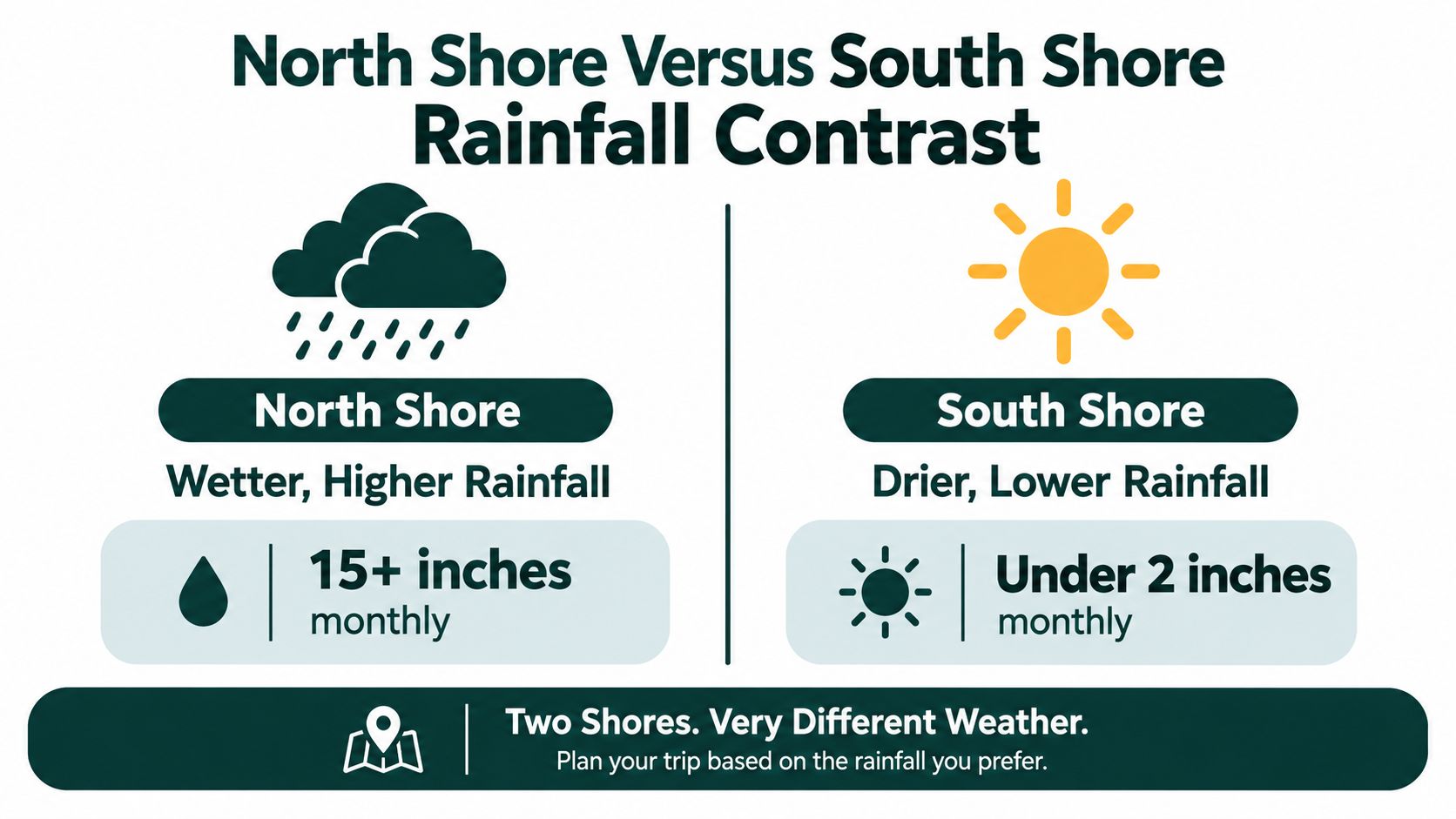
The most important comparison for June planning is the difference between Līhuʻe and Hanalei. Independent weather summaries report approximately 41 mm of June rain in Līhuʻe, with about 16 days showing some rainfall, while a long-term climate table for Hanalei lists approximately 112 mm, with about 15 rainy days. Both locations receive around 8 hours of sunshine per day, so the distinction is not merely "sunny south versus permanently cloudy north." It's a difference in rainfall volume and the way that moisture shapes the terrain.
The Hanalei figure is nearly three times the Līhuʻe figure in the same month. That's why a forecast for “Kauaʻi” can be technically accurate yet practically unhelpful. It may describe rain in Hanalei while Poʻipū remains suitable for a beach afternoon, or show a broadly sunny island while a north shore trail is wet.
What the contrast means for accommodation
| Location | June Rainfall | Average Sunshine Hours |
|---|---|---|
| Līhuʻe | 41 mm | About 8 hours per day |
| Hanalei | 112 mm | About 8 hours per day |
The comparison is drawn from the Kauaʻi climate and weather summary. It shows why sunshine duration alone doesn't settle the question. Hanalei can retain substantial sunshine while still experiencing considerably more rainfall.
For villa selection, the decision becomes a trade-off between scenery and scheduling flexibility. North shore properties place guests close to lush vegetation and dramatic coastal views, but outdoor plans may need more movable pieces. A private chef dinner, boat departure, or long hike should have a weather alternative rather than a fixed assumption.
Poʻipū and Līhuʻe offer a different form of value. Their comparatively drier June conditions make it easier to preserve a beach-focused day or schedule an outdoor meal without relying on a narrow weather window. That doesn't make the south universally better. It makes it better suited to travelers who value predictability.
The east side can serve travelers who want access to multiple directions, but it shouldn't be treated as meteorologically identical to the south. The useful question is not whether the whole island is dry. It's whether your chosen base gives you the right balance of scenery, driving, and weather resilience.
Coastal Zones and Activity Matching Guide
A successful June itinerary matches each activity to the coast where its weather exposure is most manageable. That means choosing the location first, then assigning experiences, rather than booking a villa for its scenery and hoping every excursion works from there.
South shore for protected beach priorities
Poʻipū and the Līhuʻe area are the stronger choices when reliable coastal time is central to the trip. The drier June pattern makes these areas well suited to swimming, snorkeling, sunset drinks, and outdoor lunches, although ocean conditions still require a same-day safety check.
For a premium stay, a private villa's outdoor space can become a functional part of the trip rather than a decorative feature. Breakfast, pool time, and a late afternoon beach visit can remain viable even when wetter parts of the island are receiving showers.
North shore for scenery and flexible scheduling
Hanalei and Princeville offer the lushness many visitors associate with Kauaʻi, but their June planning should remain adaptable. Schedule scenery-led drives and hikes with room to move them, and avoid placing every important outdoor experience on one fixed day.
A north shore base works especially well for travelers who prefer dramatic scenery, quiet mornings, and a slower rhythm over maximum weather certainty. It works less well for guests who want each day tightly choreographed around beach conditions, dining reservations, and private water activities.
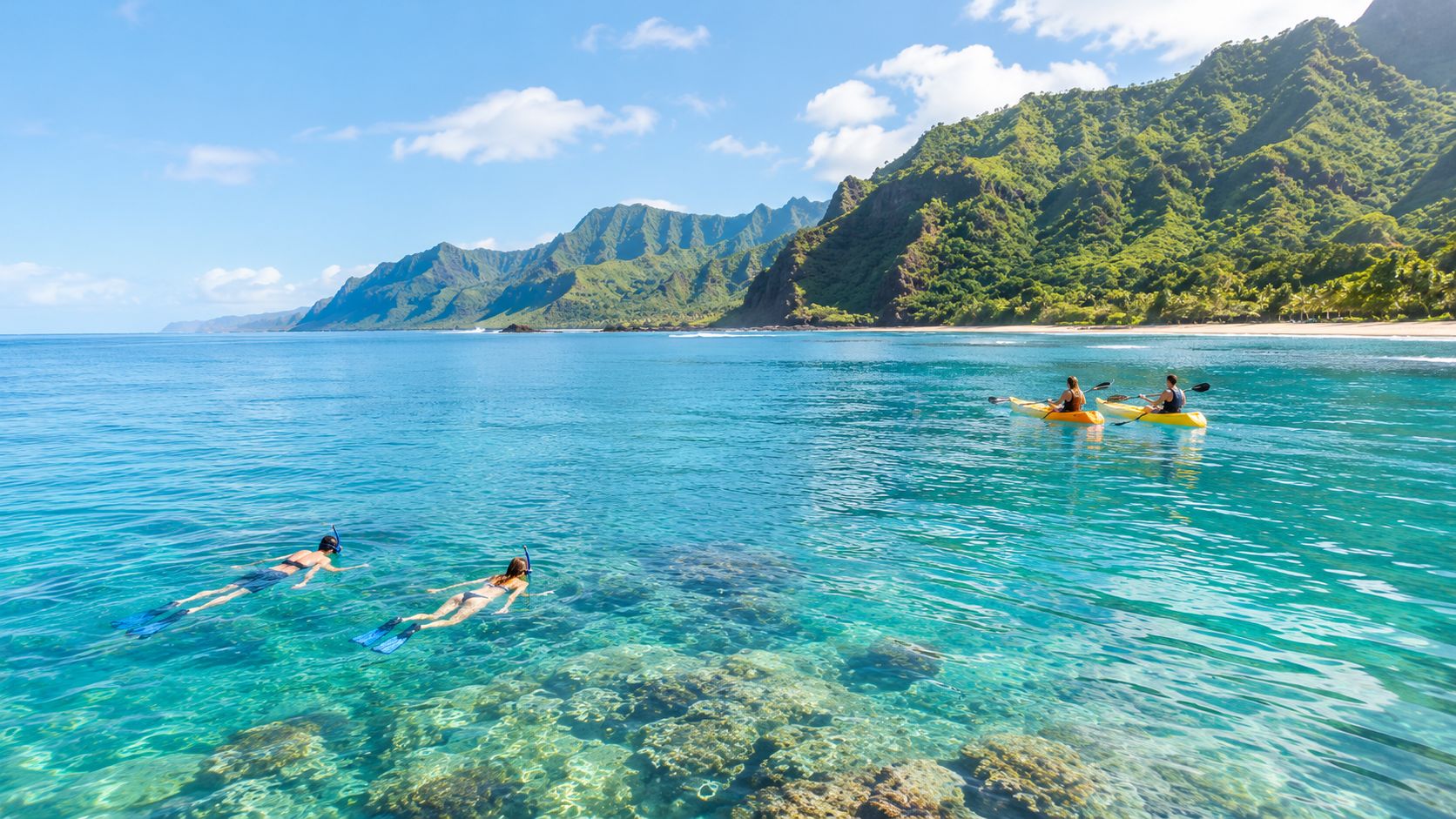
Mountains need a separate forecast
The island's drier coastal pattern doesn't eliminate wet conditions inland. Mountain hikes can be cloudier, wetter, and more slippery than the beach where the day began. Ask a local guide about current trail conditions before committing to a route, especially after recent showers.
The same coast-specific logic helps when comparing other island destinations. Travelers researching unusual volcanic shorelines may also find this guide to black sand beaches around the world useful for broader coastal planning.
For high-end travelers, the best operating model is simple: protect the experiences that need stable conditions, keep scenic drives and hikes movable, and choose accommodation according to the activities you most want to repeat.
Temperatures Sea Conditions and Sunshine Hours
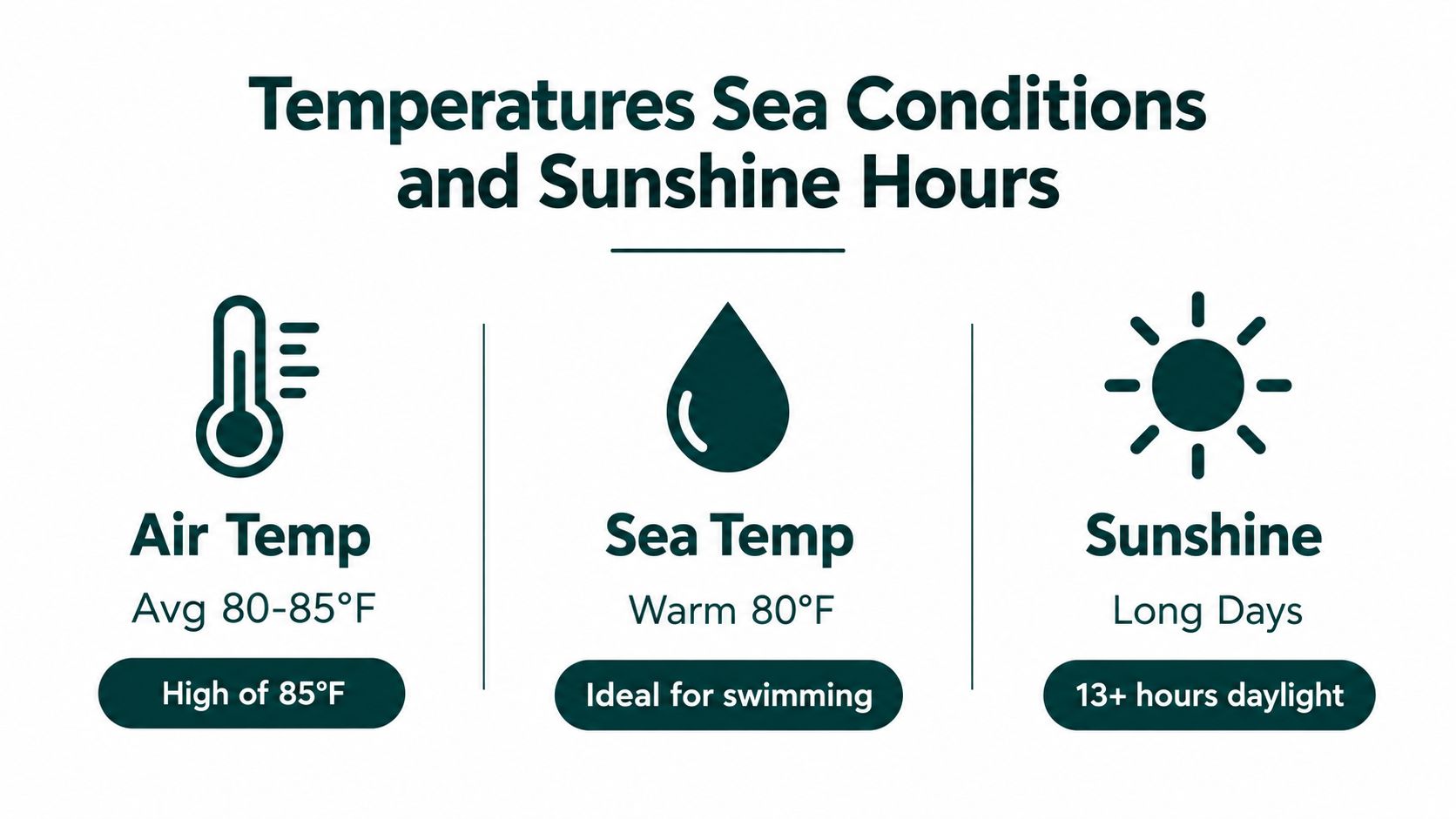
June feels warm without behaving like a tropical heat spike. At Līhuʻe Airport, average June highs reach 83.3°F and average lows fall to 73.4°F, based on NOAA 1991–2020 normals summarized in the climate data cited earlier. The season then warms gradually, moving from the low 80s toward the mid-80s later in summer rather than producing an abrupt jump.
That modest day-to-night range supports a flexible outdoor rhythm. Early mornings can suit scenic drives or hikes, midday favors water-based activities and shaded dining, and evenings remain comfortable for open-air meals with a light layer available.
Sunshine doesn't mean identical skies
Līhuʻe and Hanalei both average roughly 8 hours of sunshine per day in June, yet Hanalei receives much more rain. That pairing is important. Rainfall can be intermittent rather than a full-day washout, and a location can retain generous sunshine while still producing wet roads, damp gardens, or short-lived showers.
Ocean activities generally benefit from the summer pattern, which is associated with calmer conditions outside storms or larger swells. That does not guarantee clear water or safe swimming at every beach. Currents, wind, swell direction, and local beach exposure can change the decision from one coastline to another.
The practical conclusion is that June supports long outdoor days, but not identical outdoor days everywhere. Pack for warmth, plan around coastal exposure, and let local conditions determine whether swimming, snorkeling, or boating is appropriate.
Packing Essentials for Kauai June Conditions
A generic Hawaii packing list misses the central problem. June is warm at the coast, but a north shore villa, mountain trail, or breezy boat can feel materially different from a sheltered afternoon in Poʻipū.
Start with a compact coastal wardrobe:
- Lightweight daytime clothing: Breathable shirts, shorts, dresses, and swimwear suit the warm June pattern.
- A refined evening layer: A linen shirt, wrap, or light overshirt handles cooler evenings, restaurant air conditioning, and trade winds without adding bulk.
- Reliable sun protection: Bring a hat, sunglasses, and reef-conscious sun protection for open beaches and boat days.
- Quick-drying footwear: Sandals work for resort areas, while secure water shoes or trail shoes are more useful when rocks, wet paths, or uneven shoreline access are involved.
Pack for the wet side even if you stay on the dry side
A lightweight rain shell is more useful than a heavy jacket. It protects against passing showers on the north shore and keeps a scenic drive or short walk from becoming uncomfortable without taking much space in a day bag.
For mountain activities, choose traction and moisture management over style alone. Shoes with dependable grip, a small dry bag, and a change of socks can preserve the rest of the day after a wet trail.
Build one flexible day kit
Keep a small pack ready with water, a layer, sun protection, and a dry pouch for electronics. This lets you move between a beach, lookout, and short walk without returning to the villa whenever the weather shifts.
The most efficient luxury packing strategy is not to bring more. It's to bring versatile pieces that work across the island's distinct conditions.
May June and July Compared for Travel Planning
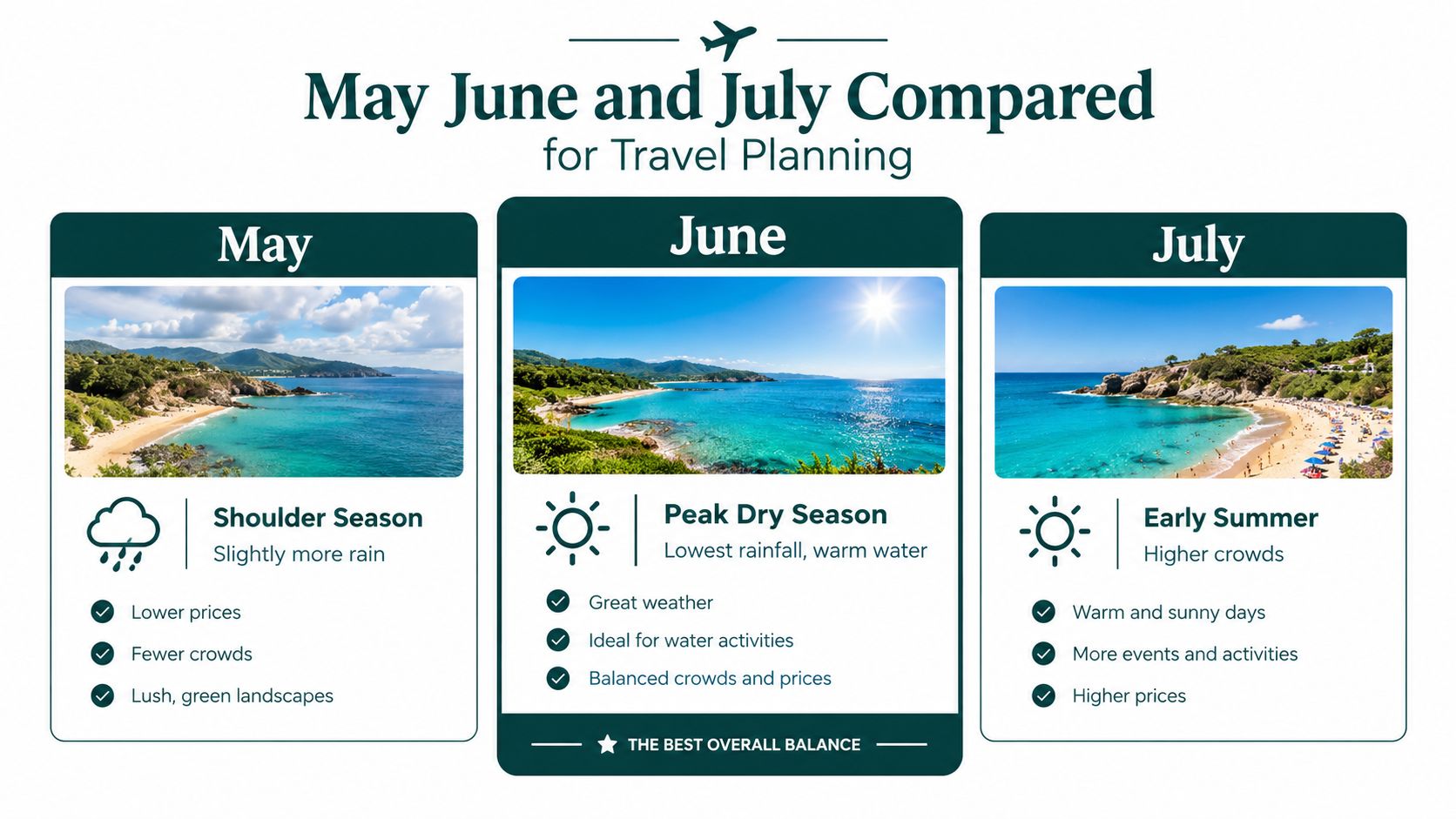
June is best understood as a transition point within Kauaʻi's warmer, sunnier pattern. It offers the clearest combination of low rainfall, warm coastal temperatures, and generally favorable summer ocean conditions, but it also moves travelers closer to the high-demand summer period.
May can appeal to guests who want a softer shoulder-season atmosphere. Its place before the core summer window may support a quieter feel, but travelers shouldn't assume that an earlier date automatically delivers the same rainfall profile as June. If a trip depends on several fixed outdoor experiences, June's statistically dry position is the stronger climate argument.
July extends the summer pattern and can offer similarly attractive conditions for beaches and boating. The trade-off is demand. School-holiday travel can concentrate visitors, raise pressure on popular beaches and restaurants, and reduce the sense of privacy that many luxury travelers are paying to protect.
Choose dates by the experience you're protecting
| Travel priority | Stronger date logic |
|---|---|
| Lowest historical rainfall | June |
| A quieter shoulder-season feel | May may appeal, with more weather flexibility |
| Summer ocean access and extended demand | July, with greater crowd awareness |
| Premium privacy and unhurried service | Consider the shoulder period rather than the busiest summer dates |
This framework is qualitative because the climate sources available here don't establish a complete month-by-month comparison for every criterion. For travelers planning water-based activities across Hawaiʻi, a separate Kona Honu Divers dive timing guide offers useful context on seasonal ocean planning.
June is the compromise month, not an automatic winner. It provides a strong weather foundation, while May may suit guests prioritizing atmosphere and July may suit those prioritizing a full summer schedule. Travelers comparing seasonal luxury itineraries more broadly can also consult this seasonal guide to Northern Spain.
2025 Climate Context and Warmer Trends
June's historical averages remain useful, but they shouldn't be treated as permanent guarantees. Recent climate reporting described Hawaiʻi as experiencing its second-driest year on record, with Kauaʻi among the warmest years since 1990. That context suggests June's dry reputation may now sit within a broader pattern of warmer and, at times, drier conditions.
The practical response isn't to discard the long-term normals. They remain the best baseline for comparing locations and planning a typical June. The response is to avoid overconfidence, especially when arranging expensive, fixed-date experiences such as private boat departures, long hikes, or outdoor celebrations.
Recent conditions can shift the balance between expected and actual weather. A drier year may reduce rain in some places, but it doesn't erase the island's underlying geography. Hanalei and the mountain zones can still behave differently from Līhuʻe and Poʻipū.
Planning principle: Use historical climate data to choose the base, then use current local conditions to finalize each day's activity.
For luxury travelers, that distinction matters because flexibility has real value. A private guide, driver, or concierge who can adjust timing and route can protect the quality of the trip better than a rigid itinerary built around one island-wide forecast.
Is June the Best Month for Luxury Travelers
June is one of the strongest months for weather-sensitive travel to Kauaʻi, but “best” depends on what luxury means to you. If it means reliable beach access, warm days, and a lower likelihood of rain disrupting outdoor plans, June has a compelling case. If it means empty beaches, effortless restaurant access, and the highest possible sense of privacy, the answer is less certain.
Summer demand can increase costs and crowd levels, particularly around popular resort areas and heavily visited beaches. The weather may be excellent while the experience feels less exclusive. That matters for travelers choosing a private villa, premium boat charter, or carefully timed outdoor dinner, because congestion can diminish the value of otherwise excellent conditions.
Where June earns its premium
June works well when the itinerary includes:
- Several coastal days: The island's driest monthly pattern supports a beach-led schedule.
- Water-based experiences: Summer conditions are generally more favorable outside storms or large swells.
- A first-time Kauaʻi visit: The month provides a practical foundation for combining beaches, scenery, and outdoor dining.
- A fixed celebration: Lower historical rainfall can reduce, though not eliminate, weather exposure.
Where another period may win
A shoulder-season visit may suit travelers who value a quieter atmosphere more than the lowest rainfall baseline. It can also provide a better emotional fit for guests who would rather accept occasional weather changes than encounter the concentrated demand of summer.
The most discerning answer is therefore conditional. June is a strong climate choice, but not automatically the strongest luxury-value choice. Book it when weather reliability ranks above absolute seclusion, and consider a shoulder period when privacy and unhurried service matter more than statistical dryness.
June Weather Quick Reference and Planning Summary
June on Kauaʻi rewards precise planning. The island is at its driest point of the annual cycle, but the north shore and mountain areas can still be substantially wetter than the leeward coast. Use the following reference when choosing a base and assigning activities.
| Planning factor | June reference |
|---|---|
| Līhuʻe average high | 83.3°F (28.5°C) |
| Līhuʻe average low | 73.4°F (23.0°C) |
| Līhuʻe monthly precipitation | 1.79 inches |
| Līhuʻe June rainfall summary | 41 mm, with about 16 days showing some rainfall |
| Hanalei June rainfall summary | 112 mm, with about 15 rainy days |
| Sunshine | About 8 hours per day in both Līhuʻe and Hanalei |
| Seasonal position | Start of the warmer, sunnier summer pattern |
| Core weather decision | Choose by coast, not by island-wide average |
The temperature and Līhuʻe precipitation normals come from the climate reference cited earlier, while the Līhuʻe and Hanalei comparison comes from the independent weather summary used above. The numbers describe different locations and should not be blended into one generalized forecast.
For booking decisions, use three rules:
- Choose Poʻipū or Līhuʻe when reliable beach time, outdoor dining, and a drier base matter most.
- Choose Hanalei or Princeville when lush scenery and north shore access outweigh the need for predictable dry conditions.
- Keep mountain hikes and water activities flexible because coastal sunshine doesn't guarantee identical inland or ocean conditions.
Travelers planning by month can also use this June travel guide as a reminder that the same calendar month can produce very different experiences depending on destination, terrain, and itinerary design.
Northern Spain Travel designs fully private, tailor-made luxury journeys across Northern Spain, combining boutique hotels, private guides, drivers, chefs, winemakers, and rare local access. If you value the same careful matching of place, pacing, and experience that makes Kauaʻi planning work, visit Northern Spain Travel to begin a bespoke journey built around your interests.