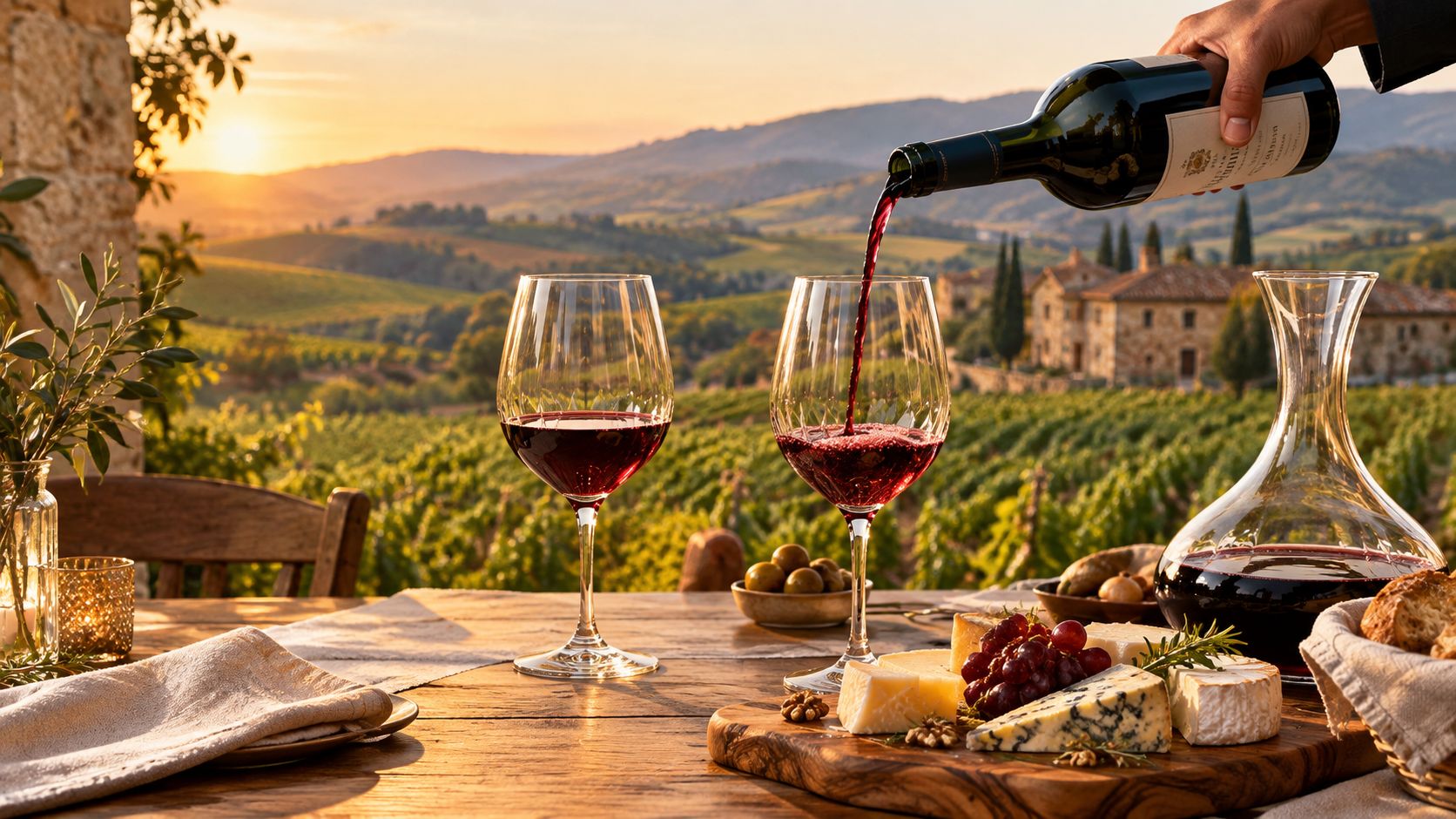
A private barrel room at dusk is the moment many travelers have in mind: the last light slipping through a stone doorway, a winemaker pouring a single vintage, and no group waiting behind you for the next tasting. That quiet isn't something you get by adding more winery stops. You get it by choosing the right region, securing the right access, and leaving enough room in the day for the conversation to unfold.
A well-planned wine country vacation in Northern Spain is less about collecting famous labels than shaping a journey around your pace. Rioja is stately and architectural, Navarra feels experimental and intimate, and Galicia brings wine to the Atlantic table. The best route doesn't try to do everything. It gives each place enough time to feel distinct, with private tastings, good meals, comfortable transfers, and space between the highlights.
Table of Contents
- Designing a Wine Country Vacation Around the Moment You Want
- Three Wine Cultures, Not One Wine Region
- Comparing Rioja, Navarra and Galicia Side by Side
- Choosing the Right Season for a Private Wine Trip
- Two Bespoke Itineraries Built Around Different Travelers
- What Private Cellar Access Actually Means
- Boutique Lodging, Private Drivers and On-the-Ground Support
- Deciding What Kind of Northern Spain Trip You Actually Want
Designing a Wine Country Vacation Around the Moment You Want
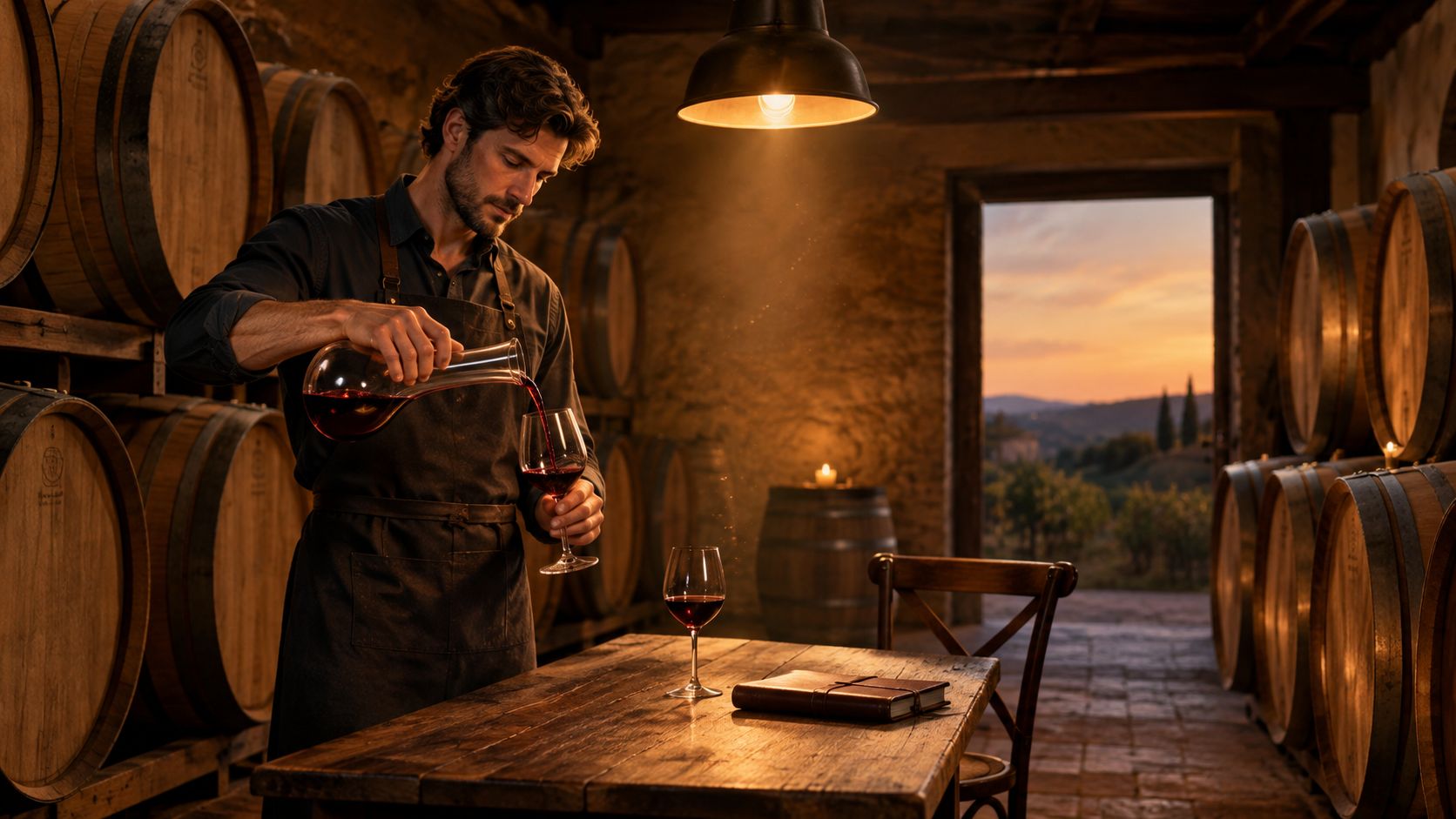
I've planned trips around that barrel-room moment, and the work starts well before anyone enters the cellar. A private visit needs the right producer, a time that suits the estate, and a host who can speak to the wines without turning the appointment into a sales pitch. It also needs a day with enough breathing room that guests arrive curious rather than tired.
Northern Spain works best when you think in rhythms. One region favors long, structured visits among historic cellars and ambitious architecture. Another rewards spontaneous conversations with small producers. Farther west, the coast and seafood shape the day as much as the tasting does. Those differences matter more than a ranking of wineries.
One base for a long stay can be lovely if you want a settled retreat, but it often means spending too much time retracing routes. For travelers who want both cellar depth and a change of scenery, a carefully routed two-region journey usually feels richer. The trade-off is straightforward: moving hotels takes coordination, but it can save long transfers and make each part of the trip feel purposeful.
If you're used to planning around a familiar American wine destination, a Sonoma wine country guide can offer a useful point of comparison for thinking about regional identity and routing. Northern Spain asks for a different approach, though. Here, wine, food, scenery, and local life are tightly connected, so the itinerary should be built around the people traveling, not just the bottles they hope to taste.
The planning rule I use: Build a sequence of private moments, not a checklist of wineries.
Three Wine Cultures, Not One Wine Region
Start by choosing the kind of day you want. Do you picture a formal visit through a historic cellar, a candid conversation with a small family producer, or a long lunch where the wine belongs beside seafood and sea air? Northern Spain offers all three, but not in the same place or at the same pace.
Rioja is the choice for travelers drawn to legacy, oak-aged reds, and dramatic winery settings. Its strongest visits have a sense of ceremony: an estate tour, a cellar walk, and a tasting that explains how aging shapes the wine. The architecture can be striking, but don't let a photogenic building stand in for a worthwhile visit. Ask who will host you and what you'll taste.
Navarra suits people who like to explore beyond a single established style. The region's Garnacha, rosado, and international varieties sit within a more experimental setting, where smaller producers and family estates can make the visit feel personal. Expect a less formal experience than in the grandest Rioja cellars. That intimacy is the point, not a compromise.
Galicia, including the Txakoli zones, belongs to a different mood: Atlantic weather, white wines, seafood, fishing villages, and vineyards that can feel more connected to the coast than to a grand cellar tradition. Here, a memorable wine day might begin with a vineyard visit and end over a generous meal. The wine isn't a separate attraction; it's part of the local table.
| Dimension | Rioja | Navarra | Galicia / Txakoli |
|---|---|---|---|
| Character | Historic estates, cellar depth, and architectural ambition | Small producers, experimentation, and family-run settings | Atlantic landscapes, coastal culture, and food-led visits |
| Wine focus | Tempranillo-led reds and oak influence | Garnacha, rosado, and varied blends | Whites, including Albariño and Txakoli, alongside regional reds |
| Best conversation | Aging, estate history, and cellar craft | Farming choices, grape variety, and producer perspective | Seafood, landscape, and how the coast shapes the glass |
| Trip rhythm | Structured visits and leisurely meals | Flexible, intimate tastings | Scenic drives and long lunches |
| Pairing style | Regional cuisine and mature reds | Local cooking and versatile wines | Seafood and fresh, lively wines |
That's the useful distinction: choosing a region means choosing a cuisine, a pace, and a kind of conversation with the winemaker. If you're assembling a picnic or a thoughtful aperitif between visits, browse Azouro Azo5 olives for a taste of Portugal's olive tradition. Keep the regional focus clear, though. Rioja, Navarra, and Galicia each deserve their own place at the table.
Comparing Rioja, Navarra and Galicia Side by Side
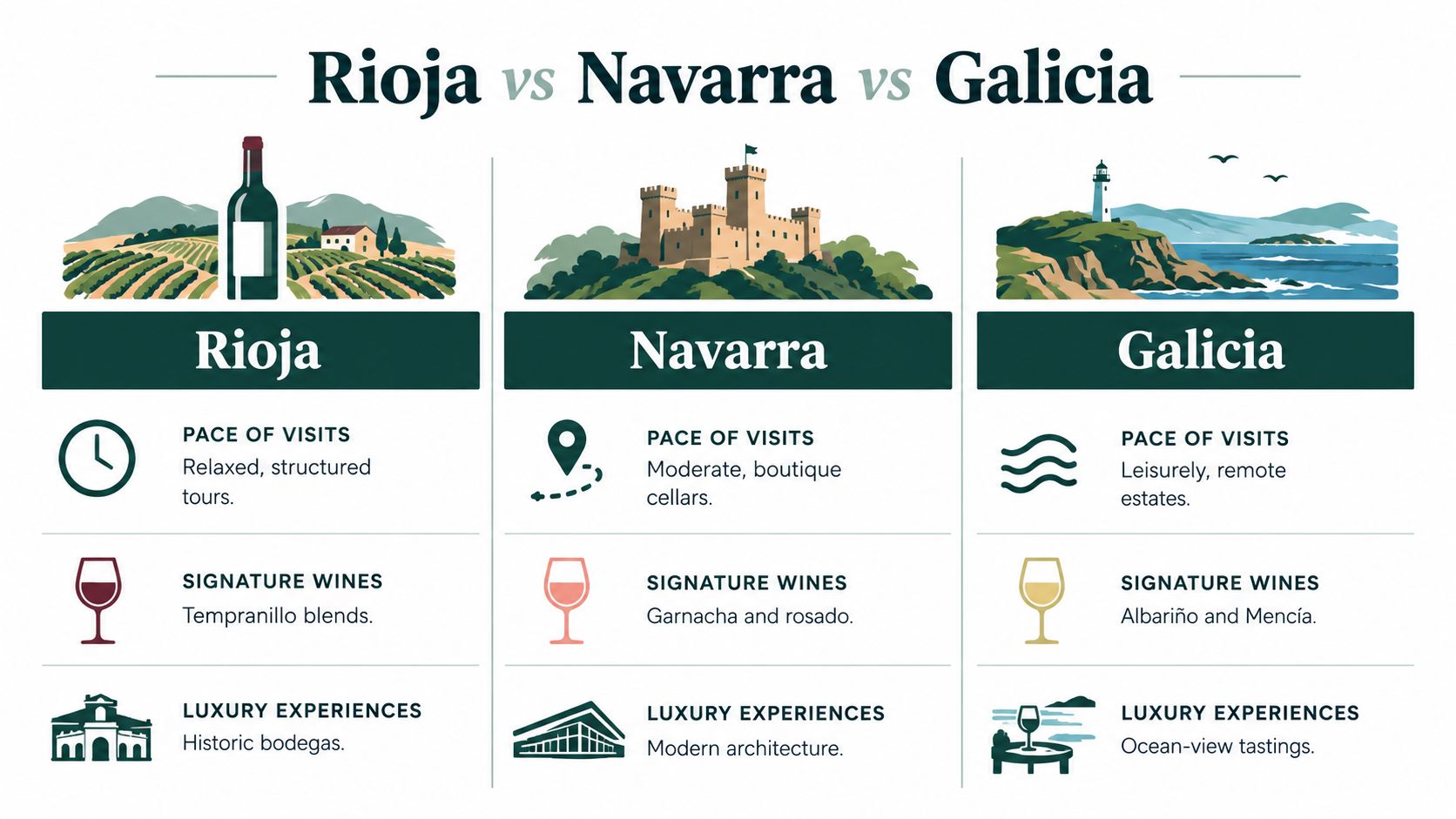
The practical question isn't which region is “best.” It's which one matches the trip you want to have. Rioja is the strongest choice when the cellar itself is the attraction. Navarra is better for a traveler who values access to small producers and doesn't need every visit to feel polished or monumental. Galicia works especially well when food and sight should lead, with wine woven into a coastal journey.
| Decision point | Rioja | Navarra | Galicia / Txakoli |
|---|---|---|---|
| Pace of visits | Relaxed and structured, with time for cellar tours | Moderate and boutique, often more conversational | Leisurely, shaped by coastal distances and long meals |
| Signature tasting | Tempranillo-led blends and oak-aged wines | Garnacha, rosado, and less conventional blends | Albariño and Txakoli, with Mencía in some itineraries |
| Food pairing | Regional cooking alongside mature reds | Varied local cuisine and adaptable wines | Seafood, market produce, and fresh whites |
| Lodging style | Character hotels and design-minded estates | Rural houses and intimate boutique stays | Coastal hotels and village properties |
| Access | Historic bodegas and established private programs | Family-run cellars and small estates | Smaller producers and scenic, food-centered visits |
| Best suited to | Cellar enthusiasts and architecture-minded travelers | Curious tasters who value personal contact | Food lovers and travelers drawn to the Atlantic |
Rioja has the deepest concentration of cellar architecture and established estates, but it can feel busier, particularly when visitors all want the same famous addresses. Don't book a landmark winery just because its name is familiar. Choose it because the visit format fits your interests, then balance it with a smaller producer or a vineyard-focused outing.
Navarra rewards flexibility. A private guide can help you move between producers without turning the day into a sequence of formal presentations. This is the place to ask direct questions about grape choices, farming, and how a winemaker wants you to understand the wines.
Galicia's advantage is its pairing logic. A tasting makes more sense when it sits beside the meal, the coast, or a village visit. The wines may be lighter in style than a long Rioja cellar session, so I'd use Galicia as a distinct coastal chapter rather than stretch it into a week of winery appointments.
For a high-value destination experience, the wider context matters too. A peer-reviewed study of German wine regions estimated wine tourism's impact at approximately €5.0 billion, with about 43 million unique winery visits annually; wine tourists accounted for around 13% of visitor days but roughly 19% of tourism's total economic impact (study of wine tourism in German wine regions). The lesson for itinerary design is simple: a winery visit can support a whole day of local spending, so build in restaurants, lodging, and transport rather than treating the tasting as the entire trip.
Choosing the Right Season for a Private Wine Trip
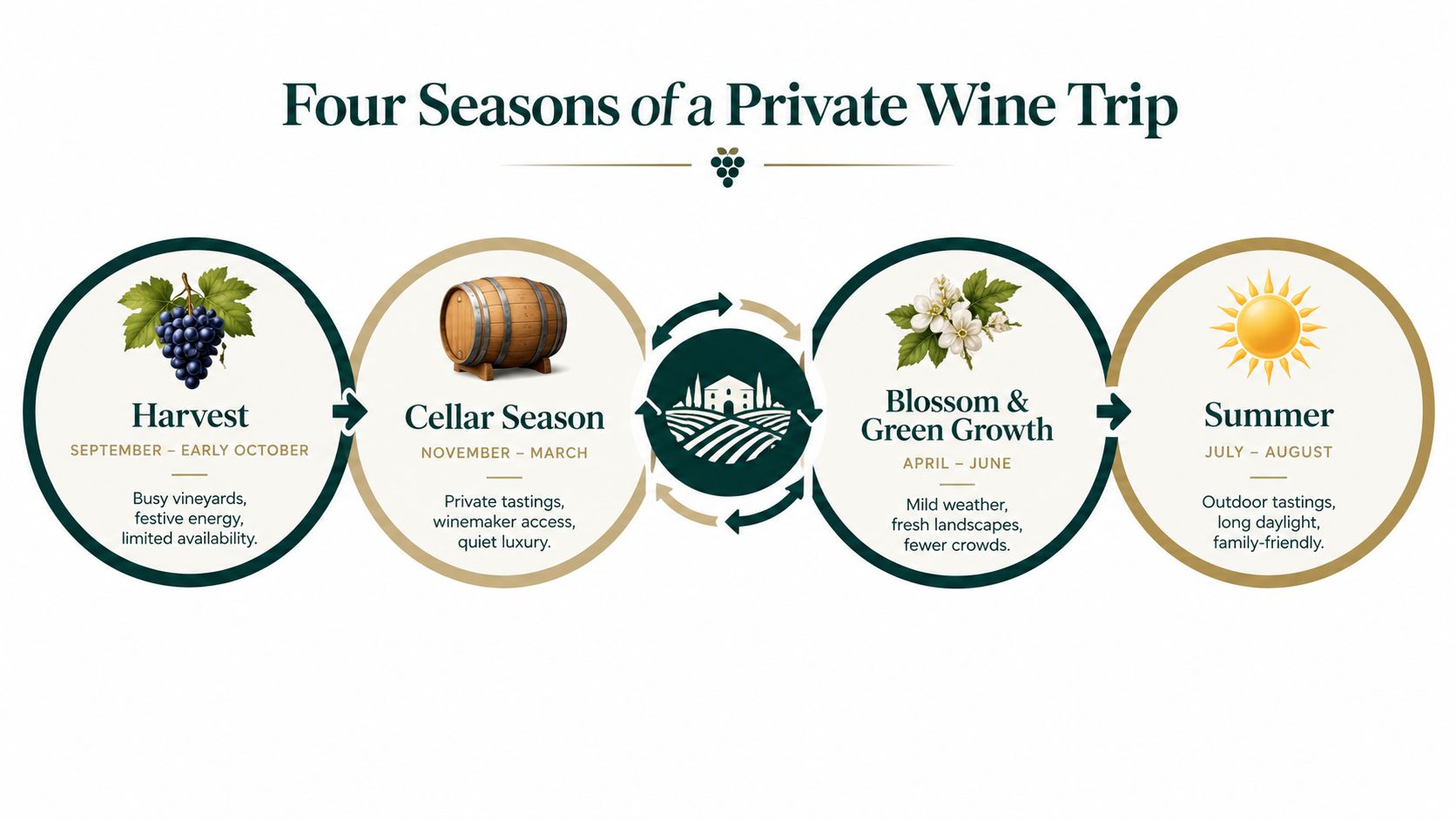
There's no universally perfect month. The right season depends on whether you want harvest energy, quiet cellar conversations, fresh green fields, or long outdoor days. Choose the mood first, then check availability and local events before fixing the route.
Harvest for energy and participation
Harvest, from September into early October, brings activity to the vineyards and a lively feeling to wine towns. It's the right window if you want to see production in motion or arrange a hands-on harvest experience. It's also the period that demands the most advance coordination. Winery teams are busy, rooms can be harder to secure, and a private visit needs to fit the estate's working schedule.
Cellar season for serious tastings
From November through March, the vineyards are quieter and the trip can feel more contemplative. Choose this window if you want to spend time with the wines, talk through vintages, and take unhurried lunches without chasing an event calendar. Some properties and restaurants may have reduced availability, so a local planner should confirm what's open before you build the route.
Spring for landscape and gentle pacing
April through June suits travelers who want green hills, comfortable touring, and a softer schedule. It works particularly well for multigenerational groups, since a vineyard walk or village stop can balance a tasting without demanding a full day of wine-focused activity.
Summer for outdoor days
July and August bring long daylight and opportunities for open-air meals, but the coast can be popular and inland heat may shape the best hours for driving and walking. San Fermín in Pamplona draws major attention in July, so don't assume Navarra will be quiet. Check event dates and hotel availability before locking in a route. The seasonal luxury guide to the best time to visit Northern Spain can help you weigh regional weather and seasonal priorities.
A harvest visit may be memorable, but it isn't automatically better than a quiet cellar tasting. Choose the season that suits your energy and appetite for activity, then let the itinerary follow.
Here's a short visual introduction to the region's wine-travel atmosphere before you settle on dates.
Two Bespoke Itineraries Built Around Different Travelers
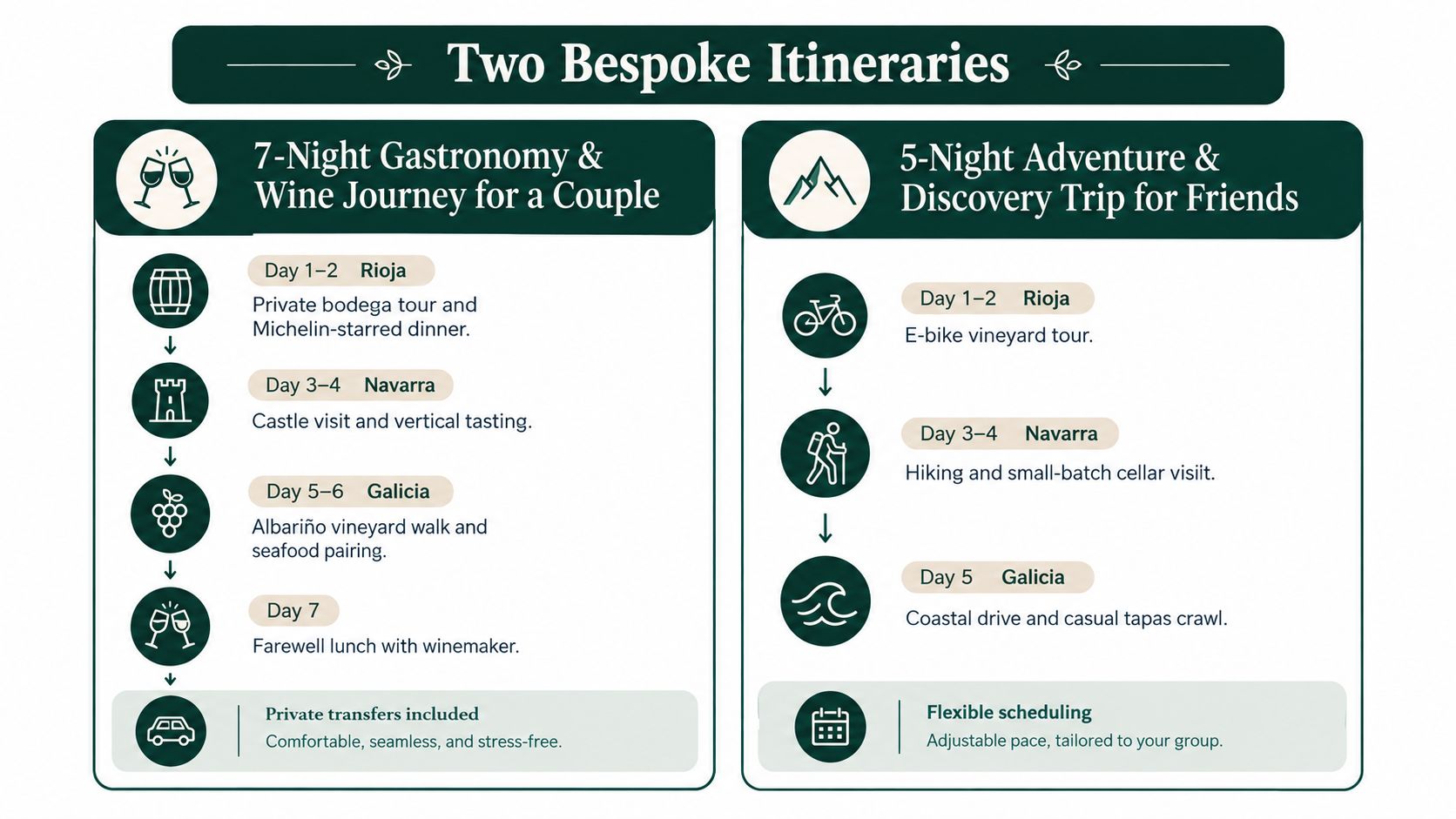
Two travelers can visit the same wineries and come home with entirely different trips. A couple who wants long lunches and serious cellar time needs a different route from a family balancing grandparents' comfort with teenagers' curiosity. The itinerary should follow the group, not force everyone into the same tasting schedule.
A slow journey for a couple
For a couple focused on gastronomy and wine, I'd build a routed journey with two contrasting bases. Begin in Rioja Alta, where a boutique hotel gives you a comfortable home for private cellar visits, scenic drives, and an evening meal chosen around the region's wines. Plan one substantial winery appointment per day, not a relay of tastings. If Bilbao is part of the wider trip, reserve a separate day for its museums and restaurants rather than squeezing it between cellar visits.
Move next to Navarra and stay in a characterful rural property. The pace can ease further: a family-run bodega, a village stop, and a chef-led dinner make a satisfying day without overloading it. If the couple wants a coastal contrast, finish with a Txakoli day in Getaria, where lunch and the sea should carry as much weight as the tasting.
A flexible trip for a multigenerational family
For a family, keep the number of hotel changes low and use a private driver throughout. Start with Rioja as the base for accessible cellar visits, an architectural stop, and activities that give teenagers more to do than listen to a technical lecture. A vineyard walk, a hands-on food experience, or a short scenic outing can make the wine culture tangible for everyone.
Then choose whether Navarra or Galicia better suits the family's interests. Navarra offers a countryside rhythm and room for outdoor activities; Galicia makes sense if the group is eager for seafood, coastal villages, and dramatic Atlantic scenery. Grandparents may appreciate a shorter touring day and a hotel with easy access, while younger travelers can take a more active outing with a guide.
For both trips, the essential decision is not how many regions you can fit in. It's how much energy the group wants to spend moving between them. A private driver allows the day to flex around a late lunch, a longer conversation, or a change in weather without putting anyone behind the wheel after tasting.
The finest family itinerary has different ways for each generation to enjoy the same day.
What Private Cellar Access Actually Means
“Private cellar access” can describe anything from a quiet room to a rare appointment. Ask exactly what the winery is offering. A polished description isn't enough; the host, setting, and wines determine whether the experience is personal or a standard tasting with the door closed.
Know the difference between the tiers
At the entry level, a hosted tasting takes place in a public cellar or tasting room, with a guide presenting a set flight. It can be enjoyable, but it isn't necessarily private in the meaningful sense.
A more substantial experience is a guided tasting in a working cellar with a winemaker or estate representative. You can discuss the wines in context, compare aging choices, and ask questions without being hurried through a group format.
The deepest access might include barrel samples, older vintages, a vineyard walk with the person responsible for the vines, or a blending session. These are not standard inclusions, and they depend on the producer's schedule and willingness to host.
Ask for specifics before booking
Use a local destination management company or specialist planner to make the request, especially for small estates. Reach out well in advance for sought-after wineries, and get the details in writing: who will host, where the tasting takes place, which wines are included, whether food is served, and how long to allow. The Northern Spain wine tasting tips offer useful preparation for making the most of the conversation.
A strong visit engages more than taste. A peer-reviewed analysis of wine-hotel reviews found recurring themes that included wine, scenery, staff, accommodation, food, service, and comfort; another study found that visitors' sensory responses differ by region (research on sensory experiences in wine tourism). That's why I favor a progression: observe the scenery, notice the cellar atmosphere, compare aromas, taste with food, and leave time for conversation.
Don't schedule several intensive tastings back to back. The second visit should feel different from the first, and lunch or a walk can reset the day. The value lies in attention, access, and context, not in the number of bottles poured.
Boutique Lodging, Private Drivers and On-the-Ground Support
A good hotel and a reliable driver don't merely make the trip more comfortable. They determine whether the whole itinerary holds together when a visit runs late, the weather changes, or someone in the group needs a quieter day. Treat lodging, transport, and local support as one operating plan.
Choose a property for its character and location, not only its spa. A converted convent, a family-run casa rural, or a design-led hotel among vineyards can make the evenings feel rooted in the region. But charm shouldn't come at the expense of practical needs. Confirm room access, dining arrangements, and transfer times before you commit.
Use a private driver on tasting days, and consider keeping the same driver for the full route. Continuity matters: the driver learns the group's pace, knows where a scenic pause makes sense, and can adjust when lunch stretches or a cellar appointment changes. For families, confirm child-seat needs, luggage capacity, and accessible room requirements in advance.
The final piece is a local contact who can act quickly. That person coordinates restaurant changes, checks whether a producer can host, and offers a workable alternative when weather makes the original plan less appealing. Travelers who want to understand how aviation arrangements can connect with local destination management can read about private jet and DMC integration. For Northern Spain, the same principle applies on the ground: one point of coordination should understand the full journey, not just the next transfer.
Northern Spain Travel designs private journeys across the region, including wine-focused itineraries, and coordinates local guides, drivers, hotels, and experiences. Its transportation coordination guide for luxury travel in Northern Spain explains why transport deserves the same attention as winery selection.
Deciding What Kind of Northern Spain Trip You Actually Want
Before you book, answer four questions. Is the trip's center of gravity wine, food, family, or scenery? Does a restorative pace mean one anchor visit a day, or are you happy with a more active route? How adventurous do you want your meals to be? And would you rather unpack once or change bases to experience distinct wine cultures?
Choose Rioja when historic cellars and deep wine context matter most. Choose Navarra for a more intimate, exploratory trip. Let Galicia lead when coastal scenery and seafood are central. Pair regions only when the travel time supports the experience, not because a map makes the route look tempting.
Before confirming, check cellar availability, arrange a private driver for tasting days, name a local contact for changes, and leave a buffer after the most intensive visits. A memorable trip isn't the one with the longest list of famous wineries. It's the one that gives your preferred rhythm room to breathe.
If you're ready to shape a wine country vacation around the people traveling, Northern Spain Travel designs private, tailor-made journeys through Rioja, Navarra, Galicia, and the wider north. Visit Northern Spain Travel to discuss your preferred pace, food interests, and cellar access.