
News · Autumn 2026

How Northern Spain Travel Designs a Journey: A Conversation with Oliver Blázquez

Walking path along the coast of Northern Spain

How Northern Spain Travel Designs a Journey: A Conversation with Oliver Blázquez

Who: Oliver Blázquez, CEO · About: A twenty-day journey in design · For: Summer 2027


How a slow walking journey is built, from the first call to the empty days.
In short. Northern Spain Travel designs slow walking journeys through Northern Spain around three rules: at least three nights in each hub, a pace set before any itinerary, and a skeleton first with the decisions in a second stage. Oliver Blázquez, CEO, explains how it works, using a twenty-day journey in design for an Australian couple, for summer 2027. Northern Spain Travel is a family business based in Pamplona, recognized in Travel + Leisure’s World’s Best and Condé Nast Traveller rankings.
Oliver Blázquez, CEO of Northern Spain Travel

How does Northern Spain Travel start a journey?

It always starts with a conversation. The first call is a video call of about forty minutes. I ask how long you have, which areas you want and what a good day looks like. I ask what surprised you on past trips. There is no itinerary yet. Many of our Australian travelers come with a long window, at least twenty days. So the first thing we work out together is which areas they want and what rhythm they want to travel at.

What do you settle first?

The pace. It is not the same to come for seven or ten days as to stay for twenty or twenty-five. The rhythm we have to build into the journey changes completely, and it is one of the first things we talk about.

How many nights should each hub have?

My rule is at least three nights in each hub. A hub is a base: you unpack and explore the region from there. In seven days we can see two hubs without any problem. That is three different hotels, five days of experiences and two of rest, a stronger journey. Twenty days let us design a more relaxed one, with more quiet days to enjoy, as long as the client wants it that way.

What do you build first, and how long does it take?

A skeleton. It shows where each night is spent, which walk starts from each hub and which days need a transfer. It is incomplete on purpose. Then comes a second stage, where we add the details and the important decisions, before presenting anything for the first time. For a long journey, a first version takes about ten days. In the second stage we get as close as we can, both to the client’s budget and to the idea and concept they have. Always with our recommendations and our people, our local heroes.

What is the Hollywood curve?

It is how we structure what the traveler feels, and how we place the strongest experiences along the rhythm of the journey. It is also known as the dramatic curve, or the curve of emotional arcs. It is the hidden map film-makers use to pace what a viewer feels over a film. It starts with recovery. When you arrive from a long flight, you want a good base that gives you time to recover. Once the jet lag is gone and you are more settled, you are ready to enjoy the peak moments at one hundred percent. So we open with the deep cultural days: the last family of fishermen in a village, a cliff read with a geologist, restaurants that exist nowhere else, time with chefs and winemakers. These are days of growth, of discovery.
Hands of a local artisan at work in Northern Spain
After a few days like that we look for a balance again, a moment to relax and enjoy where you are. Not only the people, but the places and the landscapes.

What changes in the second climb?

The second rise works differently. What we manage to do is bring together everything they have seen so far: the experiences, the people who represent the place, the landscapes. They can understand all of it completely.

The first climb is discovery. The second comes with knowledge. They already know where they are and they know the surroundings. So everything in these last experiences they enjoy completely, because they see it from a place of knowing, not only of discovering. They arrive with what they learned and lived in that first stretch.

There are a few experiences through local heroes and large meals that surprise without overdoing it. Then we end quietly, a small calm stretch before going home.

Can you give a recent example?

An Australian couple wrote to us from Sydney. They wanted to walk stretches of the Camino del Norte and the Picos de Europa, eat slowly and sleep in places with character. For the three ways we travel, see Our Process.

They wrote that they wanted to create hubs from which to explore, and they said: “We like the freedom to decide on a good weather day to explore beaches and coastal villages from a hub and on a rainy day to go to a bigger town and visit some cultural landmarks or a cheesemaker or something like that.” — an Australian traveler
They also wrote: “local producers and farm to plate or other slow travel food experiences coupled with walks/hikes is our thing.” That one sentence tells you most of what to build.

What changed after the first call?

They arrived with a plan of five bases of four nights each, walking out and back along the Camino from every base. We suggested always walking forwards, so the journey keeps moving and no stretch repeats. They agreed. The five bases became four hubs, one for each region: Bizkaia, Cantabria, Asturias and Galicia. They chose to start in San Sebastián on their own.
In the end, we adapt completely to our client.

What if one of the two cannot do a walk?

We design a second route for the same day. One of them does not like heights. So on the day one walks the Cares Gorge in the Picos de Europa, the other has a quiet day in the village of Bulnes, on flat paths with no edges, and they meet again for dinner. On the other days we check each stretch for edges before they walk it.

The couple also said private guides were a low priority. So the visits are self-guided, with a prepared route, a GPS track and pick-up markers that let any stage be shortened.

What makes a journey a wellness trip?

Everything to do with our journeys is wellness. You are in places away from the crowds, quiet places, places with clean air. The food is kilometer zero. The products and the meals are very healthy.

Quiet beach on the coast of Northern Spain

It is the combination of physical activity, which creates those endorphins and that sense of well-being, and then rest and a great meal. That combination is what makes these journeys so unique. In this itinerary, a morning of walking is followed by a long lunch, and a long day on the coast by a pool and a spa. Three days have nothing planned at all.
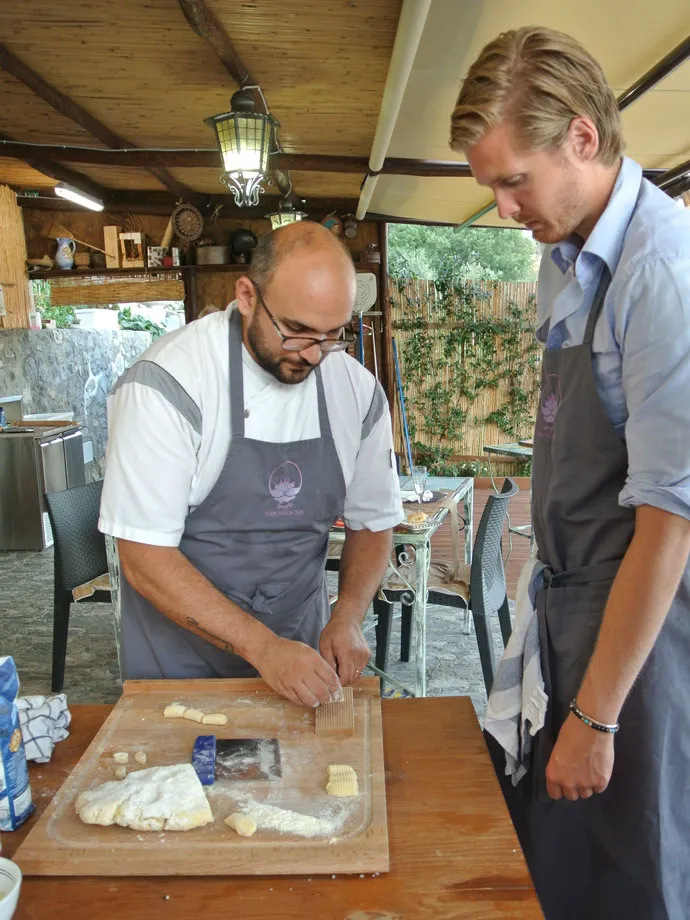
Who are the local heroes, and why do they open doors?

A local hero at work in Northern Spain

In Getaria, the couple will spend a morning with Manuela and Claudio, mother and son, the last traditional fishing family of the village. In Zumaia, Naiara, a Basque geologist, will read the coastal cliff with them. In Bulnes, Pilar, who works the funicular, will welcome them into a house her family restored. In the Cabrales valleys, a cheesemaker will open a cave where the wheels cure inside the mountain. In Cudillero, Ángeles, a fisherman’s daughter who once ran her own cannery, will walk them through the village.

They already work with us. We know they open doors, because they have done it for our other clients. They are people we trust completely. They represent the territory, with big projects and their own work apart from this.

The relationship we have with them is one of friendship above all. That is why we have their trust. Our travelers get to be with people who open up their stories, their hearts and themselves. That is what makes being with them so important.
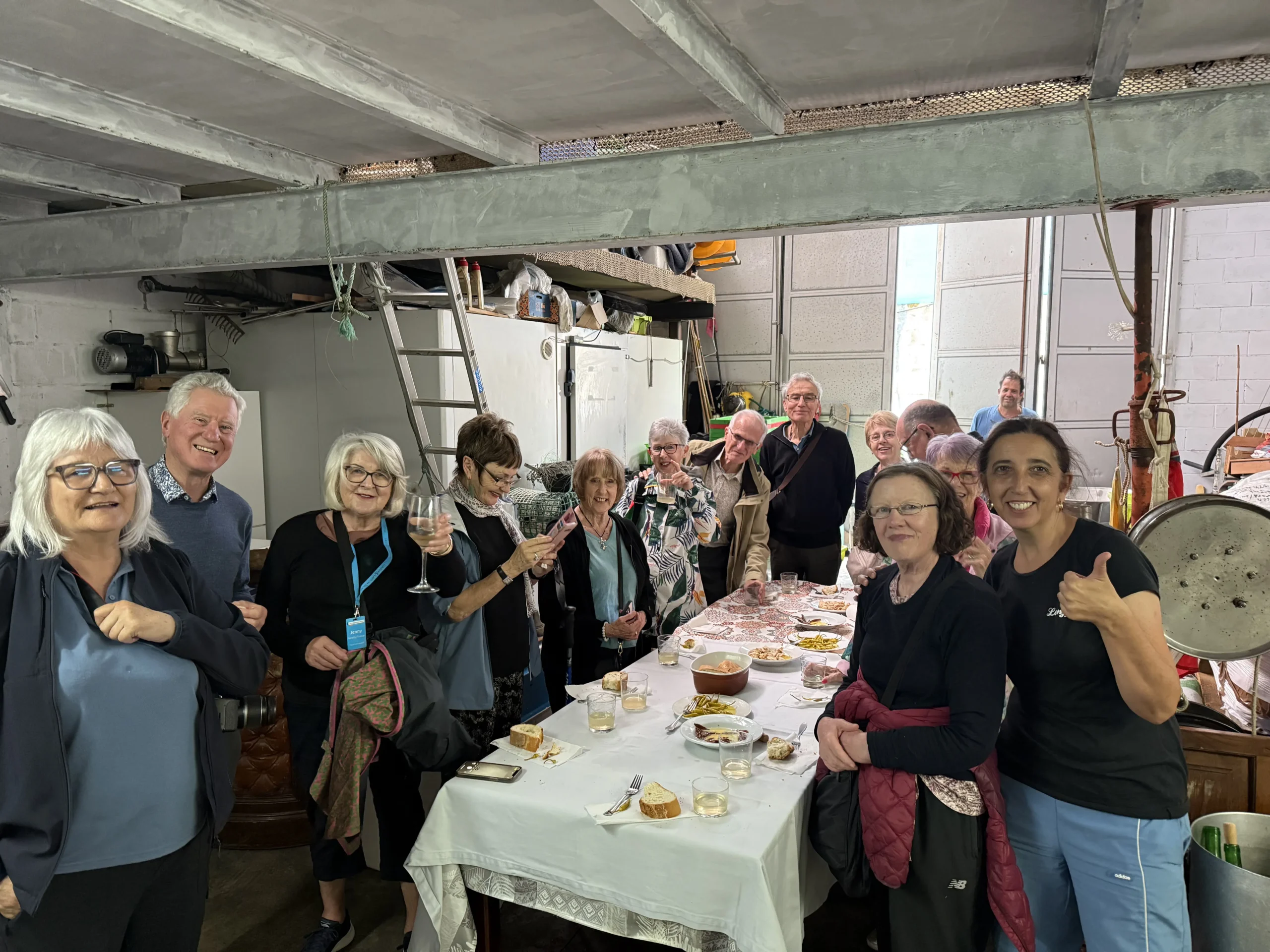
What does the traveler have to manage?

Nothing. One person from our team is assigned to the couple, with a 24-hour line from the first day to the last. Tracks, transfers, tables and tickets are ours to arrange.

How does the budget work?

I ask for it at the start, because it sets the level of the stays and the experiences. Each version of the itinerary gets closer to it. This couple was clear about where they wanted the money to go: places to sleep, landscape and villages, rather than private guides. So the budget moves there.

Why is no journey the same as the last?

Because we adapt completely to the client. The pace, the number of hubs, the empty days and the people all change with who is traveling. The first step is always a conversation, and everything else is built around the person who is listening.
Start the conversation

Journeys we have loved making

Written by Oliver Blázquez, CEO of Northern Spain Travel.

So, ready to start?

Every group is different, with its own dynamics and rhythm.
We begin by understanding group size, interests and travel goals then design a journey that
feels seamless, social and deeply personal.

Follow us on Social

Share