Most advice about a private travel designer gets the emphasis wrong. It treats the job like a shortcut to nicer hotels or harder-to-get restaurant tables, when the underlying value is much more practical: a good designer removes friction, protects the schedule, and keeps a trip working when conditions change.
In Northern Spain, that difference matters. The region rewards travelers who want depth, but it also punishes sloppy planning, tight transfers, and generic pacing. If you want Rioja, the Basque Country, the Atlantic coast, and mountain scenery to feel effortless, you need someone who can design the trip as a system, not a shopping list.
Table of Contents
- What Is a Private Travel Designer
- Why Luxury Travelers Choose Bespoke Planning
- Private Designers Versus Traditional Operators
- Relief Over Access: What Personalized Itineraries Actually Deliver
- Applying Bespoke Design to Northern Spain
- How to Choose the Right Travel Designer
- Examples of Bespoke Northern Spain Itineraries
- Is a Private Travel Designer Worth It
What Is a Private Travel Designer
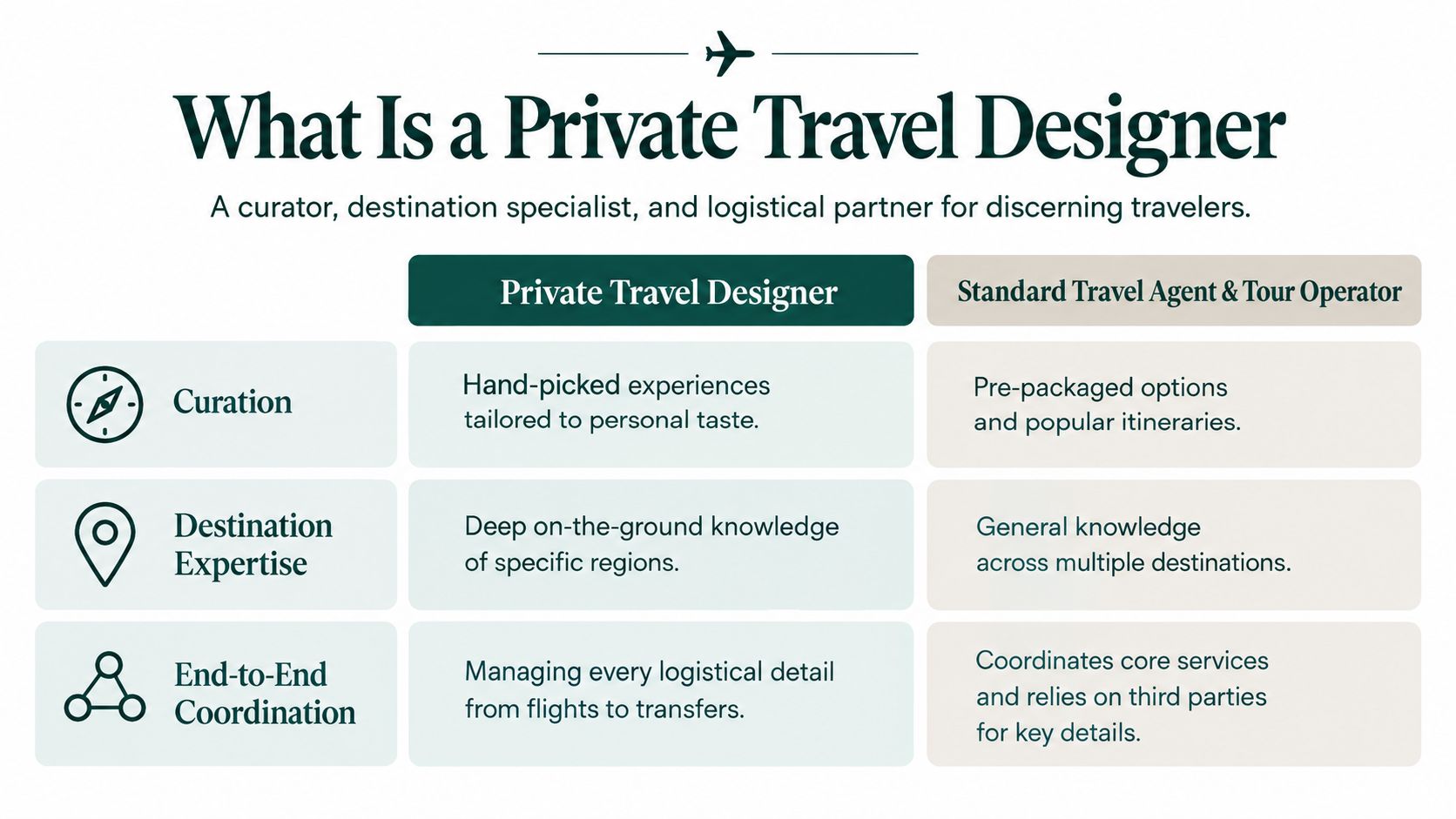
A private travel designer is not just a booking desk with nicer branding. The role combines curation, destination expertise, and logistics management into one service, so the itinerary reflects the traveler's pace, tastes, and priorities instead of a preset package.
A standard travel agent usually works from existing inventory and common supplier relationships. A tour operator may package a route efficiently, but efficiency is not the same thing as precision. A private designer starts with the client, then builds outward, deciding which experiences belong, which ones do not, and how each part of the trip should connect.
What the role actually covers
The best designers do four things well. They match the trip to the client's interests, they know which suppliers are reliable in a specific region, they coordinate moving parts without exposing the traveler to unnecessary complexity, and they adapt when reality interrupts the plan.
That matters because luxury travelers aren't buying transportation and accommodation anymore, they're buying a controlled experience. In Northern Spain, that might mean shaping a route around gastronomy, wine, culture, nature, or private events, then making sure the pace stays comfortable from arrival to departure.
Practical rule: if the person selling the trip can't explain how they handle delays, closures, or last-minute changes, they're not designing, they're just reserving.
For readers who want a tailor-made approach, Northern Spain Travel's tailor-made vacations show the difference between generic trip assembly and true bespoke planning. The point is simple, a designer should reduce decision fatigue before the trip starts and operational friction while the trip is underway.
Why Luxury Travelers Choose Bespoke Planning
A family arrives with three generations, two conflicting schedules, and a short list of things they refuse to compromise on. One wants fine dining, another wants quiet time, and everyone wants the trip to run without wasted transfers, awkward waits, or last-minute stress. Bespoke planning earns its keep by removing that friction before it appears.
The market has already moved. McKinsey reports that travelers with net worth between $100,000 and $1 million now account for 35% of the luxury-travel market, and 80% of luxury leisure spending comes from travelers under 60. Luxury demand is broader, more active, and more selective than the old stereotype suggests. McKinsey's analysis of today's luxury traveler
Personalization solves real trip problems
Marriott's 2025 Intentional Traveler research found that 93% of surveyed high-net-worth travelers deemed individualized experiences essential, up from 83% the prior year. That shows how strongly luxury travelers now expect a trip to reflect their preferences, not a preset formula. Marriott's 2025 Intentional Traveler research
Clients are not paying extra just to stay somewhere expensive. They want a trip shaped around how they travel, who they travel with, and what they are willing to leave out so the right parts work properly.
A private travel designer earns that fee by translating priorities into operations. One client needs cellar visits and unhurried dinners. Another needs room for family changes without disrupting the whole route. Another wants coast, food, and light activity without burning time in transit. The designer turns those needs into a plan that holds together under pressure.
That is why the strongest luxury itineraries feel calm rather than crowded. Fewer decisions, better timing, cleaner logistics, and a trip that fits the traveler instead of forcing the traveler to fit the trip.
Private Designers Versus Traditional Operators
Visa's 2025 affluent-tourism research makes the current expectation unmistakable, affluent travelers now associate luxury with specialist judgment, convenience, data-driven insight, authenticity, and emerging destinations. In other words, the premium is no longer just on price or stars on a wall, it's on whether the trip feels intelligently run. Visa's 2025 affluent-tourism research
A traditional operator can book the room and the transfer. A private designer goes further and builds a dependable operating layer around the whole journey. That includes a verified supplier database, a clear sense of what each provider can deliver, and backup options for the moments when the first choice breaks down.
What the orchestration layer does
The best operators of bespoke travel think in terms of failure points. They check cancellation terms, language capability, accessibility, seasonal constraints, and escalation contacts before the client ever arrives. They also leave room for a backup driver, an alternate restaurant, or a weather-safe substitute, because private travel has little tolerance for public embarrassment.
That's where the difference shows up most clearly. A standard booking can look good on paper and still fail the moment a road closes, a restaurant shifts service, or the weather changes a hike into a liability. A private designer has already planned for those possibilities.
A luxury trip should feel smooth because someone already solved the ugly parts.
If you're comparing options, the question isn't whether the itinerary includes nice things. The question is whether the person behind it can protect the experience when the day changes. For readers evaluating support models, destination management companies are useful to understand, but the designer's value is still broader, because they shape the client experience before the trip starts and keep adjusting it after arrival.
Relief Over Access: What Personalized Itineraries Actually Deliver
The strongest argument for a private travel designer is relief. A travel trends report found that 72% of surveyed travelers planned to use a travel professional partly because of planning pain points such as choosing accommodations, avoiding tourist traps, and organizing logistics, while 62% considered one-stop planning important and 66% wanted a personalized bespoke trip. Travel trends report on planning pain points and bespoke trips
That is the core problem. Travelers do not need more options, they need tighter filtering. They want someone to decide which hotel fits the pace of the trip, which stops justify the drive, and which ideas will look appealing on paper but wear the group out in practice.

A better trip is often a simpler trip
Affluent travelers are also choosing quality over quantity. The same report found that 36% were traveling off-season for better high-end hotel pricing. That is not just about saving money. It is about using timing well so the same destination feels calmer and more rewarding. Travel trends report on planning pain points and bespoke trips
A private designer uses that logic constantly. They cut unnecessary car hours, reduce queue-based sightseeing, and stop the trip from becoming a stack of daily decisions the client has to make. The result feels controlled without feeling rigid.
Good bespoke travel preserves choice, it doesn't bury the client under options.
For Northern Spain, that means a couple can stay one night where the food is worth the detour, then remain long enough to enjoy it. It also means the designer can drop an appealing add-on if it throws off the rhythm of the trip. That judgment is the product.
For travelers who want that kind of planning discipline in one place, luxury vacation planning is the right mindset, because the value sits in the sequence, not just the stops.
Applying Bespoke Design to Northern Spain
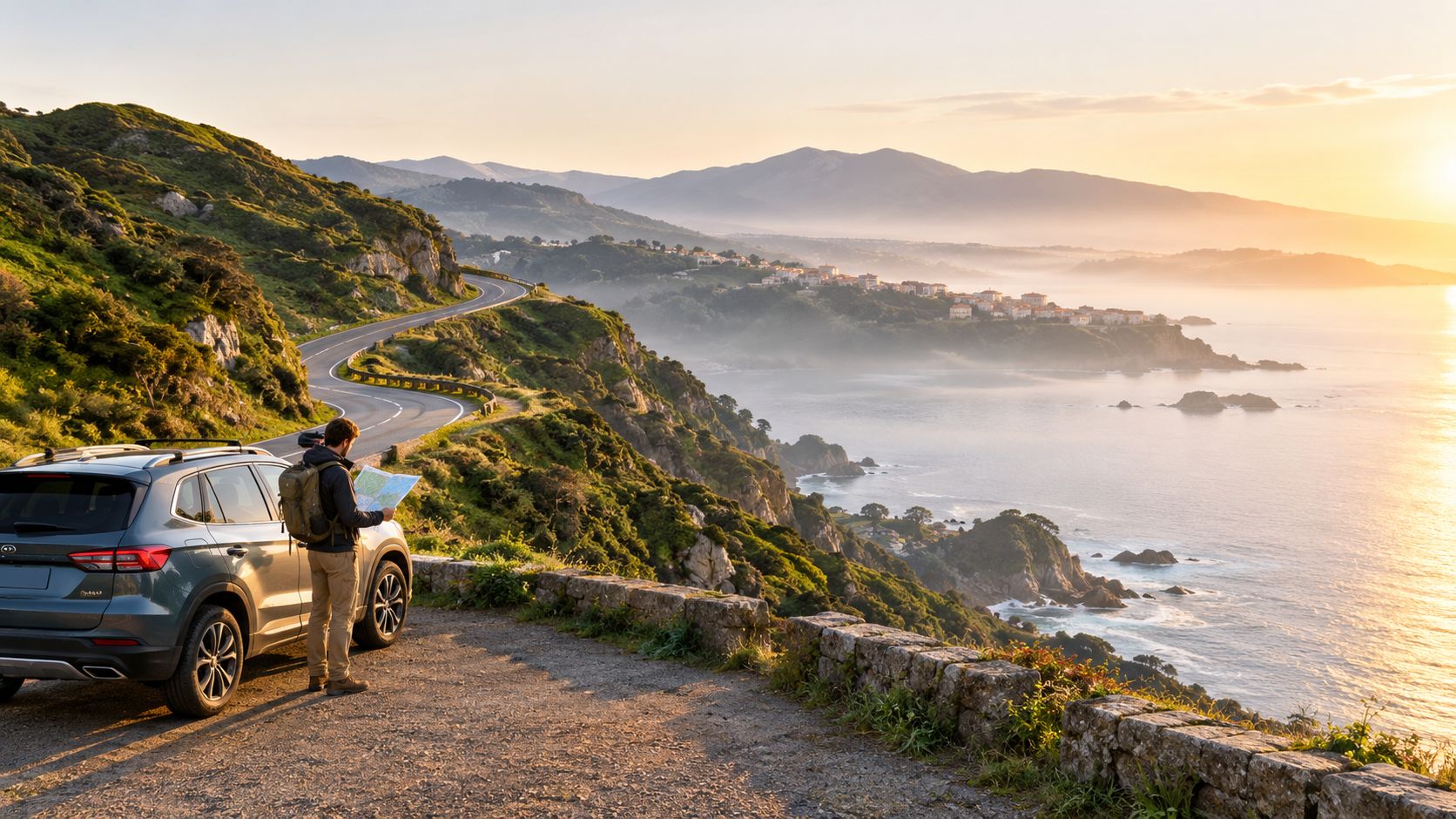
Northern Spain rewards travelers who move thoughtfully. The Basque Country, La Rioja, Navarra, Cantabria, Asturias, Galicia, the Pyrenees, and the Picos de Europa all offer distinct experiences, but they don't connect like a simple city-break route. Roads can be narrow, weather can shift quickly, and some experiences only work if the timing is right.
Why sequencing matters here
Long transfers should not sit next to big dining commitments. That's a basic rule, not an advanced one. If a lunch is special, the morning has to be protected. If a mountain route depends on weather, the itinerary needs a fallback that still feels worthwhile.
A local designer can keep the trip moving without making it feel rushed. They can reserve flexible time around private visits, arrange support when a road closure or schedule change affects the day, and make sure the traveler doesn't feel stranded if plans shift. That's especially useful in regions where one bad decision can cost half a day.
If you're building a trip that includes travel between coast, wine country, and mountain areas, this kind of support is not a luxury add-on. It's what keeps the itinerary coherent. For travelers who want a broader view of how this works with local planning, how private plans complement public healthcare is also a practical read if peace of mind matters alongside comfort.
One more point. Northern Spain is ideal for travelers who want depth without crowds, but only if the route is designed around the terrain and the group's energy. The region can easily become exhausting if it's treated like a checklist.
How to Choose the Right Travel Designer
Choose the person, not the brochure. A competent private travel designer should be able to describe their supplier network clearly, explain how they handle changes, and show that they understand more than hotel categories and restaurant names.
What to look for
- Verified supplier relationships: they should know which hotels, guides, drivers, and winemakers are dependable, not just available.
- Experience with mixed-age groups: multigenerational travel has different needs, and the designer should know how to balance privacy, mobility, and pace.
- Transparent operational detail: cancellation terms, payment rules, and escalation paths should be visible before money changes hands.
- Local judgment: in Northern Spain, look for someone who understands boutique properties, private guides, and regional producers, not just major cities.
A strong designer also asks better questions than most travelers expect. They'll want to know how much walking you'll tolerate, whether you care more about food or scenery, what kind of rooms make a family comfortable, and whether you prefer a packed day or a slower one with room to breathe.
The point is not to find the most glamorous answer. It's to find the partner who can keep the trip aligned with your real preferences. If they can't explain how they'll handle pacing, dietary needs, or non-commercial experiences, they're not ready for bespoke work.
Ask how the itinerary changes when the weather turns, a restaurant closes, or a child needs a shorter day.
For Northern Spain, that standard matters even more because the best experiences often sit outside the obvious route. The right designer knows where to look, who to call, and what to avoid.
Examples of Bespoke Northern Spain Itineraries
A food-and-wine couple might spend a few nights anchored around Rioja, with private cellar visits, a long lunch in the vineyards, and an evening in San Sebastián shaped around the culinary rhythm that suits them. A good designer would choose the hotels for comfort and location, then keep the days spacious enough that the experience feels indulgent rather than rushed.
A multigenerational family needs a different architecture. One day might pair grandparents with a market visit and a private guide while younger travelers take a coastal walk, then everyone reunites for a relaxed dinner with room for different appetites and energy levels.
That's the advantage of bespoke design. The destination doesn't change, but the way people experience it does.
You can also extend the logic to softer adventure. One family might want scenic drives and short walks, another might want a private driver, wine stops, and time near the coast, and another might want culture without overcommitting to museums. A private designer makes those differences workable instead of forcing everyone into the same template.
Is a Private Travel Designer Worth It
Yes, if you care about how a trip feels while you are on it. The money goes into time saved, stress removed, and experiences that fit your group instead of flattening it into a generic luxury script.
For Northern Spain especially, a private travel designer isn't a decorative extra. The region is too varied, and the logistics are too easy to get wrong, for a one-size-fits-all approach to make sense. You want someone who can manage the route, pace, suppliers, and contingencies without making the traveler do the work.
The benefit is simple. You spend less time coordinating and more time enjoying the trip. That's what discerning travelers are buying when they hire a designer: control, clarity, and a journey that feels considered from the first transfer to the last dinner.
Northern Spain Travel designs fully private journeys across the Basque Country, La Rioja, Navarra, Cantabria, Asturias, Galicia, and the Pyrenees, with each itinerary shaped around pace, cuisine, wine, and local access. If you want a trip that's built to remove friction and keep the experience sharp from start to finish, visit Northern Spain Travel and start a conversation about your route.