You've saved restaurants in San Sebastián, bookmarked Rioja wineries and started wondering whether the trip will feel like a holiday or a sequence of reservations. Perhaps your partner wants coastal walks, someone in the family needs a gluten-free menu, and you'd rather not drive after a tasting. The challenge isn't finding good food. It's arranging the food, access and logistics so everyone can enjoy it.
The best culinary vacations begin with those practical decisions. In Northern Spain, that means choosing a manageable route, understanding what private access includes and leaving enough room to appreciate what's on the table.
Table of Contents
- What Culinary Vacations Are and the Formats They Take
- Choosing the Right Region for Your Food Style
- Sample Northern Spain Itineraries by Trip Length
- Dietary, Access and Language Needs to Settle First
- How to Plan Your Culinary Trip Step by Step
- Private Experiences Worth Booking and How to Spend Well
- Send Your Brief for a Private Culinary Journey
What Culinary Vacations Are and the Formats They Take
A culinary vacation is a trip in which food, drink and the people who make them shape the route, rather than a restaurant booking added to a sightseeing plan.
The format matters because similar descriptions can conceal very different experiences. A market visit might mean browsing with a guide, meeting stallholders or buying ingredients for a class. A private tasting might provide a separate room without including any time with the winemaker.
Culinary vacation formats compared
| Format | What it includes | Typical length | Best for |
|---|---|---|---|
| Market and tapas walk | Guided market visit and several tasting stops | A morning or afternoon | First-time food travelers |
| Cooking class | Hands-on preparation and a shared meal with a chef | A cooking session followed by lunch or dinner | Travelers who want to learn techniques |
| Winery or cellar visit | Tour, guided tasting and producer access when confirmed | A dedicated tasting appointment, extended for a cellar tour | Wine lovers and collectors |
| Chef's table or private kitchen meal | Chef-led meal in a private setting | A lunch or evening sitting | Celebrations and special occasions |
| Multi-day culinary journey | Connected food experiences, regional stays, guides and transfers | A short break or extended regional journey | Travelers planning a full trip around food |
Choose the experience, not just the label
A cooking class teaches a skill. A cellar visit explains a region's wine through the producer's choices. A chef's table offers conversation and proximity to the cooking, while a multi-day journey connects these encounters into a coherent trip.
Food also provides a way to understand local identity. In its gastronomy-tourism survey conducted between June and September 2016, the World Tourism Organization found that 87% of respondents considered gastronomy tourism important to a destination's image and brand. That supports an itinerary linking markets, scenery and producers, rather than treating meals as isolated events.
For friends or extended families, MyPerfectStay's guide to food tasting tours for groups is a useful starting point for considering a shared tasting format. Before booking, establish whether the experience is private, whether everyone receives the same menu and how much walking it involves.
The defining test: Does food decide where you go, who you meet and when you travel? If it only determines the lunch stop, you're booking sightseeing with good meals rather than a culinary vacation.
Choosing the Right Region for Your Food Style
A couple books a beautiful rural hotel in La Rioja for the quiet, then discovers the restaurants they care about sit 45 minutes away in Logroño. The fix starts earlier: name your strongest food interest before you look at a single property. Is wine the goal, the coast and seafood, or cider houses and rural cooking? The right region puts the experiences within reach. The wrong one turns every dinner into a transfer.
The table below gives planning notes for each region. Ingredient availability and opening calendars vary from year to year, so ask your planner to match specific producers and dishes to your dates, especially when a harvest or a short fresh season is the reason for traveling.
Northern Spain regions by food style
| Region | Signature food and drink | Best for | Planning notes |
|---|---|---|---|
| Basque Country | Pintxos, Michelin-starred dining, txakoli | Food lovers who want city and coast | Book restaurant meals first; coastal outings flex around them |
| La Rioja | Rioja reds, cellar tastings, Logroño pintxos | Wine lovers and collectors | Reserve winery appointments early; harvest weeks are working periods with limited host time |
| Navarra | Asparagus, piquillo peppers, Navarra wines | Seasonal produce and rural food | Fresh harvests run on short windows; confirm timing with the host |
| Cantabria | Cantabrian anchovies, cocido montañés | Coastal villages and a slower pace | Village restaurants keep shorter calendars; check openings before fixing dates |
| Asturias | Cider houses, fabada, Cabrales cheese | Cider lovers and active travelers | Cider-house visits and mountain walks share the calendar; plan both together |
| Galicia | Atlantic seafood, pulpo, albariño | Seafood lovers and coastal walkers | Book seafood restaurants and bodega visits first; coastal conditions shape the rest |
Match the region to the way you eat
Choose the Basque Country if you enjoy contrasting informal bar eating with a carefully staged restaurant meal. San Sebastián works as a city base, and coastal outings introduce a different setting without requiring a hotel change.
Choose La Rioja when you want time to ask about vineyards, maturation and winemaking decisions. Harvest is fascinating to watch, and it is also the busiest working period of the year, so a quieter appointment often buys more of the winemaker's attention. Access is the limited resource here, and the same budget stretches further in a calm week than in a crowded one.
Navarra rewards travelers who enjoy vegetables and rural meals as much as wine. Cantabria and Asturias suit those who would rather connect food with villages, pasture and mountains than build every day around formal dining. Galicia makes sense when Atlantic seafood and coastal walking lead the plan.
Selecting regions works like building a menu: one star dish carries it, and the other courses support. Pick one anchor region, then add a complement. Use the guide to Northern Spain's regional specialties to narrow the shortlist by the dishes you most want to eat.
Choose fewer regions than you could physically reach. Every hotel change costs packing, checking in and learning another town's food customs.
For a first draft, pair complementary interests: city dining with wine country, or seafood with rural cider traditions. Two regions sharing a map edge does not make them one trip.
Sample Northern Spain Itineraries by Trip Length
A six-night trip covering the Basque coast and La Rioja is a useful starting proposal for a first visit. Treat it as a planning model, not a rule: your arrival airport, preferred dining pace and interest in wine may justify a different balance.
These sample itineraries illustrate how to allocate time. They aren't fixed departures, and every named experience needs availability checks before it becomes a confirmed booking.
Use the visual ladder as an overview, then judge the routes by their actual daily commitments.
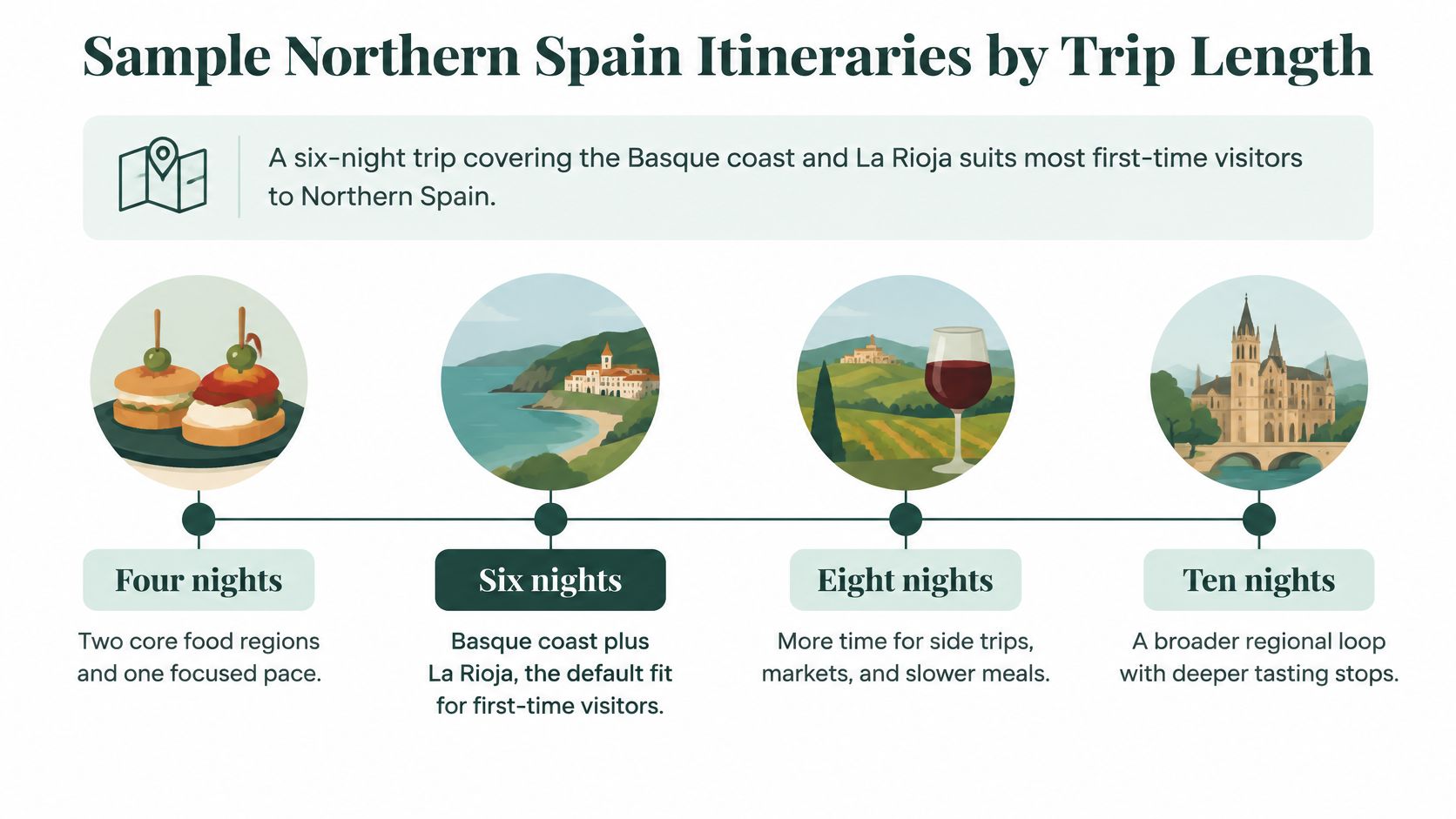
Sample itineraries by trip length
| Trip length | Route | Food highlights | Pace |
|---|---|---|---|
| Four nights | San Sebastián and the Basque coast | Pintxos outing, a Michelin-starred tasting menu, txakoli bodega | Relaxed, with a principal food experience each day |
| Six nights | Basque coast and La Rioja | Cellar tastings, family-winery lunch, fishing-village seafood | Moderate, with a regional hotel change |
| Eight nights | Basque Country, La Rioja and Navarra | Rioja tastings, seasonal vegetables, private cooking class | Fuller, with a driver for wine days |
| Ten nights | A tailored route extending toward Cantabria or Asturias | Anchovies or cider-house cooking, coastal meals and producer visits | Broader, with longer stays rather than constant movement |
A short break needs a clear center
For the four-night example, stay in San Sebastián and use the coast as an outing rather than another base. An evening pintxos walk, a destination tasting menu, a txakoli visit and a market-to-kitchen session provide contrasting experiences.
Don't schedule the cooking session immediately before a substantial dinner. A class that ends with a shared meal is already a dining commitment, even if the itinerary describes it as an activity.
For the six-night model, divide the stay between the Basque coast and La Rioja. A coastal lunch in a fishing village such as Getaria offers a useful contrast to cellar appointments and a family-winery meal inland. Keep the hotel-change day lighter so luggage collection and check-in don't compete with an important reservation.
Add depth before adding distance
The eight-night example allows Navarra to become a meaningful stay rather than a hurried detour. Build the food around what's fresh during your visit: don't promise asparagus and peppers as though their fresh seasons were interchangeable.
With ten nights, consider Cantabria or Asturias, but redraw the route rather than attaching a distant stop to an already crowded schedule. Asturias is the appropriate choice for a cider-house focus; Cantabria makes more sense when anchovy producers and coastal villages are the priority. Extra nights can also be spent in existing bases, with time for walking, galleries or a leisurely breakfast.
Before approving any route, check:
- Daily commitments: Count substantial meals, tastings and classes together, not as separate categories.
- Door-to-door travel: Include hotel pickup, parking, walking and check-in, not just the driving estimate.
- Recovery time: Protect an unstructured afternoon and an easy alternative if someone wants to skip an outing.
A route is relaxed only when the calendar supports that description.
Dietary, Access and Language Needs to Settle First
An unsafe meal or inaccessible venue can undermine an otherwise carefully planned trip. Dietary safety and access belong in the initial itinerary design, not in a note sent after reservations are made.
The CBI's European food-tourism guidance recommends transparent ingredient information, accessible partner venues and suitable menus or interpretation for people with hearing or visual impairments. For travelers, the practical task is turning those principles into a venue-specific plan.
Allergies and dietary requirements
For celiac disease or a severe allergy, ask how the kitchen handles cross-contact, including preparation surfaces, utensils, fryers and service. A translated ingredient card helps, but it doesn't replace a conversation with someone responsible for food preparation.
Pintxos require particular attention because bread and shared counters can complicate service. Request a plan for each intended bar: what can be prepared separately, who will receive the instructions and what happens if the venue can't accommodate the need. A general assurance that the guide understands isn't enough.
Vegetarian and vegan travelers should ask about stocks, sauces, garnishes and cooking fats, not just the main ingredient. Request an adapted menu early enough for the chef to design a complete meal rather than remove components from the standard one.
- Kitchen vetting: Who has confirmed the preparation method, and what limitations remain?
- Local-language communication: Who will explain the requirement to staff in the language they use confidently?
- Suitable substitutions: Which dishes retain their character when adapted, and which should be replaced entirely?
Mobility, sensory needs and communication
Check the entire visit, from vehicle drop-off to the dining seat and toilet. Historic streets, cellar stairs, uneven vineyard paths and standing tastings may each require a different solution. Ask for step-free access details rather than accepting the word accessible without explanation.
For hearing needs, discuss background noise, seating and written interpretation. For visual needs, request readable menus or spoken descriptions of dishes, table arrangements and walking surfaces. A guide can support communication, but can't remove a physical barrier that wasn't identified beforehand.
Before confirming: Put each person's needs in writing, obtain the venue's written response and agree on a suitable backup for meals where an accommodation failure would leave someone unable to eat.
For severe allergies, discuss travel precautions with the treating clinician and keep prescribed emergency medication accessible.
How to Plan Your Culinary Trip Step by Step
Plan culinary vacations in the order that reduces avoidable compromises: establish what matters, test whether it fits and only then commit money. A beautiful hotel is little help if the essential winery appointment requires an impractical journey.
Use the sequence below to produce a workable draft before turning individual ideas into reservations.
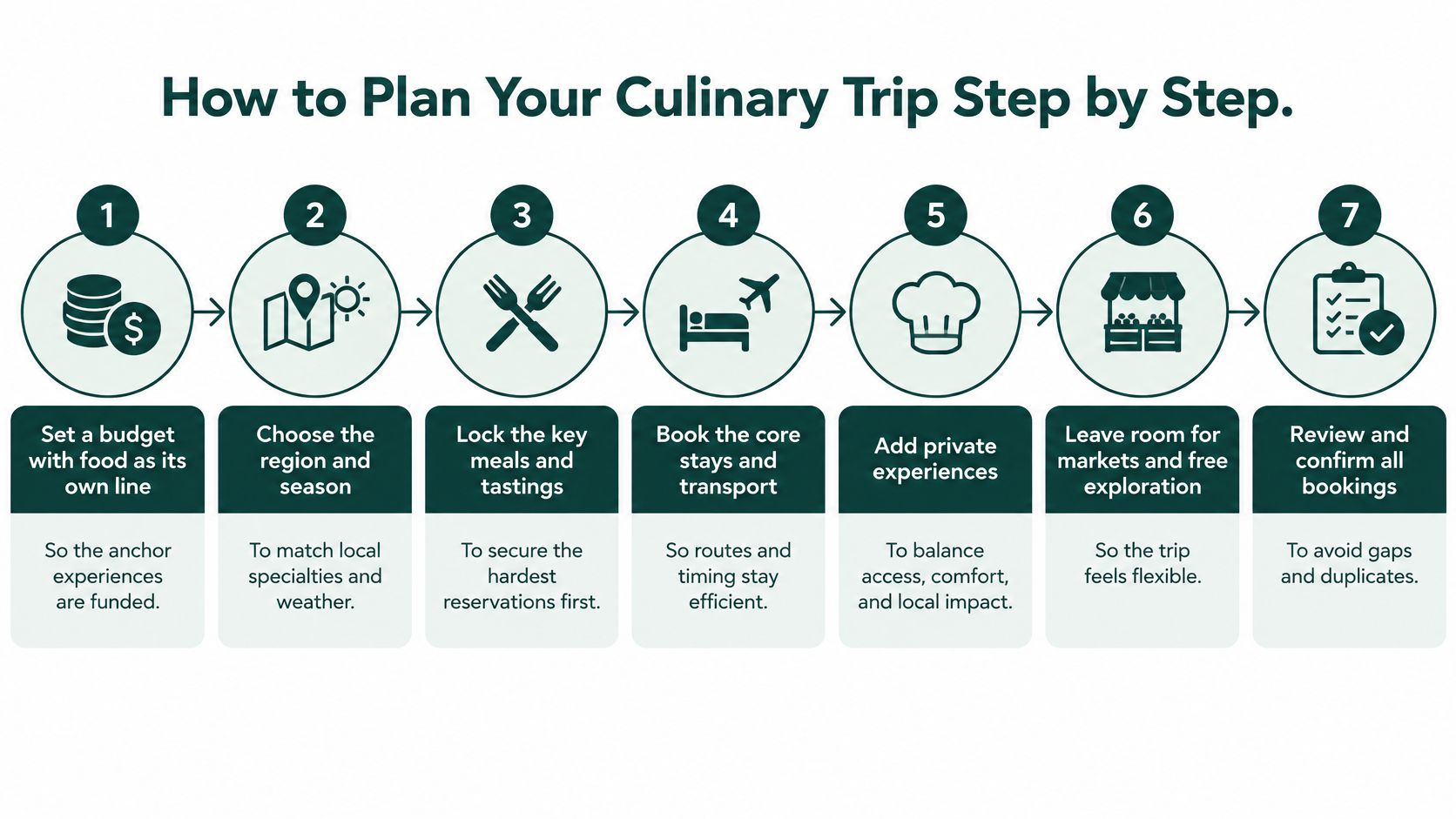
Build the route around your priorities
-
Give food its own budget line. Separate accommodation, transport, guiding and culinary experiences so you can see what you're funding. Identify the meals or encounters you'd be disappointed to miss before spending on optional upgrades.
-
Choose the trip length and regional focus. Start with the food interests that matter most, then fit the geography around the available nights. If the route requires repeated packing or long detours, remove a stop before reducing time at every meal.
-
Select the anchor experiences. Give each day a principal purpose, such as a cellar appointment, a cooking session or a chef-led dinner. A second reservation should complement that experience, not duplicate it or create a race against the clock.
-
Set an eating and resting rhythm. Follow a long lunch with a flexible evening rather than another demanding menu. Leave room for appetite, weather and the possibility that someone would prefer a walk to another tasting.
Resolve logistics before paying
-
Plan transport around the actual appointments. Use a private driver for wine-country days so nobody has to choose between tasting and driving. Discuss pickup locations, luggage, vehicle access and waiting arrangements using the practical considerations in this guide to transportation coordination in Northern Spain.
-
Submit dietary and access requirements with the quote request. This lets the planner evaluate suitable venues before building the route around them. Make clear which requirements are medically necessary, which are preferences and which activities need an alternative for part of the group.
-
Secure the date-dependent elements first. If harvest access, San Fermín or a particular chef is central to the trip, establish availability before committing to nonrefundable arrangements. Ask what is confirmed, what is requested and what could be substituted, because those are different booking statuses.
The finished draft should read like an operating plan rather than a wish list. Each day needs its principal experience, realistic travel estimates, meal arrangements and relevant dietary or access notes. Fixed reservations should carry confirmation details and any payment deadline.
Before approving it, read a transfer day from breakfast through bedtime. That simple exercise often reveals an awkward luggage gap, an unnecessary return journey, or a meal that hasn't been arranged.
Private Experiences Worth Booking and How to Spend Well
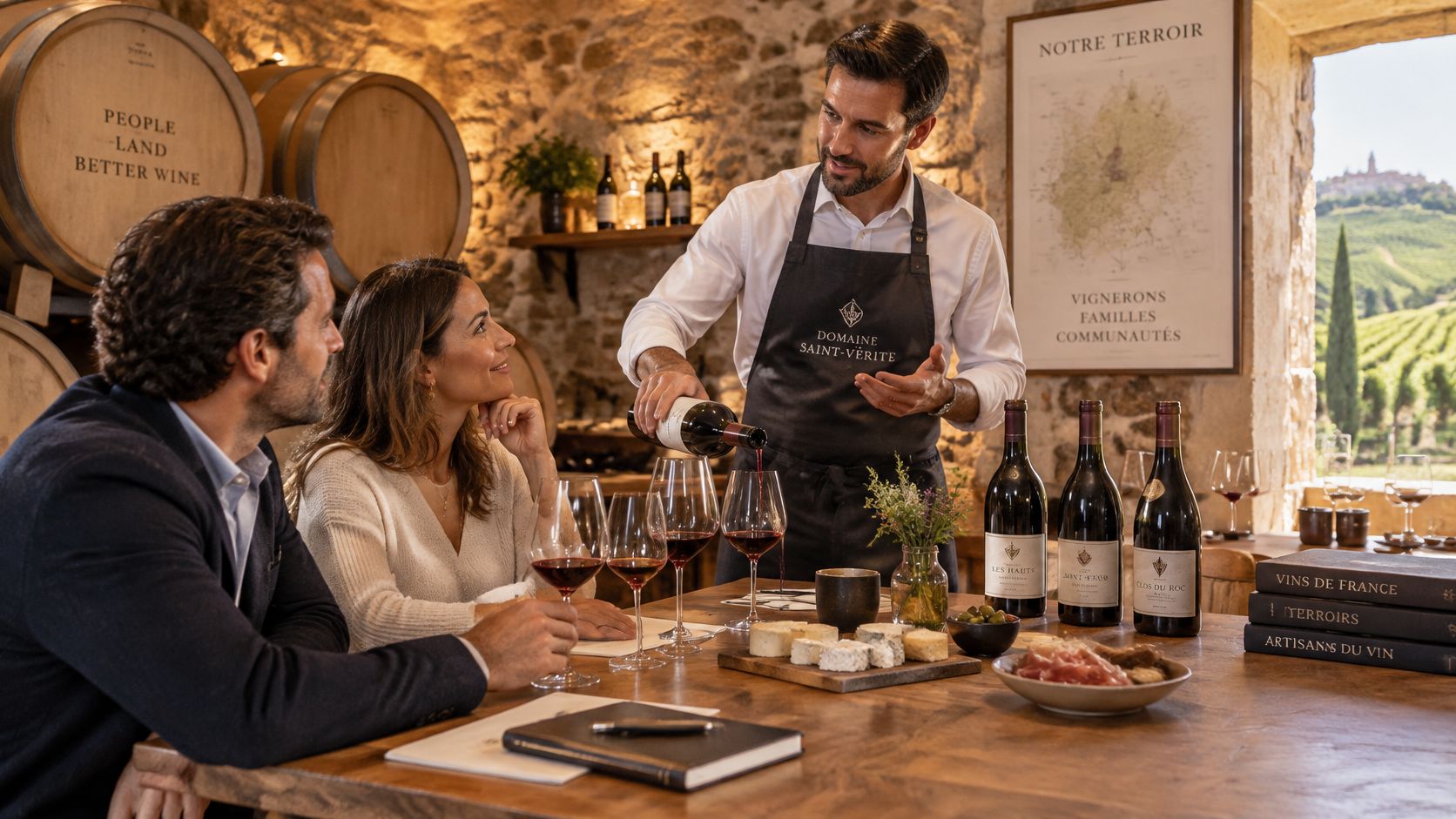
Private access earns its price when it changes what you can learn or how comfortably you can participate. It works like the difference between reading a recipe and standing beside the cook: the same dish, with every decision explained by the person making it. Judge each option by the access it adds:
- Winemaker-led cellar tasting: Direct discussion of vineyard and cellar decisions, with the host's identity confirmed in writing.
- A meal in a chef's own kitchen: Conversation about the cooking in a personal setting, plus a controlled environment when a dietary requirement needs careful handling.
- A Michelin-starred chef workshop: Practical instruction, with clarity about who teaches and how hands-on the session is.
- An Asturian cider-house evening: Interpretation of the food, service and pouring traditions.
- An early market visit: A quieter encounter, worthwhile only when access is authorized and trading routines are respected.
- A normally closed venue: A restaurant, winery or artisan visit arranged specifically for your party, with the arrangement confirmed rather than implied.
A separate tasting room can also improve comfort and conversation, though the quote should explain what makes the space private.
Pay for substance, not an impressive description
For every option, request an itemized price band in the written quote, stating whether the figure is per person or per group and whether transport, interpretation, food and drinks are included. A single lump sum hides what you are buying. An itemized band lets you compare a cellar tasting against a workshop on equal terms and shows whether a premium buys access or adjectives.
The guide to private chef experiences in Northern Spain can help distinguish a demonstration, a workshop and a hosted meal. Before a sensory session, Fresco Chocolate's tasting walkthrough explains how to approach chocolate beyond deciding whether you like it.
Consider who receives the benefit
A private booking can still strain a small producer. A study examining 4,308 Tripadvisor reviews across 397 Barcelona businesses identified cultural, economic, environmental, infrastructure, safety and service problems associated with excessive gastronomy tourism, including threats to local culinary culture and community sustainability, in Over-gastronomy: Conceptualisation of the Problems in Gastronomy.
Choose smaller producers when they offer the experience you want, avoid their busiest service periods and ask how the host is paid. Combine nearby appointments rather than arranging repeated journeys, and remember that a working producer may not be able to stop production for visitors.
For another view of the food-and-wine experience, watch the accompanying video.
Price and community benefit do not rise together. Before approving an experience, ask: Who benefits from this visit, and would it still work with a smaller group?
Send Your Brief for a Private Culinary Journey
Choose whether you want a fixed route with confirmed highlights or a flexible journey with protected free time. Either can work, but the planner needs to know which matters more when an exceptional appointment conflicts with a leisurely day.
Start with your preferred trip length and regions, then send a concise brief that makes the important decisions visible.
What to include
- Dates and flexibility: Give your preferred arrival and departure dates and explain what can move.
- Traveling party: State the group size and each traveler's age, including children and older relatives.
- Individual requirements: Record dietary, mobility, hearing, visual and sensory needs by person.
- Budget: Give a per-person budget excluding flights, with any firm ceiling.
- Preferred pace: Describe whether a substantial daily food experience is enough or whether you actively want additional tastings.
- Food priorities: Rank your strongest interests, such as pintxos, Rioja cellars, seafood or cider houses.
- Private-access requests: Name the encounters you want and ask for the permitted group size at each.
What to request in return
Ask for a day-by-day draft showing the main experience, hotel base, transport arrangements and free time. Request venue-specific dietary and access responses, producer and host details, and a price band for each optional experience. Any advertised access should identify what is included and what remains subject to confirmation.
Our Culinary Journeys and Slow Travel Journeys collections can be adjusted to deepen winery access, add private tastings with renowned winemakers, expand culinary experiences or allow more time for rest. Guests can also access hidden restaurants, wineries and artisans closed to the public, with the proposed encounters defined in the itinerary.
Before any payment, request the deposit and cancellation terms in writing, including the treatment of separately booked experiences and substitutions. Send your dates and priorities first, then review the written draft before paying a deposit.
Northern Spain Travel designs fully private, tailor-made food and wine journeys across Northern Spain, combining regional dining with carefully arranged local access. Visit Northern Spain Travel to share your dates, dietary requirements and food priorities, and request a proposed route with written inclusions and booking terms.