Your family has agreed on Northern Spain for a milestone birthday. One person wants winery visits, another is already asking about coastal walks, and the grandparents would rather not change hotels every night. The teenager wants some independence. The person organizing the trip wants everyone to have a good time without spending the whole holiday managing a group chat.
That's the work of luxury group travel. A private journey isn't a standard tour with a better vehicle. It's an operating plan built around the people who'll take the trip: their pace, preferences, mobility, and tolerance for logistics. Get those right and Northern Spain can feel generous and unhurried. Get them wrong, and even a beautiful itinerary becomes a sequence of missed connections, tired travelers, and compromises nobody agreed to.
Table of Contents
- What a Private Northern Spain Group Trip Actually Looks Like
- Mapping Your Group Before You Design Anything
- Designing an Itinerary That Doesn't Wear Anyone Out
- Private Drivers, Transfers, and the Hotel Layer
- Dining, Events, and Milestone Moments
- Pricing Models and How to Contract the Trip
- Risk, Contingency, and the Pre-Departure Checklist
What a Private Northern Spain Group Trip Actually Looks Like
Consider a family arriving in San Sebastián to celebrate a birthday. The party includes grandparents, adult children, and teenagers. The lead booker wants a special dinner, the grandparents want comfortable days, and the younger travelers want food, surfing, or time to explore independently. There isn't one perfect schedule for everyone. There is, however, a workable design that gives the group reasons to come together without requiring everyone to do everything.
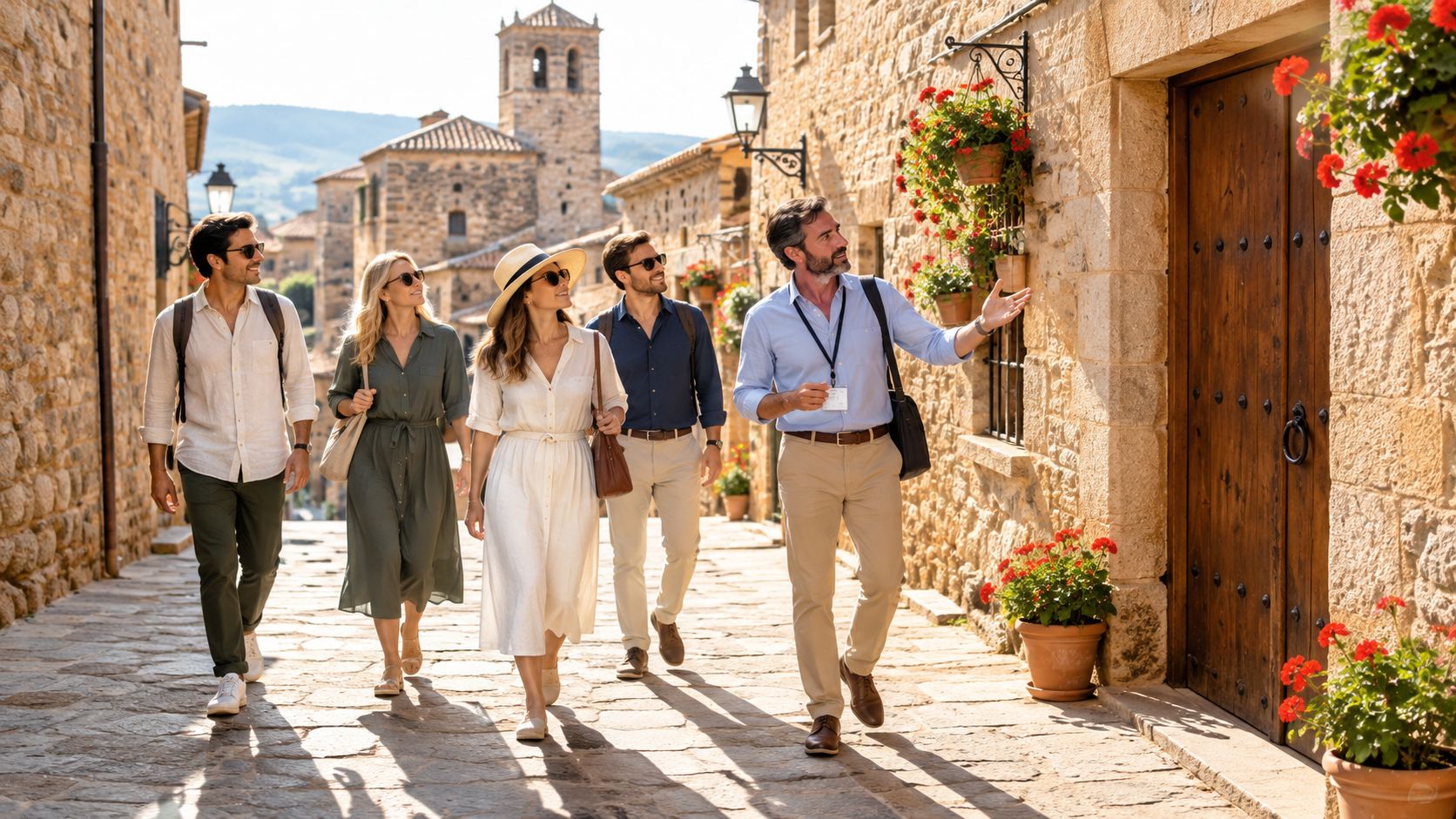
A private journey usually starts with discovery, not a hotel shortlist. The planner identifies the group's shared priorities, then builds a route and daily rhythm around them. That work includes choosing where to stay, coordinating drivers and guides, shaping meals and celebrations, checking accessibility, and agreeing on alternatives if weather or energy changes the plan.
Luxury travel has a substantial economic base, but it isn't limited to the ultra-wealthy. Mastercard's 2024 Affluent Travel Report estimates that affluent travelers generate approximately 36% of worldwide travel spending and nearly 70% of spending on luxury travel. McKinsey's research on today's luxury traveler defines luxury travelers as those spending an average of at least US$500 per night on lodging and finds that 35% have a net worth between US$100,000 and US$1 million. For a private group, the relevant point isn't a spending threshold. It's that a premium trip should deliver tangible value through thoughtful planning, comfort, and distinctive access.
The trip is private, not effortless
A private journey gives your group control over its schedule and suppliers. It doesn't erase the decisions involved. You'll need to settle practical questions about rooming, time together versus time apart, walking distances, meal preferences, and how much activity belongs in a day. You'll also need to decide what deserves the budget: an exceptional hotel, a private guide, a special venue, or more downtime.
Shared group tours often fail affluent parties because their fixed pace and common itinerary don't reflect a family's real differences. A single trusted planner on the ground can adjust the day, coordinate suppliers, and make decisions before small problems grow. Expect a considered day to include one defining experience, unhurried meals, and room to rest, rather than a checklist of attractions.
Practical rule: If a plan only works when every traveler has the same energy and interests, it isn't a group itinerary. It's a schedule with a failure point.
Mapping Your Group Before You Design Anything
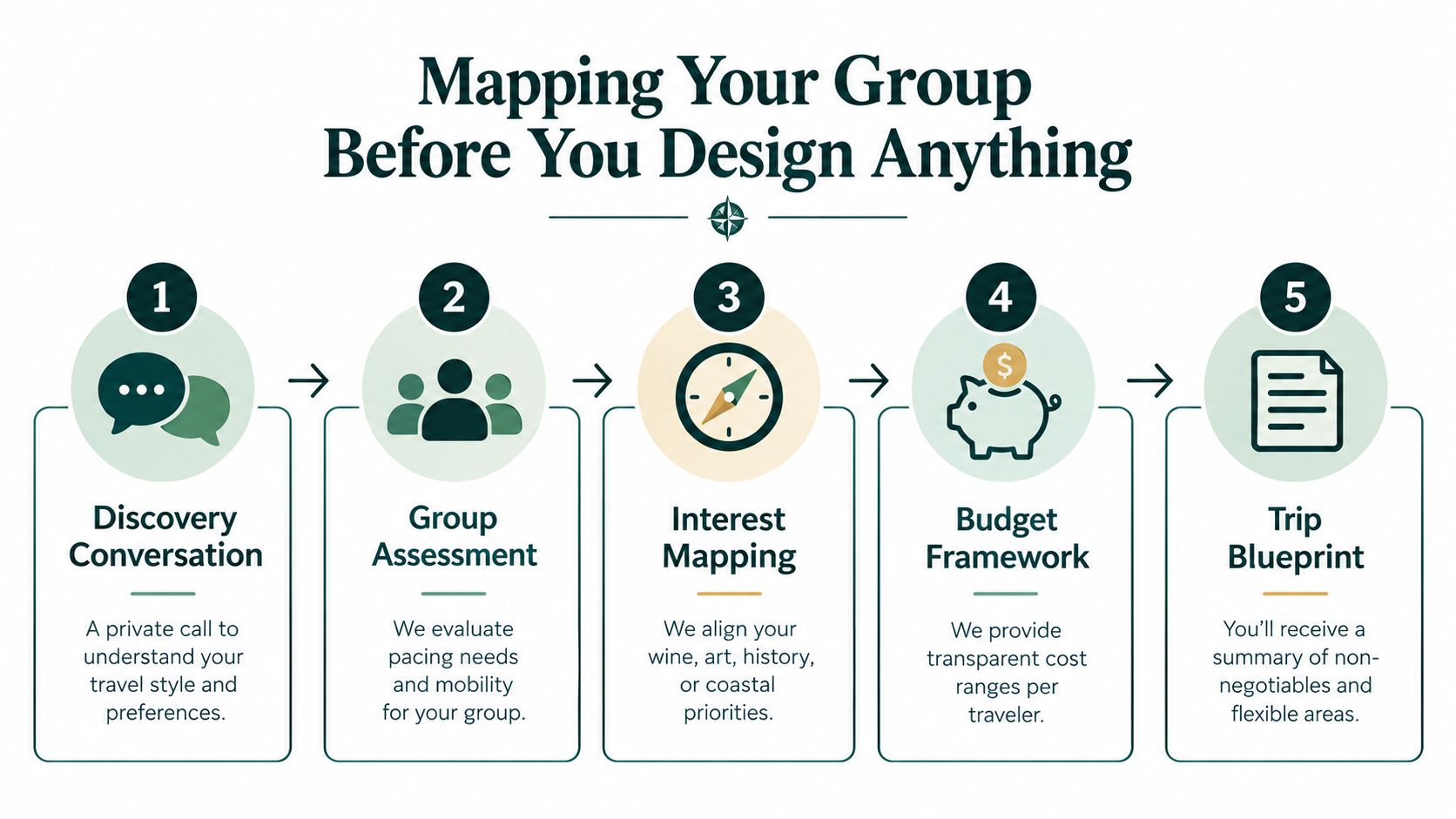
The first planning conversation should happen before anyone books a hotel or restaurant. Ask each traveler what would make the trip feel worthwhile, what they'd happily skip, and what could make a day uncomfortable. The lead booker may have the strongest opinions, but the group's actual needs often surface only when you ask people directly.
McKinsey's luxury-traveler research notes that multigenerational families often favor villas for their privacy and space. That's a useful starting point, not a rule: a villa only works if its layout, location, and service fit the group. A property with stairs, distant dining, or limited transport can create more friction than a well-chosen hotel.
Turn preferences into requirements
Use a private call or a short written intake to capture the same information from everyone. Don't make the group vote on every detail. Instead, record which needs are essential, which are preferences, and where the group can compromise.
- Set the shared purpose. Is this a birthday, reunion, anniversary, or time together? Identify the moments that matter most to the lead booker and the wider group.
- Map pace and mobility. Ask how long people comfortably walk, whether hills or stairs are a concern, and how much recovery time they need after a full day. "Can walk" isn't enough detail; someone may enjoy a gentle village stroll but tire on uneven terrain.
- Record food and activity priorities. Note dietary requirements, food interests, and whether travelers prefer wine, art, history, coast, or nature. A family chef's strong restaurant opinions deserve a conversation, not an ambush at dinner.
- Agree on togetherness. Ask how much free time people want and whether parallel activities would help. A teenager might take a surf lesson while grandparents enjoy a relaxed coastal visit, with the whole party meeting for lunch.
- Set the budget framework and approval process. Clarify what the budget should prioritize and who can approve changes. Summarize rooming, pacing, accessibility, emergency contacts, and cancellation terms in a requirements matrix before asking suppliers to hold space.
A matrix makes trade-offs visible. It might list each traveler's priority, mobility considerations, meal needs, and preferred balance of shared and independent time. Then the planner can distinguish genuine constraints from nice-to-haves instead of treating every request as equally urgent.
For organizers who want a broader prompt for balancing group preferences, these VIVARA-inspired group vacation planning ideas can help start the conversation. For a more detailed approach to bespoke trip design, see the guide to tailor-made vacations.
Designing an Itinerary That Doesn't Wear Anyone Out
The strongest group itinerary isn't the one with the most stops. It's the one that holds together when someone needs a rest, a meal takes longer than expected, or the day's walk proves harder than it looked on paper.
McKinsey reports that around 80% of the luxury leisure market is made up of people younger than 60, while baby boomers remain a significant source of luxury spending. That mix matters for group design: the party may include people who are comfortable with an active day and others who need a gentler version of the same experience.
Choose the structure that fits the group
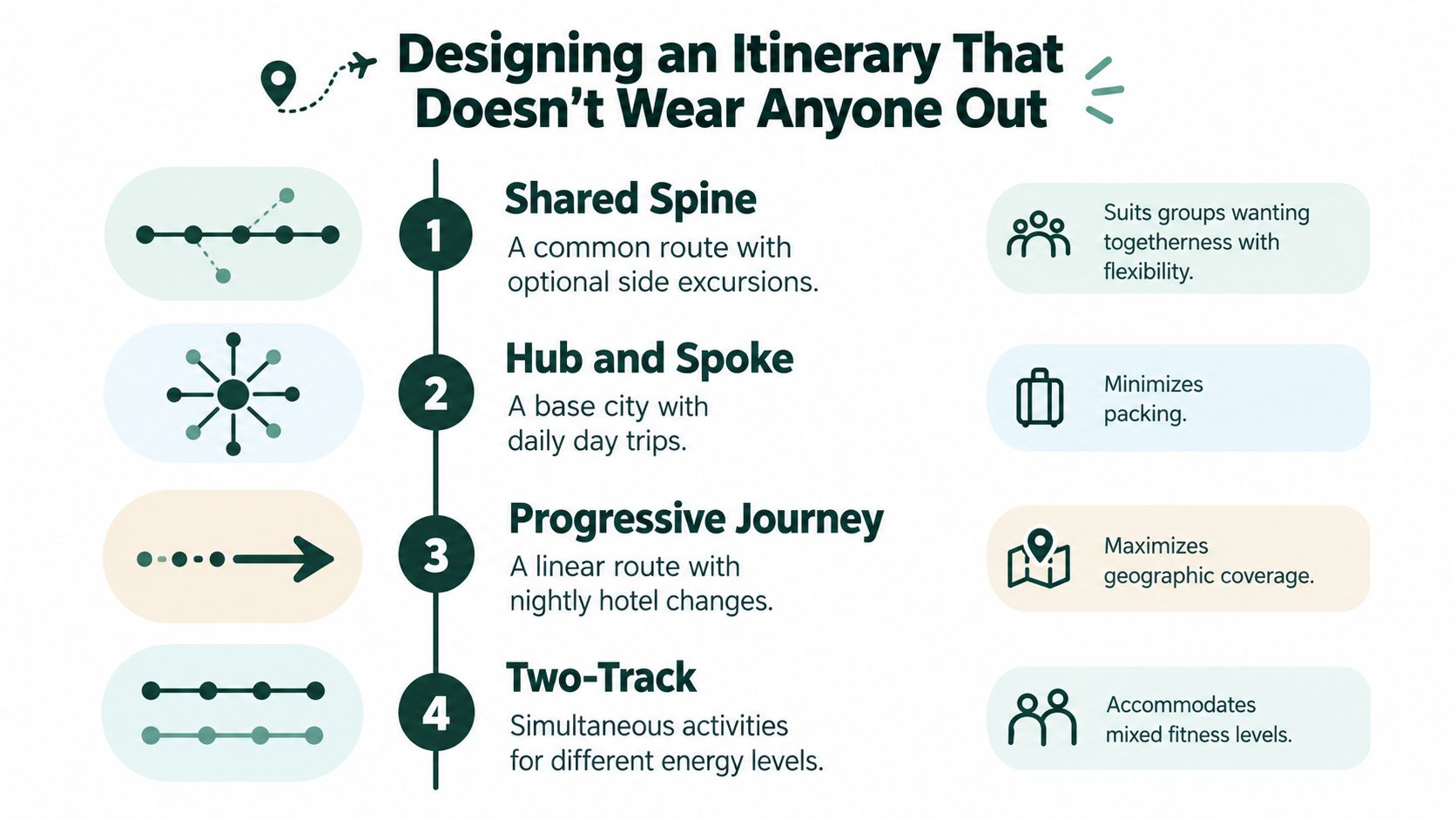
Four patterns work particularly well, and they don't need to be used in isolation.
- Shared spine: Everyone follows the same route and joins the day's main experience, with optional side excursions for those who want more. This is often the best foundation for friends or families who value shared meals and moments but have different energy levels.
- Hub and spoke: Stay in one base and take day trips. It minimizes packing and hotel changes, though long return drives can wear down travelers if the outings stretch too far.
- Progressive journey: Move between regions, changing hotels as the route unfolds. This can cover more ground, but each move adds check-in, luggage, and transfer demands.
- Two-track day: Split the group into activities that match different interests or abilities, then reunite for lunch, dinner, or a shared visit. It's particularly useful when one traveler wants a hike and another prefers a vineyard or village.
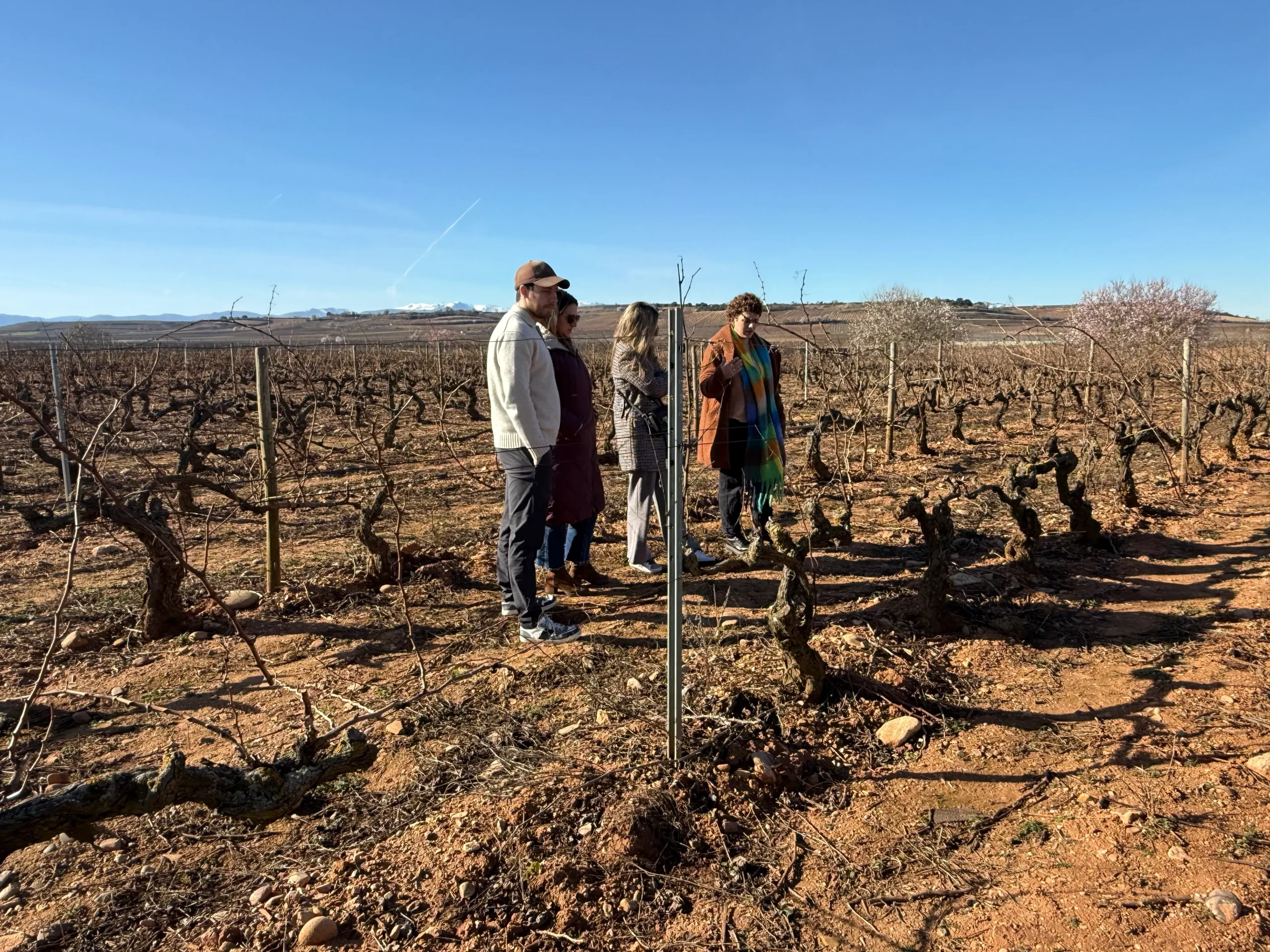
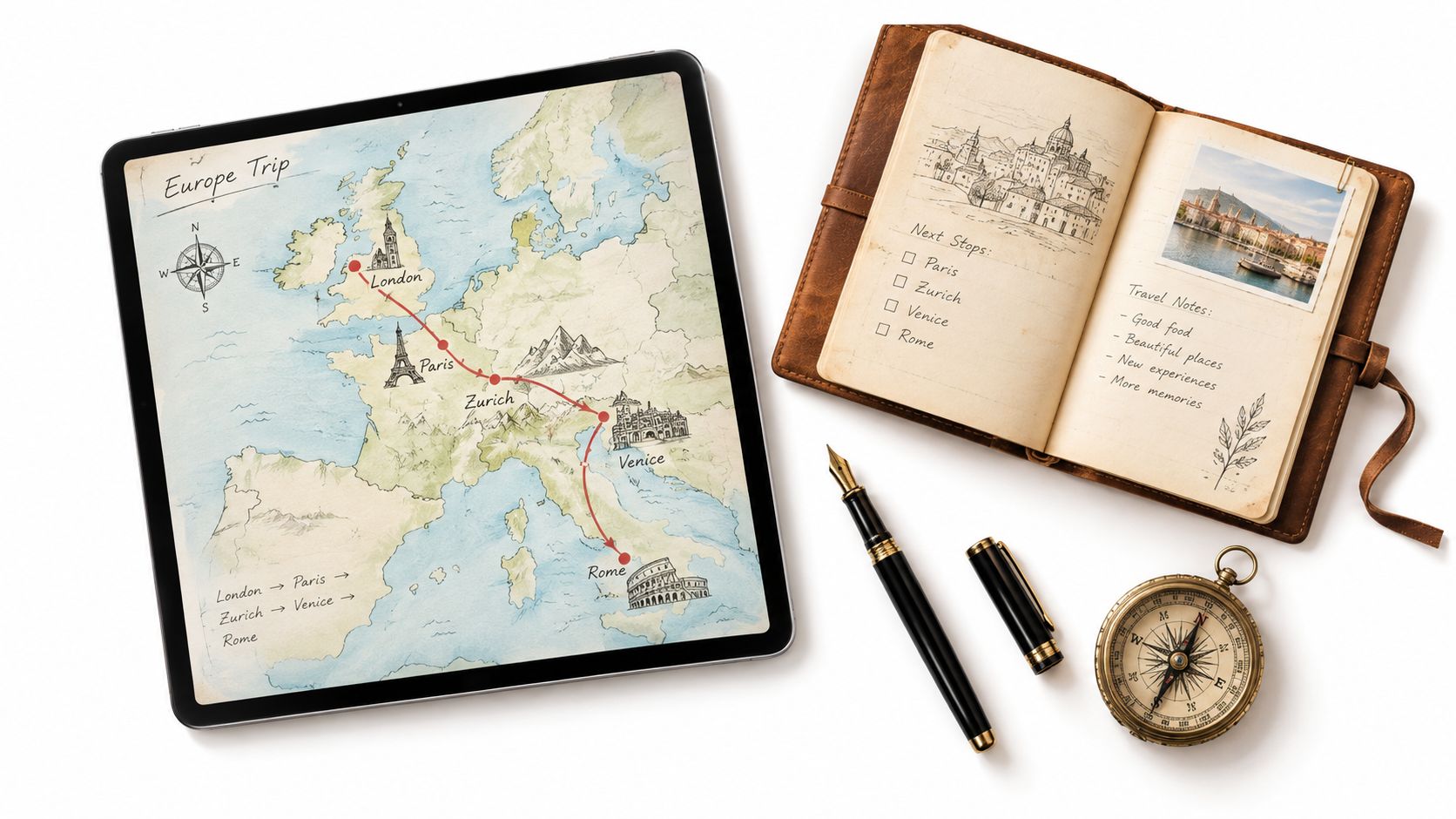
A seven-day Basque Country, La Rioja, and Cantabria route might begin with a settled stay in San Sebastián, continue inland for wine and rural scenery, then finish near the coast. Build the route around one major movement or timed commitment per day. A private winery visit can be the central experience, while a longer walk remains optional. On a transfer day, make the drive the main logistical event and resist adding a reservation that forces the group to rush.
Protect the rhythm, not the checklist
For each day, test four things: transfer time, walking exposure, meal duration, and recovery time. Give the group one signature experience and a shared meal to anchor the day. Then add an optional extension for travelers who want more, rather than making the whole party follow the most ambitious version.
San Sebastián's dining scene can tempt planners into late dinners after full days. Rioja drives can look manageable on a map but feel long after a tasting and lunch. Coastal paths may offer uneven ground or wind exposure. Those aren't reasons to avoid the experiences. They're reasons to plan realistic transitions and make it easy to shorten or adapt the day.
The most common mistake is prioritizing attractions over group tolerance. A technically impressive route can unravel when it combines a long drive, a fixed appointment, a late dinner, and little time to recover. Build the day around the people who'll travel, not around the number of places a map can fit.
Private Drivers, Transfers, and the Hotel Layer
A beautiful itinerary is only as dependable as its transport and accommodation. Before confirming either, decide how the group will move and how many changes it can comfortably absorb. One lead driver can create continuity across a route; regional specialists may make more sense when local knowledge, road conditions, or route boundaries call for a different operator. The choice should follow the itinerary, not a generic preference.
For a party of ten, a single vehicle may be convenient, but it isn't automatically the right configuration. Check luggage capacity with the actual bags the group will bring, confirm whether everyone can get in and out comfortably, and ask whether a second vehicle would improve flexibility. A guide and driver aren't interchangeable roles: one person focused on navigation and logistics may not be able to deliver the same experience as a dedicated local guide.
Match the property to the group
A boutique hotel can offer service and a central location, while a private villa can give a family space to gather. An estate stay in Rioja may make the winery the day's center, but could require more coordination for transfers and dinner. A Parador or a coastal property may suit a scenic stop, but room configuration, stairs, elevator access, and distance between rooms still matter.
Ask for a rooming plan before confirming. Which travelers need rooms close together? Does anyone need step-free access or a walk-in shower? Will breakfast and dinner be available at the property, or will the group need a driver? Clarify luggage handling and whether staff can assist when the party arrives at different times.
Don't book a property because it looks right for the lead traveler. Book it because it works for the whole party's rooming, mobility, and service needs.
Transfer planning needs the same discipline. Leave breathing room around long drives, meals, and timed visits. For a useful reference on how providers describe coordinated airport transport for groups, see this overview of a Heathrow to London hotel minibus transfer. For vehicle choices and private transport considerations within the region, consult this guide to luxury coach services for private travel.
Use an operating sheet so the lead planner and suppliers agree on the day's limits:
| Variable | Target threshold | What to validate against |
|---|---|---|
| Transfer | Keep to the planned window | Road conditions, stops, luggage, and arrival time |
| Walking | Match the least mobile traveler's comfort | Surface, gradient, distance, and rest points |
| Main appointment | One high-friction commitment per day | Fixed entry time, travel buffer, and cancellation terms |
| Meal | Allow the group to eat without rushing | Service pace, dietary needs, and transport afterward |
| Recovery | Protect a quiet period where needed | Arrival fatigue, heat, and the group's previous day |
Reconfirm critical suppliers 72 hours before arrival and again on the operating day. Check driver details, pickup points, guide timing, rooming, dietary notes, and any access arrangements. A glossy itinerary is a promise; those confirmations are what make it run.
Dining, Events, and Milestone Moments
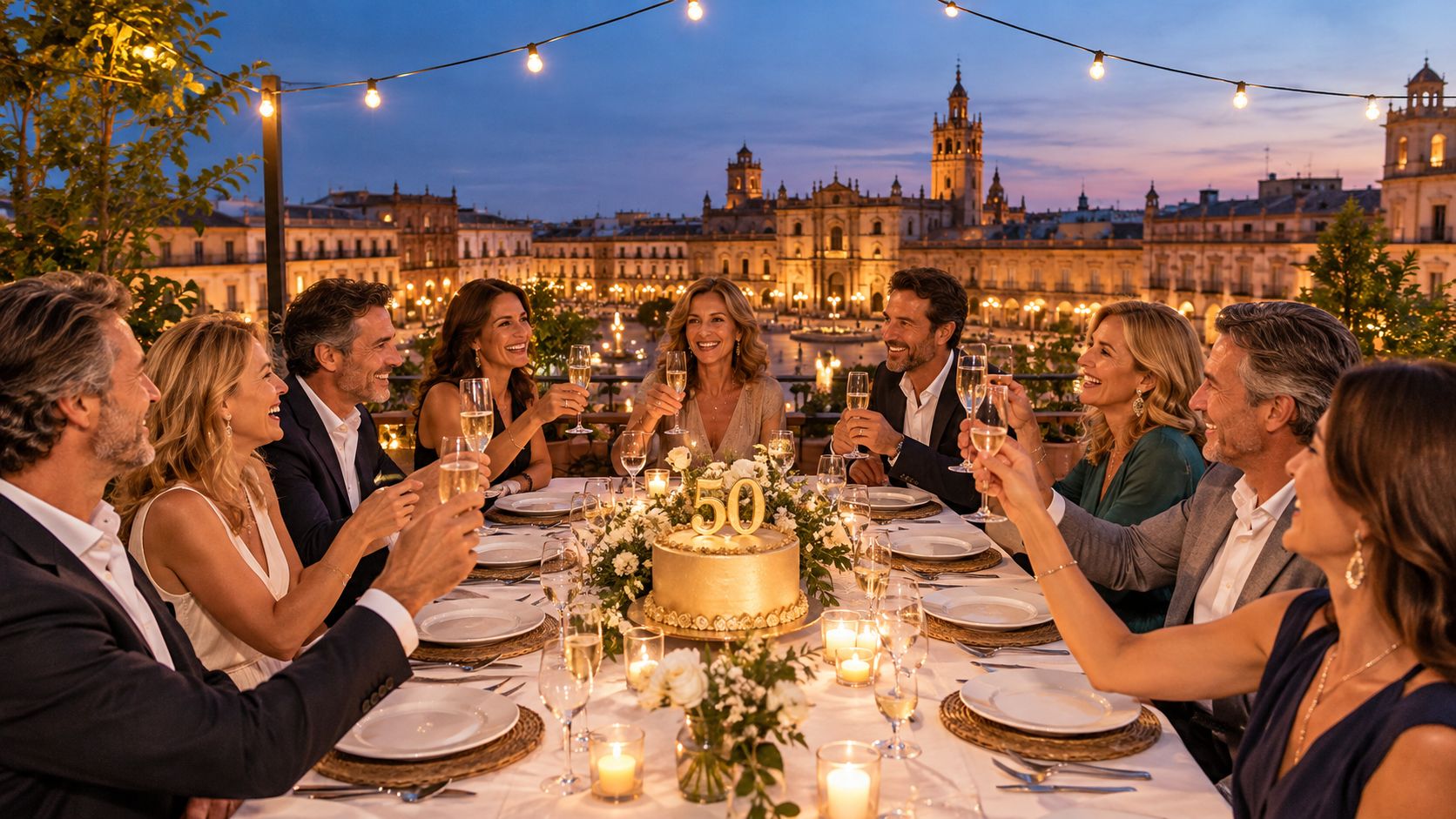
A milestone dinner can be the trip's emotional center, but it shouldn't be treated as a reservation dropped into an already crowded day. The venue, timing, dress expectations, group size, and route back to the hotel all shape whether guests can enjoy it.
Take a birthday dinner in a Rioja cellar. The group may want a private tasting before dinner, but the event needs to suit the guests who don't drink, the person who tires early, and anyone who would rather talk than sit through a long menu. A private chef at a villa can offer more control over timing and dietary needs. A restaurant may provide a stronger sense of place. Neither choice wins by default.
Make the occasion fit the day
A San Fermín experience presents a different design problem. Balcony access, event timing, crowd conditions, and the group's comfort with a busy atmosphere all need to be addressed before promising a particular view or level of access. Some travelers may relish the spectacle; others may prefer a quieter vantage point and a relaxed meal afterward. Explain the trade-offs plainly, then agree on the group's priorities before making commitments.
Dining should also have contrast. Pair a carefully chosen tasting menu with a casual pintxos evening or a cider house meal. That variety keeps a special dinner special instead of making every night feel like a formal performance. If the group has a keen food enthusiast, involve them in choices without letting one person dictate the whole schedule.
For a surprise element, plan the reveal around the day's natural rhythm. A local musician, private wine tasting, or cake delivered after dinner can feel personal without disrupting transfers or resting time. Check supplier requirements early, especially for group size, minimum spends, access, and cancellation conditions. Availability may dictate a different date or format, and diplomacy matters when the dream version isn't possible.
Northern Spain's private events and dining opportunities reward precise coordination more than extravagance. A practical starting point is this guide to private event planning in Northern Spain. Decide what the milestone should feel like, then select the venue and sequence that support it.
Pricing Models and How to Contract the Trip
There isn't one right way to price a private group journey. The sensible structure depends on how much exclusivity the group wants, how it prefers to share costs, and how much flexibility it needs if plans change.
A villa or estate buyout separates accommodation from services. The group may pay for the property and arrange drivers, meals, guides, and activities as separate components. That offers control, but the organizer needs a clear view of what's included and who handles service requests. Check whether the property requires a deposit, when the balance is due, and which services are cancellable.
A hotel room block with a private itinerary can work well when travelers want individual rooms and hotel services. The accommodation terms may differ from the tour or ground-service contract, so don't assume one cancellation policy covers everything. Ask whether rooms can be released if travelers drop out and whether the quoted group price includes meals, transfers, and guiding.
A fully private departure packages the journey around the group alone. It can simplify coordination and protect exclusivity, but the price depends on the services and reservations the group commits to. Confirm which elements are private, which are shared with the public, and what happens if the group changes its dates or numbers.
Read before paying
Before signing, ask for a written schedule of deposits, balances, inclusions, exclusions, cancellation terms, and payment currency. US, UK, Canadian, and Australian travelers should confirm whether supplier costs are quoted in euros, what exchange-rate assumptions apply, and who bears bank or conversion charges. Don't treat currency exposure as a minor detail when different travelers are settling their shares at different times.
Before a deposit: Ask which costs are refundable, which are supplier commitments, and whether a change by one traveler affects the rest of the group.
Have the lead booker review each supplier contract, especially for rooming, event access, minimum spends, and cancellation deadlines. Then establish how the group will handle cost changes if a traveler withdraws. A small private party may have little room to spread a fixed expense, so the contract needs to reflect the group's actual flexibility, not an optimistic assumption.
Risk, Contingency, and the Pre-Departure Checklist
Private travel can adapt when weather, fatigue, illness, or a supplier cancellation changes the day. Build alternatives before departure: a shorter walk, a relaxed indoor visit, a different meal, or a revised route. Crowds also affect decisions. In Simon-Kucher's 2025 travel research, more than 20% of surveyed travelers said they had already canceled trips because of crowding concerns. Quiet alternatives and flexible timing can help protect the experience without requiring the group to abandon its plans. For more practical ideas on coordinating group journeys, see these group travel tips from Oz Coach Hire.
Before departure, confirm:
- Approvals: The lead booker has signed off on rooming, pacing, accessibility, and cancellation terms.
- Operations: Critical suppliers have been reconfirmed, with pickup points and contacts recorded.
- Wellbeing: Dietary safeguards, medical contacts, and mobility needs are shared with the right suppliers.
- Decision rights: Everyone knows who can approve a change and how the group will be notified.
A durable trip plan doesn't prevent every disruption. It makes clear who will respond, what can change, and how the group can stay together without forcing everyone into the same pace.
Northern Spain Travel designs fully private journeys around your group's interests, pace, accommodation needs, and milestone plans, with local guides, drivers, and on-the-ground support. If you're ready to turn your group's priorities into a practical itinerary, visit Northern Spain Travel to discuss your journey.