Only about 226 of Rioja's roughly 600 wineries are open to visitors, so a private guide isn't merely a luxury. It's often the key to reaching the estates, cellars, and tastings that independent travelers will never find through a standard booking page.
You may be looking at a map of Rioja, a short list of famous bodegas, and a calendar that seems to offer more choices than you can possibly fit into one trip. The difficulty isn't finding somewhere to drink wine. It's knowing which subzone deserves your time, which estates offer genuine depth rather than a polished visitor circuit, and how to connect the experiences into a coherent journey.
Rioja welcomed 1,164,388 winery visits in 2025, crossing the one-million mark for the first time, while international visitors accounted for about 36% of total visits according to the DOCa Rioja 2025 report. That growth makes planning more important, not less. A well-considered Rioja wine region tour should compare terroirs, introduce you to contrasting winemaking philosophies, and leave enough room for conversation, food, and unhurried discovery.
Table of Contents
- Why Private Access Changes Everything
- The Three Subregions – A Comparative Guide
- Crafting the Perfect Bespoke Itinerary
- Selecting the Optimal Season for Your Visit
- Luxury Accommodations and Seamless Logistics
- Tailoring the Experience for Discerning Travelers
- Final Thoughts on Your Private Rioja Journey
Why Private Access Changes Everything
You arrive in Rioja with time for only a few appointments. A standard booking may place you in a polished tasting room, yet leave the most relevant producer, vintage, or vineyard outside the schedule. Private access changes the quality of the decisions behind your day. It directs your time toward estates that match your palate and connects each tasting to a clear purpose.
Rioja has developed a mature visitor economy. Nearly 70% of producers now have dedicated wine-tourism teams, and approximately 775 jobs are directly connected to wine tourism, according to the DOCa Rioja 2025 executive summary. Professional hospitality is widely available. Specialist judgment still determines whether your itinerary feels personal or interchangeable.
A standard tour follows a fixed route, serves a predetermined flight, and delivers a rehearsed explanation. That format can be pleasant. It does not usually let you adjust the visit around your preferences, request a less obvious vintage, or compare wines from separate parcels with the person who farms or makes them.
The private advantage: You aren't paying for more wine. You're paying for better judgment about which wine, which person, and which place deserve your attention.
Start with the access question
Ask your planner to divide potential appointments into three categories:
- Historic reference houses, where architecture, cellar traditions, and long aging practices provide cultural context.
- Small producers, where the owner, winemaker, or vineyard manager may personally lead the tasting.
- Terroir-focused estates, especially those connected to the modern “Viñedo Singular” classification and specific villages or parcels.
A superior itinerary combines all three. A grand bodega supplies scale and historical perspective. A small cellar creates direct conversation. A site-focused producer shows how soil, elevation, exposure, and farming decisions shape the wine in your glass. The point is contrast, not a parade of famous names.
A private winery tour guide to Spain should contribute more than translated tasting notes. Choose someone who knows which appointments justify the drive, which producers welcome informed questions, and when a celebrated name is less appropriate for your interests than a quieter cellar nearby.
Don't confuse availability with quality
A visitor program proves access, not distinction. Some estates excel in architecture and hospitality. Others earn their place through mature wines, precise explanations of vineyard decisions, or rooms that sit beyond the public circuit.
Pacing also separates a considered journey from a standard tourist visit. Three formal tastings in succession can flatten your palate and turn Rioja into a sequence of glasses. Build in a village walk, a focused lunch, or a quiet vineyard stop so every appointment has time to register.
General advice for leisure travelers can help with preparation, but Rioja requires specialist planning. Book sought-after estates early, state your preferred styles before arrival, and demand a clear reason for every tasting on the schedule.
The Three Subregions – A Comparative Guide
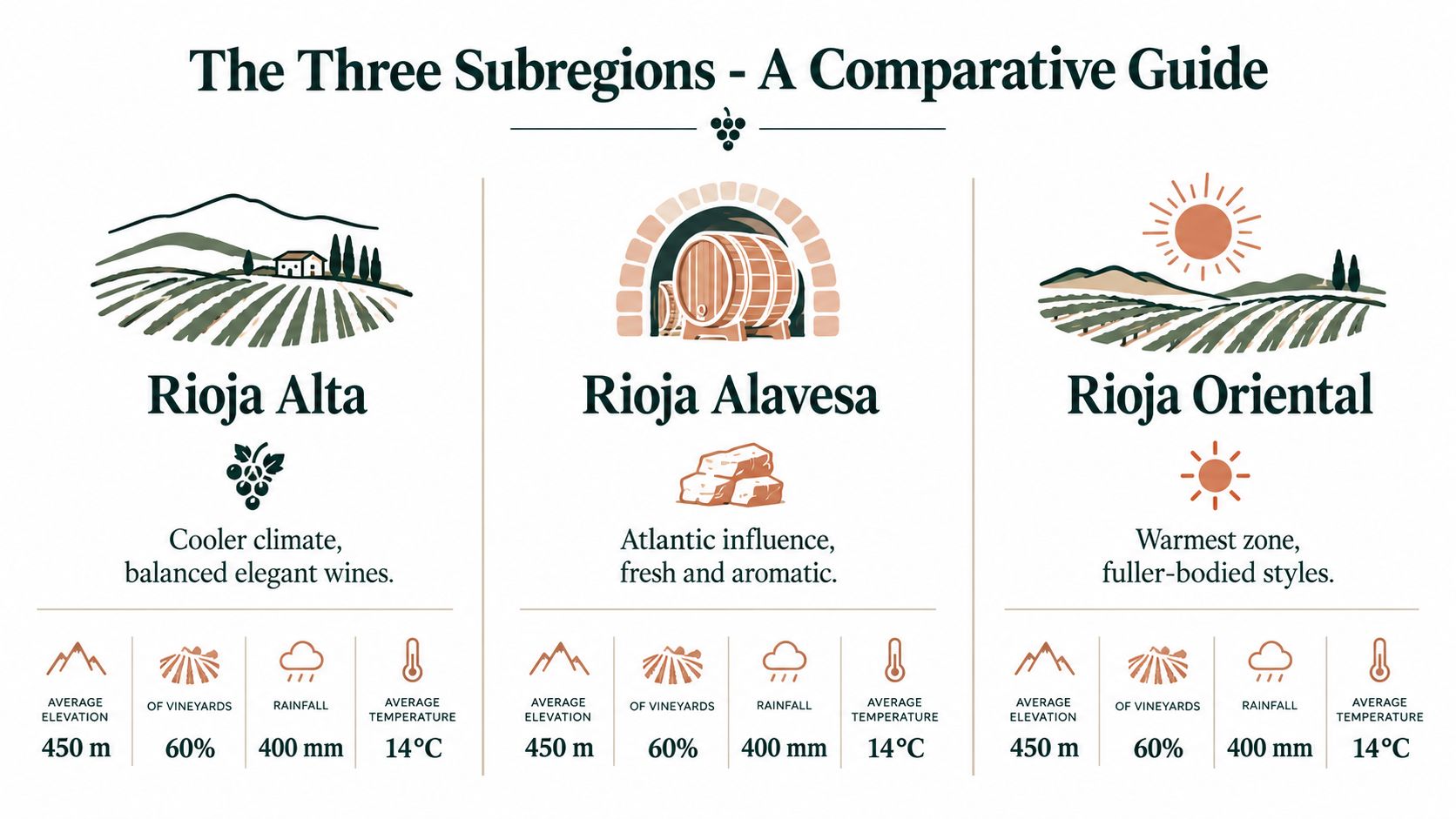
Rioja isn't a single flavor profile. Its three subzones sit within a region shaped by Atlantic, continental, and Mediterranean influences, and their differences become obvious when you taste them side by side.
Rioja Alta
Rioja Alta is the cooler, more Atlantic-influenced western sector. Its wines often show lift, restraint, freshness, and fine-grained structure, making the area particularly attractive to travelers who prefer elegant Tempranillo, traditional aging, and a firm but polished finish.
The best visits here should focus on how cooler conditions preserve acidity and shape the balance of oak, fruit, and tannin. Rioja Alta is also an excellent setting for historic cellar visits, where long-established methods and patient maturation remain central to the identity of the wines.
Rioja Alavesa
Rioja Alavesa has a similarly temperate climate but is distinguished by chalky clay-limestone soils and a dramatic setting of villages, slopes, and mountain backdrops. Wines from this subzone can combine aromatic precision with a structured palate, particularly when the tasting includes single-village or vineyard-designated examples.
I recommend Rioja Alavesa to clients who want the clearest connection between terroir and wine. A well-designed appointment here should include a vineyard viewpoint or a walk through the surrounding village, not just a tasting room. The setting helps explain why two wines made from the same principal grape can feel entirely different.
Rioja Oriental
Rioja Oriental is the warmest, driest, and most Mediterranean-influenced subzone. Its more fertile alluvial soils and greater heat stress tend to support riper fruit, broader texture, and more generous weight. It suits travelers who enjoy fuller-bodied reds and want to understand a less frequently discussed side of Rioja.
| Subregion | Climate | Soil | Wine style |
|---|---|---|---|
| Rioja Alta | Cooler and more Atlantic-influenced | Varied soils shaped by western landscapes | Fresh, poised, structured, and traditionally elegant |
| Rioja Alavesa | Temperate, with mountain shelter | Chalky clay-limestone | Aromatic, balanced, and finely structured |
| Rioja Oriental | Warm, dry, and Mediterranean-influenced | More fertile alluvial soils | Riper, broader, and fuller-bodied |
The regional contrasts are not theoretical. Rioja sits at roughly 300 to 800 meters above sea level, and the surrounding mountains moderate but don't erase climatic variation, as explained in Decanter's overview of Rioja's key facts. A second Decanter guide to the Ebro Valley details the subzones' differing climate and soil profiles.
A superior itinerary doesn't ask, “Which is the best part of Rioja?” It asks, “Which contrast will teach you the most about the wines you already love?”
Crafting the Perfect Bespoke Itinerary
The best Rioja journeys read like a carefully edited wine list. They begin with tradition, move into interpretation, and finish with a personal encounter that couldn't be replicated by a coach group.
A strong day might open in Haro, where historic bodegas provide an immediate sense of Rioja's cellar culture. Rather than rushing through several formal tours, I'd choose one substantial appointment and request a tasting that moves beyond the entry-level range. Older vintages, extended-aged wines, and a discussion of cellar decisions reveal far more than a broad flight of young bottlings.
Lunch should reinforce the morning rather than interrupt it. Choose a restaurant where the kitchen understands local produce and can adapt the meal to the wines being poured. Rioja's food deserves its own attention, but the menu shouldn't overwhelm a delicate, aged red or turn a serious tasting into a sequence of heavy courses.
Build contrast into the day
After Haro, the itinerary can shift toward a more contemporary expression of the region. A modern architectural bodega near Logroño may show how Rioja presents itself to the world today, with a focus on design, hospitality, and polished interpretation. That visit earns its place when it provides a genuine contrast to the historic cellar, rather than just another impressive building.
Then the day should slow down. A small family-run estate in a lesser-known village can offer the most memorable appointment, particularly when the proprietor pours wines that aren't widely distributed and explains the vineyards in personal terms. The value lies in proximity and candor, not in prestige alone.
My preferred sequence: one major historic estate, one modern or design-led visit, and one intimate producer. More appointments usually mean less attention.
Don't treat this as a fixed formula. A couple with a preference for traditional, long-aged Rioja may want to devote the day to historic houses and mature bottles. A group fascinated by farming may prefer vineyard walks and small producers. Travelers planning several destinations can use curated food and wine tour destinations for 2026 as wider inspiration, then narrow the plan around Rioja's particular strengths.
The practical details matter. Leave space between tastings, arrange a private driver, and avoid making every stop a grand reveal. The bespoke Rioja itinerary ideas are useful when shaping the rhythm of a longer escape, especially if wine needs to share the stage with villages, food, and scenery.
Selecting the Optimal Season for Your Visit
Season changes the character of a Rioja wine region tour. The right choice depends on whether you want to see the region working, enjoy the vineyards at their most expressive, or concentrate on cellar time without the distractions of peak activity.
Autumn brings energy
Harvest season has undeniable atmosphere. Vineyards become busy, winery teams work to receive and sort fruit, and conversations naturally turn toward the vintage. If you want to see the relationship between vineyard and cellar, autumn is the obvious choice.
It's also the season that requires the most discipline. Appointment availability tightens, sought-after guides are committed early, and harvest operations can force wineries to change schedules. Some estates may limit access to working areas or replace a leisurely tour with a more operational visit. That's not a flaw, but your expectations must be precise.
Book well ahead, ask whether the winery will be actively receiving fruit, and decide whether you want an observational harvest experience or a calm, technical tasting. You rarely get both at their fullest.
Spring offers clarity
Spring is my preferred season for clients who want balanced travel. The scenery feels fresh, driving conditions are comfortable, and wineries can often give appointments more individual attention. Vineyard walks become particularly rewarding because the guide can discuss pruning, flowering, soil, and the coming vintage without the pressure of harvest.
Spring also works well for multigenerational groups. The itinerary can include villages, scenic outings, and long lunches without asking every traveler to spend the entire day in a cellar.
Winter rewards concentration
Winter has a quieter, more contemplative character. Bare vines shift the focus toward architecture, barrel rooms, blending decisions, and the history of Rioja. It's an excellent time for serious wine enthusiasts who care more about conversation and comparative tasting than vineyard color.
Summer can be attractive for travelers combining Rioja with a broader Spanish itinerary, but heat and visitor demand make midday pacing important. Whatever the season, select the wineries first and build the route around their availability. A beautiful date is no substitute for access to the right cellar.
Luxury Accommodations and Seamless Logistics
Luxury in Rioja isn't defined by a room with expensive finishes. It's defined by how little friction you encounter between the moment you wake up and the moment the final glass is poured.
Choose accommodation according to the shape of the itinerary. Laguardia suits travelers who want a stone village, high vantage points, and immediate access to Rioja Alavesa. Haro is the natural choice for historic cellar culture and concentrated winery visits. Logroño offers a broader restaurant scene and practical access for travelers who want wine balanced with urban dining and regional culture.
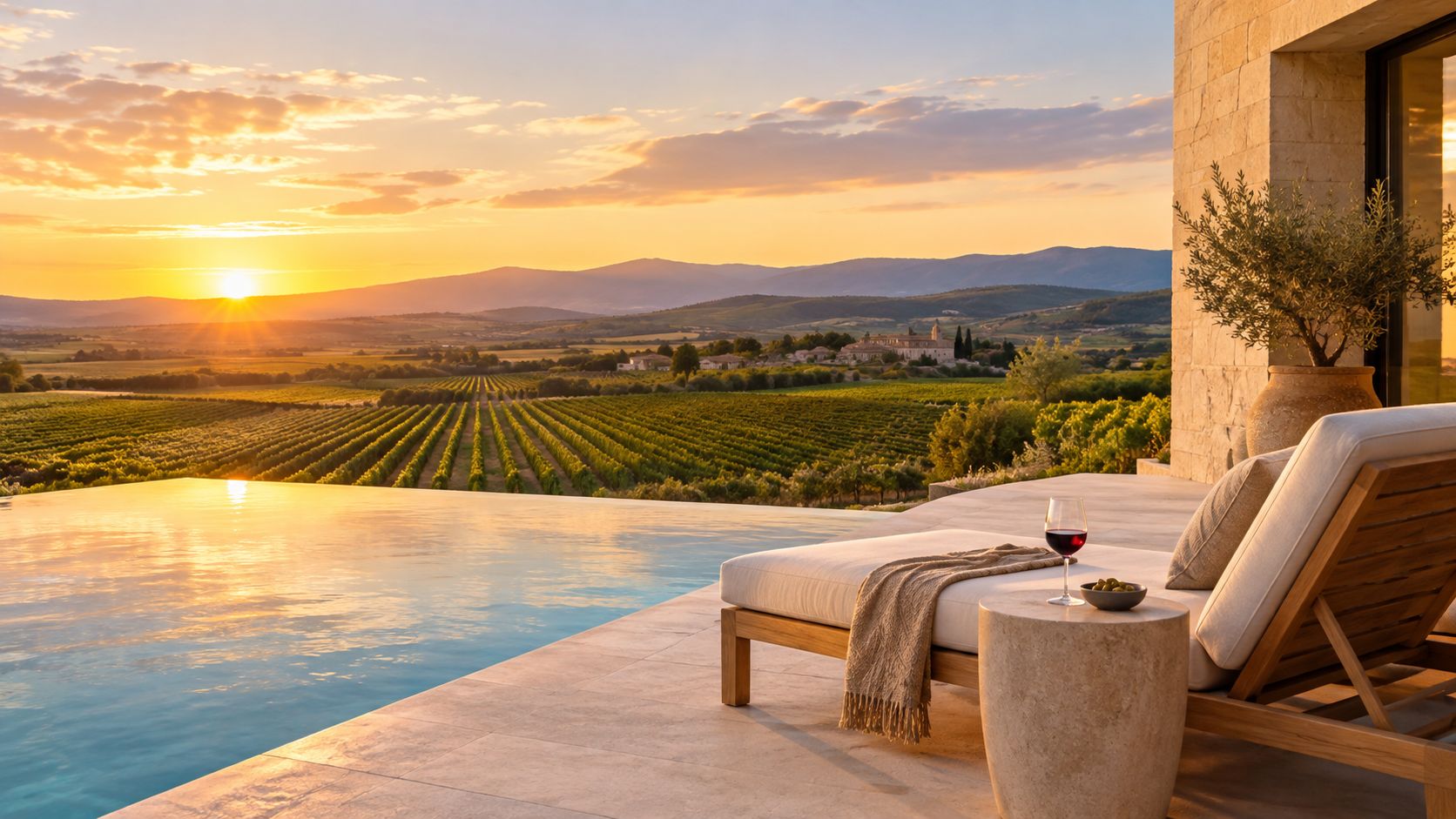
Match the base to the mood
A boutique property in a historic village creates intimacy and makes an evening stroll effortless. A refined hotel outside town may offer greater privacy, views, and restorative space after a full tasting day. A city hotel can be the smarter choice for clients who care significantly about dining and want a wider range of restaurants within easy reach.
Don't change hotels just to collect addresses. Two well-chosen bases often create a more relaxed journey than moving every night, particularly when luggage, wine purchases, and differing sleep schedules are involved.
For a practical comparison of locations, this guide to where to stay in the Rioja wine region is a useful starting point. The final decision should reflect your winery reservations, not just the appearance of a property online.
Let the driver protect the experience
A private driver does more than remove the need to find the way after tastings. An experienced local driver understands the smaller roads, allows the day to flex when a tasting runs long, and keeps the group focused on the conversation rather than directions.
The vehicle should be comfortable enough for transfers between subzones, with room for purchases and a schedule that doesn't feel compressed. Build in time for viewpoints, coffee, village walks, and spontaneous stops. Rioja rewards looking beyond the main road.
Restaurant reservations should be coordinated with the winery route. A late lunch after a technical tasting can be ideal, while a heavy meal before a concentrated appointment usually dulls the palate. The best logistics create a quiet continuity between hotel, vineyard, cellar, table, and sunset.
Tailoring the Experience for Discerning Travelers
A private Rioja journey becomes exceptional when the planner receives a clear brief. “Luxury wine trip” isn't enough. It describes a budget and a broad category, not the experience you want.
Start with the wines. Tell your local handler whether you prefer traditional, oak-shaped Rioja; fresher, more site-driven bottles; mature reservas; white wines; or powerful, warm-climate reds. Then explain what you want to understand. Do you want to compare villages, study aging, meet growers, explore architecture, or buy bottles that are difficult to find outside Spain?
Give the itinerary a point of view
Your interests should determine the appointments:
- For collectors, prioritize mature vintages, library-cellar access, production detail, and secure shipping advice.
- For food-focused travelers, pair winery visits with chefs who can build menus around local ingredients and the structure of the wines.
- For culturally curious guests, add historic villages, wine-trade stories, and conversations about how Rioja's identity developed.
- For families, use shorter tastings, vineyard walks, hands-on activities, and flexible meal timing rather than forcing every traveler through a technical cellar tour.
- For milestone celebrations, make the private meal or final tasting the emotional centerpiece, not an afterthought between appointments.
The region's institutional history gives a strong foundation for that depth. Rioja's designation was created by Royal Decree on 6 June 1925, and later milestones included mandatory aging certification in 1974, wine-aging categories and vintage control in 1980, Qualified status in 1991, and the “Viñedo Singular” category in 2017, as documented by Rioja's centenary history. Those developments aren't just trivia. They give a guide the framework to explain why classification, aging, and place matter so much here.
Ask for interpretation, not performance
A skilled private guide translates more than language. They explain local etiquette, identify when a winemaker is speaking technically or personally, and help guests ask questions without turning the encounter into an interview.
That cultural interpretation matters most at small estates. The interaction should feel like a conversation with a host, not a purchased demonstration. If your guide has prepared the winery properly, the producer already knows your interests and can select bottles, vineyard walks, or cellar spaces that make the meeting relevant.
Depth also means leaving room for the unexpected. A quiet olive grove, a village bakery, or a conversation with a grower may prove more valuable than another famous façade. Comfort matters, but access, context, and intelligent curation are what distinguish an elite journey from an expensive standard tour.
Final Thoughts on Your Private Rioja Journey
A Rioja wine region tour should leave you with more than a collection of tasting notes. It should give you a clearer understanding of how a cooler western sector, a limestone-rich central area, and a warmer eastern zone can produce such different expressions under one appellation.
Choose the itinerary by contrast. Begin with the wines and styles that interest you, then select the subzones that will challenge or deepen your palate. Add a historic cellar for perspective, a small producer for intimacy, and a carefully chosen meal that allows the region's food to speak alongside its wines.
Season matters, but it shouldn't dictate the entire journey. Harvest offers movement and immediacy. Spring gives you room to explore. Winter rewards concentration. The right choice depends on whether your priority is vineyard activity, scenery, or serious cellar conversation.
Logistics matter just as much. A private vehicle, well-placed accommodation, realistic pacing, and early appointment work remove the small frustrations that can dilute an otherwise outstanding trip. Rioja has the infrastructure for refined tourism, yet its most personal experiences still depend on relationships, timing, and local judgment.
The region's history reaches back a century, but its most compelling experiences remain human. You remember the producer who opened an unexpected bottle, the guide who connected a wine to a hillside, and the evening when the view finally made sense in the glass. A map can get you to Rioja. Expert planning is what helps you understand it.
Northern Spain Travel designs fully private, tailor-made journeys that can combine Rioja cellar tastings, boutique hotels, private drivers, fine dining, and cultural access around your preferred pace. Visit Northern Spain Travel to begin planning a Rioja itinerary built around the subzones, producers, and experiences you most want to discover.