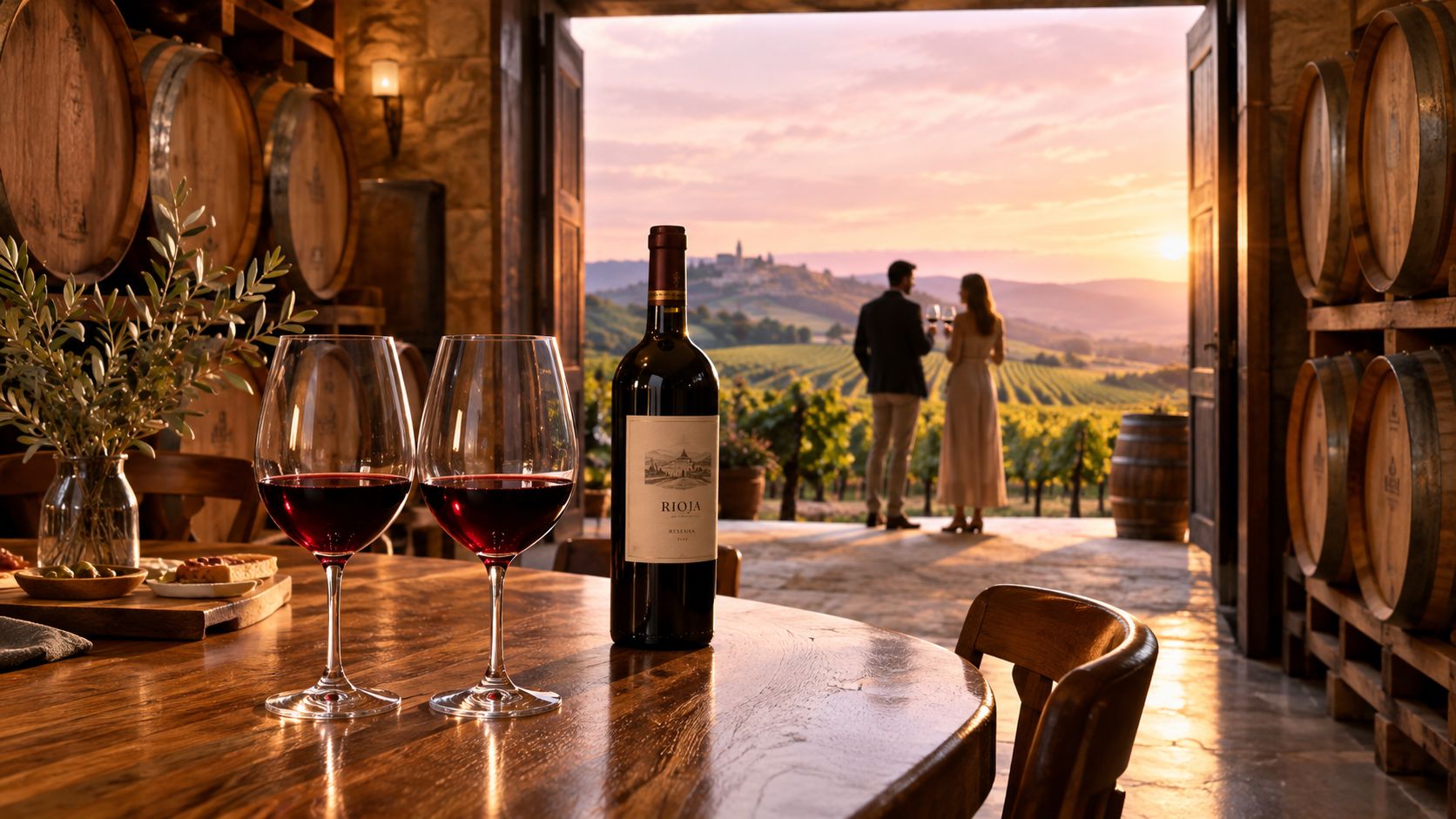
The light is lowering over the vineyards outside Haro, and a small group has gathered on a quiet terrace. The producer pours a Gran Reserva as the last warmth lingers in the stone. Nobody's checking a tour schedule or trying to keep pace with strangers. There's time to look, smell, taste, and ask what the wine says about the place it came from.
That's the difference between a private red wine tasting experience and a list of winery stops. In Northern Spain, Rioja, Navarra and the Basque Country offer distinct ways to understand red wine, but the journey comes alive through the choices around it: who pours, how wines are sequenced, what's on the table, and when the group gets time to pause.
For couples who want a considered escape, families with different ages and interests, and small groups celebrating a milestone, the right experience shouldn't feel like a lecture or a race. It should give each person a way in, whether that's the producer's story, a regional dish, the feel of a wine in the glass, or a beautiful view and an unhurried evening.
Table of Contents
- A First Glimpse of a Private Northern Spain Tasting
- What Makes a Red Wine Tasting Experience Truly Luxury
- The Three Formats of a Private Red Wine Tasting
- Rioja, Navarra and the Basque Country as One Tasting Map
- A Sample Bespoke Northern Spain Tasting Itinerary
- How a Sommelier Shapes Each Pour
- Add-Ons That Turn a Tasting into a Private Journey
A First Glimpse of a Private Northern Spain Tasting
On a private terrace above Haro, the host doesn't begin with a long history of Rioja. The first pour is a Gran Reserva, and the producer lets the setting do some of the talking. A guest notices dried herbs in the aroma; another asks how time in the cellar has changed the wine. The conversation starts with what's in the glass, then opens naturally onto the producer and the vineyards.
That quiet exchange is a better introduction to luxury than a grand room or an elaborate tasting sheet. The experience has room to adapt. If the group is curious about aging, the host can bring the conversation there. If someone would rather talk about food, the wine can be tasted alongside a local pairing. Nobody needs to pretend to know the right vocabulary.
Rioja provides an obvious starting point, but a private journey needn't stop at the familiar. Navarra can bring a different expression of red wine to the table, while the Basque Country offers a natural change of pace, with food-led stops and Atlantic influence shaping the wider culinary context. What matters is not collecting regional names. It's building contrasts the group can notice and enjoy.
The setting is part of the tasting
A private tasting should feel connected to its place. That might mean a cellar where the producer can explain the wines in context, a vineyard setting that encourages a longer pause, or a private chef's table where each course gives the group another way to engage with the wine.
For couples, the pleasure may be in lingering over a thoughtful flight. For a family, it may be the freedom to let younger or less wine-focused guests enjoy the surroundings and meal without making the day revolve around tasting. A good host leaves room for both.
The best journeys are therefore shaped around the people taking them, not the largest possible bottle list. Curation, setting, glassware, temperature and pacing do the storytelling. The wines matter, of course, but their meaning becomes clearer when each is given the right moment.
What Makes a Red Wine Tasting Experience Truly Luxury
A private tasting earns its premium through control and attention, not through ceremony for its own sake. The same wine can feel entirely different when a host has chosen a quiet setting, matched the flight to the guests, and left time for questions instead of ushering everyone toward the next stop.
Four signs of thoughtful service
Privacy means the group isn't sharing its host or conversation with strangers. That matters most when guests have different levels of wine knowledge. One person can ask a basic question without feeling exposed, while a more experienced taster can explore the producer's decisions in greater depth.
Sensory pacing is the difference between an orderly flight and a memorable one. The host chooses an order that makes the wines easier to compare and allows the group to take breaks. A tasting shouldn't be timed for the venue's convenience if a slower pace would make the experience more rewarding.
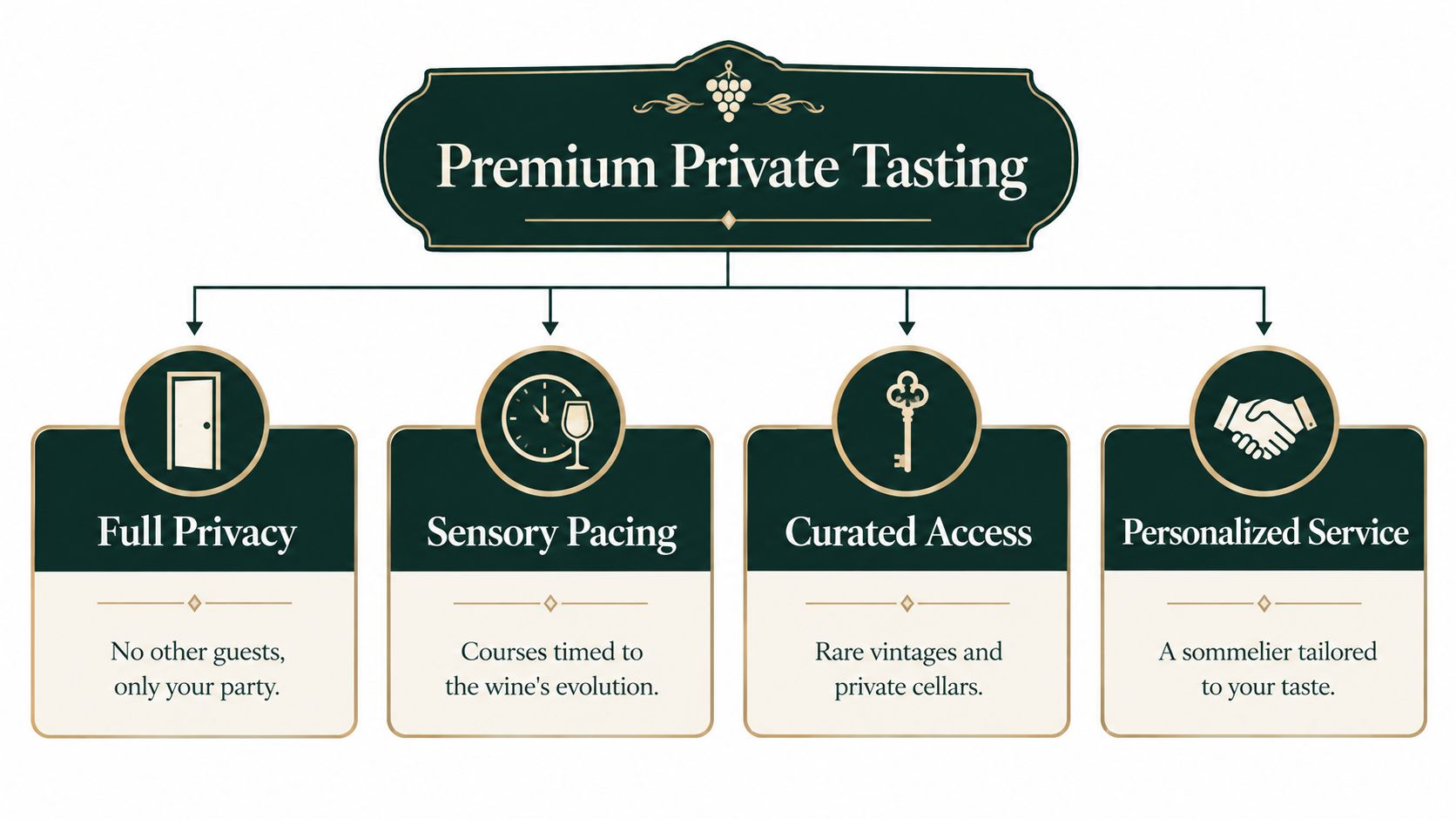
Curated access should connect guests to a producer, cellar or selection that adds context. A private visit isn't automatically meaningful because it's exclusive. The host should explain why these wines belong together and what the guests can learn from tasting them.
Personalized service brings the details into focus: a knowledgeable host who listens, deliberate choices about food and glassware, and flexibility when the group wants to linger or change direction. A sommelier should translate, not perform expertise at the guests.
A high-volume tasting may pour the same wines as a private one, but the experience often differs in the details: a fixed script, shared attention and little room to adjust. That doesn't make every group tasting poor. It does mean privacy alone isn't enough to justify a premium. If you're comparing how hosts guide a tasting across different drinks, these brewery beer tasting tips offer a useful point of comparison.
A practical test: Ask who will lead the tasting, how the wines will be chosen for your party, and what can change if the group wants a slower or more food-focused visit. Clear answers matter more than grand promises.
The Three Formats of a Private Red Wine Tasting
The right format depends on what your party wants to feel, not on which option sounds most exclusive. A cellar visit puts the producer and wine at the center. A vineyard experience gives the surrounding scenery and open air more weight. An in-villa sommelier brings the tasting to your accommodation and keeps the day firmly under your control.
Choose the cellar for producer context
A private cellar tasting suits a couple who wants to understand how a producer thinks. The setting may be cool, quiet and close to the work behind the wines. It's a strong choice when the group wants a focused conversation, perhaps about aging, blending or how the producer approaches a particular wine.
The trade-off is that the cellar can be less flexible for guests who need more space or prefer to spend time outdoors. Ask how much of the visit is devoted to tasting and conversation, and whether there's time to explore the estate rather than move straight through a set flight.
Choose the vineyard for room to breathe
A vineyard experience works well for a multigenerational family, especially when not everyone wants to sit through a technical tasting. The view and outdoor setting can make the visit feel generous, while the host introduces the wines without making them the only focus.
Its appeal depends on the weather, the site and the quality of the host. Beautiful surroundings don't substitute for a well-chosen flight, and an exposed terrace may be uncomfortable for guests who need shade or a quieter place to sit.
Choose the in-villa sommelier for privacy
An in-villa tasting suits an intimate group or milestone celebration that values ease above all. The sommelier can bring a curated selection to the group, set up the tasting in a familiar setting, and build in a meal or a relaxed evening. It also removes the need to coordinate another stop.
The trade-off is the loss of direct access to a producer's cellar or vineyard. If the story behind the wine is the main attraction, an estate visit may be more satisfying. If the group wants flexibility and privacy, the villa is hard to beat.
| Format | Best for | Sensory signature | Trade-off |
|---|---|---|---|
| Private cellar tasting | Couples interested in the producer | Focused, close to the wines and their making | Less open-air space |
| Private vineyard experience | Families and mixed-interest groups | Landscape-led and relaxed | More dependent on setting and weather |
| In-villa private sommelier | Intimate groups and celebrations | Personal, flexible and unhurried | No direct cellar or vineyard access |
Rioja, Navarra and the Basque Country as One Tasting Map
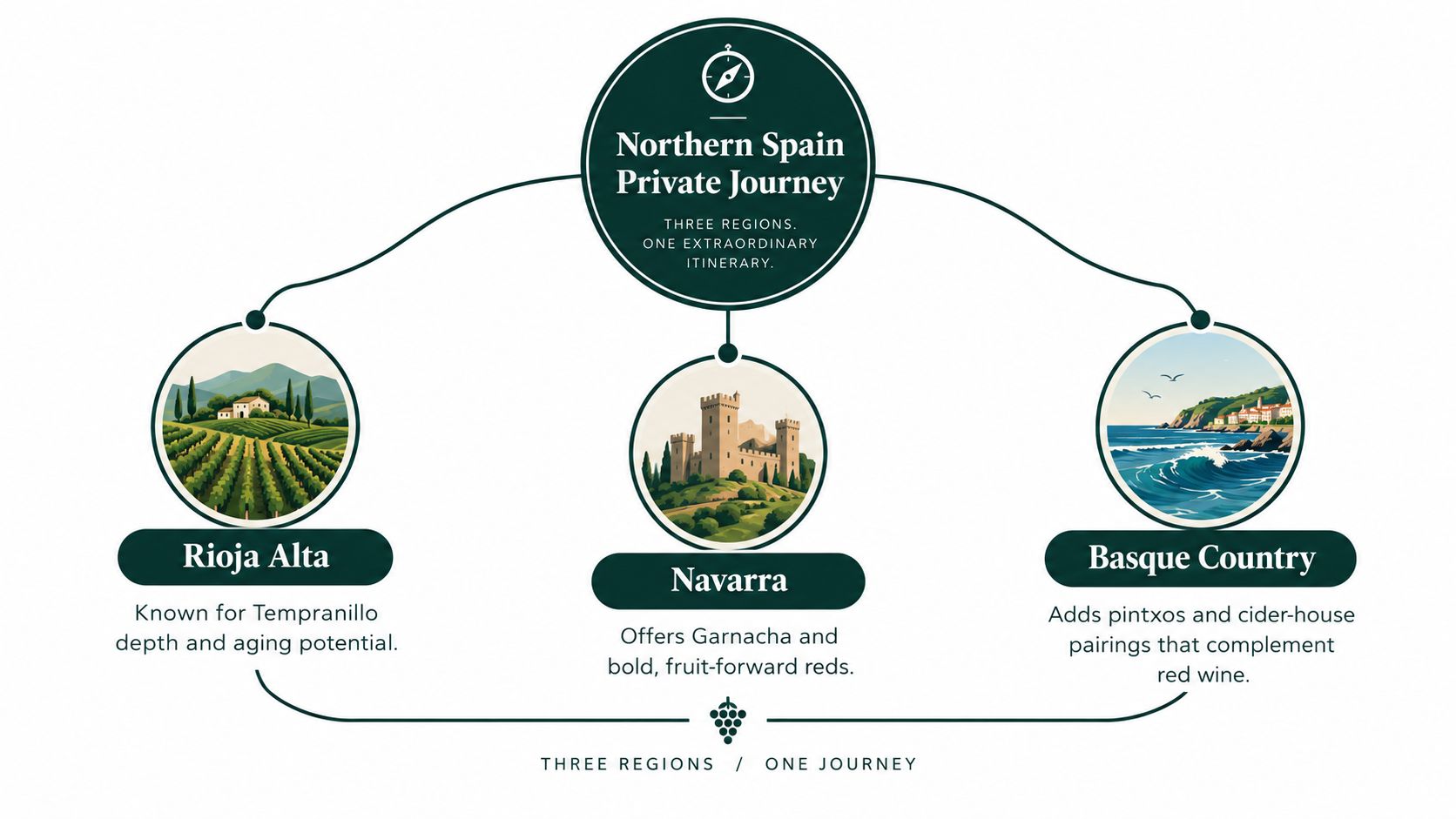
A well-designed Northern Spain itinerary uses regional contrast to give the wines shape. Rioja can anchor the journey, Navarra can shift the profile, and the Basque Country can widen the frame through food and Atlantic character. Rather than treating each place as a separate wine lesson, a private host can connect them through the order of the tasting and the meals around it.
In Rioja, Rioja Alta and Rioja Oriental offer useful points of contrast for a flight built around Tempranillo. One might lead with a more traditional, age-conscious expression; another could show a contemporary style. The point isn't to declare one superior. It's to give guests a clear comparison and enough context to understand what they prefer.
Navarra brings Garnacha-led wines and a fruit-forward counterpoint. That change can refresh a tasting after more structured Rioja reds, particularly when the host explains the differences through place, farming and the producer's intent rather than relying on technical terminology alone.
Let the food create the regional transitions
The Basque Country isn't another red-wine stop. Its strongest contribution can be the way local food gives the group a new lens on wine. Txakolí, pintxos and cider-house traditions broaden the journey, while rare reds and the region's Atlantic tension can create compelling food pairings. The host should make clear when a stop is about red wine, when it's about regional food culture, and how the two relate.
Temperature belongs in the same conversation. A controlled study of trained tasters found that serving temperature affected the aroma, bitterness and astringency of red wines tasted at 14°C, 18°C and 23°C. Near-room-temperature service enhanced aroma and reduced perceived bitterness and astringency, supporting 14–18°C as a starting range for structured reds, rather than one rule for every bottle (the controlled red-wine temperature study).
The route also needs to work practically, with comfortable transfers and enough time to appreciate each stop. Travelers weighing the regional options can use this private guide to Northern Spain's wine regions as a starting point, then ask an itinerary designer to connect the places that suit their group.
A Sample Bespoke Northern Spain Tasting Itinerary
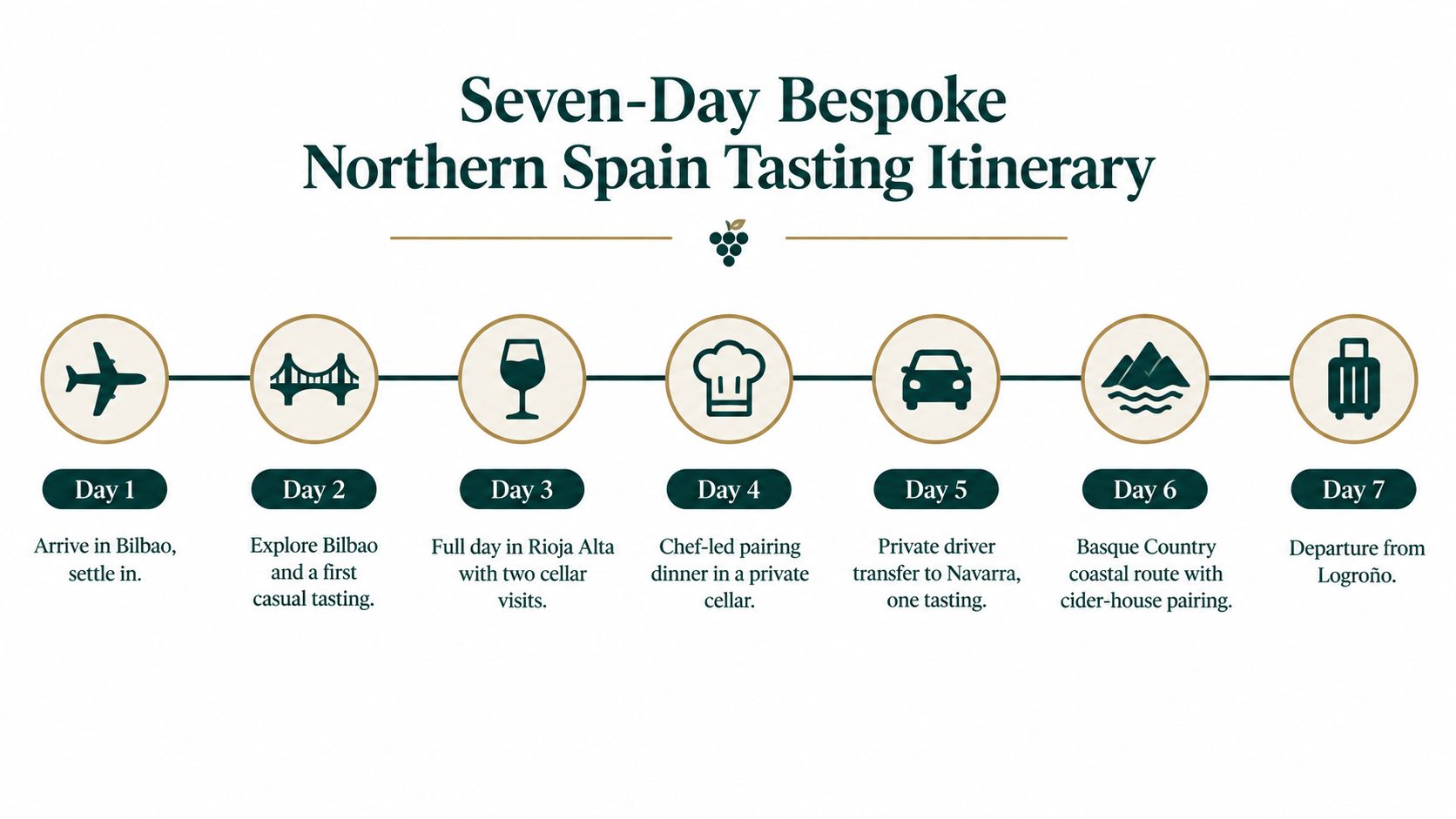
A seven-day journey from Bilbao to Logroño should feel like a holiday with wine at its center, not a week of appointments. For a couple in their sixties, I'd keep serious tastings to a manageable rhythm and build in proper downtime. For a multigenerational family, I'd protect a non-wine day so nobody feels obliged to make every activity about the glass.
The opening days can ease the group into the region. Arrive in Bilbao, settle into the hotel, and keep the first evening simple. A relaxed city meal gives travelers a chance to recover from the journey without asking them to concentrate on a formal flight. The next day, explore Bilbao at a comfortable pace, with an informal tasting only if the group feels ready.
Give Rioja a day, then leave room around it
In Rioja Alta, a cellar visit in the morning can focus on the producer's approach and a Gran Reserva tasting. Follow it with a vineyard lunch, then leave the afternoon open. A walk, a quiet hour at the hotel or time to enjoy the surroundings will help the morning's wines stay distinct in memory.
A chef-led pairing dinner should feel like a different event, not an encore of the same tasting. Set it in a private cellar or another characterful setting, and let the dishes lead the conversation. The sommelier can select wines that suit the menu rather than repeat the most prestigious bottles from the morning.
The next leg can introduce Navarra through one focused producer visit, perhaps with Garnacha as a contrast to Rioja. Keep the rest of the day for the transfer and a relaxed meal. Don't add a second formal tasting just because there's time on the map.
A later day can turn toward the Basque Country for a coastal drive and a food-led stop. A cider-house pairing or pintxos evening gives non-specialists a strong role in the journey, while wine-focused guests still have regional details to enjoy. The final departure from Logroño should be straightforward, with no last-minute appointment that turns a calm morning into a logistical scramble.
For families, a non-wine day might mean a coastal outing or time in the city. It isn't a concession. It gives the group a shared memory beyond the tasting room and helps the next wine experience feel fresh.
How a Sommelier Shapes Each Pour
A sommelier's most valuable work often happens before anyone tastes the wine. They decide what belongs in the flight, in what order it should be poured, which glasses will help guests compare fairly, and whether a wine needs decanting. When those choices are right, the tasting feels effortless. When they're improvised, the wines can blur together.
Control the variables guests can actually feel
For a comparative tasting, use the same glass for each wine. Glass shape can change how aroma is released and how intense a wine seems. In a study of glass shapes, total sensory intensity was highest in Burgundy-style glasses and lowest in Chardonnay-style glasses; for red wine, perceived intensity closely tracked the ratio between bowl diameter and opening diameter (the study on glass shape and perceived wine intensity). A separate Cabernet Sauvignon study found that both glass shape and volume altered perceived aroma.
That doesn't mean every tasting should use the most bulbous glass available. If the goal is to compare wines, identical ISO-style glasses help remove glassware as a variable. If the goal is to emphasize aromatic complexity and texture, a broader bowl may be a deliberate choice. Either way, leave headspace for swirling and aroma to gather above the wine.
Temperature requires the same attention. As covered in the regional section, a starting range around 14–18°C can work for structured reds. A sommelier should check the wines during service, because wine warms in the glass and the best temperature can vary with style, alcohol level and guest preference.
Pace the flight for clarity
Move from lighter and fresher reds toward fuller, more tannic examples. A modest pour gives everyone room to swirl and smell, while also helping the host keep the tasting comfortable. Ask whether the sommelier can accommodate smaller pours, breaks or spitting. Those choices are normal parts of a well-run tasting, not signs of disinterest.
Decanting also deserves a reason. A sommelier may choose to open a wine's aromas or separate it from sediment, but decanting shouldn't be a ritual applied without thought. The host can explain the decision in plain language, then let the wine show what it has to offer.
Ask for: the same glasses for comparisons, carefully managed temperature, a clear tasting order and enough time between pours. A guide to expert wine-tasting tips for Northern Spain can help guests decide what they'd like to notice before they arrive.
The invisible craft is the point. Guests shouldn't need to manage the service themselves. They should be able to pay attention to what they like, what surprises them and what they'd want to taste again.
Add-Ons That Turn a Tasting into a Private Journey
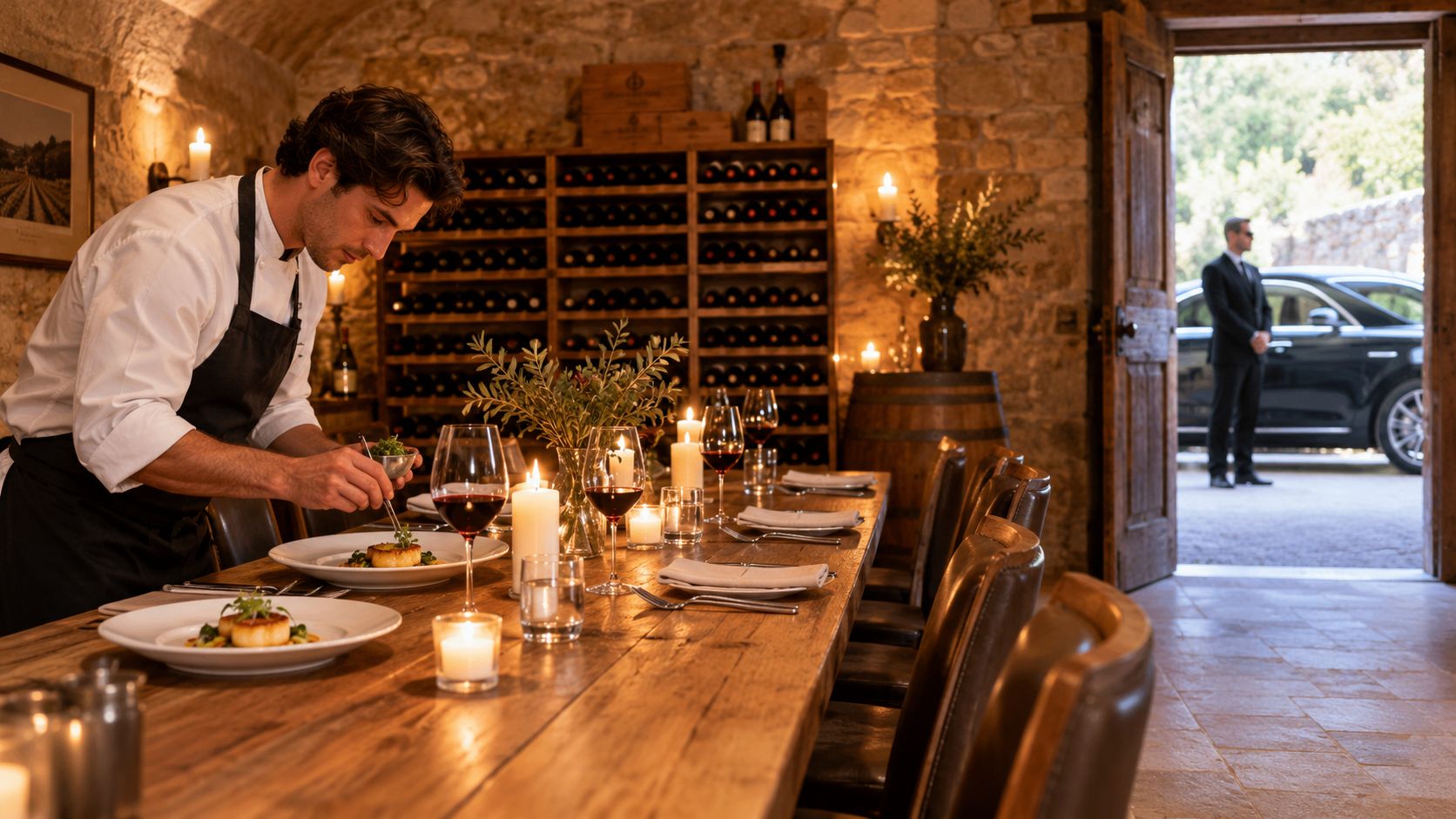
The best add-ons solve a real problem or give a particular kind of traveler something they value. A chef-led pairing dinner suits food-and-wine travelers who want the meal to deepen the tasting. A private driver is especially helpful for families traveling with older parents, since it takes the pressure off transfers and lets the day change pace when needed.
Harvest access can be meaningful when it gives guests a genuine view of the work behind the wine, rather than a staged photo opportunity. Festival access can do something different, connecting a private wine journey to the local calendar and culture. For groups who want an evening to feel personal from the start, having a sommelier meet them at the hotel can make the experience feel considered without adding another venue.
Ask for details you can evaluate
Before booking, ask who will host, how the wine selection will reflect your group, and what happens if a guest wants a break or doesn't drink alcohol. A thoughtful host can arrange smaller pours, an alcohol-free alternative or another way to take part without making anyone feel like an exception. The alternative should be chosen for balance and enjoyment, not as a test of how closely it imitates wine.
Request the key arrangements in writing: the format, the food pairing, transport, accessibility considerations and any access the operator says it can arrange. If the group includes different ages or levels of wine interest, say so early. A luxury tasting works best when the planner can design for the whole party rather than expecting everyone to follow the same script.
Regional food is often the easiest way to make that personalization tangible. A host who can shape a meal around the wines and the group's preferences can give guests more to talk about than a list of labels; this guide to Northern Spain's regional specialties can help you think through the food dimension.
Northern Spain Travel designs private, tailor-made journeys that can include Rioja cellar tastings, boutique winery visits, private drivers and chef-led meals. To shape a red wine tasting experience around your own pace, interests and travel companions, contact Northern Spain Travel and start with the kind of day you want to remember.