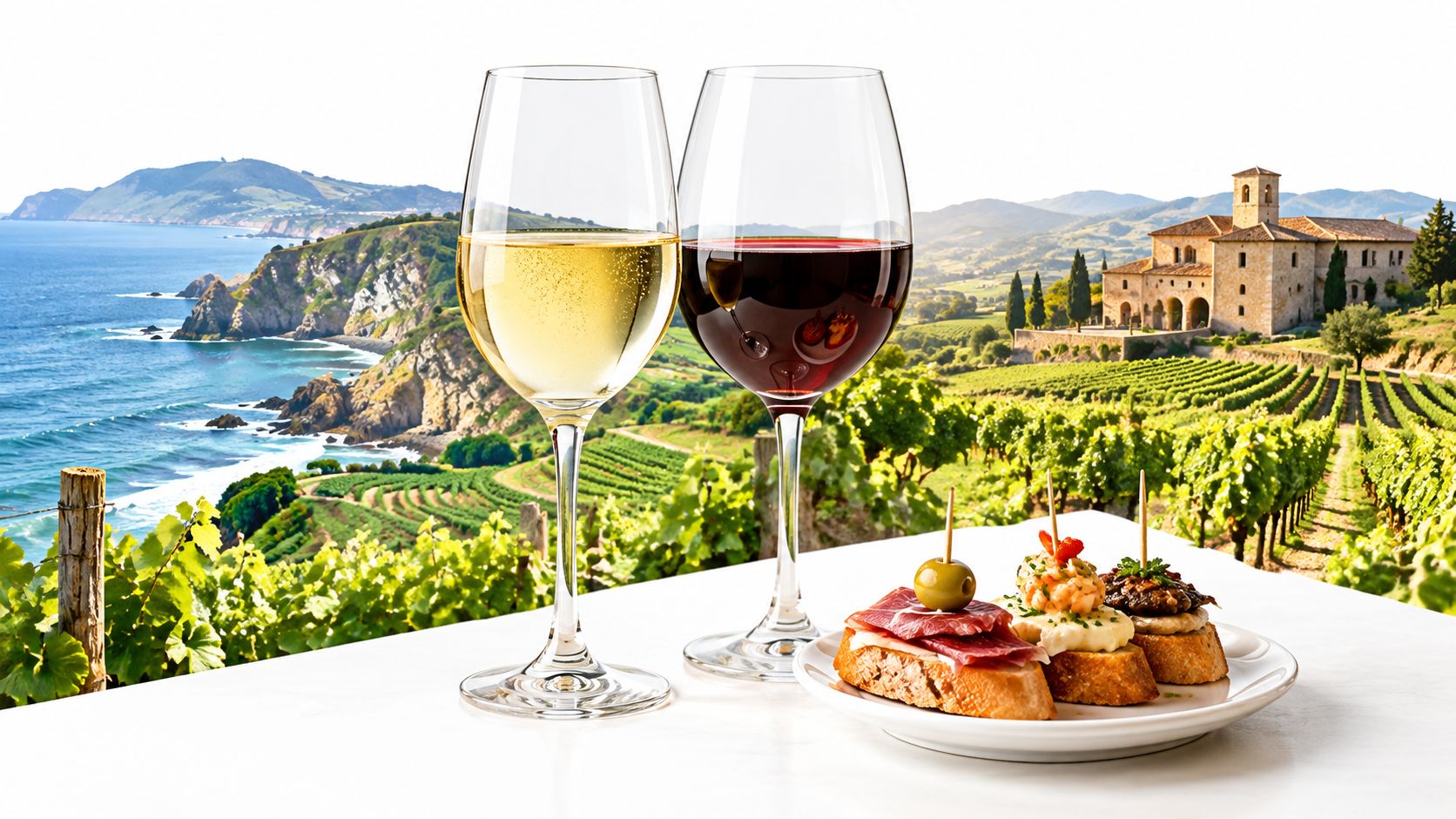
What if the bottle marked Gran Reserva isn't the one you'll enjoy more? Most travelers treat Rioja's aging ladder as a quality ranking, then walk out of a shop with a more expensive bottle that only tastes older. Rioja wine from Spain is a regulated expression of place, grape, and cellar time, and those three don't climb in one direction. A village name can matter as much as the word Reserva. A white can be the smarter pour at lunch. This guide shows how to read a label as a set of choices, then turn those choices into a tasting and a day on the road.
Table of Contents
- Why Rioja Wine From Spain Deserves Your Attention
- The Foundations of Rioja's Designation of Origin
- Exploring Rioja's Three Subzones and Terroir
- The Grape Varieties Behind Rioja's Wines
- Decoding Rioja's Aging Categories
- Choosing Your Rioja Wine Experience
- Planning Your Private Rioja Wine Journey
- Your Next Step Toward Rioja Wine From Spain
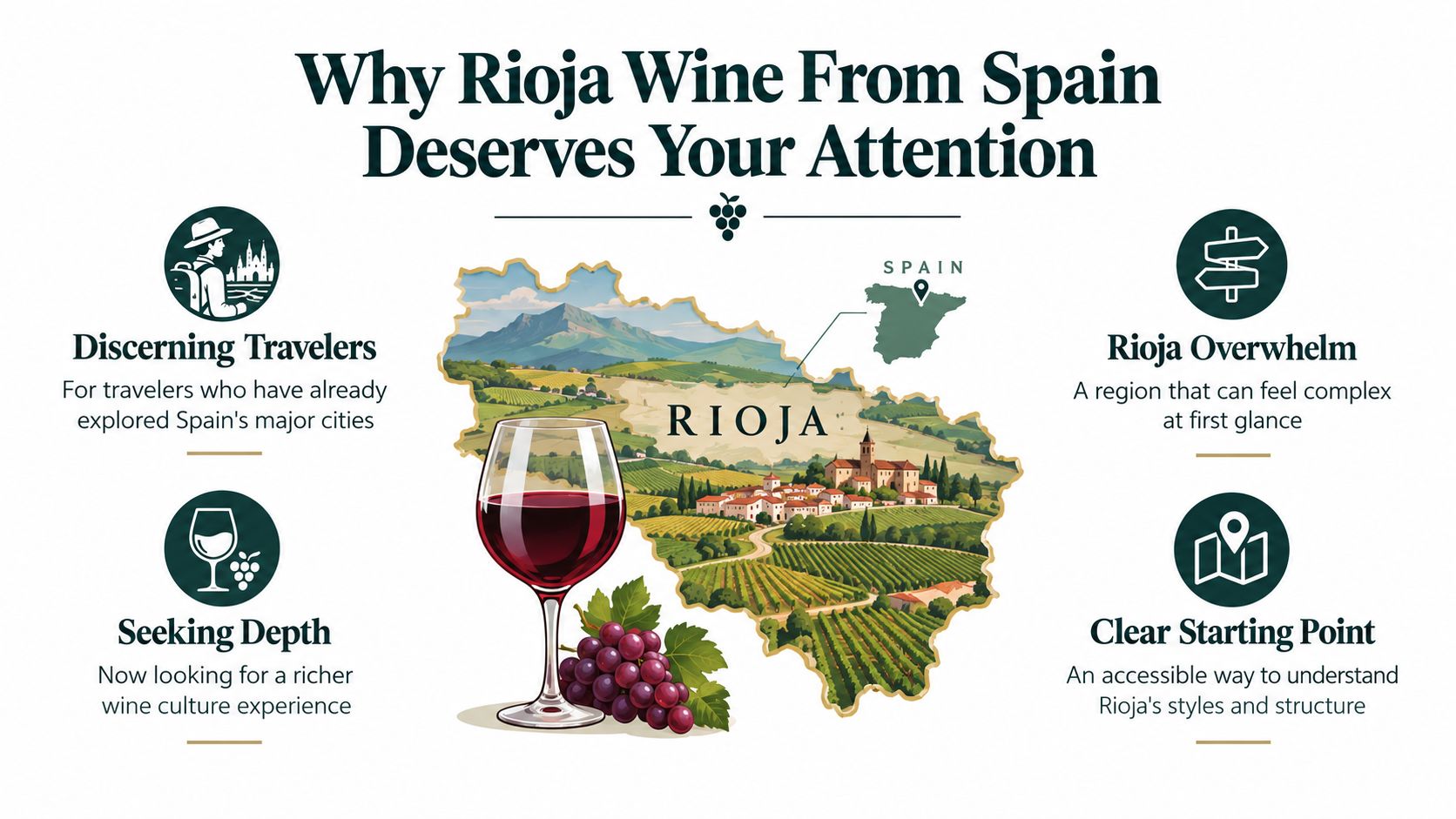
Why Rioja Wine From Spain Deserves Your Attention
You're in a Logroño shop after a morning in the old town. The shelf runs from bright young reds to bottles that spent years in oak. The clerk asks whether you want something fruity or something that has already softened. You don't have a framework, only a vague sense that older means finer.
That pause is common among travelers who already know Madrid and Barcelona and now want depth in the north. Rioja looks simple from a distance and crowded up close.
The scale is the first clue that this isn't a niche bottle you stumble on. The 2024 annual report of the Rioja Control Board lists 66,638 hectares of registered vineyards, 13,078 grape growers, 586 wineries with bottling registration, and 751 registered wineries overall. The designation marketed 328,461,466 bottles and 240,046,448 liters. Exports reached 135 countries, and international sales were 41.2% of the total.
What those figures change for a traveler
The same report names the leading export markets as the United Kingdom, Germany, the United States, the Netherlands, and Canada. Export volume rose 4.42% against 2023, while total volume fell 1.87% and total sales moved 0.63%. Growth abroad and a softer overall year can sit in the same vintage of commerce.
A better question: Don't ask which bottle is the upgrade. Ask which axis you're comparing: age, origin, variety, or the house style.
Hold two bottles from one producer before you book a cellar. Notice whether the label is promising time in wood, a place, or both. That habit is the whole point of learning Rioja wine from Spain before you taste it on site.
The Foundations of Rioja's Designation of Origin
Rioja sits at the front of Spain's modern wine law because it was the country's first officially protected wine region. A Royal Decree dated June 6, 1925 created the Rioja Designation of Origin, with a legally delimited territory and the first formal rulebook for the region, as the official history of the designation records.
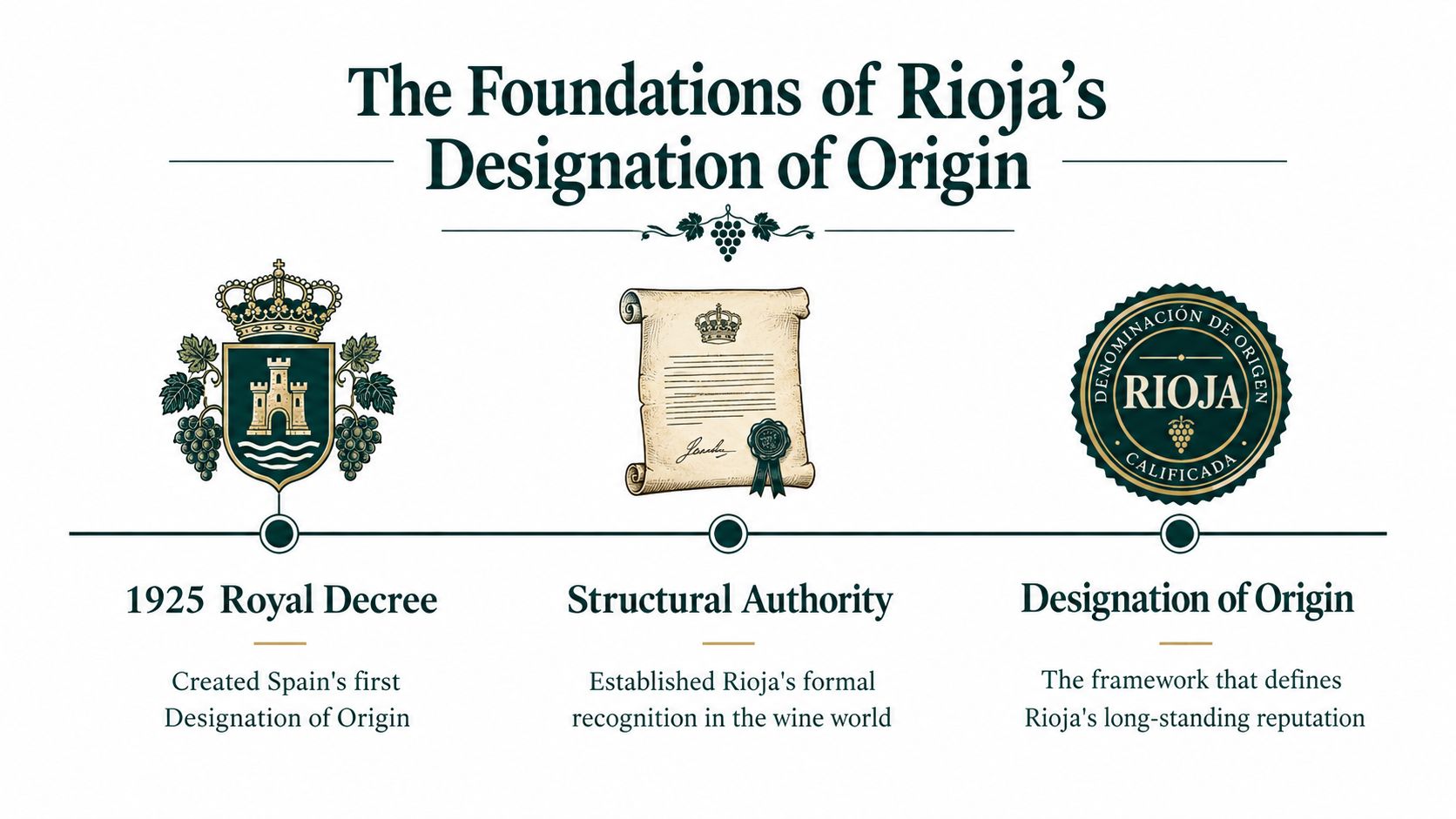
The Control Board began operating in 1926, so production, labeling, and quality had an institution behind them, not only a name on a map. In 1991 Rioja became Spain's first Qualified Designation of Origin (DOCa), then the top step of the national quality pyramid. Stricter controls are why classifications, cellar habits, and vineyard origins still carry unusual weight for international buyers.
A short film from the region makes that century of rule-making easier to picture before you start comparing villages.
One name, three communities
The designation covers Rioja Alta, Rioja Oriental, and Rioja Alavesa across 144 municipalities in three autonomous communities: 118 in La Rioja, 18 in the Basque Country, and 8 in Navarra. It is not a single province with a pretty label. It is a cross-regional commercial territory whose identity has been formalized for roughly a century.
- Legal boundary first: Wine made outside that map cannot be sold as Rioja, which is why the name itself is a guarantee of place, not a style slogan.
- Institution next: The Control Board is the reason two bottles can be compared on shared rules rather than on marketing alone.
- DOCa last: The 1991 step is why travelers treat the region as Spain's reference point for regulated, age-worthy wine.
Think of the decree as the fence, the Control Board as the lock, and DOCa status as the inspection stamp. You don't need the legal text in your pocket. You do need to know the stamp is older, and stricter, than a casual "Spanish red" implies.
Exploring Rioja's Three Subzones and Terroir
Soil is a tasting variable here, not a postcard caption. Research on Tempranillo in DOCa Rioja, summarized in the UK protected-name product specification, found that more vigorous, higher-yielding alluvial soils produced grapes and wines with lower concentrations of polyphenols and anthocyanins than less vigorous Palerexalfs and Palerexolls.
Anthocyanins feed red-purple color. Polyphenols feed astringency, structure, and the wine's ability to hold up as it ages. A vigorous riverside site often gives a softer phenolic frame and a lighter color. A lower-vigor clay-limestone site can give firmer tannin and more mid-palate weight. Same grape, different architecture.
How to use the contrast in a cellar
Ask whether the wine comes from alluvial ground, clay-limestone, or another soil unit. Then compare color density, tannin length, and concentration across wines made from the same grape. Yield rules reinforce the point. Maximums are 6,500 kg/ha for red grapes, equal to 45.5 hl/ha, and 9,000 kg/ha for white grapes, equal to 63 hl/ha.
| Subzone | Climate | Dominant Soils | Typical Wine Style |
|---|---|---|---|
| Rioja Alta | Cooler Atlantic influence, moderated by sheltering ranges | Clay-limestone and other lower-vigor units are common talking points | Finer structure, slower ripening, wines that often reward time |
| Rioja Alavesa | Atlantic edge north of the Ebro, with slope and altitude in the conversation | Clay-limestone terraces are the classic reference | Concentrated Tempranillo, firm tannin, strong village identity |
| Rioja Oriental | Warmer, more continental stretch to the southeast | Alluvial and mixed valley soils appear more often | Ripeness, softer phenolic frame, Garnacha-friendly sites |
A useful analogy is a garden hose versus a drip line. Vigorous alluvial ground pushes the vine to grow leaves and crop. Leaner soils make the vine work harder for less fruit, and that effort often shows up as color and grip.
Rioja Alavesa sits inside the Basque Country, so a day there pairs naturally with the wider Basque glass. A practical companion is this guide to Basque Country wine styles and tastings. Don't treat the three zones as a ranking. Treat them as three answers to "where did the fruit work hardest?"
The Grape Varieties Behind Rioja's Wines
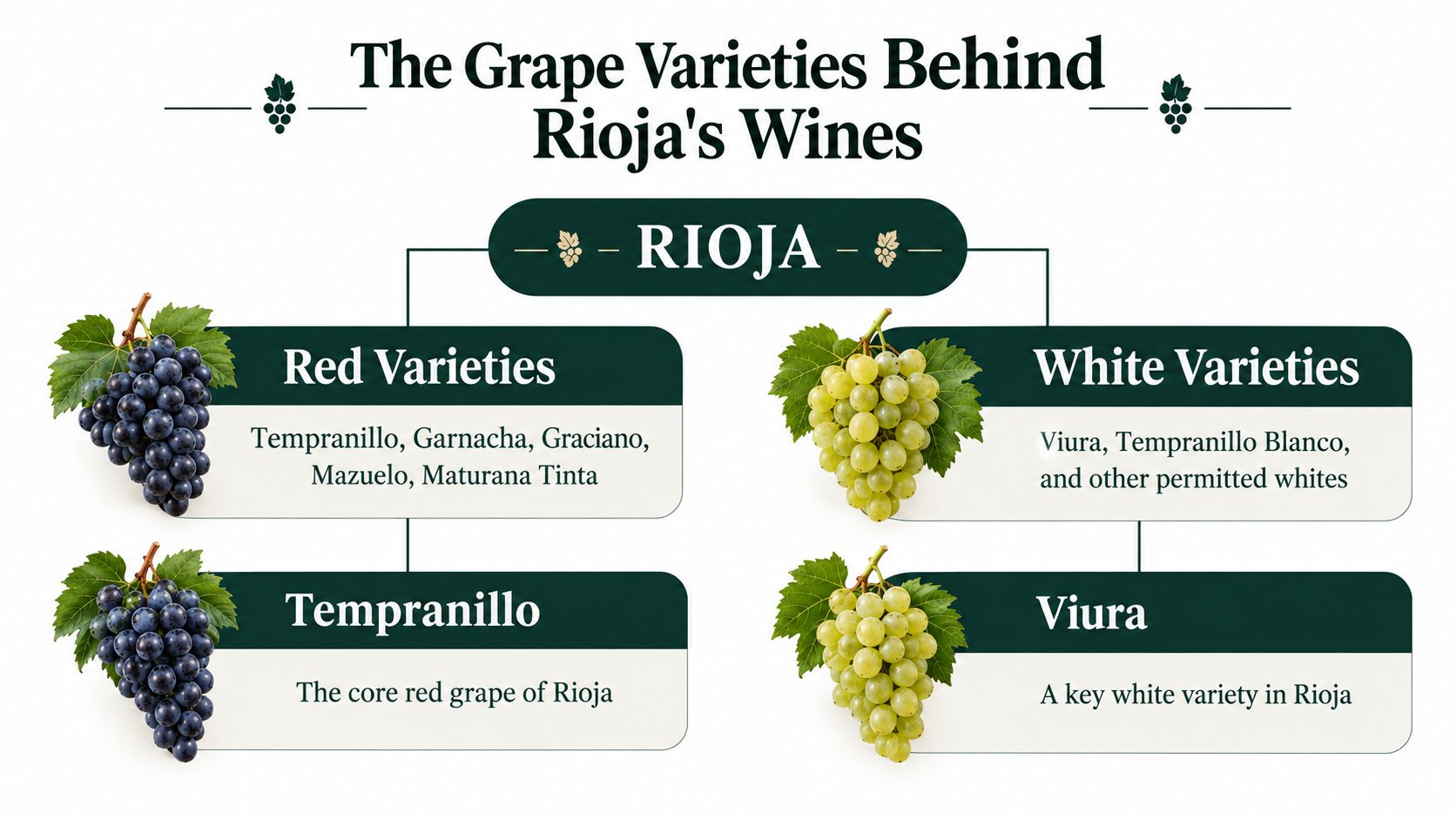
Tempranillo is the backbone, not the whole skeleton. It gives red Rioja its cherry core, moderate alcohol, and a tannin that can take oak without turning bitter. Almost every classic red still leans on smaller partners rather than a single-grape statement.
Garnacha brings body, warmth, and a rounder red-fruit line, which is why it shows up more often where the climate runs hotter. Graciano is the seasoning grape: perfume, acidity, and a darker edge that keeps a blend from tasting flat after years in barrel. Mazuelo (Carignan) adds color and a rustic bite. Maturana Tinta is the local rediscovery, used in small amounts when a producer wants a signature that isn't a copy of the neighbor's blend.
Whites and the market shift
On the white side, Viura is the workhorse, with citrus, fennel, and enough acidity to stay fresh or to take barrel time. Tempranillo Blanco is a mutation, not a white version of the red grape in flavor, and it often tastes more floral and taut. Other permitted whites appear in field blends and small experimental lots.
Recent market figures reported by EFE show total Rioja commercialization falling 4.5% to 312.8 million bottles, while white wines reached 37% of Spanish domestic wines with a designation of origin, up from 35% a year earlier. Rioja's share in white wine rose to 8.63%, and its rosé share reached 20.19%. Gran Reserva sales increased 16% in Spain and 6.9% internationally, and Crianza grew 4.2%, even as overall volume declined.
Premium categories are gaining, and the market is also contracting. That is not universal growth. For a summer lunch, seafood, or a mixed-age table, a Viura-led white or a rosé can outplay a famous red. Taste an unoaked Viura beside a barrel-aged one from the same house. The first shows fruit and snap. The second shows texture. Neither is a lesser Rioja.
Decoding Rioja's Aging Categories
The legal categories regulate time and the split between oak and bottle. They are not a medal ceremony. The DOCa Rioja rules set the minimums, and the standard barrel is about 225 litres.
| Category | Total Aging | Oak Aging | Bottle Aging |
|---|---|---|---|
| Crianza (red) | At least 2 years | At least 1 year | The balance of the total |
| Reserva (red) | At least 3 years | At least 1 year | At least 6 months |
| Gran Reserva (red) | At least 5 years | At least 2 years | At least 2 years |
What the clock does to flavor
Oak time builds vanilla, toast, and spice. Bottle time builds dried fruit, leather, and earthy notes. A Crianza still has primary fruit in the foreground, with wood as a frame. A Reserva starts to trade freshness for savoriness. A Gran Reserva is the furthest along that path, which some drinkers love and others find too quiet.
White and rosé follow a different clock. Required barrel aging is generally six months, and Reserva-style wines need at least two years of total aging. Don't apply the red table to a white label and assume the same oak load.
The cleanest private tasting is one producer's Crianza, Reserva, and Gran Reserva, poured side by side at about 15–18°C. Same house, same basic recipe, different clocks. If you mix producers, you'll credit the category for a difference that belongs to the vineyard or the barrel cellar.
Serve the youngest wine first, and don't "correct" anyone who prefers it. Preference isn't a failure to understand the law.
Young wines and site-labeled bottles that skip the classic ladder still exist for a reason. Some winemakers would rather show fruit, altitude, and a lighter oak touch than wait for a category stamp. Read the back label for village or zone before you assume the front label's aging word is the whole story.
Choosing Your Rioja Wine Experience
A zone or a municipality on the label answers "where," not "better." The current classification lets a bottle name Rioja Alta, Rioja Alavesa, or Rioja Oriental, and it recognizes 14 permitted grape varieties, including Garnacha, Graciano, Mazuelo, Maturana Tinta, Viura, and Tempranillo Blanco. Longer oak can mean more evolved, savory flavor. A younger or site-designated wine can mean fruit, freshness, and altitude. Match the visit to the axis you care about.
| Experience Type | Best For | Typical Visit Style | Wine Style Focus |
|---|---|---|---|
| Historic traditional cellar | Travelers who want the classic red story and visible barrel culture | Guided walk through old galleries, a vertical of aged reds | Crianza through Gran Reserva, American and French oak in conversation |
| Village-focused producer | Couples who want place over prestige and a slower conversation | Small group or private appointment in one municipality | Zone or village wines, blends that show soil more than wood |
| Modern high-elevation winery | Guests curious about freshness, architecture, and newer whites | Terrace or vineyard walk, then a technical tasting | Higher sites, Viura and Tempranillo Blanco, lighter extraction |
How to pick without collecting wineries
If your group argues about leather and vanilla, book the historic cellar and taste a vertical. If you already know that ladder and want to see why two Tempranillos don't taste alike, book the village producer and ask about soil before you ask about oak. If lunch is seafood or the party includes people who don't love tannin, put the modern house first so white, rosé, and a fresher red set the tone.
These wine tasting tips help you decide what to notice once you're in the room, so the visit isn't only a photo in front of barrels.
One strong contrast beats three rushed pours. A historic cellar in the Haro orbit, a village house in Rioja Alavesa, and a higher, newer project in a warmer pocket will teach you more than three versions of the same Reserva. Tell your host which axis you want to learn. Age, origin, or variety. Then let the itinerary follow that sentence.
Planning Your Private Rioja Wine Journey
A good day is a short list, not a crawl. Distances between the three zones look small on a map and feel longer once you add cellar stairs, a long lunch, and a driver who shouldn't rush the last tasting.
A workable order
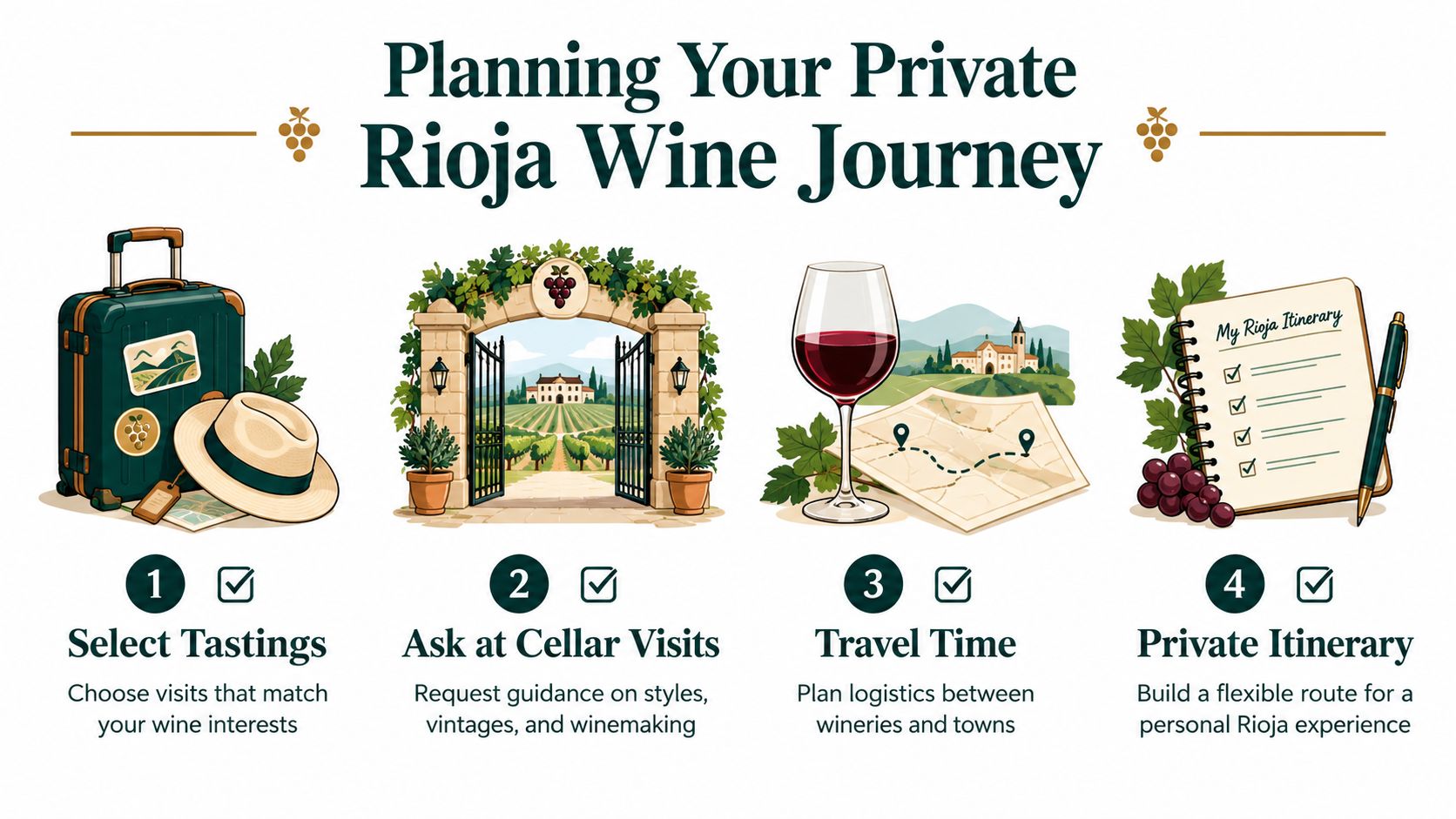
- Select tastings: Cap the day at two cellars, or three only if one is a short vineyard walk with a single wine. Put the most technical tasting before lunch, when your palate is still sharp.
- Ask at cellar visits: Request the soil unit, the yield relative to the legal ceiling, the barrel size and origin, and whether the wine is a zone, a village, or a classic aging category. Those four questions stop a generic tour.
- Travel time: Keep the morning and afternoon inside one subzone when you can. Crossing the whole designation in a single day trades depth for windshield time.
- Private itinerary: Leave a gap after lunch and an exit if someone is tired. Harvest weeks are busier and more atmospheric. Appointments matter more then, not less.
Where you sleep changes the plan. Staying near Haro, Laguardia, or Logroño sets a different first drive. These notes on where to stay in the Rioja wine region are worth reading before you lock hotels.
Pack less wine in your carry-on than you think, and keep documents where you can reach them between cellars and a regional airport.
A slim passport holder saves fumbling at hotel desks and hire-car counters. If you want one that isn't a bulky travel wallet, find handcrafted passport wallets before you fly. A private driver is the other practical luxury. It keeps the pacing human and opens smaller houses that don't run drop-in tours.
Your Next Step Toward Rioja Wine From Spain
You don't need to memorize every rule to order well. You need three habits. Ask where the fruit grew, which grapes are in the glass, and how long the wine spent in oak and bottle. Those habits stop Reserva and Gran Reserva from acting like automatic upgrades.
The market is also wider than the red primer suggests. Whites and rosés have a real place at the table, and a contracting overall volume can sit beside stronger sales of the longest-aged wines. Choose the bottle for the meal and the people, not for the most serious word on the label.
For the trip itself, match the cellar to the lesson you want. Historic galleries for the aging clock, a village house for soil, a newer high site for freshness. Two focused visits will teach more than a rushed circuit of famous names.
Northern Spain Travel designs private, tailor-made journeys through La Rioja and the neighboring north, with hand-picked wineries, drivers, and guides rather than shared coach tours. That model fits travelers who want the label vocabulary turned into a day they don't have to assemble themselves.
Northern Spain Travel builds fully private Rioja itineraries around the subzones, aging styles, and producers you want to taste, with drivers, guides, and cellar access arranged in advance. If you're ready to turn this framework into a journey through Rioja wine from Spain, visit Northern Spain Travel and start planning a trip shaped to your pace.